Iran-US Conflict Escalates: Trump Warns of Return to War
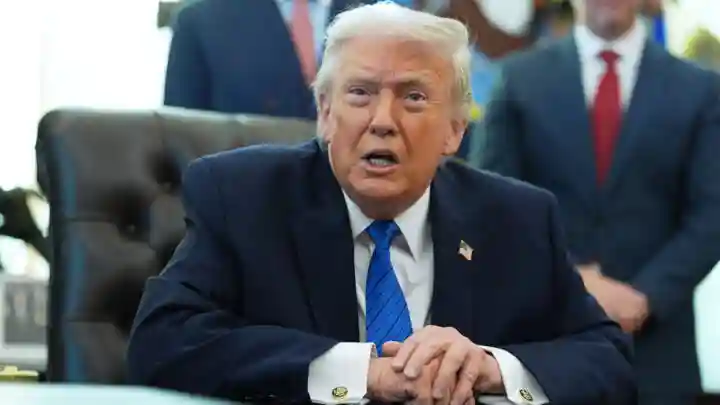
Table of Contents
Iran-US relations have plunged into a perilous new phase of destabilization as President Donald Trump warns that the United States could be forced to return to a full-scale war. A series of escalating, reciprocal military strikes between Washington and Tehran continued into Sunday, threatening to permanently unravel the fragile diplomatic efforts that had briefly halted hostilities earlier this month. The renewed conflict, which erupted with intense fury over the weekend, has shattered the temporary ceasefire and placed the entire Middle East on a knife-edge.
The latest crisis was ignited by a rapid succession of attacks and counter-attacks in and around the crucial Strait of Hormuz. Following an Iranian strike on a commercial vessel, United States Central Command (CENTCOM) launched heavy retaliatory airstrikes against Iranian military installations. Hours later, regional security was further compromised as Kuwait and Bahrain faced wave after wave of hostile Iranian missile and drone attacks, drawing deep condemnation from regional allies and exposing the vulnerabilities of American military bases in the Persian Gulf. This rapid descent back into violence has stoked fears of a prolonged and economically catastrophic conflict.
Escalating Confrontations: A Fragile Peace Collapses
The sudden escalation over the weekend marks a dramatic reversal of the brief diplomatic progress achieved in early June 2026. A framework agreement, negotiated with the assistance of regional intermediaries, had established an interim ceasefire, offering a temporary reprieve from the war originally launched by the United States and Israel in late February. However, this peace proved extraordinarily fragile, buckling under the weight of deep-seated mistrust and unresolved territorial disputes over maritime transit routes.
This is not the first time shipping security in the waterway has ignited a flashpoint. Earlier this year, reports of Iran attacks French vessel CMA CGM Everglades in Hormuz highlighted the vulnerability of commercial transport in these waters. Despite the brief pause in open hostilities, military intelligence warned that underlying tensions remained unresolved, and that any small spark could reignite a broader conflict. Over the weekend, that spark came in the form of a devastating drone attack on a commercial tanker, prompting an immediate and violent military response from Washington.
Trump’s Truth Social Ultimatum: The Existential Threat
President Donald Trump took to his social media platform, Truth Social, on Saturday night to confirm the airstrikes and issue a blistering warning to Tehran. “United States aircraft just struck Iranian missile and drone storage locations, and coastal radar sites, for violating the Cease Fire Agreement, AGAIN!” Trump wrote. His post was not merely an announcement of military action but a direct existential threat to the Iranian state, reflecting his administrative stance of maximum pressure.
In subsequent postings, Trump elaborated on his warnings, writing that “there may come a point when we are no longer able to be reasonable, and will be forced to militarily complete the job that we very successfully started”. He added with characteristic intensity: “If that happens, the Islamic Republic of Iran will no longer exist!”. This rhetorical escalation has heightened anxiety globally, signaling that the White House is prepared to abandon all diplomatic channels in favor of a decisive, devastating military resolution if the ceasefire continues to be violated.
Central Command Offensive: Decimating Iran’s Coastal Capabilities
According to statements released by U.S. Central Command, the American military response was a direct consequence of an unwarranted drone attack on the Panama-flagged oil tanker “Kiku,” which was transiting the Strait of Hormuz carrying roughly two million barrels of crude oil. CENTCOM officials stated that such actions posed a direct threat to the freedom of international navigation and global energy security.
The retaliatory strikes targeted key strategic assets in southern Iran, specifically focusing on the Sirik and Qeshm coastal regions. American aircraft targeted surveillance infrastructure, communication systems, air defense sites, drone storage facilities, and minelayer capabilities. Pentagon officials emphasized that the precision strikes were designed to severely degrade Iran’s ability to harass commercial shipping and monitor international naval movements in the Gulf. Despite these claims of tactical success, the strikes did not deter Tehran; instead, they provoked an immediate, asymmetric counter-offensive.
The Gulf Under Fire: Retaliation in Kuwait and Bahrain
Within hours of the U.S. strikes, the Islamic Revolutionary Guard Corps (IRGC) retaliated by launching synchronized missile and drone barrages targeting military installations in Kuwait and Bahrain. The IRGC claimed responsibility for the strikes, stating that they had successfully targeted key operating locations of the “U.S. terrorist army” in the region. This marked the first direct attack on Kuwaiti territory since the initiation of the interim deal, signaling a major geographic expansion of the conflict.
In Kuwait, where the United States maintains a substantial military presence, air defense systems were activated, working through the night to intercept hostile projectiles. Meanwhile, the government of Bahrain fiercely condemned the drone attacks, describing them as a flagrant threat to the security and safety of its citizens. Bahrain, which hosts the U.S. Navy’s Fifth Fleet, has historically been one of the loudest regional critics of Iranian foreign policy. As Iran threatens new military blows amid Hormuz crisis, neighboring countries find themselves increasingly caught in the crossfire of this escalating superpower rivalry.
The Battle for the Strait of Hormuz and Global Oil Markets
The geopolitical struggle remains anchored in the Strait of Hormuz, a maritime chokepoint through which approximately one-fifth of the world’s petroleum passes. Iranian Foreign Minister Abbas Araghchi asserted on Sunday that full management and control of the waterway lies solely with Tehran, brushing aside Trump’s threats. Araghchi warned that any attempts to challenge Iran’s authority or introduce new security arrangements in the corridor would only serve to increase regional tensions and delay the normalization of maritime traffic.
Regional states are scrambling to prevent a total economic shutdown of the shipping lanes. Oman has rejected any proposals to introduce mandatory fees or tolls in the strait, emphasizing the absolute necessity of maintaining international freedom of navigation. Earlier efforts to safeguard this crucial corridor, including the high-profile Hormuz crisis Macron and Starmer lead defense mission, have struggled to maintain cohesion in the face of ongoing unilateral military actions. Reports from Sky News suggest that international maritime insurers are already preparing to raise war-risk premiums to prohibitive levels, threatening to disrupt global supply chains once again.
Comparative Breakdown of the Reciprocal Strikes
The scale and target variation of this weekend’s operations reflect a highly dangerous transition from proxy skirmishes to direct state-on-state confrontation. The table below details the specific military actions, targets, and locations involved in the recent reciprocal strikes.
| Date | Actor | Target / Location | Military Assets Involved | Strategic Objective |
|---|---|---|---|---|
| June 26, 2026 | Iran / IRGC | Oil Tanker ‘Kiku’ (Strait of Hormuz) | Attack Drones | Disrupt commercial shipping & challenge ceasefire |
| June 27, 2026 | United States (CENTCOM) | Sirik & Qeshm (Southern Iran) | Airstrikes (Fighter jets) | Destroy drone storage, coastal radar, & minelayers |
| June 28, 2026 | Iran / IRGC | Kuwait & Bahrain (U.S. Base Locations) | Missiles and Drones | Retaliate against U.S. presence & regional hosts |
Domestic Backlash and the War Powers Debate
In Washington, the resumption of hostilities has triggered intense domestic political friction. Critics of the administration argue that unilateral military action without congressional approval bypasses essential democratic checks and balances. Representative Ro Khanna publicly criticized the recent strikes, calling them a “blatant violation of the War Powers Resolution”. Khanna argued that the administration must halt the operations immediately or face legal action designed to compel an end to the unauthorized war.
The debate is further intensified by the massive financial projection of a prolonged conflict. Academic and economic experts warn that the true cost of entering a direct war with Tehran would be staggering, with estimates aligning with a trillion-dollar Iran war that could trigger global inflation and severely strain domestic resources. Amidst these warnings, the administration faces immense pressure to balance its strong foreign policy stance with fiscal responsibility and statutory constraints.
Diplomatic Efforts and the Future of the Framework Agreement
Despite the aggressive posturing, there are backchannel diplomatic efforts underway to salvage what remains of the framework agreement. Negotiators from Qatar and Oman continue to engage both sides in hopes of reviving the 10-point peace proposal that had previously been accepted as a basis for long-term negotiations. Additionally, leaders from Pakistan have previously appealed to the White House to suspend destructive military campaigns to allow for a negotiated settlement.
However, the geopolitical environment has been complicated by shifting financial alliances. The implementation of a UAE dollar lifeline designed to support regional stability highlights the complex network of funding and diplomacy that governs Middle Eastern affairs. Whether these financial and diplomatic tools will be sufficient to overcome the momentum of military mobilization remains to be seen. If talks fail and the Strait of Hormuz remains blocked, the region may rapidly slide into a devastating conflict that neither side can easily escape.