Pakistani security forces kill 29 militants along border
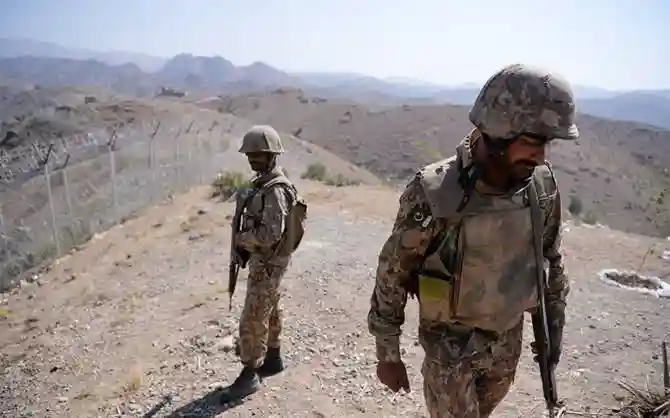
Table of Contents
Pakistani security forces on Sunday carried out a ground operation along the Pakistan-Afghanistan border, followed by “calibrated strikes” against militant hideouts and safe havens, killing 29 fighters, officials said. This major escalation marks one of the most significant cross-border military engagements in recent months, demonstrating Islamabad’s growing impatience with the persistent threat of cross-border terrorism. Information Minister Attaullah Tarar, in an official post on X, confirmed that the operation was launched in direct response to multiple militant attacks that have plagued various parts of the country in recent weeks. The unilateral military actions, which occurred in highly rugged terrain, have once again spotlighted the volatile security dynamics of the Durand Line and the deeply strained relationship between Pakistan and the Taliban-led administration in Kabul.
Detail of the Ground Operation in Bajaur
The security operation commenced with a highly targeted, intelligence-based ground raid in Bajaur, a district located in Pakistan’s northwestern Khyber Pakhtunkhwa province. Bajaur, which directly shares a highly porous border with Afghanistan’s Kunar province, has long served as a key transit point for militants attempting to infiltrate Pakistan’s tribal belt. Acting on actionable intelligence, elite ground forces navigated treacherous mountainous terrain under the cover of darkness to surround a suspected militant outpost.
During the intense firefight that ensued, Pakistani security forces successfully eliminated a high-value Khwarji commander identified as Khan Farosh, alongside three of his close associates. Khan Farosh was reportedly a key operative involved in coordinating cross-border movements, facilitating logistic networks, and planning guerrilla-style attacks against Pakistani military outposts. The elimination of such high-level leadership is viewed by military analysts as a significant tactical victory, temporarily disrupting the local operational capabilities of the militant networks in the region. The ground forces managed to secure the area and recover a substantial cache of advanced weaponry, communications gear, and explosive materials from the site, confirming the active state of preparation of the hostile cell.
The Execution of Precision Calibrated Strikes
Following the successful ground phase in Bajaur, the military expanded its operational scope by executing what officials described as “calibrated strikes” targeting larger militant encampments and logistics hubs nestled along the border belt. These calibrated strikes utilized precision-guided munitions and aerial surveillance platforms to target predetermined coordinate points, focusing strictly on active training camps, ammunition depots, and command centers.
By defining the strikes as “calibrated,” the military signaling apparatus highlighted a calculated strategy designed to achieve specific tactical objectives while attempting to avoid a broader, uncontrolled escalation with neighboring Afghan border guards. The strikes were concentrated on areas where intelligence indicated that splinter groups of the Pakistani Taliban had established operational bases. These installations served as staging areas where fighters were trained, armed, and dispatched to execute attacks deep within Pakistan’s urban centers. Military sources indicated that the strikes successfully neutralized 25 additional militants, bringing the total death toll of the operation to 29. The calculated nature of the operation was intended to deliver a clear message to cross-border actors that Pakistan possesses both the capability and the resolve to target hostile actors beyond its immediate security perimeter.
The Catalyst: Karachi Paramilitary Rangers Attack
This massive counterterrorism operation did not occur in a vacuum; rather, it was directly catalyzed by a highly audacious attack on Saturday night in the southern port city of Karachi. Heavily armed militants, equipped with automatic firearms, hand grenades, and suicide vests, launched an assault on the regional headquarters of the paramilitary Rangers. The ensuing hours-long gun battle resulted in the deaths of three Pakistani soldiers who defended the complex from being overrun.
During the engagement, security forces neutralized three of the attackers on the spot. Crucially, a fourth assailant was captured alive in a severely wounded state. Upon subsequent interrogation and medical evaluation, the military formally identified the captured militant as an Afghan national. This critical development provided Pakistani authorities with direct, undeniable physical evidence of foreign involvement and cross-border planning in domestic terror operations. The captured militant’s testimony and the forensic recovery of weapons pointed directly to sanctuaries located inside Afghanistan, prompting the Pakistani national security committee to authorize the immediate cross-border retaliatory strikes on Sunday.
Defining the Threat: Jamaat-ul-Ahrar and Fitna al-Khwarij
The primary targets of Pakistan’s latest military operation were identified as Jamaat-ul-Ahrar (JuA) and “Fitna al-Khwarij”. The term “Fitna al-Khwarij” is the official designation adopted by the government of Pakistan to describe the Tehrik-e-Taliban Pakistan (TTP), a militant umbrella organization that has waged a bloody insurgency against the Pakistani state for nearly two decades. By utilizing theological terminology that historically refers to a rebellious, extremist sect in early Islamic history, the state aims to delegitimize the TTP’s religious narratives and highlight their deviant, violent methods.
Jamaat-ul-Ahrar, on the other hand, is a notorious breakaway faction of the TTP that has historically claimed responsibility for some of the deadliest suicide bombings targeting civilians, religious minorities, and security personnel in Pakistan. Although JuA has periodically operated independently due to internal leadership disputes, it has maintained close operational ties with the core TTP leadership. Both groups share a common safe haven along the poorly monitored border regions of Afghanistan, exploiting the complex topography to evade Pakistani security forces while continuing to recruit, radicalize, and deploy operatives for asymmetric warfare.
Afghan Response and Rising Diplomatic Tensions
The unilateral actions by Pakistan immediately drew a sharp and hostile response from the Taliban-led administration in Kabul. According to reports from Al Jazeera, the spokesperson for the Afghan government, Zabihullah Mujahid, issued a strongly worded statement condemning the strikes. Mujahid claimed that the Pakistani military’s operations violated Afghan sovereignty and resulted in the tragic deaths and injuries of dozens of civilians, including women and children, in the border villages of Afghanistan.
“We strongly condemn this cowardly act of aggression and consider it a crime and an act of brutality,” Mujahid stated, warning that such unilateral actions would bear serious consequences for bilateral relations. The Afghan administration has consistently denied Pakistani allegations that it allows its territory to be used as a launching pad for international terror, asserting instead that the TTP is an internal Pakistani problem that Islamabad must resolve within its own borders. These conflicting narratives have significantly heightened diplomatic tensions, threatening to dismantle previous efforts to establish a cooperative border management framework.
Chronology of Border Engagements and Security Events
To understand the current state of conflict, it is essential to review the sequence of military actions, cross-border skirmishes, and retaliatory strikes that have occurred along the Durand Line. The security landscape has steadily deteriorated since the Afghan Taliban returned to power in Kabul in August 2021, leading to a massive spike in TTP-led violence within Pakistan.
| Date of Action | Location of Engagement | Operation / Incident Type | Key Tactical & Strategic Outcomes | Bilateral Diplomatic Impact |
|---|---|---|---|---|
| Late May 2026 | Khost & Paktika provinces | Unilateral Retaliatory Airstrikes | Targeted multiple TTP hideouts; several key militant leaders reported killed | Strong protest from Kabul; temporary suspension of bilateral border trade |
| Mid-June 2026 | Kurram District (Durand Line) | Cross-border Artillery Exchange | Exchange of heavy mortar fire; two Pakistani border guards wounded | Both militaries placed on high alert; diplomatic channels briefly frozen |
| June 27, 2026 | Karachi, Sindh Province | Militant Attack on Rangers HQ | Three soldiers and three attackers killed; one Afghan national captured alive | Triggered immediate security cabinet meeting and mobilization of border forces |
| June 28, 2026 | Bajaur District & Border Belt | Ground Assault & Calibrated Strikes | 29 militants killed, including high-value commander Khan Farosh | Severe diplomatic condemnation from Afghan Taliban spokesperson Zabihullah Mujahid |
Strategic Implications for Regional Security
The transition from defensive border guarding to proactive, intelligence-led ground raids and calibrated cross-border strikes reflects a profound shift in Pakistan’s defense doctrine. Historically, Islamabad focused heavy resources on constructing a multi-billion-dollar border fence to prevent infiltration. However, the persistence of sophisticated, coordinated attacks across the country has demonstrated that physical barriers alone are insufficient against determined insurgent groups possessing cross-border safe havens.
This operational shift carries significant implications for regional security partners, including China and the United States. China, which is heavily invested in the multi-billion-dollar China-Pakistan Economic Corridor (CPEC), has repeatedly voiced concerns over the security of its developmental projects and personnel within Pakistan. Any destabilization of Pakistan’s internal security directly threatens these economic investments. Similarly, Washington remains highly concerned that the border region could once again morph into an ungoverned space where transnational terror groups, such as Al-Qaeda or the Islamic State Khorasan Province (ISKP), can rebuild their global strike capabilities.
Geopolitical Friction and the Role of the Afghan Taliban
The core of the diplomatic impasse lies in the complex and historically deep-seated relationship between the Afghan Taliban and the TTP. Although the two groups operate under different organizational structures and have distinct geographical focuses, they share a common ideological lineage, sectarian alignment, and tribal bonds. Many TTP fighters fought alongside the Afghan Taliban during the two-decade insurgency against Western forces in Afghanistan.
Consequently, the Kabul administration faces an acute internal dilemma. Taking decisive military action against their ideological brothers in the TTP would risk triggering internal dissent, mutiny, or defections to more extreme groups like ISKP. On the other hand, failing to restrain the TTP from conducting cross-border raids severely damages Kabul’s relations with Pakistan, its primary economic gateway, and prevents the Taliban government from gaining the international legitimacy and economic assistance it desperately needs. This geopolitical deadlock has resulted in a cyclical pattern of violence, followed by diplomatic blame games and short-lived border closures.
The Border Fence and Pakistan’s Counterterrorism Infrastructure
In response to the persistent threat of infiltration, Pakistan has fortified its 2,640-kilometer (1,640-mile) border with Afghanistan, fencing nearly 95% of the rugged terrain. This monumental engineering feat involved constructing double-paneled chain-link fences topped with razor wire, interspersed with hundreds of high-tech border forts, observation towers, and modern surveillance systems. The infrastructure is designed to channel legal traffic through designated, biometric-enabled border crossings while denying militants free movement across the historical Durand Line.
Despite these extensive physical defenses, the highly mountainous and fractured topography of the border region offers numerous natural hideouts, hidden ravines, and underground tunnels that determined militant cells continue to exploit. To counter this, Pakistan’s security forces have increasingly integrated advanced electronic warfare assets, thermal imaging systems, and unmanned aerial vehicles (UAVs) into their border surveillance architecture. These technologies allow real-time monitoring of suspicious movements, enabling rapid-response tactical teams to intercept infiltrators before they can reach the civilian hinterland.
Future Outlook: Can a Lasting Peace Be Negotiated?
As the conflict along the Pakistan-Afghanistan border intensifies, the prospects for a negotiated peace settlement appear increasingly remote. Previous attempts to broker peace between Islamabad and the TTP, mediated by the Afghan Taliban, collapsed repeatedly due to the unyielding demands of the militant leadership. The TTP has consistently demanded the reversal of the merger of the former Federally Administered Tribal Areas (FATA) into Khyber Pakhtunkhwa province, the withdrawal of Pakistani military forces from the tribal belt, and the enforcement of their strict interpretation of religious law—demands that the Pakistani state has rightly rejected as unconstitutional and non-negotiable.
Having exhausted diplomatic and negotiated avenues, Pakistan has committed to a policy of total military elimination of “Fitna al-Khwarij”. The success of this strategy will depend heavily on Pakistan’s ability to maintain high-tempo counterterrorism operations, sustain economic stability, and secure the border without triggering a wider conventional clash with Afghan forces. Until the underlying issue of cross-border sanctuaries is comprehensively addressed—either through decisive action by Kabul or sustained, unilateral tactical operations by Pakistan—the border region is destined to remain a highly volatile fault line in South Asian geopolitics.





One Comment