Norway’s historic run celebrated by 100,000 fans in Oslo
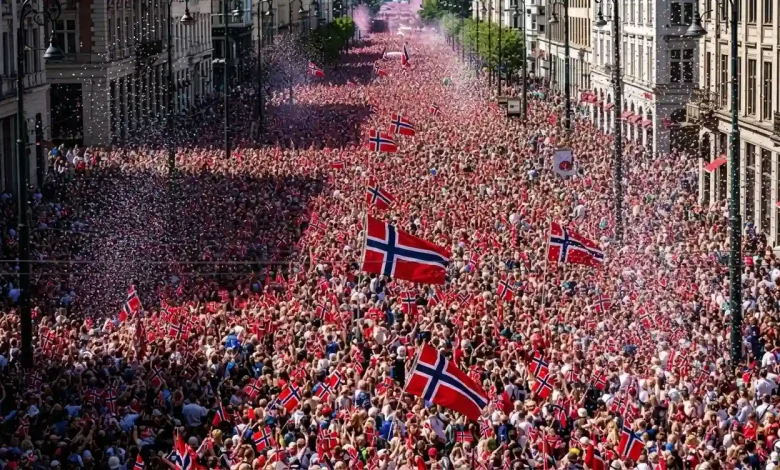
Table of Contents
Norway’s historic run at the 2026 FIFA World Cup may have ended in Miami, but the spirit of the nation has never been stronger. On Monday, more than 100,000 passionate football fans flooded the sun-drenched streets of the Norwegian capital, Oslo, to welcome home their heroes. What began as a moment of heartbreak after an agonizing 2-1 extra-time defeat to England in the quarter-finals quickly transformed into a monumental national celebration. The grounds of the Royal Palace were filled to capacity, with supporters dressed in red, white, and blue gathered to honor a generation of players who have forever changed the landscape of Norwegian sport.
Norway :Turning Heartbreak into National Pride
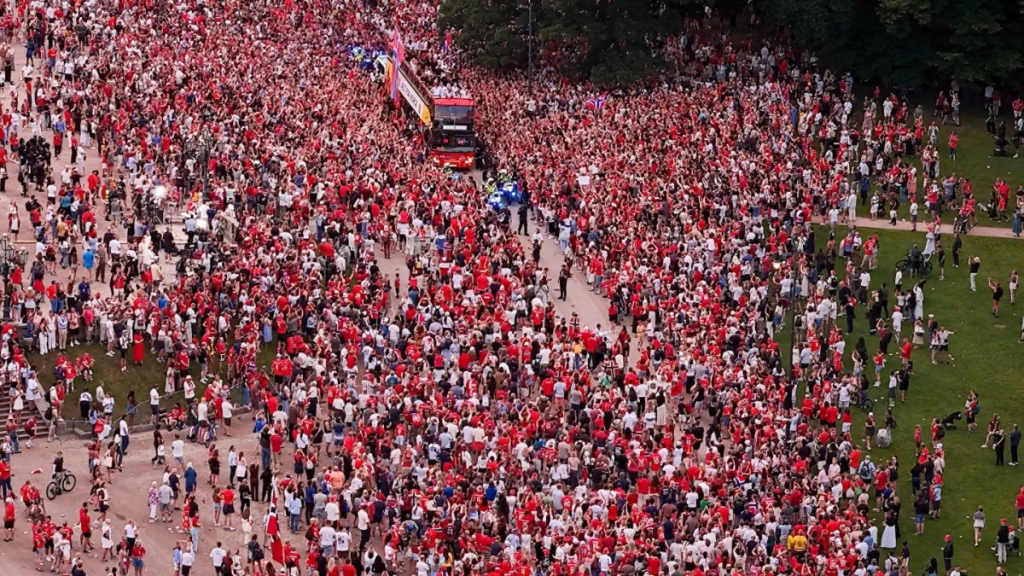
The sheer scale of the homecoming in Oslo took both international observers and the team itself by surprise. For a country of just 5.5 million people, an unofficial turnout of over 100,000 citizens represents an extraordinary display of national unity. This was not merely a reaction to a single match; it was the culmination of a historic tournament campaign that captured the imagination of the entire country. Norway had not reached the World Cup since 1998, and their dramatic journey to the last eight in the United States and Mexico had reignited a dormant footballing passion across the nation.
As the squad landed at Oslo Airport, they were greeted by airport personnel waving national flags and a traditional water cannon salute. The players, visibly tired but clearly moved by the reception, boarded the team bus and headed toward the heart of the capital. Along Karl Johans gate, the main thoroughfare, fans had lined up hours in advance, packed shoulder-to-shoulder under the warm summer sun. The heartbreak of Saturday’s extra-time loss in Miami seemed to evaporate, replaced by a collective sense of immense gratitude and pride.
Norway :The Dramatic Miami Clash: How the Quarter-Final Unfolded
To fully understand the emotion of the homecoming, one must look back at the incredible battle that took place at Miami Stadium on Saturday night. Norway went toe-to-toe with England, one of the tournament favorites, in a match characterized by intense physical battles and dramatic officiating decisions. The Scandinavians took a shocking lead in the first half when Andreas Schjelderup capitalized on a defensive error, sending the travelling Norwegian contingent into absolute ecstasy. It was a tactical masterclass early on from manager Ståle Solbakken, who successfully neutralized England’s highly-rated midfield.
However, the match turned on several razor-thin margins. Early in the second half, Torbjørn Heggem appeared to double Norway’s lead off a corner kick, but a lengthy video assistant referee (VAR) review ruled that superstar striker Erling Haaland had committed a foul in the buildup, nullifying the goal. Tension mounted as England’s Jude Bellingham equalized shortly after, capitalising on a rare miscommunication in the Norwegian defense. Despite Norway’s valiant efforts—including a stunning strike by Kristoffer Ajer that rattled the crossbar—the match was pushed into extra time. It was Bellingham who once again broke Norwegian hearts, scoring the decisive goal in the 111th minute to secure a 2-1 victory for England. Even England manager Thomas Tuchel admitted in his post-match press conference that his side was incredibly lucky to escape with a victory, paying tribute to Norway’s relentless press and defensive resilience.
Norway :A Royal Homecoming: Inside the Palace Square Celebrations
Upon reaching the Royal Palace, the team was granted a private audience with the Norwegian Royal Family. King Harald V, alongside Crown Prince Haakon, Princess Ingrid Alexandra, and Prince Sverre Magnus, welcomed the squad with genuine warmth. Crown Prince Haakon, who had watched the quarter-final clash live in Miami and had visited the team’s dressing room immediately after the defeat to offer words of comfort, led the praise. The royals congratulated the team not just on their performance, but on the profound impact they had made on the nation’s youth.
Following the private audience, the squad stepped out onto the palace balcony to greet the sprawling sea of fans waiting below. The atmosphere was electric, defined by traditional chants, flares, and a wave of flags that stretched as far as the eye could see. Catherine Breiland, a fan who had traveled from Spain to witness the event, described the atmosphere as “unbelievable,” noting that the sense of pride among the Norwegian people had remained unbroken throughout the entire tournament. The connection between the squad and the public was tangible, cementing this team’s place in the history books.
Norway :The Iconic Viking Row Ritual
One of the most memorable moments of the celebration occurred when the crowd and the team united for the famous “Viking Row” ritual. Originating from Viking culture and popularized by Norwegian fans during their remarkable tournament run, the ritual involves tens of thousands of supporters sitting on the ground and mimicking a rowing motion in perfect synchronization. The crowd of approximately 90,000 at the palace square sat down in unison, led by Crown Prince Haakon himself, who took up the drums to set the rhythm. The performance of this cultural display outside the royal residence symbolized the ultimate unity of the team, the royal family, and the citizens, creating an unforgettable audio-visual spectacle that quickly went viral on global sports media.
Notable Absences: Why Haaland and Berge Left Early
While the celebrations were overwhelmingly joyous, some fans noticed the early departure of two of Norway’s most prominent players, Erling Haaland and Sander Berge. National team coach Ståle Solbakken clarified the situation to reporters, explaining that a four-hour delay in their return flight from the United States had severely disrupted the players’ schedules. Both Haaland and Berge had urgent travel commitments and had to rush to catch separate flights immediately after the royal audience, meaning they missed the final open-top bus parade through the city. Despite their absence, the remaining members of the squad carried the torch, celebrating with beer on the top deck of the bus as it crawled through crowds that were so dense they forced the vehicle to a halt multiple times.
Norway :Statistical Showcase: Norway’s 2026 World Cup Journey
Norway’s performance at the 2026 World Cup exceeded all pre-tournament expectations, establishing them as one of the most exciting rising forces in international football. Below is a detailed breakdown of their remarkable campaign path and key statistics:
| Tournament Stage | Opponent | Result | Key Goalscorers / Highlights |
|---|---|---|---|
| Group Stage (Match 1) | Senegal | 3-2 (Win) | Thrilling late victory that sparked wild overnight celebrations in Oslo. |
| Group Stage (Match 2) | Group Opponent | 4-1 (Win) | A dominant display as Haaland fuels Norway’s historic 4-1 World Cup win. |
| Round of 16 | Brazil | 2-1 (Win) | Stunning upset of the five-time champions; Haaland scored twice; goalkeeper Ørjan Nyland saved a penalty. |
| Quarter-Finals | England | 1-2 (Loss, AET) | Heroic effort ended in extra time by Jude Bellingham; Schjelderup scored for Norway. |
Norway :Global Context: Comparing the World Cup Madness
The 2026 World Cup has been a tournament of unprecedented drama, with smaller nations repeatedly punching above their weight on the global stage. While Norway was capturing the hearts of Europe, other confederations experienced similar moments of pure theater. For instance, across the Atlantic, North American fans celebrated wildly as the USMNT clinches World Cup knockout spot after surviving a highly competitive group stage, demonstrating the rapid growth of soccer in the United States. In contrast, other fairytale runs met a sudden and decisive end; Haiti’s World Cup journey ends as Brazil cruises through their matches, showing that while football is filled with surprises, the traditional footballing giants still possess devastating quality.
At the individual level, legendary figures continued to etch their names into history. Fans around the globe marvelled as Lionel Messi ties World Cup record during his campaign, reminding everyone of the transcendent power of the beautiful game. Off-field drama was also a constant theme of the tournament, illustrated by the explosive Qatar vs Canada chaos which saw multiple red cards and tactical disputes dominate the sports pages. Outside the sporting arena, major political and global news continued to cycle. While news wires ran reports detailing how Mitch McConnell breaks silence on his health recovery, and the political world saw Lindsey Graham mourning a sudden personal loss, and even scientists debated the origins of space debris mysterious metal spheres on remote shores, the Norwegian populace remained completely locked in on the exploits of their footballing icons.
Norway :The Tactical Evolution under Ståle Solbakken
The success of the national team is a testament to the tactical modernization implemented by head coach Ståle Solbakken. For years, Norwegian football was criticized for being overly reliant on physical long-ball tactics. Solbakken has revolutionized this approach, building a dynamic, high-intensity pressing system that perfectly leverages the unique talents of his squad. Central to this system is the world-class playmaking of captain Martin Ødegaard, who acts as the team’s creative heartbeat, linking the solid defensive midfield marshalled by Sander Berge with the lethal movement of Erling Haaland upfront.
Solbakken’s tactics have also fostered a formidable defensive resilience. Players like Kristoffer Ajer and Julian Ryerson have developed a disciplined understanding, allowing Norway to absorb pressure against elite opposition like Brazil and England before launching devastating counter-attacks. This modern, proactive style of play has not only yielded historic results on the pitch but has also garnered widespread praise from international analysts, signaling that Norway is no longer an underdog to be taken lightly.
Norway :What the Future Holds for Norwegian Football
The monumental reception in Oslo marks the beginning of a new era rather than the end of a journey. With a core group of world-class players in their prime and a wealth of young talent emerging from the youth academies, the future of Norwegian football is incredibly bright. The performance of young prospects like Andreas Schjelderup during this tournament demonstrates that the national team is developing the depth required to compete consistently at the very highest level of international football.
Erling Haaland’s passionate call to action during the tournament—urging the nation to cultivate a deep sense of pride in representing Norway—has clearly resonated with the public and the next generation of players. As the focus shifts to the upcoming UEFA European Championship qualifiers, the players can rest assured that they have the unwavering backing of a proud, united nation. The heartbreak of Miami has laid the foundation for a legacy that will inspire Norwegian footballers for decades to come.