3 Controversial Facts About Qatar vs Canada 6-0 Match Filled With Chaos and Red Cards
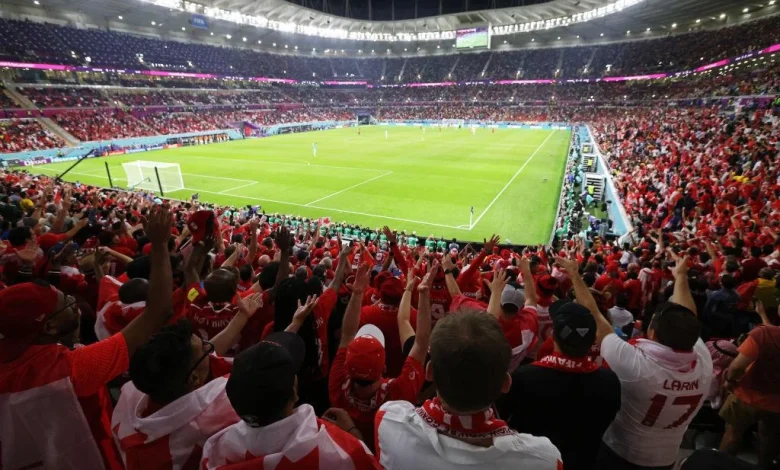
Table of Contents
Qatar was reduced to nine players in a highly chaotic and emotionally charged night at Vancouver’s BC Place, as Canada secured a historic 6-0 victory in their Group B clash of the 2026 FIFA World Cup. In a match defined as much by structural breakdowns and physical drama as by clinical finishing, the visiting Qatari squad was completely undone by disciplinary infractions, ultimately finishing the match with only nine players on the pitch. The massive victory not only marked Canada’s first-ever win in Men’s World Cup history but also tripled their all-time goal-scoring output in the competition. However, the jubilant mood in Vancouver was severely dampened by a gruesome injury to Canadian midfield maestro Ismaël Koné, who was stretchered off in the second half with a suspected broken leg, casting a somber shadow over an otherwise monumental sporting achievement.
Qatar Reduced to Nine Players: Match Overview
The highly anticipated fixture between Canada and Qatar was projected to be a tight, tactical battle between two teams looking to assert themselves in Group B. Instead, the capacity crowd of 52,497 at BC Place witnessed an absolute whirlwind of goals, video reviews, and catastrophic discipline failures from the Qatari side. From the opening whistle, Canada’s aggressive high press under manager Jesse Marsch put immense pressure on Qatar’s backline. The match quickly devolved into chaos as Qatar struggled to cope with the transition speed of Canada’s attacking players, leading to critical defensive errors and severe physical challenges that forced the referee to make major disciplinary interventions.
By the time the final whistle blew, Qatar had been reduced to nine players, leaving their defensive lines completely exposed to a ruthless Canadian attack. The tactical structure of the Qatari team disintegrated under the weight of the red cards, allowing Canada to dictate every facet of the game. For the co-hosts, the victory was a monumental milestone in their footballing history, but the physical toll of the match left many questioning the long-term implications for the squad as they progress deeper into the tournament.
The First Half Flashpoint: Homam Ahmed’s Dismissal
The match turned decisively in Canada’s favor in the 33rd minute during a fast-break sequence led by Canadian winger Tajon Buchanan. Buchanan’s blistering pace saw him bypass the Qatari midfield and drive directly at the heart of the defense. In a desperate attempt to halt the attack, Qatari defender Homam Ahmed lunged into a reckless challenge just on the edge of the penalty area. The referee immediately blew his whistle, pointing to the penalty spot and brandishing a yellow card to Ahmed, sparking intense protests from the Canadian players who argued it was a clear denial of an obvious goal-scoring opportunity.
What followed was a lengthy and tense VAR review. The match official was instructed to review the incident on the pitchside monitor. After carefully studying the footage, the referee determined that the initial contact had actually occurred inches outside the penalty box, thereby overturning the penalty and awarding Canada a free-kick instead. However, because Ahmed’s challenge had completely denied Buchanan a direct shot on goal with no other defenders in vicinity, the yellow card was upgraded to a straight red card. Ahmed was forced to make the long walk back to the dressing room, leaving his teammates to battle with 10 men for the remaining hour of the match.
The Second Half Horror Tackle: Assim Madibo and Ismaël Koné’s Injury
Any hopes of a Qatari comeback in the second half were thoroughly extinguished in the 54th minute by an incredibly reckless tackle that left everyone in the stadium in shock. Canadian midfielder Ismaël Koné, who was putting together an outstanding performance in the center of the pitch, shielded the ball near the halfway line when Qatari midfielder Assim Madibo arrived with a late, high-force challenge from behind. The impact was severe, and Koné immediately crumpled to the turf in immense pain, holding his lower left leg which appeared to be bent at an unnatural, fractured angle.
Teammates immediately rushed to Koné’s side, signaling frantically to the medical staff as the gravity of the injury became clear. The atmosphere inside BC Place turned silent as medical personnel carefully stabilized Koné’s leg and placed him on a stretcher. He was carried off the pitch to a standing ovation from the Vancouver crowd, waving back weakly before being rushed to a nearby hospital for emergency surgery. Madibo, who appeared deeply distraught and apologetic after seeing the consequences of his challenge, was shown a direct red card after a swift review, officially reducing Qatar to nine players and ending any tactical resistance they could offer.
Historical Milestones: Canada Triples Its World Cup Goal Total
Before this explosive 6-0 performance, Canada’s goal-scoring legacy in the men’s FIFA World Cup was modest. During their debut appearance at the 1986 World Cup in Mexico, the team failed to find the back of the net entirely, suffering three consecutive shutout losses against formidable opponents like France, Hungary, and the Soviet Union. It took another 36 years for Canada to return to the global stage, qualifying for the 2022 World Cup in Qatar. It was there that superstar Alphonso Davies scored the nation’s historic first-ever World Cup goal with a powerful header against Croatia, though the match ultimately ended in a loss. Canada’s only other goal in that tournament came via a deflected own-goal by Morocco.
In their opening match of the 2026 tournament, striker Cyle Larin salvaged a crucial point with an equalizer in a 1-1 draw against Bosnia-Herzegovina in Toronto, bringing Canada’s cumulative historic World Cup goal tally to exactly three. By netting six goals against Qatar at BC Place, the Canadians managed to triple their overall World Cup goal total to nine in a single, extraordinary night. According to reports on the official FIFA website, this scoring outburst represents one of the most rapid offensive accelerations for any host nation in recent tournament history.
From 1986 Shutouts to 2026 Scoring Outburst
The contrast between the 1986 campaign and the 2026 tournament could not be more stark. In 1986, the Canadian squad struggled to create cohesive attacking opportunities, often appearing overwhelmed by the tactical sophistication of their European opponents. The team left Mexico without a single point or a single goal to their name. Fast forward forty years, and the modern Canadian squad boasts world-class talents playing at the highest levels of European club football. The tactical evolution of the program has transformed Canada from a defensive, reactive team into a dynamic, possession-oriented side capable of dismantling international opponents with fluid passing and relentless high pressing.
This structural evolution was on full display against Qatar. Even before the red cards shifted the numerical balance, Canada operated with a level of confidence and tactical clarity that was entirely absent in previous generations. The ability to rotate positions fluidly, coupled with a deep bench of clinical finishers, allowed Canada to maintain a high tempo for the entire ninety minutes, thoroughly entertaining the home fans and establishing themselves as a legitimate threat in the knockout stages of the tournament.
The Scoring Masterclass: Jonathan David and Cyle Larin Shine
The offensive onslaught was spearheaded by Canada’s dynamic striking duo, Jonathan David and Cyle Larin, who displayed exceptional chemistry and clinical precision. The breakthrough came in the 16th minute when Jonathan David unleashed a powerful, dipping volley toward the Qatari goal. Qatar goalkeeper Mahmoud Abunada did well to punch the initial shot away, but the rebound fell perfectly into the path of the oncoming Cyle Larin. Larin made no mistake, sliding the ball into the back of the net to register his second goal of the tournament. He celebrated by pointing to his ears as a capacity crowd of red-clad supporters roared in approval.
Jonathan David then took full control of the match, doubling Canada’s lead in the 29th minute with a sensational right-footed volley off a precise cross, marking his first goal in the run of play for the national team in over a year. David struck again in first-half stoppage time, capitalizing on a chaotic scramble in front of the Qatari net after a powerful shot ricocheted off the crossbar. He completed his historic hat-trick in the second half, systematically breaking down Qatar’s nine-man defense with intelligent off-the-ball movement and clinical finishing, cementing his status as one of the tournament’s standout performers.
VIPs and Fan Culture: Vancouver Paints the Town Red
The city of Vancouver transformed into a vibrant carnival of football culture in the days leading up to the match. Local businesses, public spaces, and transit hubs were adorned with Canadian flags and promotional banners, creating an immersive tournament atmosphere that captivated locals and visiting fans alike. The cultural impact of hosting the World Cup was palpable, with fans from diverse backgrounds coming together to celebrate the global game, illustrating the powerful unifying nature of the sport.
The pre-match festivities set a historic precedent for soccer fandom in Western Canada. The sheer volume of supporters marching through the city streets sent a clear message that soccer has truly arrived in the mainstream Canadian sporting landscape. This cultural shift has been decades in the making, and the success of the national team on home soil is poised to inspire the next generation of Canadian athletes, ensuring that the legacy of the 2026 World Cup extends far beyond the tournament itself.
High-Profile Spectators: Prime Minister Mark Carney and Gianni Infantino
The historic nature of the match drew several high-profile political and sporting figures to BC Place, adding to the grandeur of the evening. Among the 52,497 fans in attendance was Canadian Prime Minister Mark Carney. Carney had been forced to miss Canada’s opening match against Bosnia-Herzegovina in Toronto due to his mandatory attendance at the G7 Summit in France. Having recently returned to Canadian soil, the Prime Minister spent the earlier part of his day in Vancouver making a landmark housing and infrastructure funding announcement alongside B.C. Premier David Eby before shifting his focus to the sporting spectacle.
Carney watched the match from the presidential suite, seated directly beside FIFA President Gianni Infantino and his wife, Diana Fox Carney. Before the opening kickoff, the Prime Minister expressed his immense pride in Vancouver’s role as a host city, praising the local infrastructure and the incredible energy of the fans. Carney correctly predicted that Canada would play an aggressive, attacking style of football, and his presence alongside the head of world football underscored the growing geopolitical and cultural significance of the sport within Canada.
The Sea of Red: Vancouver Fans Lift the Co-Hosts

The atmosphere inside and outside BC Place was nothing short of electric, as Vancouver fans painted the city red to support their national team. Hours before kickoff, thousands of passionate supporters assembled near Science World, where the building’s iconic dome had been beautifully transformed into a massive replica of a World Cup soccer ball. Led by the prominent Canadian supporter group, The Voyageurs, a massive pre-game march wound its way through the streets of downtown Vancouver, complete with beating drums, blowing trumpets, and vibrant red smoke flares, building a wall of sound that carried directly into the stadium.
Inside the arena, the home crowd took the instruction to wear red to heart, creating a stunning visual spectacle that completely filled the stands. According to stadium decibel meters, the roaring crowd reached a staggering peak volume of 149 decibels just moments before the opening kickoff. While small pockets of Qatari fans dressed in traditional white attire occupied sections of the lower bowl, they were completely overwhelmed by the deafening chants of “Ca-na-da!” that reverberated through the rafters, providing the team with an unforgettable, high-octane home-field advantage.
Detailed Match Statistics: Canada vs Qatar
To fully understand the lopsided nature of this encounter, a review of the official match statistics highlights the utter dominance of the Canadian side, particularly after Qatar suffered the two red cards. The data clearly shows how the structural integrity of Qatar collapsed under the pressure of playing shorthanded.
| Match Metric | Canada (Co-Hosts) | Qatar |
|---|---|---|
| Final Score | 6 | 0 |
| Total Shots | 24 | 3 |
| Shots on Target | 14 | 1 |
| Possession (%) | 72% | 28% |
| Pass Accuracy (%) | 89% | 61% |
| Corner Kicks | 9 | 2 |
| Fouls Committed | 8 | 18 |
| Yellow Cards | 1 | 4 |
| Red Cards | 0 | 2 |
| Goalkeeper Saves | 1 | 8 |
Tactical Analysis: Jesse Marsch’s Master Plan
Manager Jesse Marsch set up Canada in a highly fluid 4-2-3-1 formation designed to exploit the transition phases of the game. Knowing that Qatar would likely deploy a compact mid-block to limit central space, Marsch instructed his fullbacks, Alistair Johnston and Alphonso Davies, to overlap constantly, creating numerical overloads on the flanks. This tactical decision paid immediate dividends, forcing the Qatari wingers to track back deep into their own half, which severely limited their ability to launch counter-attacks when they did win possession of the ball.
When Qatar was reduced to 10 men in the first half, Marsch made immediate adjustments, telling his midfield pairing of Stephen Eustáquio and Ismaël Koné to push higher up the pitch to suffocate Qatar’s attempts to build out from the back. After the second red card in the 54th minute, the tactical challenge shifted from breaking down a structured opponent to maintaining focus and executing precise passing patterns. Canada utilized the entire width of the pitch, recycling possession quickly and dragging the remaining Qatari defenders out of position to create high-probability scoring chances in the penalty area.
The Knockout Outlook and Post-Match Reactions
As the final whistle blew, Jesse Marsch walked off the field holding up six fingers, a gesture symbolizing the six goals scored and the immense pride he felt for his team’s historic accomplishment. “No one will forget this, and no Canadian will forget this day,” Marsch stated during his post-match press conference. “It’s an incredibly seminal moment for everyone to understand that there’s talent in this country, that there’s mentality, that there’s desire, and that there are a lot of things that make this soccer nation special.”
However, the manager’s voice grew somber when discussing the status of Ismaël Koné. Marsch confirmed that Koné had been transported directly to a local Vancouver hospital and was being prepared for surgery on his broken left leg, with his family by his side. The loss of Koné is a devastating blow to Canada’s midfield depth as they prepare for the knockout rounds. With four points from their first two matches, Canada has all but guaranteed a historic spot in the round of 32, but the team will have to navigate the remainder of their World Cup journey without one of their most influential young stars.