Haiti’s World Cup Journey Ends as Brazil Cruises to a 3-0 Win
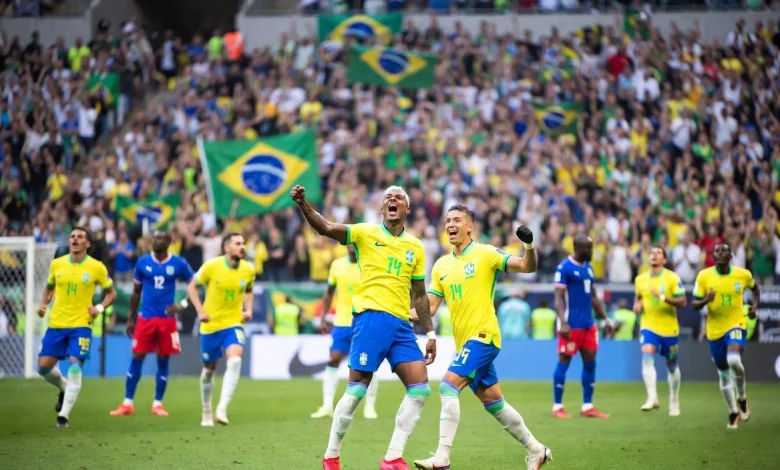
Table of Contents
Haiti’s World Cup journey reached its mathematical conclusion on Friday night at Lincoln Financial Field, as a clinical first-half blitz from five-time world champions Brazil secured a 3-0 victory in Group C. Returning to the global stage for the first time since 1974, the Caribbean nation fought valiantly but ultimately became the first team officially guaranteed not to reach the knockout round of the expanded 48-team 2026 FIFA World Cup. Meanwhile, the Seleção produced the commanding performance they desperately needed under head coach Carlo Ancelotti, bouncing back from a listless 1-1 draw against Morocco in their tournament opener.
The star of the night was Manchester United forward Matheus Cunha, who was handed a starting role after being surprisingly benched in the opening match. Cunha seized his opportunity with both hands, scoring twice in the first half and celebrating with his signature surf-and-slide pose to thrill the massive crowd of 68,324 spectators. Real Madrid superstar Vinícius Júnior also shone, scoring Brazil’s third goal in stoppage time and assisting on Cunha’s second. Despite the heartbreak of elimination, the night was also a celebration of resilience for Haiti, who proved they belonged on the world stage after a 52-year absence.
Haiti’s World Cup Anatomy of the Group C Clash in Philadelphia
The atmosphere inside Lincoln Financial Field—rebranded as Philadelphia Stadium for the 2026 FIFA World Cup—was a vibrant tapestry of culture and passion. Philadelphia and the surrounding tri-state area are home to one of the largest Haitian diaspora communities in the United States, ensuring that while Brazilian supporters made up the bulk of the 68,324 crowd, there were prominent, loud pockets of Haitian blue, red, and white. The stands vibrated with the rhythms of both nations, creating a festive backdrop to a fixture that seemed highly lopsided on paper but was fiercely contested in the stands.
While the Brazilian fans chanted reminders of their illustrious history and their status as five-time champions, shouting, ‘A thousand goals, a thousand goals, a thousand goals! Only Pelé, only Pelé!’, the Haitian fans danced and sang ‘Grenadye Alaso’ (‘Grenadiers to the Attack’), the traditional battle cry of their national team. On the pitch, however, the disparity between the footballing powerhouse and the tournament underdogs quickly became apparent. Under head coach Sébastien Migné, Haiti attempted to maintain a compact shape and frustrate the Brazilians, but the quality of Ancelotti’s side eventually dismantled their defensive organization.
Matheus Cunha Reclaims His Starting Role Under Carlo Ancelotti
Leading up to the match, the primary talking point in the Brazilian camp was the tactical structure of the attack. In their opening 1-1 draw against Morocco, Brazil looked disjointed and lacked penetration in the final third. For that match, Carlo Ancelotti had made the highly debated decision to start Brentford striker Igor Thiago as the central focal point, relegating Matheus Cunha to a late substitute appearance. The listless performance drew heavy criticism from the Brazilian media and fans alike, putting immense pressure on the Italian tactician to make changes.
Ancelotti responded by dropping Igor Thiago and handing the starting role to Cunha, the Manchester United standout. Cunha, who completed a highly publicized transfer to Old Trafford, brought a dynamic, fluid profile to the center-forward position. Rather than acting as a static target man, Cunha continuously drifted into half-spaces, linked play with Vinícius Júnior and Raphinha, and pressed the Haitian backline relentlessly. His inclusion immediately restored the offensive rhythm that the Seleção had lacked, proving that he should have been in the starting lineup from day one.
Inside Brazil’s First-Half Offensive Blitz
The match began with Brazil asserting complete dominance over possession, forcing Haiti deep into their own defensive territory. The Seleção suffered an early setback when winger Raphinha had a goal disallowed for offside, temporarily delaying the celebrations. Shortly after, Raphinha was forced off the pitch with an apparent injury, with young forward Rayan coming on as his replacement. Despite losing one of their key creative outlets, Brazil did not waver and opened the scoring in the 23rd minute, albeit with a touch of fortune.
The breakthrough occurred when Vinícius Júnior cut inside and unleashed a powerful drive that was parried by veteran Haitian goalkeeper Johny Placide. The rebound ricocheted off Haitian defender Hannes Delcroix and then struck Matheus Cunha before trickling over the goal line. While the opener had an element of luck, Cunha’s second goal in the 36th minute was a masterclass in transitional play. Lucas Paquetá won possession in midfield and quickly fed Vinícius Júnior, who delivered a perfectly weighted pass to Cunha. The Manchester United forward took one touch before launching an unstoppable left-footed strike into the upper-left corner of the net, doubling Brazil’s lead.
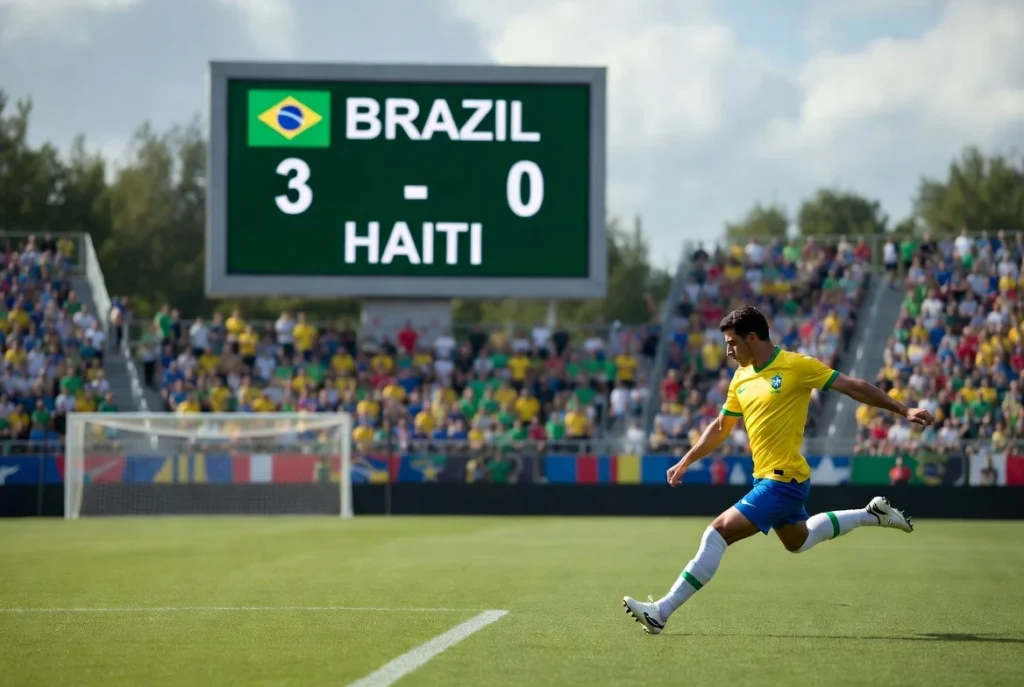
Brazil put the match completely out of reach in the first minute of first-half stoppage time. Paquetá lofted a sublime pass over the high defensive line of Haiti, allowing Vinícius Júnior to beat the offside trap. The Real Madrid forward composed himself, raced clear, and slipped a precise finish through the legs of the helpless Placide to secure a 3-0 halftime lead. The clinical 20-minute blitz left the overmatched Haitians with a mountain to climb and effectively sealed the three points for the Seleção.
Tactical Analysis: How Ancelotti Solved His No. 9 Dilemma
Brazil’s tactical setup against Haiti was significantly more flexible than the rigid system seen against Morocco. Rather than employing a traditional center-forward who remains central, Ancelotti gave Matheus Cunha the freedom to drop deep and rotate positions with Vinícius Júnior. This rotational fluidity created massive defensive headaches for Haiti’s center-backs, Ricardo Adé and Hannes Delcroix, who were constantly dragged out of position. By vacating the central area, Cunha opened up running lanes for Vinícius and Paquetá to exploit.
Furthermore, Ancelotti adjusted the team’s width. With Vinícius Júnior drifting more into the interior channels to act as a second striker, left-back Douglas Santos was instructed to push high and provide the necessary width on the flank. This tactical tweak allowed Brazil to bypass Haiti’s compact mid-block. In the second half, Brazil lowered their intensity to manage their energy and avoid further injuries, but they still managed to control the tempo of the game. The introduction of teenage sensation Endrick, who made his World Cup debut and had a goal ruled out for offside, further highlighted the terrifying depth at Ancelotti’s disposal.
The Heart and Resilience of the Grenadiers
To fully appreciate Haiti’s presence at the 2026 World Cup, one must understand the immense hurdles the nation has overcome. Haiti is widely recognized as the Western Hemisphere’s poorest nation, and the country has been plagued by severe political instability, economic hardship, and rampant gang violence. The situation has been so dire that the national team has not been able to play a competitive match on home soil since June 2021, forcing the team into exile. Head coach Sébastien Migné, who took charge in June 2024, has had to manage the team under extraordinary circumstances, including the fact that he has never even set foot in Haiti due to safety concerns.
Despite these unimaginable challenges, the ‘Grenadiers’ secured direct qualification by topping their group in the Concacaf qualifiers. While their 3-0 defeat to Brazil, combined with Scotland’s 1-0 loss to Morocco, officially eliminated them from the tournament, Migné remained incredibly proud of his squad. After the match, Migné reflected on the achievement, stating, ‘Haiti had not been to a World Cup finals for 52 years. We must not underestimate what it means to return to the biggest stage in world football. We made some naive mistakes against a world-class team, but our players showed they deserved to be here.’ Haiti will now look to play for pride in their final Group C fixture against Morocco.
Injury Concerns and the Impending Return of Neymar Jr.
While the victory restored confidence within the Brazilian camp, it came at a physical cost. Winger Raphinha’s first-half injury is a major concern for Carlo Ancelotti as the tournament progresses. The Barcelona attacker appeared to pull up with a muscular issue and was quickly replaced by Rayan. The medical staff is expected to conduct scans to determine the severity of the injury, but it is highly likely he will be rested for the final group match to avoid compounding the issue.
However, the negative news regarding Raphinha was tempered by a highly encouraging update on Neymar Jr. The nation’s all-time leading goalscorer, who has missed the first two group matches due to a right calf injury, is reportedly on the verge of a return. During his post-match press conference, Ancelotti confirmed that Neymar is expected to resume full training and should be available to play next week against Scotland. Neymar’s return will provide a massive psychological and tactical boost to a side that is starting to find its rhythm at the tournament.
Group C Standings and What Lies Ahead for the Seleção
Following the results of the second round of matches, Group C remains highly competitive. Brazil’s 3-0 victory over Haiti, paired with Morocco’s tight 1-0 win over Scotland, has completely reshaped the standings. Brazil and Morocco are currently tied at the top of the group with four points each, though Brazil holds the advantage on goal difference. Scotland sits in third place with three points, while Haiti remains bottom with zero points and is mathematically eliminated.
The final round of group stage matches will take place next Wednesday. Brazil will travel to Miami to face Scotland at the Hard Rock Stadium, where a draw will be enough to secure passage to the knockout rounds, while a win will put them in prime position to top the group. Morocco will face Haiti in Atlanta, with the North Africans aiming to secure their own spot in the round of 32. For Brazil, the objective remains clear: maintain their defensive solidity, integrate Neymar back into the lineup, and build the momentum necessary for a deep run in the tournament.
Summary of Match Statistics and Performance
The statistical breakdown of the match clearly illustrates the gulf in class between the two teams, although it also highlights a highly disciplined second-half performance by the Haitian defense. After conceding three goals in the first half, Sébastien Migné’s side tightened their lines and limited Brazil to just two shots after the interval, both of which were off-target. Haiti even threatened Alisson Becker’s goal in the 63rd minute when Ricardo Adé won a header from a corner, forcing a brilliant reflex save from the Liverpool goalkeeper.
| Statistic | Brazil | Haiti |
|---|---|---|
| Goals | 3 | 0 |
| Shots (Total) | 14 | 5 |
| Shots on Target | 6 | 1 |
| Possession (%) | 62% | 38% |
| Pass Accuracy (%) | 89% | 76% |
| Corners | 7 | 3 |
| Fouls Committed | 11 | 14 |
| Saves | 1 | 3 |
For more detailed updates and official tournament coverage, fans can visit the FIFA Official Website. Ultimately, the match served as a crucial turning point for Brazil’s World Cup ambitions. The Seleção found their scoring touch, resolved their tactical dilemmas, and successfully navigated a high-pressure fixture. For Haiti, the tournament may be coming to an end, but the memories of their historic qualification and the pride they brought to their nation will endure long after the final whistle in Philadelphia.