Superyacht Nord Navigates Hormuz Strait Amid Russian-Iran Pact
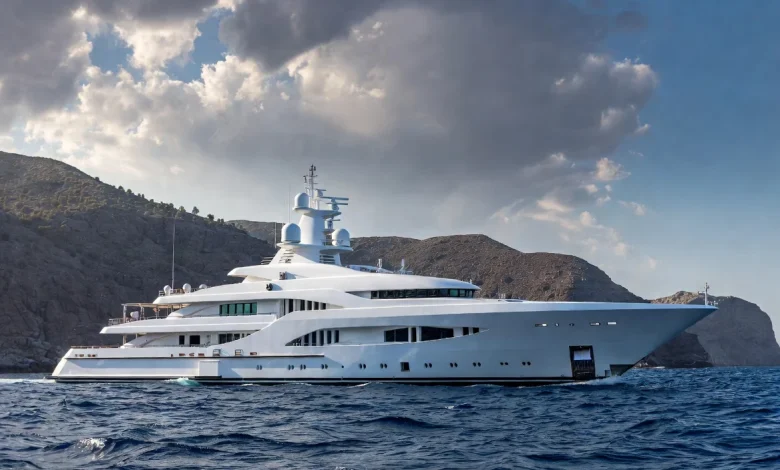
Superyacht Nord just accomplished a maritime feat that heavily armed commercial vessels, global shipping conglomerates, and international energy tankers are currently failing to do: it sailed unimpeded through the heavily contested and effectively blocked Strait of Hormuz. As global markets panic over the closure of one of the world’s most critical maritime chokepoints, this $500 million, 465-foot floating palace—complete with a swimming pool, helipad, and onboard submarine—glided peacefully from Dubai to Oman over the weekend. The vessel is widely linked to Alexey Mordashov, a heavily sanctioned Russian billionaire with an estimated net worth of $37 billion and notoriously close ties to Russian President Vladimir Putin. At a time when the world watches the Hormuz blockade threaten to collapse the global economy, the uninterrupted voyage of the Nord is a stunning geopolitical flex that highlights the rapidly solidifying strategic alliance between Moscow and Tehran.
Superyacht Nord: The $500 Million Vessel Sailing Through Danger
Constructed by the legendary German shipyard Lürssen, the Superyacht Nord is a masterclass in modern marine engineering and opulent luxury. Measuring an astonishing 142 meters (465 feet) in length, the vessel features an exterior and interior design penned by the acclaimed Italian studio Nuvolari Lenard. Its profile is unmistakable, often described as resembling an elegant warship mixed with a billionaire’s private playground. Equipped with two helipads, a massive swimming pool, a cinema, and its own submarine for deep-sea exploration, the Nord is designed for ultimate self-sufficiency and unparalleled luxury.
However, the true significance of the Nord lies not in its lavish amenities, but in its current coordinates. Navigating the Strait of Hormuz is presently considered one of the most perilous endeavors in global shipping. The waters are heavily monitored and aggressively patrolled by the Islamic Revolutionary Guard Corps (IRGC), who have recently imposed a severe blockade on international maritime traffic. Despite these profound dangers, the Nord was granted safe passage, a stark contrast to the fate of Western-aligned vessels that have faced immediate harassment, boarding, or forced rerouting.
Alexey Mordashov and the Sanctioned Russian Elite
To understand the diplomatic immunity seemingly afforded to this vessel, one must examine its purported owner. Alexey Mordashov is the primary shareholder and chairman of Severstal, Russia’s largest steel and mining company. With a staggering net worth hovering around $37 billion, Mordashov is a central figure in the Russian economic elite. Following the geopolitical fallout of recent years, Mordashov was heavily targeted by Western economic penalties, landing prominently on the sanctions lists of the United States, the European Union, and the United Kingdom.
These sanctions were designed to freeze his assets, restrict his movement, and impound his luxury properties—including the Superyacht Nord. By navigating the vessel through jurisdictions sympathetic to Russian interests, such as the United Arab Emirates, Oman, and specifically the Iranian-controlled corridors of the Strait of Hormuz, Mordashov and his crew have successfully insulated the $500 million asset from Western seizure. The sheer audacity of sailing through a global flashpoint underscores a profound reality: international sanctions are increasingly ineffective when sanctioned nations form a cohesive, parallel block.
The Strategic Timing of the Dubai to Oman Voyage
The weekend voyage from Dubai to Oman occurred against a backdrop of unprecedented regional instability. For weeks, the international community has grappled with the volatility of the Strait of Hormuz crisis, attempting to negotiate a reopening of the vital trade artery. Dubai, long considered a safe haven for Russian wealth in the post-sanctions era, served as the launching point. The destination, Oman, maintains a unique position of neutrality and back-channel diplomacy in the Middle East.
Defying Geopolitical Tensions in the Middle East
The routing required the Nord to pass directly through the narrowest sections of the Strait of Hormuz, where Iranian fast-attack craft operate with near impunity. The decision to undertake this voyage during peak hostilities was almost certainly cleared at the highest levels of the Iranian government. It serves as a visual and undeniable testament to the world that Iran has total control over who is permitted to transit the strait and who is denied. While Western cargo ships idle hundreds of miles away in fear of interception, the Russian oligarch’s pleasure craft sails like nothing is happening.
The Moscow-Tehran Axis Deepens During the Blockade
The safe passage of the Nord cannot be viewed as an isolated maritime anomaly; it is deeply intertwined with the highest levels of bilateral diplomacy taking place concurrently. Just as the yacht was making its way toward the Gulf of Oman, Iran’s Foreign Minister was in St. Petersburg, holding high-stakes meetings with Russian President Vladimir Putin. These meetings represent the culmination of years of deepening military, economic, and political ties between the two heavily sanctioned regimes.
Diplomatic Engagements in St. Petersburg
The St. Petersburg summit was framed around mutual resistance to Western hegemony. While official press releases spoke of trade corridors, technological exchange, and cultural ties, analysts universally agree that the primary focus was military cooperation and sanctions evasion. Russia relies on Iranian military hardware, notably suicide drones and ballistic missile technology, to sustain its geopolitical maneuvers in Eastern Europe. In return, Iran gains access to advanced Russian air defense systems, cyber capabilities, and, crucially, diplomatic cover on the UN Security Council.
Putin Hails Iran’s Courageously Fighting Spirit
During the summit, Putin made headlines by explicitly praising the Iranian populace, calling them “courageously fighting” in the face of international pressure. He hailed the “strategic relationship” between Moscow and Tehran, elevating Iran from an opportunistic partner to a core pillar of Russia’s anti-Western geopolitical strategy. This public endorsement provides immense domestic legitimacy to the Iranian leadership during a period of intense economic strife, as highlighted by ongoing challenges within Iran’s domestic economy. The contrast is sharp: while the Iranian people endure crushing inflation and isolation, their leadership facilitates the luxurious transit of their strategic partner’s elite.
The Floating Palace: Inside the 465-Foot Marvel
Returning to the vessel itself, the Superyacht Nord is a technological marvel that defies conventional maritime limitations. Its bow features a unique, enclosed design aimed at deflecting heavy seas, an engineering choice that gives the yacht an aggressive, militaristic silhouette. Inside, the vessel boasts 20 luxury cabins capable of accommodating up to 36 guests, serviced by a highly trained crew of over 40 personnel. The presence of a submarine and a heavily fortified tender garage means the vessel is equipped for both extreme luxury and high-security extraction if necessary.
Its transit through the Strait of Hormuz required advanced logistical planning. Given the heavily sanctioned status of its presumed owner, the Nord cannot utilize traditional Western marine insurance, nor can it rely on conventional refueling networks. Its ability to source maritime fuel (bunkering), secure port clearances, and navigate international waters relies entirely on a shadow network of allied states and non-compliant maritime service providers. This network operates entirely outside the oversight of the Office of Foreign Assets Control (OFAC) and its European equivalents.
Implications for Global Trade and International Sanctions
The real-time divergence between the fate of the Superyacht Nord and global commercial shipping is starkly illustrative of a fracturing global order. As the Nord sailed effortlessly past the Musandam Peninsula, standard commercial freighters were being forced into thousands of miles of costly detours. This rerouting is directly responsible for the surging European natural gas futures triggered by the Hormuz closure, as well as a spiraling supply chain crisis.
Maritime Transit Comparison in the Hormuz Strait
| Vessel Type | Ownership Status | Sanctions Status | Hormuz Passage Status |
|---|---|---|---|
| Commercial Freighters | Western / Global Conglomerates | None | Blocked / Harassed by IRGC |
| Superyacht Nord | Russian Oligarch (A. Mordashov) | Heavy US/EU Sanctions | Safe / Uninterrupted Transit |
| LNG Tankers | European / Asian Energy Firms | None | Rerouted / Severely Delayed |
| IRGC Fast Patrols | Iranian State Military | Heavy US Sanctions | Dominant / Controlling Waterway |
How Shifting Alliances Reshape the Global Economy
The table above paints a grim picture for Western economic interests. The global economy relies heavily on the free flow of goods through chokepoints like the Strait of Hormuz, which traditionally sees roughly 20% of the world’s oil consumption pass through its waters daily. When this flow is disrupted, the downstream effects are devastating, raising the specter of a scenario where the global food supply collapses under the weight of surging transport costs and energy shortages. Yet, for nations operating outside the US-led financial system, alternative arrangements are seamlessly executed. Iran guarantees safe passage to Russian vessels, effectively weaponizing geography against the West while protecting its autocratic allies.
Analyzing the Geopolitical Repercussions of the Voyage
The journey of the Superyacht Nord from Dubai to Oman is far more than a simple relocation of a billionaire’s toy. It is a highly visible, undeniable indicator of a new geopolitical reality. The United States and its European allies have spent decades refining a system of economic sanctions meant to isolate rogue states and penalize their oligarchs. However, as the world witnesses the uninterrupted sailing of a $500 million, sanctioned Russian superyacht through a heavily blockaded, Iranian-controlled maritime chokepoint, the limitations of those Western tools are glaringly exposed.
The “strategic relationship” that Putin so enthusiastically praised in St. Petersburg is manifesting in real, tactical advantages on the high seas. Iran receives vital backing on the global stage and crucial military imports, while Russian elites maintain access to warm-water playgrounds and secure transit routes beyond the reach of Western navies. Sometimes the alliance writes itself, broadcasted via a 465-foot floating palace gliding through the center of a global crisis while the rest of the world scrambles to adapt to a deeply disrupted global economy.