Beqaa Valley Strikes: IDF Hits 20 Hezbollah Targets Amid Truce Claims
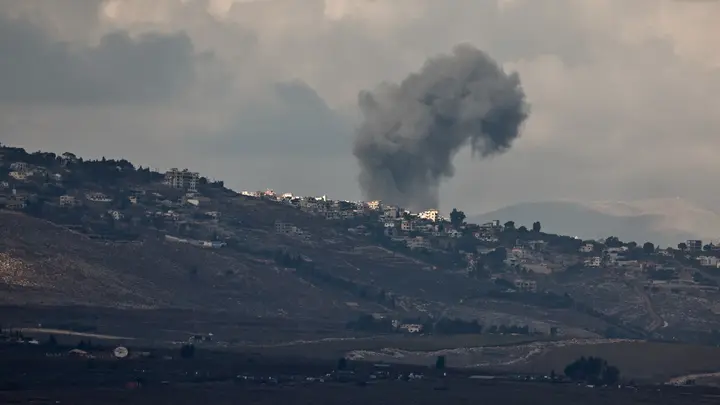
Beqaa Valley operations have dramatically intensified, signaling a profound shift in Middle Eastern geopolitics and modern military engagement. Ceasefire or not, the Israel Defense Forces (IDF) have executed an unprecedented, sweeping offensive, striking over 20 high-value Hezbollah targets across southern Lebanon and the Beqaa Valley in a single, highly coordinated operation. Weapons manufacturing sites, subterranean storage facilities, disguised launch positions, and expansive military infrastructure were all systematically targeted and dismantled by precision airstrikes. The Beqaa Valley is the focal point and the key detail in this sudden escalation. Historically acting as Hezbollah’s strategic rear, this rugged region hosts the organization’s critical supply lines, advanced weapons depots, and the notorious Iranian smuggling corridors that keep their vast military apparatus functioning. Hitting these locations signifies that Israel is no longer content with merely suppressing border skirmishes; the IDF is actively dismantling the very backbone of Hezbollah’s military capacity, aiming to permanently degrade the militant group’s ability to wage sustained warfare.
The Strategic Importance of the Beqaa Valley
The Beqaa Valley is far more than just a geographical expanse; it is the logistical heart and central nervous system of Hezbollah’s sprawling military enterprise. Bordering Syria to the east, the valley serves as an overland bridge connecting Tehran, through Iraq and Syria, directly into the hands of militants in Lebanon. This strategic depth provides Hezbollah with a sanctuary situated far enough from the Israeli border to historically evade localized tactical strikes, yet connected enough to maintain a steady flow of munitions to the southern front. The complex topography of the Anti-Lebanon mountain range offers natural cover for subterranean bunkers and concealed missile silos. When the IDF chose to execute deep strikes into the Beqaa Valley, they effectively signaled a paradigm shift. They are bypassing the tactical skirmishes of the frontier to strike at the foundational infrastructure that allows Hezbollah to function as a regional paramilitary powerhouse. By severing these vital arteries, the IDF aims to suffocate the frontline fighters, starving them of the rockets, drones, and anti-tank guided missiles (ATGMs) required to maintain their offensive posture.
Dissecting the 20 Hezbollah Targets
Analyzing the scope of the recent IDF operation reveals a meticulous and highly calculated targeting strategy. Striking over 20 targets in a single coordinated wave requires immense intelligence gathering, aerial supremacy, and synchronized execution. These targets were not arbitrary field outposts; they comprised heavily fortified weapons manufacturing plants, expansive underground storage complexes, command and control nodes, and pre-staged launch positions designed for rapid deployment. The destruction of these specific assets indicates a deep infiltration of Hezbollah’s operational security. Israeli intelligence likely mapped out these facilities over months or years, waiting for the optimal moment to maximize the degradation of Hezbollah’s capabilities. Each neutralized site represents a massive financial and logistical loss for the militant group, setting their operational readiness back by a significant margin. The precision of these strikes minimizes collateral damage while maximizing the strategic disruption of militant networks.
Iranian Smuggling Corridors Compromised
At the core of Hezbollah’s power is its reliance on the Islamic Revolutionary Guard Corps (IRGC) Quds Force for financing, training, and armament. The Beqaa Valley is the primary terminus for the sophisticated Iranian smuggling corridors that traverse the Levant. These overland routes are utilized to transport everything from small arms to components for Precision Guided Munitions (PGMs). By targeting the infrastructure within the Beqaa Valley, the IDF is directly confronting Iranian influence in the region, disrupting the seamless transfer of advanced weaponry. The loss of these smuggling hubs creates a severe logistical bottleneck. Hezbollah must now attempt to rebuild these networks under the constant threat of aerial surveillance and immediate kinetic strikes, fundamentally altering the risk calculus for Iranian operatives facilitating the transfer of arms.
| Target Category | Primary Location | Strategic Impact | IDF Objective |
|---|---|---|---|
| Weapons Manufacturing Sites | Northern Beqaa | Halts local production of PGMs and drones. | Prevent indigenous armament capabilities. |
| Subterranean Storage Depots | Central Beqaa | Destroys stockpiles of long-range ballistic missiles. | Neutralize immediate existential threats to Israeli cities. |
| Command and Control Nodes | Southern Lebanon | Disrupts real-time communication and tactical coordination. | Decapitate localized militant leadership. |
| Smuggling Corridors | Syrian Border Region | Severs the logistical lifeline from Tehran. | Isolate Hezbollah from international resupply. |
IDF’s Shift in Military Doctrine
The decision to conduct a massive, multi-target strike deep within Lebanese territory underscores a definitive shift in the IDF’s military doctrine. For years, the unwritten rules of engagement between Israel and Hezbollah dictated a proportional response, largely confined to the immediate border regions of southern Lebanon and northern Israel. However, the sheer scale of targeting the Beqaa Valley demonstrates an abandonment of this reciprocal containment strategy in favor of preemptive degradation. The IDF is leveraging its technological superiority and intelligence dominance to fundamentally rewrite the rules of deterrence. This aggressive posture aims to achieve what the IDF refers to as ‘campaigns between the wars,’ a continuous effort to degrade enemy capabilities before a full-scale conventional conflict erupts. The magnitude of this operation sends an unequivocal message: there are no safe havens, and the traditional red lines regarding geographic depth have been completely erased.
Weapon Manufacturing Sites Neutralized
Among the most critical assets destroyed in the Beqaa Valley were localized weapons manufacturing facilities. In recent years, Hezbollah, with Iranian assistance, has transitioned from merely importing finished weapons to assembling them domestically. This shift was designed to mitigate the risks associated with the long and vulnerable overland smuggling routes. By establishing underground factories capable of retrofitting unguided rockets with precision guidance systems, Hezbollah aimed to create a massive arsenal capable of overwhelming Israel’s Iron Dome and David’s Sling air defense systems. The obliteration of these manufacturing hubs is a devastating blow. It not only destroys millions of dollars in advanced machinery and components but also forces Hezbollah to revert to riskier, more exposed methods of acquiring advanced munitions, exposing their supply chain to further Israeli interdiction.
The Impact on Southern Lebanon
While the Beqaa Valley serves as the strategic rear, southern Lebanon remains the tactical vanguard. The cascading effects of the Beqaa strikes are immediately felt on the southern front. Without a reliable influx of munitions and logistical support from the north, frontline Hezbollah units face critical supply shortages. This logistical starvation diminishes their ability to sustain high-intensity rocket barrages and compromises their defensive fortifications. Furthermore, the broader civilian and geographical consequences are immense. The continuous military pressure has radically altered the demographic and security landscape, reminiscent of the recent military blockade isolating 55 Lebanese villages. The destabilization of the south creates a volatile environment, exacerbating the humanitarian crisis and complicating any future efforts to establish a demilitarized zone as envisioned by international resolutions.
Ceasefire Claims vs. Military Reality
The timing of these extensive strikes presents a stark contrast to ongoing diplomatic narratives regarding a potential ceasefire. While political figures and international mediators discuss the prospects of a truce, the military reality on the ground tells a vastly different story. The IDF’s willingness to execute such a massive operation amidst ceasefire murmurs suggests a strategic calculation: military leverage must precede diplomatic concessions. By degrading Hezbollah’s core infrastructure, Israel ensures it negotiates from a position of overwhelming strength. This dynamic severely complicates the political landscape, mirroring the political tensions surrounding the Lebanon summit, where diplomatic optics often clash with stark geopolitical realities. For a ceasefire to hold any actual value, it must be predicated on a tangible shift in the balance of power, a shift the IDF is aggressively engineering through kinetic action in the Beqaa.
Analyzing Hezbollah’s Supply Lines
The destruction of over 20 critical targets necessitates a comprehensive reevaluation of Hezbollah’s supply line resilience. The militant group has historically demonstrated an impressive ability to adapt to Israeli interdictions, utilizing dual-use civilian infrastructure, subterranean tunnel networks, and heavily disguised convoys. However, the scale of the recent strikes, particularly those relying on deep-penetration intelligence, exposes fundamental vulnerabilities in their logistical apparatus. The precision of these operations is heavily dependent on actionable, real-time data, often gathered through sophisticated espionage and targeted Israeli intelligence strikes. Moving forward, Hezbollah will be forced to implement extreme operational security measures, likely slowing down the pace of resupply and restricting the movement of key personnel, thereby degrading their overall operational tempo and combat effectiveness.
Regional Escalation and Global Fallout
The reverberations of the Beqaa Valley strikes extend far beyond the borders of Lebanon and Israel. The systematic targeting of Iranian-backed infrastructure directly challenges Tehran’s regional hegemony and the broader ‘Axis of Resistance.’ This aggressive dismantling of proxy capabilities places immense pressure on Iran to respond, raising the specter of a wider regional conflagration involving Syria, Iraq, and potentially the Persian Gulf. International observers, including independent geopolitical analysts, have noted that the threshold for a broader war is perilously low. The global community watches with bated breath, as any miscalculation or disproportionate retaliation could trigger a chain reaction, disrupting global energy markets, destabilizing neighboring regimes, and necessitating immediate and potentially massive interventions from global superpowers deeply invested in Middle Eastern stability.
Future Implications for the Levant
Looking ahead, the permanent degradation of the Beqaa Valley’s military infrastructure fundamentally alters the security architecture of the Levant. If Hezbollah cannot securely rebuild its strategic rear, its ability to project power and dictate terms in Lebanese domestic politics will wane. This potential power vacuum could lead to profound internal realignments within Lebanon, offering an opportunity for state institutions to reclaim sovereignty, or conversely, plunging the nation into deeper factional strife. The civilian toll remains an enduring tragedy, with entire communities, such as the Lebanese Christians trapped in the crossfire, bearing the brunt of this protracted conflict. Ultimately, the IDF’s recent offensive represents a defining moment in the modern history of the region—a clear indication that the geopolitical status quo has been irreversibly shattered, setting the stage for a new, highly volatile era in the Middle East.