Syria Peace Talks: Al-Sharaa Confirms Active Israel Negotiations
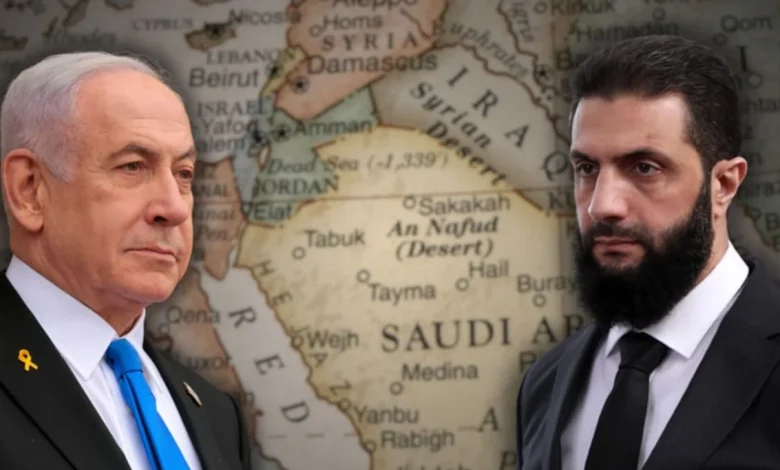
Syria has officially embarked on what many international observers consider the most astonishing geopolitical pivot of the twenty-first century. Emerging from the ashes of a protracted and devastating civil conflict, the nation is now engaging in high-stakes bilateral negotiations with Israel. Following the historic collapse of former President Bashar al-Assad’s regime in December 2024, the political vacuum paved the way for sweeping territorial and diplomatic shifts. Leading the charge for a new diplomatic era, prominent official Al-Sharaa recently delivered a definitive statement clarifying that ongoing negotiations with Israel are far from deadlocked. By declaring that the newly formed administration is deeply serious about finalizing a comprehensive security agreement, Al-Sharaa has injected unprecedented optimism into an otherwise highly volatile region. However, this optimism is tempered by stark realities on the ground, notably the territorial seizures near the Golan Heights and entrenched red lines concerning national sovereignty.
Syria Enters a Historic Chapter in Middle Eastern Diplomacy
The contemporary political landscape of the Middle East is undergoing seismic transformations, and the current administration in Damascus is at the epicenter of this shift. Decades of hostility and an absence of formal diplomatic relations between these two bordering states had solidified into what seemed to be an intractable conflict. Yet, the rapid sequence of events culminating in late 2024 has fundamentally rewritten the rules of engagement. As the Assad regime fell, the traditional axes of power, proxy influences, and entrenched military postures dissolved almost overnight. The new leadership immediately faced a dual mandate: stabilizing an internally fractured country while neutralizing existential threats at its borders. Entering into direct, unmediated peace talks represents a pragmatic realization that domestic reconstruction is practically impossible without external border security. This pragmatic pivot highlights a mature approach to statecraft, prioritizing the survival and revival of the nation over historical ideological entrenchments.
The Astonishing Transition From Civil War to Bilateral Talks
Transitioning from over a decade of brutal civil war directly into serious peace negotiations in under eighteen months is a diplomatic miracle. Historically, post-conflict nations require years, if not decades, to establish internal consensus before engaging historical adversaries. The urgency of this timeline underscores the severe economic and infrastructural desperation within Damascus. The leadership understands that prolonged instability invites further foreign intervention and proxy warfare. By seizing the initiative to negotiate, they aim to short-circuit the cycle of violence. This transition has demanded remarkable political agility. The new governing coalition had to swiftly consolidate military control, marginalize radical elements opposed to dialogue, and present a unified, credible front to international mediators and Israeli counterparts. This rapid evolution demonstrates a profound desire to rejoin the international community as a stabilizing force rather than a perennial battleground.
The Golan Heights Dispute: Territory Seized After Assad’s Fall
Context matters significantly when evaluating the current negotiation parameters. Following the sudden collapse of the Assad government in December 2024, Israeli Defense Forces (IDF) swiftly advanced, seizing strategic swaths of territory in southern Syria near the pre-existing lines of the Golan Heights. Israel justified this rapid military incursion as a necessary preemptive measure to secure its northern frontier against chaos, rogue militant factions, and the potential influx of hostile actors filling the power vacuum. This new buffer zone has drastically altered the tactical map. For decades, the 1974 disengagement line had been relatively stable, monitored by United Nations peacekeepers. The post-Assad territorial adjustments have effectively erased those old boundaries, creating a new, highly contested status quo that forms the primary friction point of current diplomatic talks.
Demands for Complete Territorial Withdrawal
From the onset of these back-channel discussions, the administration in Damascus has remained steadfast in its primary demand: the complete, unconditional withdrawal of Israeli military forces from all newly occupied Syrian territories seized post-December 2024. For the new government, compromising on territorial integrity so early in its tenure would be politically suicidal, risking massive domestic backlash and delegitimizing their authority. The demand for full withdrawal is framed not just as a matter of national pride, but as an absolute requirement for exercising sovereign control over the country’s southern agricultural and water-rich regions. They argue that maintaining a permanent foreign military presence within these borders inherently violates international law and sabotages any foundation of mutual trust necessary for a lasting peace treaty.
Al-Sharaa’s Declaration: Negotiations Are Not at a Dead End
Amidst swirling rumors of stalled talks and irreconcilable differences, Al-Sharaa’s recent public address served as a vital corrective. By explicitly stating that negotiations are “not at a dead end,” he signaled to both domestic constituencies and international stakeholders that back-room progress is actively occurring. He emphasized that the government is earnestly “serious about a security agreement,” a phrase carefully chosen to resonate with Israeli security planners. This declaration aims to cut through the hostile rhetoric, demonstrating a willingness to engage constructively on the exact mechanisms of border security. It is a calculated move to prevent escalation, keeping the diplomatic channels energized and buying crucial time for mediators to bridge the substantial gaps between both nations’ core demands.
Israeli Security Guarantees vs. Syrian Sovereignty
The crux of the negotiation impasse lies in the classic geopolitical trade-off between the security imperatives of one state and the sovereign rights of another. Israel categorically refuses to relinquish the strategic high ground and buffer zones it captured without ironclad, verifiable security guarantees. Tel Aviv demands mechanisms that ensure the southern region remains entirely demilitarized, preventing any resurgence of militant infrastructures or advanced weapons deployment. Conversely, Damascus views these extensive security demands—which reportedly include rights for ongoing Israeli aerial surveillance and potential unilateral enforcement actions—as unacceptable infringements on its sovereignty. Reconciling Israel’s demand for absolute security with Syria’s red line on absolute sovereignty requires highly creative diplomatic architecture, possibly involving neutral third-party enforcement or unprecedented technological monitoring solutions.
What is at Stake: Stability in the Southern Region
The outcomes of these negotiations carry monumental consequences for the broader Levant. A successful security agreement could immediately stabilize the volatile southern theater, ending the daily threat of border skirmishes and artillery exchanges. For the civilian populations returning to these war-torn regions, an agreement means the difference between rebuilding their lives or facing perpetual displacement. Furthermore, securing the southern border is inherently linked to broader regional security dynamics. This regional fragility is underscored by recent diplomatic maneuvers, such as when Israel navigated broader US-Iran peace talks, demonstrating a pattern of complex multipolar negotiations where border agreements in one nation directly impact peace viability in another. Stability here removes a major flashpoint from an already overcrowded powder keg.
Halting Israeli Strikes and Giving Damascus Room to Rebuild
Perhaps the most immediate and tangible benefit of a formalized security pact for the newly formed administration would be the cessation of routine Israeli airstrikes across the country. For over a decade, Israel has conducted hundreds of strikes against suspected militant strongholds and weapons convoys within the nation’s borders. These operations have continually degraded critical national infrastructure, including airports, seaports, and transit hubs. A comprehensive agreement that guarantees the eviction of proxy forces and prevents weapons proliferation would theoretically end these bombardments. Halting these strikes is the absolute prerequisite for Damascus to begin serious, large-scale reconstruction. International donors, the World Bank, and foreign investors require a secure, predictable environment before committing the hundreds of billions of dollars necessary to rebuild cities, power grids, and basic civilian services. A peace deal gives Damascus this desperately needed breathing room.
Comparative Analysis of Core Diplomatic Demands
To fully understand the complexities of the ongoing negotiations, it is essential to map the divergent objectives of both parties. The following table outlines the fundamental pillars of the negotiation and where both states currently stand.
| Diplomatic Pillar | Syrian Core Demands | Israeli Conditions |
|---|---|---|
| Territorial Control | Full, unconditional withdrawal from post-2024 seized lands near the Golan Heights. | Retention of key strategic buffer zones until long-term peace is verifiable. |
| Military Posture | Restoration of national armed forces to the border to enforce national sovereignty. | Strict demilitarization of the southern region; zero tolerance for advanced weaponry. |
| Airspace Sovereignty | Complete halt to all unauthorized foreign military flights and airstrikes. | Maintained rights for aerial reconnaissance and preemptive strikes if threats emerge. |
| Third-Party Presence | International aid workers and standard UN peacekeeping monitors (UNDOF model). | Expulsion of all foreign militant proxies and robust, armed international enforcement. |
Potential Deal Breakers and Regional Implications
Despite the earnestness expressed by Al-Sharaa, several formidable obstacles could torpedo the negotiations. If Israel rigidly insists on permanent annexation or extended military occupation of the post-2024 territories, Damascus will have no choice but to abandon the talks to preserve its internal legitimacy. Such demands act as a stark reminder of sweeping territorial ambitions, echoing regional anxieties similar to when an Israeli partition plan demanded specific buffer zones in neighboring Lebanese territories. Any perception that the new government is capitulating to territorial partition would quickly spark internal rebellion and potentially trigger a renewed, fragmented civil conflict. Conversely, if Damascus cannot effectively prove it has the capability to rein in rogue factions operating in its southern provinces, Israeli negotiators will refuse to budge, viewing withdrawal as an unacceptable security risk.
The Geopolitical Domino Effect Across the Levant
The negotiations are not occurring in a vacuum; they are intimately tied to the broader geopolitical architecture of the Middle East. The success or failure of these talks will send shockwaves through neighboring capitals. If an agreement is forged, it could serve as a template for other frozen conflicts, encouraging regional normalization. However, if talks collapse, the interconnectedness of the Levantine security apparatus means that any misstep could ignite broader conflicts, a warning prominently echoed when regional powers cautioned against excluding allied nations from regional ceasefires. The integration of this specific bilateral track with broader diplomatic pushes is crucial, reminiscent of high-level ceasefire discussions across the Middle East that aim to establish a synchronized, comprehensive peace network. Furthermore, according to deep diplomatic assessments and reports from the International Crisis Group on Middle Eastern security architectures, piecemeal agreements that ignore the holistic regional balance often fail in the long term.
The Path Forward for Security and Peace
Navigating the complex labyrinth of post-war diplomacy requires both immense courage and strategic foresight. Al-Sharaa’s insistence that talks remain viable is a critical anchor for hope in an otherwise turbulent era. By focusing on practical security arrangements rather than insurmountable ideological differences, both nations have a narrow but achievable pathway to stability. The requirement now is for quiet, persistent diplomacy, backed by reliable international guarantors who can offer the technical and financial support needed to enforce a demilitarized zone while respecting national borders. If the political will holds, the resulting treaty could finally end decades of animosity, close the dark chapter of civil war, and inaugurate an era of focused rebuilding, economic revitalization, and enduring peace for millions of citizens desperate for a stable future.