Jet fuel crisis: Europe Airlines Face 6-Week Supply Warning
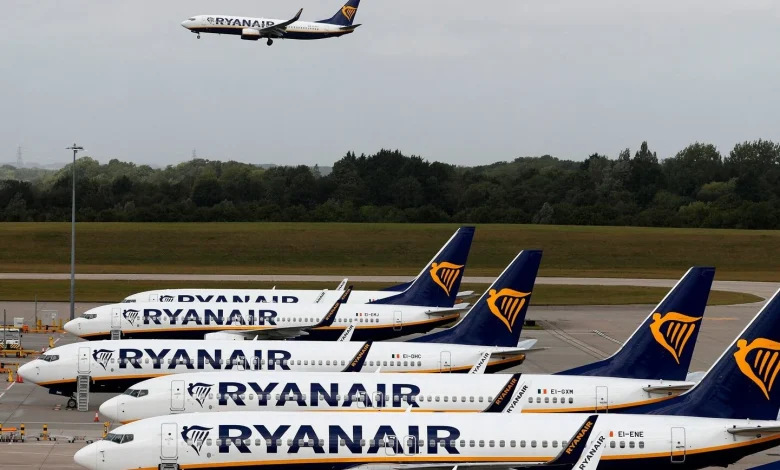
Jet fuel crisis is currently dismantling the global aviation network, leaving Europe’s airlines with a terrifying countdown clock of roughly six weeks of operational fuel reserves left. With the crucial summer travel season scheduled to begin in exactly five weeks, the aviation industry is staring down the barrel of an unprecedented catastrophe. The geopolitical turmoil stemming from the Iran war and the complete closure of the Strait of Hormuz has sent shockwaves through the petroleum supply chain, targeting the most vulnerable refined product on the market: aviation turbine fuel. As prices have violently surged by over 70 percent since the outbreak of hostilities, the collateral damage is already manifesting in mass flight cancellations, airline subsidiary bankruptcies, and sovereign export bans. Millions of prospective vacationers are entirely unaware that the structural foundation of commercial flying is currently buckling under geopolitical pressure.
The Scope of the Aviation Energy Emergency
The global energy infrastructure is deeply interconnected, and the sudden disruption of the world’s most critical maritime oil corridor has triggered what experts are calling a catastrophic market failure for middle distillates. The Strait of Hormuz is the primary artery for crude oil that eventually feeds European refineries. Without this constant influx of raw petroleum, the highly calibrated operational models of global airlines disintegrate. Aviation operates on razor-thin margins where fuel constitutes the single largest variable operating cost. When access to this vital resource is choked off, the systemic shock extends far beyond the immediate geography of the Middle East conflict. The sheer financial magnitude of this geopolitical disaster is continuously expanding, echoing the grim forecasts detailed in the trillion-dollar Iran war Harvard expert forecasts huge cost analysis. We are witnessing an unparalleled erosion of global mobility, where entire fleets may be grounded simply because the highly specific fuel required to achieve thrust is no longer commercially viable or physically available in required volumes.
Fatih Birol and the IEA’s Dire Warning
The severity of the situation was explicitly articulated by Fatih Birol, the Executive Director of the International Energy Agency (IEA), who issued a chilling statement regarding the immediate future of the energy sector. Birol has publicly classified this event as the "largest energy crisis we have ever faced," a declaration that effectively overshadows the historic oil shocks of the 1970s and the turbulent markets of 2008. The IEA’s data indicates that the 70 percent price surge in jet fuel is not merely speculative; it is fundamentally driven by hard supply constraints and the immediate depletion of strategic commercial reserves. Birol’s warning underscores a terrifying reality: European airlines have historically relied on continuous, just-in-time fuel deliveries to their major hub airports. With supply chains severed, the mathematical reality of having only six weeks of inventory while facing a massive spike in summer demand creates an unsolvable equation for airline executives.
Why Only 10 Percent of Crude Oil Matters Here
To comprehend the unique vulnerability of the aviation sector, one must understand the complex thermodynamics of petroleum refining. What most consumers entirely fail to realize is that only about 10 percent of a standard barrel of crude oil can be successfully refined into jet fuel (specifically Jet A-1 or kerosene). During fractional distillation, crude oil is heated and separated by boiling points. The kerosene fraction, which sits between the lighter gasoline and heavier diesel fractions, is relatively narrow. Refineries cannot simply command their distillation columns to produce significantly more jet fuel without throwing their entire production matrix out of economic balance. Therefore, a massive disruption in total crude volume disproportionately squeezes this narrow 10 percent margin. When crude oil stops flowing through the Strait of Hormuz, the volume of aviation fuel plummets instantly, creating a bottleneck that cannot be solved by tapping into strategic petroleum reserves, which are largely unrefined crude. This refining bottleneck is the invisible crisis threatening the summer sky.
Major European Airlines Resort to Drastic Cuts
The corporate response across Europe’s legacy carriers and low-cost titans has been a mixture of panic, aggressive consolidation, and severe operational contraction. As the overarching European energy crisis EC urges remote work and renewables policy framework attempts to address broader electricity and heating demands, the aviation sector has been largely left to fend for itself against ruthless market forces. Airlines are currently bleeding cash at a rate that is forcing executive boards to make devastating, long-term structural decisions just to survive the next financial quarter.
| Airline / Region | Current Impact | Strategic Response |
|---|---|---|
| Lufthansa | Closure of CityLine regional subsidiary | Consolidation and drastic capacity cuts |
| KLM | 160 flights cancelled next month | Network restructuring and route suspension |
| Ryanair | Severe summer capacity warnings | Schedule optimization and fare increases |
| EasyJet | Projecting $758M losses in first half | Emergency financial restructuring |
| China & Thailand | Complete halt of jet fuel exports | Domestic supply protectionism |
Lufthansa Shuts Down CityLine Subsidiary
In a shocking move that highlights the severity of the crisis, the German aviation giant Lufthansa has abruptly shut down its entire regional subsidiary, Lufthansa CityLine. This is not a temporary suspension; it is a complete dissolution of a crucial feeder network that connects secondary European cities to primary international hubs. The decision was purely mathematical: the operational cost per available seat mile (CASM) for regional jets, which inherently consume more fuel per passenger than large wide-body aircraft, became completely unsustainable under the new 70 percent price premium. By eliminating CityLine, Lufthansa is desperately attempting to ring-fence its core long-haul and main trunk operations, sacrificing regional connectivity to preserve its rapidly dwindling fuel reserves for high-margin routes.
KLM, Ryanair, and EasyJet Financial Hemorrhaging
The contagion of the supply shock has spread rapidly. KLM Royal Dutch Airlines has preemptively slashed 160 flights from its schedule for the upcoming month, a direct admission that it cannot secure enough fuel to execute its planned network. Similarly, Ryanair, Europe’s largest low-cost carrier, has issued stark warnings to investors and passengers alike regarding unprecedented summer capacity cuts. Ryanair’s highly aggressive business model relies on keeping aircraft continuously in the air; when fuel scarcity forces planes onto the tarmac, the financial model shatters. EasyJet, another low-cost powerhouse, has released terrifying financial guidance projecting staggering losses of up to $758 million in just the first half of this year. These immense losses are a direct result of unhedged fuel exposure and the brutal realization that they cannot simply pass a 70 percent cost increase onto budget-conscious European consumers without destroying demand.
Asia’s Protectionist Export Bans Trigger Regional Shortages
While Europe dominates the headlines, the situation in the Asian aviation market is demonstrably worse, characterized by sudden, aggressive state protectionism. As sovereign nations recognize the existential threat posed by the geopolitical blockade, diplomatic decorum has been abandoned in favor of strict resource nationalism. Governments are now treating jet fuel as a critical national security asset, hoarding domestic refinery output to ensure their own military and strategic commercial flights remain operational, regardless of the devastating impact on their neighbors.
China and Thailand Freeze Jet Fuel Exports
In a massive blow to regional stability, both China and Thailand have officially stopped all exports of jet fuel to protect their domestic supply. China, possessing some of the largest refining capacities in the world, usually acts as a critical swing supplier for the Asia-Pacific aviation market. By pulling their massive volume off the international market, Beijing has essentially weaponized its refining infrastructure. Thailand’s decision further exacerbates the crisis, entirely removing a vital supply node for Southeast Asian transit hubs. This sudden evaporation of regional supply highlights the fragility of global trade when key maritime chokepoints are compromised.
The Ripple Effect in Import-Dependent Nations
The immediate victims of these aggressive export bans are heavily import-dependent nations whose aviation sectors are now facing total paralysis. Vietnam, Myanmar, and Pakistan are currently running dangerously short on aviation fuel. Unlike wealthy Western nations with massive strategic reserves, these developing economies lack the hard currency to bid against desperate European carriers in the highly inflated spot market. In Pakistan and Vietnam, domestic flight schedules have already been quietly trimmed, and international carriers are being warned of potential "tankering" requirements—meaning incoming flights must carry enough of their own fuel for the return journey because local airports cannot guarantee refueling. This extra weight burns even more fuel, creating a vicious cycle of inefficiency and compounding the overarching global shortage.
Consumer Impact: Skyrocketing Fares and Surcharges
For the average consumer, abstract geopolitical conflicts and refinery distillation ratios are quickly transforming into harsh economic realities at the digital checkout counter. The airline industry’s standard mechanism for dealing with volatile energy markets—fuel surcharges—has been weaponized to offset the catastrophic spike in operational costs. These surcharges are no longer minor inconveniences; they are rapidly becoming more expensive than the base airfare itself, permanently altering the demographics of international travel and pricing the middle class out of the sky.
Tokyo to London Fares Surge 90 Percent
The intercontinental market provides the starkest evidence of this pricing collapse. Airfares on the highly lucrative Tokyo to London route have surged an astronomical 90 percent. This specific route is suffering from a brutal double-impact: the sheer cost of the fuel itself, and the elongated flight paths required to avoid active conflict zones in the Middle East and restricted airspace. Furthermore, the logistical nightmare of maritime shipping has severely delayed resupply efforts, a reality vividly illustrated when a Japanese LNG tanker crosses Strait of Hormuz after 35 days of perilous navigation. When aviation fuel eventually reaches Japanese or British airports, the landed cost is astronomical. Fuel surcharges on these Japan-Europe routes are currently forecast to exceed $500 per individual ticket, a punitive tax on long-haul connectivity that threatens to sever vital business and tourism links between Asia and Europe.
What This Means for Summer Travel to Spain and Beyond
The ultimate reckoning for the European public will arrive in exactly five weeks when the summer travel season officially commences. Millions of families who have never paid attention to the geopolitical intricacies of the Strait of Hormuz are about to experience a harsh lesson in global supply chain dependency. As consumers attempt to book their traditional summer holidays to popular destinations like Spain, Greece, and Italy, they will be met with a landscape of exorbitant fares, abruptly cancelled itineraries, and strictly enforced capacity limits. Some European airports have already initiated contingency protocols, restricting the maximum volume of fuel any single aircraft can uplift in order to ration dwindling supplies. The illusion of cheap, ubiquitous air travel—a staple of the modern European lifestyle—is evaporating. As diplomatic tensions remain deadlocked and blockade speculation why Trumps Iran posturing mirrors Venezuela but fails dominates geopolitical discourse, the aviation industry remains deeply trapped. Until the physical flow of crude oil is fully restored through the world’s most dangerous maritime corridor, the structural integrity of global aviation will continue to fracture, grounding summer dreams and triggering the most severe mobility crisis in modern commercial history.