Trump Unveils Major China Iran Deal to Open Strait of Hormuz
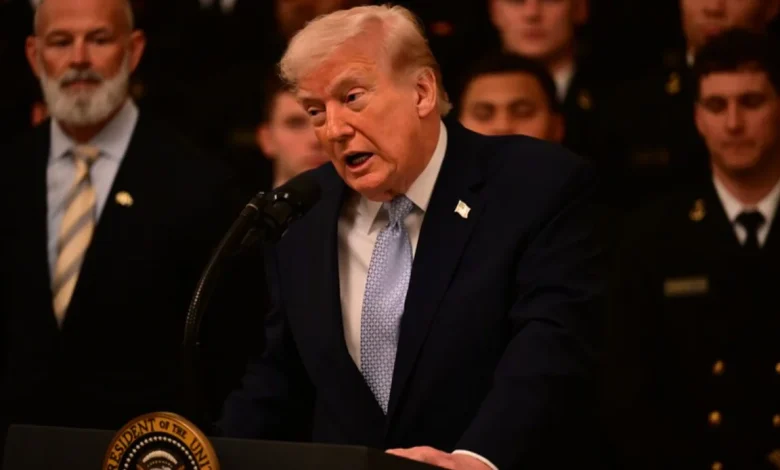
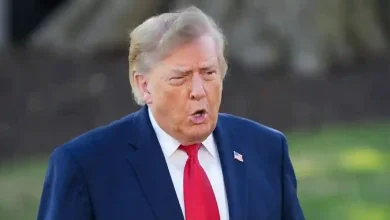
Trump has fundamentally altered the geopolitical landscape with a stunning new declaration, asserting that the United States and China have reached a clandestine agreement to neutralize ongoing Middle Eastern conflicts and secure international trade routes. According to the bold claim, Beijing has officially agreed to immediately cease all weapons shipments, military technology transfers, and defense supply chain support to the Islamic Republic of Iran. In exchange for severing these critical military ties, the agreement purportedly guarantees that the Strait of Hormuz—the world’s most critical chokepoint for global energy supplies—will remain permanently open and protected. Emphasizing the international magnitude of the alleged pact, Trump declared that he is opening the strait “for China too, and the World,” framing the development as a monumental victory for global economic stability and international security.
Trump Claims Geopolitical Breakthrough with China Over Iran
The announcement represents one of the most significant proposed shifts in Sino-American-Iranian relations in modern history. For years, Beijing has maintained a comprehensive strategic partnership with Tehran, serving as a vital economic lifeline and a major consumer of heavily discounted, sanctioned Iranian crude oil. In return, the international community has closely monitored alleged transfers of dual-use technologies, drone components, and advanced missile guidance systems flowing from Chinese entities to Iranian defense contractors. By stating that these transfers will unconditionally halt, Trump is projecting a fundamental realignment of power dynamics in the Persian Gulf. If verified, this diplomatic maneuver would effectively isolate Iran’s defense apparatus, severing its most technologically advanced patron. The sweeping declaration suggests a level of bilateral cooperation between Washington and Beijing that defies the prevailing narrative of an inevitable new Cold War.
The Core of the Trump China Iran Deal
At the center of this reported agreement lies the mutual recognition of economic vulnerability. China, heavily reliant on imported energy to fuel its massive industrial base, cannot afford prolonged disruptions in the Persian Gulf. As recent analyses of China’s economic vulnerabilities to Middle East shocks indicate, a closed strait would be catastrophic for Beijing’s domestic stability and manufacturing output. By trading its military patronage of Tehran for guaranteed, unimpeded access to Middle Eastern crude, China appears to be prioritizing its own economic survival over its anti-Western geopolitical alignment with Iran. The Trump administration’s messaging positions this as a masterclass in transactional diplomacy, leveraging China’s energy dependence to neuter Iran’s military capabilities without firing a single shot.
Securing the Strait of Hormuz: A Global Trade Lifeline
The Strait of Hormuz is the central artery of the global hydrocarbon economy. Approximately 20% to 30% of the world’s total oil consumption passes through this narrow waterway daily, making it a critical vulnerability for international markets. Trump’s assertion that he is securing this strait “for China too, and the World” underscores the universal necessity of freedom of navigation in the region. Historically, Iran has frequently weaponized its geographic proximity to the strait, threatening to mine the waters or blockade tanker traffic in response to Western sanctions or military pressure. This continuous threat has required immense U.S. naval investments to maintain deterrence.
Why the Strait of Hormuz Matters to Beijing and Washington
To understand the gravity of this agreement, it is essential to look at the intersecting, yet contrasting, interests of the major global powers involved in this geopolitical theater. The following table breaks down the strategic imperatives of the United States, China, and Iran regarding the Strait of Hormuz.
| Nation | Primary Strategic Interest in the Strait | Key Vulnerability | Diplomatic Leverage Point |
|---|---|---|---|
| United States | Ensure freedom of navigation; stabilize global energy markets; protect regional allies. | High military deployment costs; exposure to asymmetric naval warfare. | Unmatched naval superiority and control over global financial systems. |
| China | Guarantee uninterrupted flow of crude oil imports to sustain manufacturing and economic growth. | Extreme reliance on imported energy; lack of deep-water naval projection in the Gulf. | Status as the largest buyer of Middle Eastern (including Iranian) oil. |
| Iran | Utilize the strait as an asymmetric deterrent against foreign military intervention and sanctions. | Total dependence on the strait for its own sanctioned oil exports; naval inferiority. | Geographic proximity and capacity for disruptive asymmetric maritime operations. |
Xi Jinping and the Upcoming High-Stakes Summit
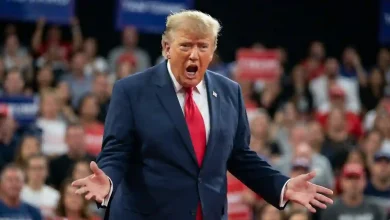
Beyond the geopolitical mechanics of the alleged deal, Trump has injected his signature interpersonal flair into the narrative, heavily promoting his upcoming visit to Beijing. He claimed that Chinese President Xi Jinping will give him “a big, fat, hug” when they meet in a few weeks, painting a picture of profound camaraderie and mutual respect. This rhetoric is a stark departure from the aggressive trade war terminology that frequently characterizes U.S.-China discourse. By framing the relationship in such intimately positive terms, Trump is signaling to domestic and international audiences that his style of highly personalized, leader-to-leader diplomacy yields tangible, massive results that traditional diplomatic channels cannot achieve.
Anticipating the Diplomatic Moment
The comment that both nations are “working together smartly and very well” suggests a coordinated effort to manage global flashpoints bilaterally, effectively bypassing multilateral institutions like the United Nations. This transactional synergy, if legitimate, implies that Xi Jinping views an agreement with Trump as more reliable or beneficial than sustaining an increasingly volatile proxy network centered around Tehran. The anticipated summit will likely serve as the ultimate proving ground for these claims, with international observers analyzing every handshake, statement, and body language cue for evidence of this grand bargain.
Analyzing the Impact on Iran’s Military Supply Chain
For the leadership in Tehran, this announcement represents a worst-case diplomatic scenario. Over the past decade, Iran has heavily relied on Chinese technology to circumvent Western sanctions, upgrading its drone fleets, modernizing its missile arsenals, and sustaining its conventional armed forces. If China abruptly terminates this pipeline, the degradation of Iran’s military readiness will be rapid and severe. This pivot fundamentally undermines Iran’s strategy in the Strait of Hormuz, as their capacity to launch sustained asymmetric attacks depends entirely on replenishable hardware components that domestic manufacturing cannot entirely supply.
Will the Cease in Weapons Transfers Hold?
The execution of this agreement heavily depends on verification. Critics of U.S.-China agreements frequently point out that Beijing often utilizes plausible deniability, operating through complex networks of shell companies and third-party brokers to maintain plausible deniability regarding arms transfers. For the Trump administration’s claims to hold weight, rigorous intelligence monitoring and transparent verification mechanisms must be established. If Beijing continues backdoor shipments through secondary markets, the “permanently open” status of the strait remains fundamentally at risk, and the diplomatic victory may prove hollow.
U.S. Military Superiority and Ongoing Security Commitments
Despite emphasizing peaceful cooperation and trade security, Trump did not hesitate to reinforce the foundational premise of American hard power. Adding a stern warning to any adversaries who might interpret diplomatic deals as weakness, he asserted that the U.S. remains “far better than anyone else” at fighting if needed. This statement is backed by the overwhelming presence of the U.S. Fifth Fleet stationed in Bahrain, complete with Carrier Strike Groups and advanced aerial reconnaissance assets. The rhetoric aligns with past posturing on international blockades, emphasizing that while Washington prefers a smartly negotiated peace, it possesses the unilateral kinetic capability to annihilate any threats to maritime navigation. The stark declaration that “This situation will never happen again” serves as an ultimate red line, intended to permanently deter Iranian brinkmanship in the Persian Gulf.
Global Market Reaction: Oil Prices and Economic Stability
The immediate fallout from this massive geopolitical announcement has sent ripples across global financial markets, particularly within the energy sector. Traders and speculators constantly monitor the Persian Gulf for disruption risks, which inject significant risk premiums into the price of crude oil. By guaranteeing the permanent openness of the Strait of Hormuz, this supposed Washington-Beijing pact effectively removes a major variable of uncertainty from the global supply chain. Recent times have seen global oil prices experiencing unprecedented volatility, largely driven by the threat of regional escalation. A verifiable defunding and disarming of Iran’s proxy and state military networks by its primary eastern backer will likely lead to an aggressive stabilization of Brent Crude and WTI pricing. Analysts at major institutions and Reuters energy market analysts have long stated that removing the Strait of Hormuz risk premium could single-handedly cool global inflationary pressures tied to logistics and fuel costs.
Historical Context and Future Implications for the Middle East
Historically, securing the Middle East has required the deployment of hundreds of thousands of American troops and trillions of dollars in defense spending. Trump’s proposed framework—leveraging China’s economic dependency to do the heavy lifting of disarming Iran—represents a paradigm shift in how the United States projects influence. Instead of functioning solely as the global policeman, Washington is acting as the ultimate broker, aligning the selfish interests of rival superpowers to achieve a shared outcome of stability. As the world watches the countdown to the impending summit between Trump and Xi Jinping, the entire geopolitical calculus of the Middle East hangs in the balance. If the weapons truly stop flowing, and the strait remains undeniably open, this moment will be recorded as one of the most consequential, bloodless strategic victories of the twenty-first century. However, if the “big, fat, hug” fails to translate into concrete, verifiable demilitarization on the ground in Iran, the explosive tensions in the world’s most volatile waterway will only continue to escalate.