Russia oil revenues double to $19B amid Iran war fallout
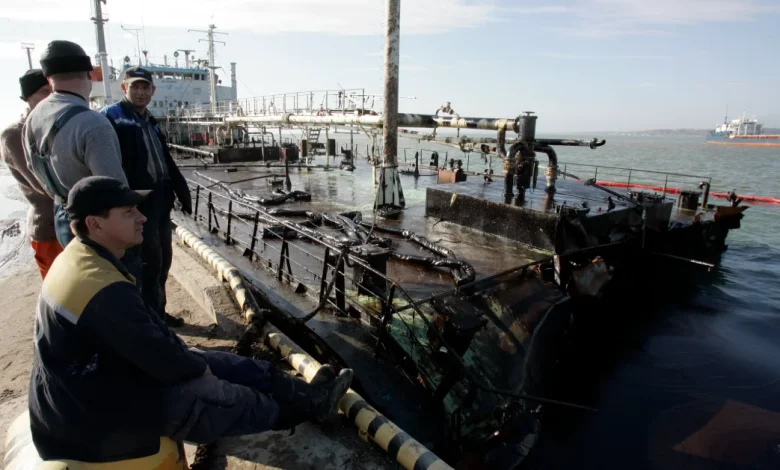
Russia oil revenues have experienced an unprecedented and dramatic surge in March 2026, creating a complex web of geopolitical and economic consequences. As the conflict in the Middle East—specifically the escalating war involving Iran—sends shockwaves through global energy sectors, Moscow has emerged as a primary financial beneficiary. In stark contrast to the intended effects of Western sanctions, the Russian Federation saw its fossil fuel export revenues nearly double in a single month. Going from a substantial $9.7 billion in February to an astonishing $19 billion in March, this massive influx of capital is aggressively funding Russia’s ongoing military campaign in Ukraine. This development has triggered profound anxiety in Kyiv, as Ukrainian officials scramble to counteract a revitalized Russian war chest. The situation is further complicated by shifting trade alliances, most notably India’s decision to drastically boost its crude purchases following a controversial waiver of specific restrictions by the United States. However, Moscow’s economic windfall is not without significant vulnerabilities. Relentless and increasingly sophisticated Ukrainian drone strikes targeting vital Russian export infrastructure in the Baltic and Black Seas threaten to cap any further production increases, setting the stage for a volatile clash of energy economics and asymmetrical warfare.
The Impact of the Iran War on Global Energy Markets
The sudden and fierce escalation of the Iran war has fundamentally altered the calculus of global energy distribution in early 2026. With major shipping lanes and extraction facilities in the Middle East under constant threat, international energy markets have reacted with severe volatility. Brent crude and West Texas Intermediate (WTI) have both spiked to multi-year highs as traders price in the heightened risk of prolonged supply disruptions. In this chaotic environment, nations heavily dependent on imported energy have been forced to secure alternative supplies at a premium, inadvertently playing into the hands of the Russian energy sector. As detailed in the escalating energy fallout from the Israel-Iran strikes, the reduction of Middle Eastern output has created an enormous vacuum in the market, one that Moscow is eager to fill despite heavy international sanctions. The risk premium attached to Middle Eastern barrels has narrowed the discount previously applied to Russian Urals crude, allowing the Kremlin to sell its oil at prices much closer to the global benchmark.
How Geopolitical Tensions Inflated Crude Prices
The mechanics of this price inflation are deeply tied to maritime security and the perception of scarcity. The threat of blockades and military actions near critical chokepoints has caused insurance premiums for oil tankers navigating the Persian Gulf to skyrocket. This dynamic, reminiscent of the broader Strait of Hormuz standoff, has forced global buyers to look for safer, albeit politically contentious, sources of hydrocarbons. Consequently, Russian crude—transported via less volatile routes or through the expanded shadow fleet—has become highly sought after. The surging demand has allowed Russian energy conglomerates like Rosneft and Gazprom Neft to dictate terms more favorably, directly contributing to the doubling of their export revenues. By capitalizing on the fear and uncertainty gripping the commodities sector, Russia has successfully weaponized the Middle Eastern instability to circumvent the financial chokehold the West attempted to impose following the 2022 invasion of Ukraine.
March 2026 Export Data: Analyzing the $19 Billion Surge
The financial data emerging from March 2026 paints a stark picture of the current geopolitical reality. The jump from $9.7 billion to $19 billion in a mere 31 days represents one of the most rapid revenue expansions in modern Russian economic history. This windfall is not solely a product of increased volume, but rather a perfect storm of higher baseline crude prices, a shrinking discount on Russian blends, and aggressive export strategies targeting energy-hungry Asian markets. Analysts at the U.S. Energy Information Administration (EIA) have noted that while the volume of oil exported by Russia increased moderately, the realized price per barrel jumped significantly, fundamentally altering the Kremlin’s fiscal landscape. This surge provides the Russian Ministry of Finance with the vital liquidity needed to balance domestic budgets while simultaneously expanding military procurement.
Monthly Comparison of Moscow’s Financial Gains
To fully grasp the magnitude of this shift, one must examine the month-over-month data closely. The sudden influx of petrodollars and alternative currencies has bolstered the ruble and provided a much-needed buffer against domestic inflation.
| Metric | February 2026 | March 2026 | Percentage Change |
|---|---|---|---|
| Total Oil Export Revenue | $9.7 Billion | $19.0 Billion | +95.8% |
| Average Price per Barrel (Urals) | $62.40 | $84.10 | +34.7% |
| Primary Export Destination | China | India / China | Shift in Dominance |
| Estimated Shadow Fleet Usage | 65% | 78% | +13% |
As the table illustrates, the dramatic leap in average price per barrel, combined with an increased reliance on an untraceable shadow fleet, has rendered the G7 price cap virtually obsolete. The shifting dynamics of primary export destinations further highlight the evolving strategies Moscow is employing to maximize its financial returns during a period of global crisis.
India’s Role Following the U.S. Sanctions Waiver
A critical catalyst for this revenue explosion was the controversial decision by the United States to quietly waive specific secondary sanctions, allowing for increased energy purchases by allied nations to prevent a global economic meltdown. Faced with the commodity shocks affecting major economies like China and the prospect of skyrocketing domestic gas prices ahead of crucial political cycles, Washington opted for a pragmatic, albeit heavily criticized, approach. India, the world’s third-largest energy consumer, immediately capitalized on this diplomatic maneuver. Unbound by the immediate threat of U.S. financial retaliation, Indian refiners massively boosted their purchases of discounted Russian crude. This policy shift allowed New Delhi to secure its domestic energy grid, refine the imported crude into petroleum products, and subsequently export those products back into the global market—often to the very Western nations sanctioning Russia.
Strategic Purchases and Geopolitical Shifts
India’s strategy is driven by a doctrine of strategic autonomy. By balancing its crucial defense ties with the West against its pressing economic needs, New Delhi has positioned itself as an indispensable middleman in the 2026 energy landscape. Indian state-run refiners such as Indian Oil Corporation (IOC) and Bharat Petroleum have entered into lucrative long-term contracts with Russian suppliers, ensuring a steady flow of Urals crude to the subcontinent. This arrangement has provided Russia with a massive, reliable revenue stream that bypasses Western financial systems, as many of these transactions are settled in rupees, dirhams, or yuan. The U.S. waiver, intended as a pressure-release valve for global inflation, has inadvertently served as a financial lifeline for the Kremlin’s war effort, showcasing the inherent contradictions and unintended consequences of complex economic statecraft.
Funding the Ukraine Conflict Through Surging Profits
The direct correlation between Russia’s energy windfall and its military operations in Ukraine cannot be overstated. The additional $9.3 billion generated in March alone represents a massive injection of capital into the Russian defense industrial base. These funds are being rapidly deployed to accelerate the production of artillery shells, cruise missiles, and armored vehicles. Furthermore, the capital influx allows Moscow to offer lucrative signing bonuses to volunteer soldiers, bypassing the politically sensitive need for further forced mobilizations. The stark reality in Kyiv is one of mounting apprehension. Ukrainian military intelligence recognizes that a well-funded Russian military is capable of sustaining a prolonged war of attrition. The fear is that the financial padding provided by the Iran-induced oil rally will allow Russia to outlast Western financial and military assistance to Ukraine, shifting the battlefield momentum decisively in Moscow’s favor.
Production Constraints and Vulnerabilities
Despite the staggering financial success of March 2026, the Russian energy sector is facing severe, structural vulnerabilities that threaten to derail its momentum. While revenues have doubled due to price spikes, increasing or even maintaining the physical production and export of crude is becoming increasingly difficult. Years of restricted access to Western drilling technology and oilfield services are beginning to take their toll on aging Siberian wells. However, the most immediate and existential threat to Russian oil exports comes not from below the ground, but from the skies. In a desperate bid to curtail Moscow’s funding, Ukraine has launched an aggressive and highly effective campaign of asymmetrical warfare targeting the logistical bottlenecks of the Russian fossil fuel empire.
Ukrainian Drone Strikes on Baltic and Black Sea Ports
Recognizing the limitations of Western sanctions, the Ukrainian Armed Forces have escalated their use of long-range, domestically produced suicide drones to strike deep into Russian territory. The primary targets of this campaign have been massive oil refineries, storage depots, and crucial export terminals situated along the Black Sea and the Baltic Sea. Facilities in Novorossiysk, Tuapse, and Ust-Luga have suffered devastating hits, causing massive fires and forcing prolonged shutdowns. These attacks on critical Baltic logistics hubs have fundamentally disrupted the delicate supply chains required to move Russian crude to international markets. The drone strikes have forced Russia to divert critical air defense systems away from the front lines in Ukraine to protect its lucrative energy infrastructure. If Ukraine continues to successfully degrade these maritime export nodes, Russia’s physical capacity to load tankers will bottleneck, meaning that regardless of how high global oil prices soar, Moscow will be unable to capitalize on them fully due to a lack of functional export infrastructure.
Future Projections for Global Crude Markets
Looking ahead to the remainder of 2026, the global crude market remains perched on a knife-edge. The confluence of the Middle Eastern conflict and the Eastern European war of attrition guarantees sustained volatility. Should the Iran war escalate further, drawing in neighboring Gulf states or disrupting traffic through the Red Sea and the Strait of Hormuz, global prices could easily shatter previous historical records. Under such a scenario, if Russia can manage to repair and defend its port infrastructure from Ukrainian drones, its revenues could climb even higher, cementing its economic resilience. Conversely, if Ukrainian strikes achieve their intended goal of paralyzing Baltic and Black Sea loading capabilities, a massive volume of Russian oil will be removed from the global market entirely, triggering an even more severe energy crisis worldwide.
Economic Repercussions for Western Sanctions
The events of March 2026 serve as a stark indictment of the current Western sanctions regime. The failure to curb Russia’s massive revenue surge highlights the limitations of financial warfare in a multipolar, resource-dependent world. The price cap mechanism, designed to keep Russian oil flowing while minimizing profits, has been shattered by the realities of geopolitical supply shocks and the emergence of non-aligned trade networks spearheaded by nations like India and China. Policymakers in Washington and Brussels are now forced to re-evaluate their strategies. The realization that external conflicts—such as the Iran war—can instantly nullify years of carefully crafted economic sanctions is a bitter pill to swallow. As the year progresses, the international community must grapple with the uncomfortable truth that as long as global energy demand remains inelastic and geopolitical flashpoints continue to erupt, resource-rich nations like Russia will inevitably find lucrative avenues to fund their strategic ambitions.