Oil prices expose a 20-year market gap as spot hits $145
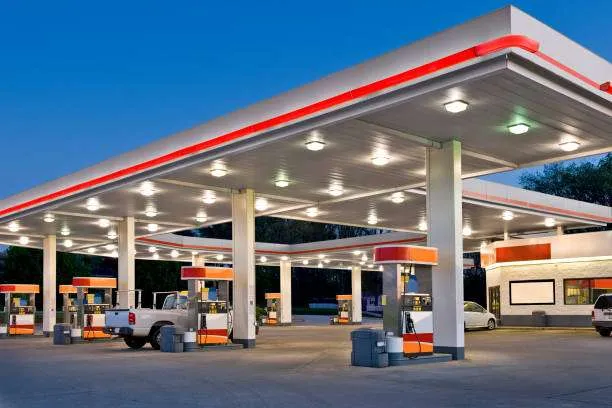
Oil prices you see flashing across your digital screens, on major financial networks, and most notably on Google, are fundamentally lying to you about the real state of the global energy market. The widely quoted Brent crude price currently sits comfortably around $102 a barrel, presenting a picture of relative stability and manageable inflation to the casual observer. However, the ground reality for physical commodities is a starkly different nightmare. If an energy distributor, a national refinery, or an independent shipping magnate actually needed a tanker full of physical oil delivered right now, the transaction would require paying close to $145 per barrel. This astronomical figure represents a new record high, and it is more than double what a barrel of oil cost before the current geopolitical conflicts erupted. The massive gap between these two prices—the quoted paper price and the actual physical delivery price—is now the largest recorded in over 20 years. Even seasoned energy analysts, veterans of multiple market crashes and commodity super-cycles, confess that they cannot fully explain the sheer magnitude of this divergence. What they do uniformly agree on, however, is that the futures market has completely lost touch with reality on the ground, creating a dangerous illusion of stability in a world that is running dangerously low on accessible fuel.
Oil Prices Disconnect: The Illusion of the Brent Crude Benchmark
For decades, the global economy has relied on standardized benchmarks to gauge the cost of energy, with Brent Crude acting as the primary indicator for approximately two-thirds of the world’s internationally traded crude oil supplies. When you type ‘oil price’ into a search engine, the algorithm inevitably returns the front-month futures contract for Brent or West Texas Intermediate (WTI). This digital figure, currently hovering near $102, is primarily driven by algorithmic trading, hedge fund positioning, and macroeconomic speculation rather than the gritty realities of physical supply chains. The illusion is maintained because the vast majority of participants in the futures market are financial speculators who have absolutely no intention of ever taking physical delivery of a crude oil tanker. They are trading paper contracts, settling in cash, and moving on to the next trade. This extreme financialization of the commodities market has created a scenario where paper oil can be traded at a massive discount, completely divorced from the logistical nightmares plaguing the actual wet barrels of crude oil that power the global economy.
Understanding the Historical Gap Between Futures and Spot Markets
To truly comprehend why a $43 gap between spot and futures prices is terrifying, one must look at the historical precedent. Traditionally, the spread between the paper market (futures) and the physical market (spot) rarely exceeded a few dollars. Arbitrageurs would quickly step in to buy the cheaper asset and sell the more expensive one, forcing the two prices back into alignment. However, today’s market is severely broken. The traditional arbitrage mechanisms have failed because securing physical ships, paying exorbitant war-risk insurance premiums, and navigating blockaded straits have made it physically impossible to exploit the price difference. The 20-year high gap we are witnessing is not a temporary market glitch; it is a structural failure of the global energy supply chain. The paper market is pricing in a hypothetical future where the war ends and supply normalizes, while the spot market is pricing in the immediate, desperate reality of a world where securing actual energy requires paying unprecedented premiums.
The Hidden $145 Reality: What Physical Oil Delivery Actually Costs
Stepping away from Wall Street trading desks and examining the actual docks of global ports reveals the true cost of energy. Procuring a tanker full of oil delivered today costs roughly $145 a barrel, a staggering figure that threatens to shatter the profit margins of industries worldwide. This hidden cost is entirely driven by the logistical friction of a world at war. Shipping magnates are demanding astronomical freight rates due to the sheer scarcity of available vessels. Furthermore, maritime insurance companies have skyrocketed their premiums, sometimes demanding millions of dollars just to insure a single voyage through contested waters. Add to this the costs of securing alternative routes, paying exorbitant fees for immediate loading, and the simple reality that there is less oil available for immediate purchase, and the $145 price tag begins to make agonizing sense. The physical market cannot trade on hope or future ceasefires; it trades on the immediate availability of wet barrels, and right now, those barrels are scarce.
Persian Gulf Blockades and the 10% Global Supply Trap
The core geographical epicenter of this pricing crisis lies in the Middle East. Around 10% of the world’s total oil supply is currently trapped within the Persian Gulf, unable to navigate safely through the heavily contested maritime choke points. This is not merely a hypothetical disruption; it is a physical blockade that removes millions of barrels of oil from the global market every single day. Recent military postures have heavily contributed to this bottleneck. For instance, the low-altitude flights over Kharg Island signaling military escalation have paralyzed local shipping networks, forcing tanker captains to anchor and await safer passage conditions that may take weeks to materialize. The logistical nightmare is further compounded by the agonizingly slow transit times for vessels that do brave the journey. A prominent example is the Japanese LNG tanker that took 35 days to cross the Strait of Hormuz, a journey that typically takes a fraction of that time. When ships are delayed by over a month, the effectively available supply of shipping capacity plummets, driving spot prices even higher as desperate buyers bid against each other for the few cargoes that manage to escape the blockade.
Futures Market vs. Spot Market: A Complete Breakdown
To further illustrate the massive divide between the quoted digital prices and the actual physical reality, the following table breaks down the fundamental differences driving this historic 20-year market gap.
| Market Characteristic | Futures Market (Paper Oil) | Spot Market (Physical Oil) |
|---|---|---|
| Current Price Quote | ~$102 per barrel | ~$145 per barrel |
| Delivery Timeline | Months to years in the future | Immediate delivery (within days) |
| Primary Market Participants | Hedge funds, speculators, algorithms | Refineries, logistics hubs, national states |
| Impact of War Premiums | Minimal (prices in future peace) | Extreme (prices in immediate danger) |
| Settlement Method | Cash settlement (99% of contracts) | Physical transfer of wet barrels |
Real-World Consequences: Gas Stations Run Dry in Asia
While Western financial media continues to report the manageable $102 Brent figure, the developing world is bearing the immediate brunt of the $145 reality. Because emerging markets rely heavily on spot market purchases to fulfill their immediate energy needs, they are being priced out of existence. The consequences are dire and highly visible on the streets of major Asian economies. In a desperate bid to curtail national energy consumption and preserve dwindling foreign reserves, Sri Lanka has implemented drastic measures, officially making Wednesdays a public holiday simply to keep commuters off the roads and cut fuel use. This unprecedented government mandate underscores the sheer desperation of nations struggling against the shadow pricing of the physical oil market.
Supply Shortages Striking Vietnam and Thailand
The crisis is not isolated to Sri Lanka. Across Southeast Asia, the backbone of commercial logistics is fracturing. In Vietnam, a country heavily reliant on extensive motorbike networks for both personal transport and commercial delivery, gas stations across major metropolitan areas have begun turning customers away, hanging out-of-stock signs as national reserves run critically low. Similarly, Thailand is facing acute fuel distribution challenges, with rural agricultural sectors severely hampered by the lack of affordable diesel. The decline of the dollar in currency markets has further complicated matters, as fluctuating exchange rates make it exceedingly difficult for these nations to secure long-term import contracts, forcing them into the unforgiving spot market where they must compete with deep-pocketed Western buyers for the meager supply of un-trapped oil.
Geopolitical Tensions: The War’s Camouflaged Economic Toll
The mainstream news headlines often present the ongoing wars as manageable, localized conflicts that have been appropriately priced in by the global markets. The reality, however, is that the true economic toll is being meticulously camouflaged by the broken paper market indicators. The massive disconnect we are witnessing is intimately tied to broader international maneuvers and geopolitical shifts heavily impacting the global markets. When superpowers engage in proxy conflicts, sanction regimes, and maritime blockades, the friction costs of global trade explode exponentially. The illusion that energy is cheap and abundant is a dangerous narrative that lulls policymakers into a false sense of security, delaying necessary investments in alternative energy infrastructure and strategic petroleum reserves. The spot market does not lie; it mathematically aggregates the true cost of global instability, reflecting a world where the fundamental building blocks of modern civilization are becoming prohibitively expensive to secure and transport.
The Future of Global Energy Markets in a Fractured World
As we navigate this unprecedented economic landscape, the massive chasm between digital commodity prices and physical reality serves as a glaring warning to governments, corporations, and consumers alike. The era of seamless, hyper-efficient global supply chains may be definitively over, replaced by a fractured system where localized scarcity dictates regional economic survival. Moving forward, the global community must recognize that depending on algorithmic benchmarks to dictate energy policy is fundamentally flawed. Organizations like the International Energy Agency (IEA) consistently emphasize the need for robust physical reserves and diversified energy portfolios, yet markets continue to blindly trust the ticker tape. Until the physical choke points in the Persian Gulf are cleared, shipping insurance premiums normalize, and physical supply meets immediate demand, the true price of oil will remain hidden in the spot market shadows. The $145 reality is not a temporary anomaly; it is the true cost of operating in a globally fractured, conflict-ridden era, and it is past time that the world woke up to the numbers that actually dictate the survival of the global economy.