Todd Blanche Nominated as Permanent US Attorney General
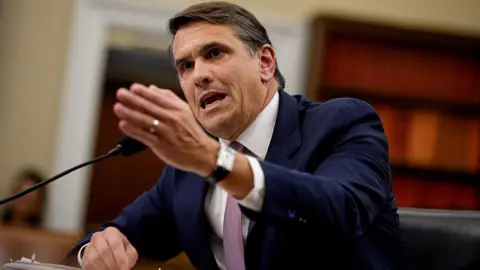
Todd Blanche, the acting United States Attorney General, is poised to permanently assume the leadership of the U.S. Department of Justice following a surprise announcement by President Donald Trump during a private dinner in the Rose Garden on Wednesday night. The decision, which marks a dramatic consolidation of executive authority over the nation’s premier law enforcement body, signals the administration’s intent to double down on its aggressive legal strategies. Blanche, who transitioned from Trump’s personal defense attorney to deputy attorney general, has managed the department in an interim capacity since the sudden dismissal of Pam Bondi in early April. The official nomination process, which Trump indicated would begin immediately, sets the stage for a high-stakes confirmation battle in a deeply divided Senate.
The announcement underscores the high degree of trust Trump places in Blanche, who has spent the last two months demonstrating absolute loyalty through a series of high-profile, highly controversial legal maneuvers. From targeting the administration’s political foes to re-aligning departmental policies with White House directives, Blanche’s brief tenure as acting attorney general has already redefined the boundaries of the Department of Justice. As the nomination heads to Capitol Hill, it faces intense scrutiny from lawmakers, legal scholars, and civil liberties advocates who are concerned about the politicization of federal law enforcement.
Table of Contents
- The Rose Garden Announcement
- Inside the Rose Garden Video Post by Dan Scavino
- The Dramatic Rise of Todd Blanche: From Defense Attorney to AG Nominee
- The Controversial Road: Pam Bondi’s Dismissal and Blanche’s Interim Stewardship
- Re-aligning the Justice Department with the Trump Agenda
- Loyalty, Retribution, and the Controversial $1.8 Billion “Anti-Weaponization Fund”
- Congressional Scrutiny and the Sudden About-Face on Allied Compensation
- Legal and Judicial Storms Surrounding the Administration
- Navigating a Fractured Senate Confirmation Battle
- Comparing the Attorney General Nominees: Pam Bondi vs. Todd Blanche
- The Road Ahead for the Department of Justice
The Rose Garden Announcement
During a private Rose Garden Club Dinner held at the White House on Wednesday evening, June 3, 2026, President Donald Trump officially broke the news that he would nominate Todd Blanche to the permanent position of Attorney General. Addressing a crowd of supportive officials and donors, Trump expressed his desire to move forward rapidly with the formal nomination, ending weeks of speculation regarding who would permanently fill the vacancy left by Pam Bondi.
The President’s remarks reflected his profound satisfaction with Blanche’s performance over the preceding two months. Trump noted that while Blanche had been operating on an interim basis, his decisive action and willingness to execute complex policy changes had earned him the right to lead the department permanently. The timing of the announcement is crucial, coming as the administration navigates multiple geopolitical challenges and complex legal disputes at home and abroad.
Inside the Rose Garden Video Post by Dan Scavino
White House Deputy Chief of Staff Dan Scavino captured the pivotal moment on video, quickly uploading it to social media late Wednesday night to broadcast the decision. In the footage, Trump is seen speaking directly to the dinner guests, highlighting Blanche’s role and his expectations for the confirmation process. “He’s acting attorney general,” Trump said in the video, referring to Blanche. “Tomorrow I’m instructing Dan and everybody else that’s involved in that very complicated process, which is going to be, I think, very quickly, that we are going to make him permanent attorney general.”
Scavino captioned the clip with enthusiastic praise, writing: “President Trump with an announcement tonight at the @WhiteHouse…Congratulations @TheJusticeDept @DAGToddBlanche.” The public nature of the post served to quickly rally conservative supporters and signal to Senate Republicans that the White House expects swift action on the nomination. It also underscored the highly coordinated communication strategy employed by the administration to bypass traditional media channels when making major personnel announcements.
The Dramatic Rise of Todd Blanche: From Defense Attorney to AG Nominee
Todd Blanche’s trajectory within the Trump administration has been nothing short of meteoric. Before entering public service, Blanche was a prominent defense attorney in New York, best known for representing Trump in several of his high-stakes personal legal battles. His sharp litigious style and unwavering public defense of the President earned him a reputation as an fierce loyalist who understood how to navigate both the courtroom and the political arena.
When Trump returned to the White House, Blanche was brought into government service as the Deputy Attorney General under Pam Bondi. In this second-in-command role, Blanche was tasked with managing the day-to-day operations of the sprawling agency. However, his influence grew rapidly, often eclipsing Bondi as he took on more public-facing responsibilities and worked to implement the administration’s direct legal priorities. His deep familiarity with Trump’s personal legal philosophies made him the natural successor when the administration sought a more aggressive posture at the helm of the department.
The Controversial Road: Pam Bondi’s Dismissal and Blanche’s Interim Stewardship
The path to Blanche’s nomination was cleared in early April 2026 when Trump abruptly fired Attorney General Pam Bondi. Bondi, who had been confirmed with substantial fanfare, reportedly fell out of favor with the White House due to her handling of sensitive matters and her perceived hesitation in executing some of the administration’s most aggressive legal directives, including the prosecution of Trump’s political adversaries. Following Bondi’s sudden ouster, Blanche stepped into the breach as acting attorney general.
Rather than acting as a mere caretaker, Blanche immediately utilized his temporary authority to initiate a sweeping reorganization. He made it clear to the department’s rank-and-file that the Justice Department under his leadership would be fully aligned with the White House. This transition marked a significant shift in the internal culture of the agency, transitioning from the relatively conventional conservative approach of Bondi to a highly combative, executive-led model championing Trump’s broad vision of governance.
Re-aligning the Justice Department with the Trump Agenda
Since taking over the reins, Blanche has worked tirelessly to demonstrate his alignment with Trump’s policy goals. He has rolled back numerous institutional norms to expedite investigations and reshape federal prosecutorial priorities. Critics argue that these actions have systematically dismantled the traditional independence of the Justice Department, effectively turning it into an arm of the executive branch’s political apparatus.
Under Blanche’s guidance, the department has focused heavily on investigating what the administration terms “government weaponization”. This has involved launching investigations into former intelligence and law enforcement officials who were involved in prior investigations into Donald Trump. By refocusing federal resources on these political controversies, Blanche has sought to reassure the administration’s base that the department is actively working to dismantle the “deep state” and restore “accountability” to Washington.
Loyalty, Retribution, and the Controversial $1.8 Billion “Anti-Weaponization Fund”
Among the most contentious initiatives rolled out during Blanche’s acting tenure was the proposed establishment of a $1.776 billion (often rounded to $1.8 billion) “Anti-Weaponization Fund”. This unprecedented compensation fund was designed to financially assist allies of President Trump who claimed they had been victims of politically motivated government persecution, audits, or investigations under previous administrations. The fund emerged from a settlement of a long-standing lawsuit between Trump and the Internal Revenue Service.
To supporters, the fund was a long-overdue mechanism for correcting systemic government overreach and protecting conservative figures from legal harassment. To detractors, however, it represented an egregious misuse of taxpayer dollars to reward political loyalists and create an official system of patronage. The initiative immediately triggered a firestorm of criticism from legal watchdogs and opposition lawmakers, who argued that utilizing federal funds in this manner violated constitutional principles governing the separation of powers and the allocation of public funds.
Congressional Scrutiny and the Sudden About-Face on Allied Compensation
The backlash against the “Anti-Weaponization Fund” quickly reached a boiling point on Capitol Hill, forcing the Justice Department into a defensive posture. Facing intense questioning from both Democratic and Republican lawmakers, Blanche was pressured to explain the legal justification for establishing such a massive fund without explicit congressional authorization. The controversy threatened to derail his standing among moderate Senate Republicans whose support would be essential for any future confirmation.
In a dramatic about-face, Blanche testified before a House committee that the Justice Department would “not move forward” with the fund, citing a recent federal court ruling that temporarily blocked its implementation. While the retreat was seen as a victory for congressional oversight, it also illustrated the complex tightrope Blanche must walk: satisfying Trump’s demands for bold, loyalty-proving actions while navigating the rigid legal boundaries enforced by the judiciary and Congress.
Legal and Judicial Storms Surrounding the Administration
The nomination of Todd Blanche occurs against a broader backdrop of intense legal conflict between the Trump executive branch and the federal judiciary. The administration’s aggressive approach to governance has resulted in a succession of high-profile legal challenges, forcing the Justice Department to repeatedly defend controversial policies in court. For example, the department’s legal defenders have been stretched thin as multiple administrative actions have been halted by federal judges, such as when grants halted by the Trump administration were deemed unconstitutional.
Furthermore, the Justice Department under Blanche’s acting leadership has had to defend wide-reaching economic and regulatory policies that have met with stiff resistance in the courts. This was recently demonstrated when tariffs were deemed illegal after courts struck down Trump’s global import taxes. These legal setbacks have placed a premium on having an Attorney General who is not only a loyalist but also a sophisticated legal strategist capable of defending expansive executive actions before increasingly skeptical judicial panels.
Navigating a Fractured Senate Confirmation Battle
Securing Todd Blanche’s confirmation as permanent Attorney General will require a masterclass in political maneuvering. Although Republicans hold a majority in the Senate, it is a razor-thin margin, and several moderate GOP senators have expressed reservations about the rapid turnover at the Justice Department and the highly politicized initiatives championed during Blanche’s interim term. With the critical midterm elections scheduled for November 2026, many senators are wary of voting for a nominee who could alienate independent voters.
Democrats are already preparing for a fierce confirmation battle, intending to use the hearings to highlight Blanche’s actions regarding the “Anti-Weaponization Fund” and his prosecution of Trump’s political opponents. They plan to frame Blanche as a personal lawyer masquerading as the nation’s chief law enforcement officer, arguing that his confirmation would permanently compromise the integrity of the Justice Department. Conversely, Trump’s allies will argue that Blanche is a patriot who is successfully restoring order and addressing institutional bias within federal law enforcement.
Amid these intense legislative and political battles, Trump has continued to project supreme confidence, keeping up a busy schedule of national and international engagements. This was recently highlighted during a historic Trump state visit where King Charles gifted a historic HMS Trump bell, demonstrating the administration’s effort to maintain an aura of strength and global prestige even as domestic legal battles rage on.
Comparing the Attorney General Nominees: Pam Bondi vs. Todd Blanche
To understand the current trajectory of the Department of Justice, it is helpful to compare the leadership styles, background, and key initiatives of Pam Bondi and Todd Blanche. The transition from Bondi to Blanche represents a distinct escalation in the administration’s effort to align the department with the White House’s political agenda.
| Profile Metric | Pam Bondi (Former AG) | Todd Blanche (Nominee) |
|---|---|---|
| Former Role | Florida Attorney General | Personal Defense Attorney & Deputy AG |
| Tenure as AG | Feb 4, 2025 – Apr 2, 2026 | Apr 2, 2026 – Present (Acting) |
| Core Alignment | Institutional Loyalist | Firebrand Loyalist & Personal Litigator |
| Noteworthy Actions | Initial establishment of 2025 conservative agenda | Aggressively pursued political rivals; drafted “Anti-Weaponization Fund” |
| Reason for Transition | Fired amid controversies over the Epstein files and legislative roadblocks | Promoted to permanent status to solidify White House control over the DOJ |
The Road Ahead for the Department of Justice
As the formal nomination papers are prepared for delivery to the Senate, the Department of Justice stands at a historic crossroads. Under Todd Blanche, the agency has moved further away from the post-Watergate norms of departmental independence, embracing a model where the Attorney General acts as an active partner in the President’s broader political and legal battles. Whether this transformation becomes permanent depends entirely on the outcome of the upcoming Senate hearings.
Regardless of the confirmation outcome, the debate surrounding Blanche’s nomination will have long-lasting implications for the American legal system. It will force a fundamental reckoning over the role of the Attorney General, the limits of executive power, and the degree to which federal law enforcement should be insulated from partisan politics. In the coming weeks, Capitol Hill will become the central arena for a debate that will shape the administration’s legal legacy for years to come.