Anti-Weaponization Fund: Major Breakdown of Why DOJ Scrapped the $1.776 Billion Program
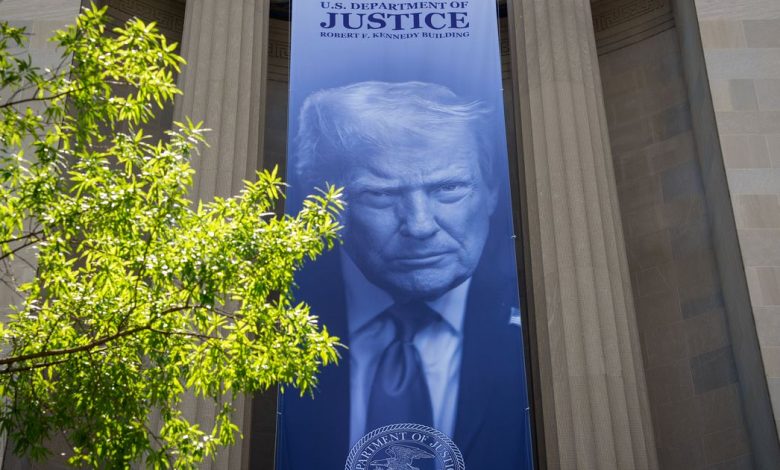
Anti-Weaponization Fund operations have been officially halted by the United States Department of Justice, marking a dramatic climax to a high-stakes standoff that has paralyzed Capitol Hill and gripped the national legal landscape. Acting Attorney General Todd Blanche announced this week that the federal government is abandoning plans for the controversial $1.776 billion initiative, which was intended to compensate individuals claiming to be victims of political targeting and “lawfare”. The sudden retreat follows intense bipartisan resistance in Congress, where lawmakers threatened to block critical funding for immigration agencies, as well as a series of damaging court orders. Critics had widely decried the program as an unregulated “slush fund” designed to reward political allies of Donald Trump. Blanche’s capitulation before a House Appropriations subcommittee is a historic reversal for an administration that had championed the fund as a cornerstone of its justice reform agenda.
Todd Blanche’s Definitive Testimony Before Congress
Appearing before a House Appropriations subcommittee to defend the Justice Department’s budget, Acting Attorney General Todd Blanche faced sharp and relentless questioning from congressional Democrats. Representative Grace Meng (D-N.Y.) and Representative Rosa DeLauro (D-Conn.) pressed Blanche on the operational future of the program. “We are not moving forward with the fund, period,” Blanche told the panel, clarifying that the DOJ would completely abandon its plans to establish the multi-billion-dollar distribution network. Despite his definitive stance, Blanche defended the core ideology of the project. He insisted that the motivation behind the fund remained highly relevant, claiming that many Americans had experienced the weaponization of the federal government against them. However, he admitted that the administration could not proceed under the current political and legal constraints.
Origin and Structure of the $1.776 Billion Settlement
The origins of the massive program trace back to a highly unusual civil settlement. The $1.776 billion figure—a symbolic reference to the year of American independence—materialized through a settlement agreement in the federal lawsuit Donald J. Trump v. Internal Revenue Service. This litigation arose after corporate and personal tax records belonging to the Trump family were leaked to the media in 2019. In a deal negotiated directly by Todd Blanche—who previously served as Trump’s personal criminal defense attorney before being appointed to the top post at the DOJ—the Trump family agreed to drop their claims with prejudice. In return, the federal government agreed to establish a systematic process to hear and redress claims of “weaponization” from other citizens, drawing the astronomical sum directly from the federal Judgment Fund.
The Legal Framework of Trump v. IRS
Under the terms of the settlement, Trump, Donald Trump Jr., Eric Trump, and the Trump Organization, LLC, agreed to dismiss their lawsuit against the Treasury and the IRS without receiving any direct monetary damages. Instead, the family secured a formal apology from the government and withdrew several other high-profile administrative claims, including damage claims arising from the FBI search of Mar-a-Lago and investigations related to the 2016 Russia probe. The creation of the $1.776 billion fund was positioned as the primary consideration of the contract. This structure immediately drew scrutiny from legal experts who questioned whether a private plaintiff could legally demand the creation of a massive public compensation program as a condition for dropping a personal civil suit.
Congressional Rebellion and the Funding Standoff
Opposition to the plan quickly unified an unlikely coalition of Democrats and Republicans on Capitol Hill. Bipartisan critics labeled the fund a taxpayer-funded pool of money designed to bypass typical congressional oversight and provide financial payouts to Trump’s political allies. Concerns were particularly acute regarding whether individuals convicted of violent crimes during the January 6, 2021, Capitol insurrection would be eligible for payouts. As backlash grew, congressional Republicans took the extraordinary step of withholding votes on a vital reconciliation bill. This critical legislation was designated to provide roughly $70 billion in funding for Immigration and Customs Enforcement (ICE) and the Border Patrol—two agencies central to the administration’s policy goals. By threatening to block border security appropriations, lawmakers successfully forced the Justice Department to back down.
Border Security Funding as Leverage
The legislative blockade was led in part by Senate Majority Leader John Thune (R-S.D.), who made it clear that Senate Republicans would not support the crucial immigration funding bill until the administration provided complete clarity on the status of the $1.776 billion package. Even after the Justice Department released a statement on social media indicating it would “abide by” recent court restrictions, Thune insisted that the program must be fully “shut down” and verified. Blanche’s congressional testimony was the direct result of this intense pressure, as the White House realized it could not secure the border control budget without completely sacrificing the controversial compensation program.
The Legal Blowback and Court-Ordered Blocks
Blanche’s retreat was also accelerated by significant legal setbacks in federal courts. Just days before the congressional testimony, a federal district judge in Virginia issued a temporary injunction blocking the Justice Department from creating, funding, or operating the program. The injunction was the result of a lawsuit filed by a coalition of watchdogs and legal experts, including a former January 6 federal prosecutor. Simultaneously, Judge Kathleen Williams of the U.S. District Court for the Southern District of Florida launched an independent inquiry into the settlement. Williams directed lawyers to address “grievous allegations” raised by a group of 35 retired federal judges, who submitted a motion arguing that the entire settlement was a “product of collusion” and constituted “a fraud on the Court”. Details of these developments were reported by the Courthouse News Service, showing the immense institutional friction surrounding the case.
Former January 6 Prosecutors Lead the Challenge
The legal challenge that ultimately crippled the fund was spearheaded by former federal prosecutors who argued that the settlement bypassed established constitutional processes. By attempting to use the federal Judgment Fund—a perpetual appropriation designed to pay off specific legal judgments—to establish a broad, executive-run compensation board, the administration was accused of encroaching on Congress’s exclusive power of the purse. The plaintiffs successfully argued that the fund lacked the statutory authorization required for such a massive spending initiative, presenting a clear threat to the separation of powers.
Analysis: The Original Fund Versus the Post-Testimony Reality
To understand the dramatic transformation of this policy, it is useful to compare the original terms of the settlement with the current operational reality following Blanche’s testimony.
| Feature / Provision | Original Settlement Agreement | Current Operational Status |
|---|---|---|
| Funding Allocation | $1.776 Billion sourced from the federal Judgment Fund. | Permanently halted and scrapped (“Not moving forward”). |
| Redress Mechanism | Administrative board to evaluate and pay claims of “weaponization”. | Dismantled; no claims process will be established. |
| Audit Immunity for Trump Family | Permanent protection from IRS audits on historical tax returns. | Remains active and unchanged, according to Todd Blanche. |
| Congressional Funding Package | Delayed due to Republican blockade over the “slush fund” designation. | Moving forward following the abandonment of the program. |
| Judicial Standings | Unchallenged contract between Trump and the IRS/Treasury. | Temporarily enjoined; subject to ongoing investigations for fraud and collusion. |
The table illustrates how a sweeping, multi-billion-dollar administrative apparatus was systematically dismantled under joint legislative and judicial pressure. While the administration initially attempted to bypass traditional congressional appropriations, the constitutional system of checks and balances ultimately prevailed.
The Audit Immunity Controversy: What Remains of the Deal?
Despite the cancellation of the $1.776 billion compensation program, one highly controversial element of the settlement agreement remains active. A signed addendum to the Trump v. IRS agreement, executed by Todd Blanche, purports to grant permanent immunity to Donald Trump, his immediate family, and his business entities from any future IRS audits of past tax returns. When questioned by lawmakers about whether this audit immunity had also been discarded, Blanche stated, “Nothing has changed with that”. This revelation has sparked a new wave of outrage among legal scholars and congressional Democrats, who argue that granting permanent tax immunity to a sitting president is an unprecedented abuse of executive authority that may itself face upcoming constitutional challenges in court.
Mixed Signals: Presidential Ambiguity vs. DOJ Reality
Adding to the political chaos, a major communication rift has emerged between the White House and the Department of Justice. Just hours after Blanche told Congress that the fund was dead “period,” President Donald Trump publicly suggested that he has not abandoned the program. Speaking on the New York Post podcast Pod Force One with Miranda Devine, Trump praised the initiative as “beautiful” and “important,” suggesting that his targeted supporters still deserve financial compensation. When asked if the program was truly dead, Trump claimed he would “have to ask the lawyers,” attributing the delay to hostile court rulings rather than an official policy reversal. This public disagreement has left lawmakers skeptical, prompting some Republicans to draft legislation to permanently codify the fund’s demise.
Broader Policy Implications for the Judgment Fund
The attempt to use the federal Judgment Fund to bankroll the $1.776 billion initiative represents a highly controversial legal precedent. The Judgment Fund, established by the Automatic Payment of Judgments Act of 1956, is typically reserved for settling specific, individual lawsuits against the United States. Legal scholars have pointed out that using this fund to create a generalized compensation board is entirely outside historical precedent. While the administration attempted to compare it to the Obama-era Keepseagle settlement, critics note that Keepseagle was a court-approved class-action settlement with strict judicial oversight and clearly defined victims, whereas the “anti-weaponization” proposal lacked basic statutory guardrails.
Conclusion: The Future of ‘Weaponization’ Claims in Washington
The collapse of the multi-billion-dollar fund underscores the enduring power of congressional oversight and judicial checks in American governance. While the Trump administration fought aggressively to establish a compensation mechanism for what it termed “lawfare,” the combined pressure of a court-ordered injunction and a Republican-led budget blockade on border security ultimately forced a total retreat. The saga is far from over, however, as the remaining audit immunity provisions and the president’s own contradictory statements ensure that the legal battles surrounding this highly unusual settlement will continue to unfold in federal courts and congressional hearing rooms for months to come.