Qatar Stuns Switzerland With Thrilling Stoppage-Time Equalizer in Group B of 2026
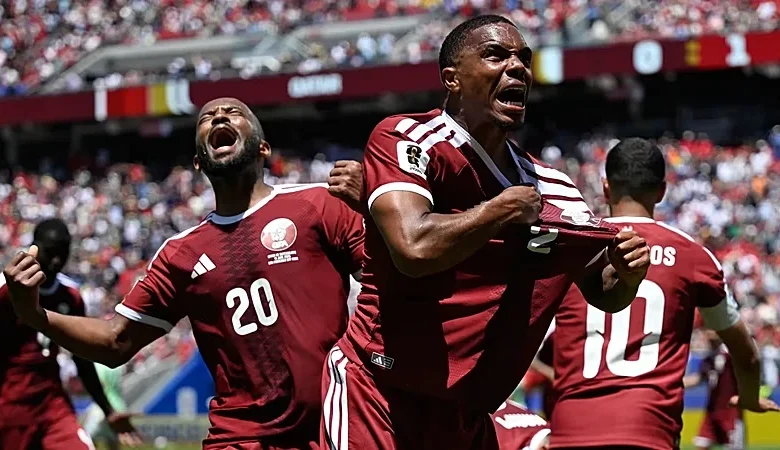
Qatar shocked the soccer world in Santa Clara, California, as Boualem Khoukhi scored a dramatic equalizing header in the fourth minute of stoppage time, snatching a 1-1 draw against a dominant Swiss side in Group B of the World Cup. The match, hosted at the sun-drenched Levi’s Stadium, appeared destined to end in a routine victory for Switzerland. However, the resilient Asian champions refused to back down, capitalizing on their single clear-cut opportunity of the second half to trigger wild celebrations among their players, coaching staff, and traveling supporters.
The draw leaves Group B wide open, with Switzerland left to rue a mountain of missed opportunities. Despite controlling over 65% of the possession and peppered the Qatari goal with shots, the Swiss national team failed to deliver the clinical finishing blow. For Qatar, this result represents a historic tactical triumph, proving that defensive discipline and clinical execution in high-pressure moments can offset a vast disparity in technical dominance.
The Swiss Breakthrough: Breel Embolo’s Statement
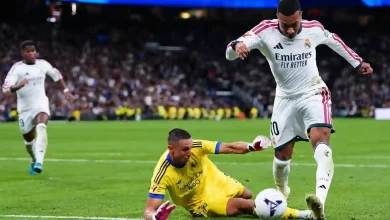
Switzerland entered the match with clear intent, pressing high up the pitch and seeking to exploit the spaces behind Qatar’s compact five-man defensive line. The breakthrough came midway through the first half when a swift, vertical passing sequence carved open the Qatari midfield. Switzerland’s dynamic forward, Breel Embolo, was brought down in the penalty area by a clumsy challenge from behind. The referee pointed to the spot without hesitation.
Embolo stepped up himself, exhibiting absolute composure under intense pressure. With a stutter-step run-up, he sent the Qatari goalkeeper the wrong way, slotting the ball low into the bottom-right corner. The goal was a massive personal and professional milestone for the striker, who had spent the preceding weeks in a state of administrative limbo. His performance throughout the first half was characterized by explosive runs and physical dominance, demonstrating exactly why head coach Murat Yakin was so desperate to have him in the starting eleven.
Behind the Scenes: Embolo’s Visa Struggle and USA Entry
The significance of Embolo’s opening goal cannot be understood without highlighting the immense logistical hurdles he faced just to step onto the pitch in Santa Clara. Just over a week prior to the match, Embolo was cleared to enter the United States following a highly publicized and stressful visa delay. The administrative bottleneck threatened to rule him out of the tournament’s opening fixtures, leaving the Swiss coaching staff scrambling for tactical alternatives.
The Swiss Football Association worked around the clock alongside consular diplomats to resolve the paperwork issues. Embolo finally joined his teammates in their California training camp with very little time to acclimate to the local time zone and climate. His ability to start, play with high intensity, and successfully convert a crucial penalty is a testament to his elite physical conditioning and mental fortitude. It also highlighted the precarious nature of international sporting logistics in the modern era.
Tactical Breakdown: Yakin’s Offense vs. Márquez’s Block
Tactically, the match was a classic confrontation between a possession-oriented, fluid attacking system and a rigid, highly disciplined defensive low block. Switzerland deployed a 3-4-2-1 formation designed to create overloads in the wide channels. Granit Xhaka orchestrated the tempo from deep, while wingbacks pushed high up the pitch to stretch the Qatari defense.
Qatar’s head coach, Tintín Márquez, responded with a highly defensive 5-3-2 setup. The objective was clear: concede the territory, choke the central creative spaces, and rely on quick transitions. Qatar’s backline remained compact, sacrificing offensive ambition to limit the space available to Switzerland’s creative playmakers. While this strategy forced Qatar to absorb an immense amount of pressure, it successfully prevented Switzerland from scoring from open play, keeping the scoreline within reach for a late-game surge.
Switzerland’s Undoing: A Story of Squandered Opportunities
Despite their tactical superiority, Switzerland’s inability to seal the game with a second goal proved fatal. Throughout the second half, the Swiss created several gold-plated scoring chances. Wingers found space behind the Qatari fullbacks, delivering dangerous low crosses that somehow eluded the oncoming attackers. On two occasions, Swiss forwards found themselves one-on-one with the goalkeeper, only to fire wide or straight into the keeper’s chest.
This lack of clinical finishing kept Qatar alive. As the clock ticked down, the Swiss team began to display signs of fatigue and complacency, perhaps believing they had done enough to secure the three points. In international soccer, a one-goal margin is never secure, and Switzerland’s failure to convert their dominance into goals left the door wide open for a late twist of fate.
Statistical Comparison: Qatar vs Switzerland
The statistical narrative of the match illustrates just how dominant Switzerland was in almost every metric, making the final scoreline all the more remarkable for Qatar.
| Match Metric | Qatar | Switzerland |
|---|---|---|
| Possession (%) | 34% | 66% |
| Total Shots | 4 | 17 |
| Shots on Target | 1 | 7 |
| Corner Kicks | 2 | 9 |
| Fouls Committed | 14 | 10 |
| Yellow Cards | 3 | 1 |
| Saves | 6 | 0 |
The 94th Minute: Boualem Khoukhi’s Moment of Magic
As the fourth official indicated five minutes of stoppage time, Qatar abandoned their defensive posture, committing extra bodies forward in a desperate bid to rescue a point. A late foul committed by Switzerland in the midfield gave Qatar a free kick in a dangerous attacking position. The ball was delivered deep into the Swiss penalty box, hanging in the air just long enough to create chaos among the defenders.
Boualem Khoukhi, Qatar’s veteran utility player known for his aerial prowess, anticipated the flight of the ball perfectly. Rising above a crowded pack of Swiss defenders and out-jumping his marker, Khoukhi connected with a powerful, looping header. The ball arched over the despairing dive of the Swiss goalkeeper and nestled into the top corner of the net. The stadium erupted as several Qatari players collapsed to the grass in sheer disbelief and ecstasy, while others embarked on a wild sprint to embrace their coaching staff on the touchline.
Group B Dynamics: Path to the Knockout Stage
According to the official tournament standings on the FIFA portal, Group B has now become one of the most unpredictable groups in the tournament. Switzerland, who had expected to comfortably secure three points, must now prepare for high-stakes matches against formidable group opponents with very little room for error. Their next fixture becomes a must-win to secure safe passage to the knockout rounds.
For Qatar, this single point feels like an absolute victory. It injects a massive boost of confidence into a squad that many pundits had written off prior to the tournament. If Qatar can replicate this defensive discipline and show greater efficiency in transition in their upcoming matches, they stand a genuine chance of navigating their way out of the group stage, defying pre-tournament expectations.
A Global Respite: Sports Amid Geopolitical Shifting Tides
While the drama on the pitch in Santa Clara captured the hearts of sporting enthusiasts, it also provided a momentary escape from a world increasingly shaped by geopolitical conflicts and economic transitions. In many ways, the international nature of the World Cup mirrors the complex global dynamics seen in other arenas of international relations. Just as sports teams must navigate logistics, visas, and unexpected tactical shifts, nations must constantly adapt to changing global landscapes.
For instance, while sporting rivalries remain intense, they occur against a backdrop of serious geopolitical events, such as the intense military standoffs seen in the Lebanon war. Furthermore, just as soccer pundits debate which strategy will dominate the tournament, political analysts find themselves examining unpredictable political arenas, similar to the dynamics of a crowded race where clear front-runners are hard to find. The economic footprint of hosting such massive international tournaments also intersects with global financial markets, where major investment decisions—such as BlackRock upgrading U.S. stocks—re-shape the economic realities of host nations and participating countries alike. Ultimately, the World Cup serves as a powerful reminder of how interconnected our world has become, where a visa delay in Europe can directly influence a sporting outcome on the pitch in California.