SpaceX Falcon Heavy Deploys Viasat F3: Global Broadband Complete
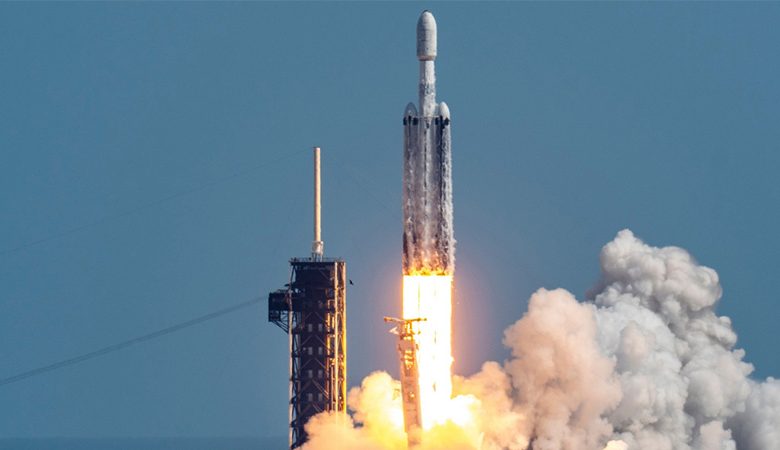
SpaceX ushered in a new era of global connectivity today as the Falcon Heavy rocket successfully deployed the highly anticipated Viasat-3 F3 satellite into Geostationary Transfer Orbit (GTO). This monumental launch effectively plugs the Asia-Pacific region into a seamless, high-throughput network, marking the completion of Viasat’s ambitious global broadband constellation. As the space internet race becomes increasingly crowded with established telecommunications giants and agile aerospace startups vying for orbital dominance, this collaborative mission underscores a unique dynamic in the modern space economy. When Elon Musk’s launch vehicles deploy the payload of a formidable competitor in the satellite internet sector, the ultimate benefactors are the end-users across the globe. The successful acquisition of the Viasat F3 signal confirms that the complex engineering gambles have paid off, setting a new benchmark for international data transmission and broadband accessibility.
The Viasat F3 Mission Explained
The mission commenced with the deafening roar of 27 Merlin engines igniting at the historic Launch Complex 39A at the Kennedy Space Center. Carrying the immense, multi-ton Viasat-3 F3 satellite, the vehicle pierced the Florida sky, tasked with an incredibly demanding orbital trajectory. The Viasat-3 class satellites are among the largest and most complex commercial telecommunications payloads ever constructed, requiring a launch vehicle with extraordinary lift capacity. The primary objective of the F3 mission was to position this gargantuan piece of hardware precisely so it could unfold its massive solar arrays and deploy its intricate antenna systems. This specific satellite is designed to cover the Asia-Pacific (APAC) region, a vast and geographically diverse area that presents unique challenges for traditional internet service providers. The flawless execution of the ascent, payload fairing separation, and eventual payload deployment highlights the maturity and reliability of modern commercial spaceflight operations.
Falcon Heavy’s Unmatched Power
Choosing the right launch vehicle for a payload exceeding 6,000 kilograms bound for a geostationary orbit is no small feat. The rocket of choice needed to provide not just raw thrust, but precision insertion capabilities. With over 5 million pounds of thrust at liftoff, the heavy-lift vehicle provided the necessary kinetic energy to propel the Viasat F3 deep into space, minimizing the amount of onboard station-keeping propellant the satellite would need to expend to reach its final orbital slot. For an in-depth look at these mechanics, observers often consult the SpaceX Falcon Heavy technical payload metrics. This efficiency translates directly into a longer operational lifespan for the satellite, enhancing the overall return on investment for the telecommunications provider. Furthermore, the spectacle of the dual side-booster landings back at Cape Canaveral continues to demonstrate the economic viability of reusable rocket technology, a paradigm shift that has fundamentally altered the financial equations of space exploration and commercial satellite deployment.
Asia-Pacific Signal Acquisition
Confirmation of signal acquisition is the critical moment in any satellite mission where mission control breathes a collective sigh of relief. Shortly after separation from the upper stage, Viasat engineers in Carlsbad, California, successfully established telemetry and command links with the F3 spacecraft. This successful handshake initiates a weeks-long process of orbit raising, system diagnostics, and payload calibration. Once fully operational, the F3 satellite will bathe the Asia-Pacific region in high-speed Ka-band capacity. This region, encompassing dense urban centers like Tokyo and Mumbai alongside thousands of remote islands in Indonesia and the Philippines, desperately requires flexible and robust bandwidth solutions. The sheer scale of the coverage area means that millions of previously underserved individuals, maritime vessels, and commercial aircraft will soon have access to fiber-like internet speeds from the sky.
Expanding the Global Broadband Constellation
The successful deployment of the F3 satellite marks the culmination of a decade-long strategic vision. The Viasat-3 constellation is designed to be a three-satellite network providing near-global coverage. With the F1 satellite dedicated to the Americas and the F2 satellite serving the Europe, Middle East, and Africa (EMEA) regions, the addition of F3 over the Asia-Pacific completes the puzzle. Each of these satellites is engineered to deliver over 1 Terabit per second (Tbps) of network capacity, representing a massive leap forward in geostationary satellite capabilities. This interconnected global web allows the provider to dynamically allocate bandwidth to areas of highest demand, routing capacity to busy aviation corridors or maritime shipping lanes as needed. This flexibility is a game-changer in the telecommunications industry, moving away from static, rigid satellite beams to a software-defined, highly adaptable network architecture.
Viasat vs. Starlink: The Space Internet Race
The completion of this constellation inevitably invites comparisons with other major players in the space internet sector. While some companies focus on Low Earth Orbit (LEO) constellations consisting of thousands of smaller satellites to provide low-latency connections, geostationary systems take a different approach. GEO satellites orbit at approximately 35,786 kilometers above the Earth, providing massive capacity over enormous footprints. The competition is fierce, particularly in premium markets such as commercial aviation and maritime connectivity. For instance, as Starlink transforms in-flight WiFi with multi-gigabit speeds, traditional providers are forced to innovate rapidly. However, the sheer volume of data that a single Viasat-3 class satellite can handle remains a formidable advantage in areas with highly concentrated user bases, such as major international airports or crowded naval choke points. The market is proving large enough to sustain both LEO and GEO models, as different consumers prioritize either latency or absolute bandwidth capacity.
Technological Synergies: Rockets and Satellites
One of the most fascinating aspects of the modern aerospace industry is the willingness of competitors to collaborate when it makes logistical and financial sense. Launching a competitor’s satellite might seem counterintuitive in a cutthroat market, but the launch services division and the satellite internet division of these mega-corporations operate with distinct profit motives. By providing reliable and cost-effective launch services to all paying customers, the launch provider solidifies its monopoly on access to space, generating immense revenue that funds other ambitious projects, such as interplanetary exploration. Meanwhile, the satellite operator secures a dependable ride to orbit, mitigating launch risks and ensuring their network expands on schedule. This symbiotic relationship demonstrates a mature, pragmatic approach to business where technological synergies override petty rivalries, ultimately accelerating the pace of global innovation.
Redefining Launch Economics
The financial barrier to entry for space-based operations has plummeted over the last decade, primarily due to the advent of reusable rocketry. Historically, launching a satellite of this magnitude would cost hundreds of millions of dollars on expendable vehicles. Today, the cost per kilogram to Geostationary Transfer Orbit has been slashed dramatically. This reduction in capital expenditure allows telecommunications companies to invest more heavily in the actual satellite payloads, developing more sophisticated digital signal processors, larger deployable antennas, and more efficient solar power arrays. The trickle-down effect of these redefined launch economics is evident in the consumer market, where the cost per megabit of satellite data continues to decrease, making space-based broadband a viable alternative to terrestrial networks in an expanding number of geographical markets.
Implications for the Global Economy and Security
The impact of ubiquitous global broadband extends far beyond consumer internet access; it is a foundational element of modern economic stability and national security. In an era where digital infrastructure is as critical as physical roads and ports, uninterrupted connectivity ensures the smooth operation of global supply chains, international finance, and corporate communications. When geopolitical tensions or natural disasters sever terrestrial fiber-optic cables, high-capacity satellite networks act as an indispensable fail-safe. For example, resilient digital infrastructure is vital when regional instabilities threaten markets; we see this clearly when China economic cracks exposed by Iran war commodity shocks force multinational corporations to rapidly reorganize their logistics networks. Reliable satellite communications ensure these critical adjustments can be managed securely from anywhere on the globe, providing a buffer against cascading economic failures.
Connecting the Unconnected in Remote Regions
Perhaps the most profound societal impact of the Viasat F3 deployment will be felt in the remote and developing regions of the Asia-Pacific. Bridging the digital divide is not merely about access to social media; it is about enabling telemedicine, remote education, and digital banking for communities that have been historically marginalized by lack of infrastructure. As global political alliances shift, the reliance on independent, space-based connectivity becomes a matter of national sovereignty for many emerging economies. The geopolitical landscape is evolving, and as the BRICS silence on Iran crisis exposes Global South fractures, developing nations are increasingly recognizing the necessity of autonomous, reliable communications infrastructure to secure their economic independence and foster domestic growth.
Military and Strategic Applications
The defense sector is a massive consumer of commercial satellite bandwidth. Modern military operations require vast amounts of data for drone telemetry, encrypted communications, and real-time situational awareness. The Department of Defense and allied militaries leverage high-throughput commercial satellites to augment their proprietary military networks, providing crucial redundancy in contested environments. The Asia-Pacific theater, in particular, is an area of intense strategic focus where naval and air forces operate across vast distances. The capacity provided by the new constellation enhances the operational effectiveness of these forces. Furthermore, recent military exercises underscore the importance of space-based assets; just as the Space Force Operation Epic Fury validates combat readiness in managing orbital threats, maintaining robust, high-capacity data links via commercial partners is an essential component of modern strategic deterrence and tactical superiority.
Market Reactions and Future Constellation Goals
The financial markets reacted positively to the confirmation of signal acquisition, viewing the successful deployment as a major derisking event for the telecommunications sector. Investors recognize that the operationalization of the Asia-Pacific node unlocks significant revenue streams previously inaccessible due to capacity constraints. Telecommunications stocks experienced a noticeable uptick as analysts revised their growth forecasts based on the projected subscriber acquisitions in the aviation, maritime, and residential broadband sectors across Asia and Oceania. Looking ahead, the focus now shifts from physical deployment to network optimization. Engineers will spend the coming months fine-tuning the software-defined payload to maximize efficiency and tailor coverage areas to specific customer demands, ensuring that the return on this massive orbital investment is fully realized over the satellite’s expected 15-year lifespan.
Anticipating Next-Generation Orbitals
Even as the current generation of mega-satellites comes online, the industry is already looking toward the future. The next wave of space internet infrastructure will likely feature advanced optical inter-satellite links (OISL), allowing spacecraft to transmit data to one another via lasers in the vacuum of space, entirely bypassing the need for immediate ground station relays. This technology promises to further reduce latency and increase the security of data transmissions. Additionally, the development of entirely reusable heavy-lift vehicles, which are currently undergoing rigorous flight testing, will push launch costs down even further, potentially enabling the deployment of even larger, more capable structures in orbit. The relentless pace of innovation ensures that the space internet race will only accelerate from this point forward.
| Constellation Provider | Orbit Classification | Primary Target Market | Capacity Architecture |
|---|---|---|---|
| Viasat | Geostationary (GEO) | Aviation, Maritime, Enterprise | High-Capacity Targeted Beams |
| SpaceX (Starlink) | Low Earth Orbit (LEO) | Residential, Mobility, Defense | Low Latency, High Global Coverage |
| OneWeb | Low Earth Orbit (LEO) | Enterprise, Government, B2B | Low Latency B2B Trunking |
Conclusion: A Win-Win for the Space Industry
The flawless execution of this launch represents a monumental achievement for the global telecommunications infrastructure. By placing the final piece of a three-part global puzzle into orbit, the Asia-Pacific region is now seamlessly integrated into a massive, high-speed broadband network. The collaboration between the premier launch service provider and a leading satellite communications operator highlights a pragmatic, results-driven approach that benefits consumers, enterprises, and defense organizations worldwide. As the orbital pathways become busier and the demand for data continues its exponential growth, the successful deployment of these colossal spacecraft proves that human engineering can overcome the vast distances of geography. In the rapidly evolving landscape of space-based internet, this mission proves that strategic partnerships and technological excellence ultimately lead to a scenario where everyone wins, bringing the entire planet closer together through the power of unparalleled digital connectivity.