USS George Washington sailors Face Harsh Realities of Iran War 2026
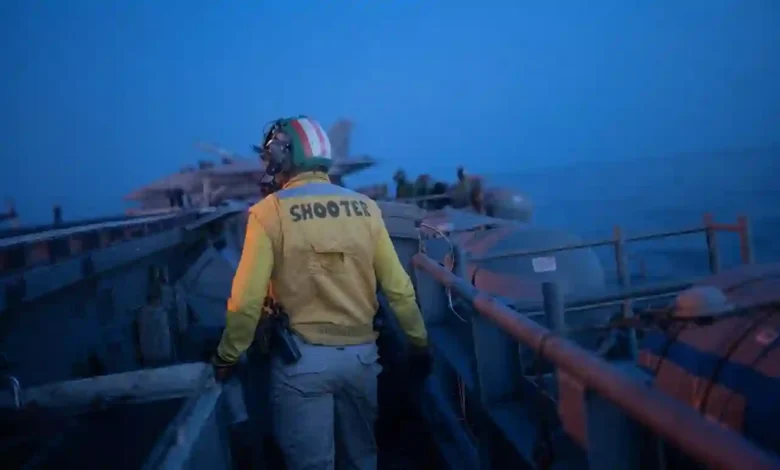
Table of Contents
USS George Washington sailors are navigating the stark reality of active naval combat as tensions across the Persian Gulf reach unprecedented heights. Stationed in waters where ballistic trajectories, one-way attack drones, and asymmetric naval warfare dominate daily intelligence briefs, thousands of young servicemembers—many deployed for the first time—find their expectations of peacetime service abruptly redefined. The supercarrier, a nuclear-powered symbol of American maritime dominance, serves as both an airbase and a sovereign garrison exposed to constant alert states.
USS :Life on the Flight Deck: The Frontline Reality
The flight deck of a Nimitz-class aircraft carrier is universally acknowledged as one of the most hazardous work environments on the planet. When high-tempo combat strike operations are introduced, that danger multiplies exponentially. Flight deck crews, easily recognizable by their color-coded jerseys, work through suffocating heat and ambient noise levels exceeding 130 decibels. Green shirts maintain arresting cables and catapult hardware, yellow shirts guide roaring F/A-18E/F Super Hornets and F-35C Lightning IIs toward the steam-powered launch shuttles, and red shirts load high-explosive ordnance under strict countdown windows.
For junior enlisted personnel, many between the ages of 19 and 22, the transition from simulated training at naval bases in Virginia or California to launching ordnance into contested combat zones happened in weeks. The sudden escalation brought on by an aggressive iran military response has forced flight deck directors and weapons handlers to operate on limited sleep and razor-thin margins of safety. A split-second miscalculation during night recoveries can cause catapult entanglement, structural damage, or catastrophic deck fires.
USS :The Mental Toll and Shifting Crew Demographics
Behind the ship’s massive steel bulkheads, the psychological impact of impending threat is palpable. Unlike historical naval engagements where adversaries fought at visual range, modern combat involves radar traces, early warning warnings from Aegis cruisers, and unexpected alarms blaring over the 1MC announcement system. Young sailors learn to identify incoming surface and aerial threats while stationed at watch posts deep inside the carrier’s hull.
Naval chaplains, clinical psychologists, and departmental leaders have instituted peer-support routines designed to mitigate the psychological fatigue brought on by persistent alert statuses. The sheer geographic detachment from family back home, exacerbated by tactical blackouts on personal communication channels to prevent electronic signature leakage, intensifies the feeling of vulnerability. Servicemembers routinely spend 14 to 16 hours on watch, rotating into crowded berthing spaces where sleep is frequently interrupted by emergency drills and combat launches.
USS :Operational Tempo and Sustained Combat Readiness
Operating a strike group during open hostilities requires relentless logistical orchestration. Ordnance elevators cycle non-stop, lifting laser-guided munitions and long-range air-to-air missiles from magazines located deep within the lower decks. Logistics specialists manage supply chains spanning thousands of nautical miles, constantly replenishing fuel, aviation components, and consumable goods via underway replenishment ships.
The sustained operational intensity mimics patterns witnessed earlier across regional theaters, echoing the intense pressure placed on the uss abraham lincoln during prior crises. Every department aboard, from aviation machinists to shipfitters maintaining water distillation plants, plays an interconnected role in ensuring the carrier remains an immovable bastion of offensive power. When supply lines are tested by maritime disruption, commanders must meticulously track store levels, especially in an era marked by critical munitions shortages that demand strict ordnance management.
USS :Tactical Challenges in the Persian Gulf and Gulf of Oman
Operating near narrow maritime choke points presents complex tactical dilemmas. The proximity of hostile coastlines shortens intercept windows for incoming anti-ship cruise missiles and unmanned aerial platforms. Electronic warfare suites hum continuously, attempting to jam tracking radars and spoof guidance systems before hostile munitions can achieve terminal lock on the strike group’s high-value assets.
A major area of tactical vigilance centers along maritime waterways near the iran strait of hormuz, where shallow waters and dense commercial shipping lanes allow adversary speedboats and miniature submarines to obscure their movements. The threat environment is further complicated by unconventional tactics developed by the iranian military, which relies heavily on swarm craft and shore-based mobile launchers hidden within mountainous terrain. Lookout watches stationed with crew-served weapons along the catwalks must remain permanently vigilant against sudden surface incursions, especially when confronting the shadow fleet irans deployment of disguised suicide boats in the strait of hormuz.
USS :Carrier Strike Group Defensive and Offensive Profile
The USS George Washington (CVN 73) does not operate in isolation; it anchors an intricate network of guided-missile cruisers, destroyers, and air defense squadrons. The table below outlines the core components and tactical responsibilities that comprise Carrier Strike Group operations in this contested maritime battlespace.
| Strike Group Component | Primary Platforms | Operational Mission | Threat Mitigation Focus |
|---|---|---|---|
| Air Wing (CVW) | F/A-18E/F, F-35C, E-2D Hawkeye, EA-18G Growler | Offensive strike, combat air patrol, airborne early warning | Aerial intercepts, strike package escort, electronic jamming |
| Air and Missile Defense | Ticonderoga-class Cruisers, Arleigh Burke-class Destroyers | Layered exoatmospheric and local air defense | Anti-ship ballistic missiles, low-altitude cruise missiles |
| Undersea Warfare Shield | Fast Attack Submarines (SSN), MH-60R Seahawks | Subsurface interdiction, choke-point surveillance | Diesel-electric coastal subs, midget attack subs, naval mines |
| Combat Logistics Fleet | T-AO replenishment oilers, T-AKE dry cargo ships | Underway replenishment of fuel, ordnance, and stores | Sustaining combat operations without port dependencies |
USS :Living Conditions Under Sustained General Quarters
Life aboard CVN 73 has contracted into an unforgiving cycle of watchstanding, maintenance, and brief moments of recuperation. When “General Quarters” sounds, all interior watertight doors are dogged down, isolating individual compartments to prevent progressive flooding or fire spread in the event of hull breach. This compartmentalization traps heat and cuts off transit routes, forcing sailors to spend hours confined in small technical control centers or engineering spaces.
Culinary teams face the daunting challenge of feeding more than 5,000 crew members while the ship maneuvers violently during tactical flight operations. Meals are frequently served as field rations or cold provisions when galleys must secure power to support combat sensors or damage control drills. Despite the austerity, the shared hardship fosters deep camaraderie among junior ratings who lean on one another to navigate the grueling tempo of sea-based military duty.
Geopolitical Stakes Reshaping Naval Doctrine
The strategic deployment of the USS George Washington reflects broader shifts in how naval power is leveraged in modern great-power competition. While naval doctrine previously emphasized deterrence through visible presence, current engagements in the Middle East demand aggressive kinetic power projection. Routine air patrols frequently transition into high-intensity centcom strikes against command-and-control nodes, coastal missile batteries, and radar installations.
Senior commanders recognize that the experiences gained on CVN 73 will dictate tactical training and force modernization for decades to come. As asymmetric anti-access/area-denial (A2/AD) capabilities proliferate, the carrier strike group must continuously adapt its deployment posture, proving that heavy surface vessels can operate successfully within missile engagement zones while maintaining sea control.
The Path Forward for the Crew
For the young men and women aboard the USS George Washington, the conflict is not an abstract strategic puzzle analyzed in think-tank white papers; it is measured in deck-crew hand signals, sleepless watches, and the thunderous recoil of arresting wires catching returning combat aircraft. Each successful evolution on the flight deck reinforces their discipline and technical expertise.
As the carrier maintains its strategic position, the young crew continues to balance personal anxiety with collective mission execution. The lessons forged in this high-intensity crucible are turning a generation of peacetime enlistees into seasoned naval combat veterans, whose resilience ensures that the aircraft carrier remains an effective shield for allied interests in one of the world’s most volatile maritime corridors.