Prada Expands Milan Flagship in Historic Galleria Arcade 2026
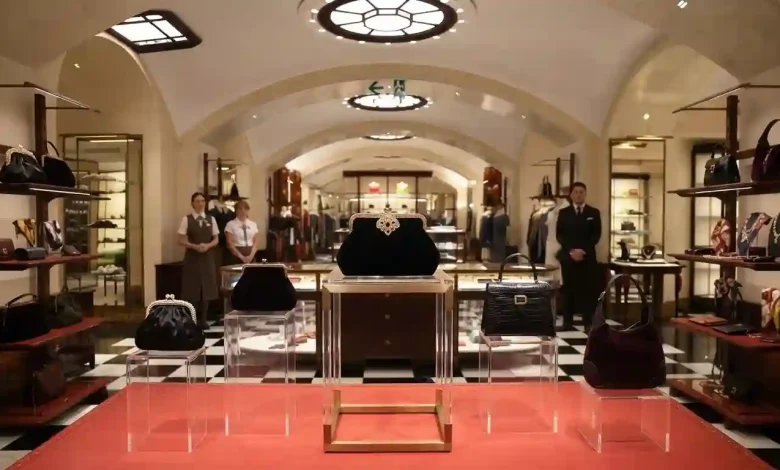
Table of Contents
Prada expands Milan flagship operations inside the legendary Galleria Vittorio Emanuele II, underscoring the Italian luxury maison’s resolute ambition to fortify relationships with high-net-worth patrons while captivating a new generation of aspirational buyers. Situated under the soaring glass cupolas of Milan’s 19th-century retail monument, the renovated and substantially enlarged flagship stands precisely where founders Mario and Martino Prada opened the inaugural “Fratelli Prada” leatherware boutique in 1913. Chief Executive Officer Andrea Guerra affirmed to Reuters that this grand reconfiguration is engineered to elevate customer intimacy, curate personalized private-shopping environments, and cement Prada’s commanding footprint in the fashion capital of Europe.
The expansion arrives during a transformative chapter for the global luxury sector. While macroeconomic tremors and changing consumer demographics have prompted volatility across retail portfolios, Prada Group continues to outperform competitors by blending rigorous aesthetic curation with aggressive spatial reinvestment. By revitalizing its dual menswear and womenswear presence inside the Galleria, the group reinforces the concept of experiential luxury, ensuring that its historic cradle serves not merely as a high-traffic point of transaction, but as the intellectual and cultural epicenter of the brand.
Architectural Renaissance at Galleria Vittorio Emanuele
The architectural orchestration of the newly expanded flagship represents a delicate balance between rigorous historical preservation and sharp contemporary minimalism. Working within the municipal constraints governing the Galleria Vittorio Emanuele II—a monumental neoclassical structure established between 1865 and 1877—Prada retained celebrated heritage elements while incorporating spatial configurations optimized for VIP privacy.
The original women’s boutique, which occupies the historic cornerstone where Mario Prada first presented steamer trunks, fine canes, and imported accessories, has been meticulously refreshed. Original mahogany shelving and crystal-faced display cases have been conserved, existing in visual dialogue with the brand’s signature pastel-green walls and black-and-white chequered marble flooring inspired by Prada’s classic black-and-white identity. By acquiring and integrating contiguous vertical space, the brand has created discrete salons on upper levels overlooking the central octagonal piazza, giving premier clients sweeping views of Milan’s most recognizable architectural crossroads.
This spatial elevation is matched on the opposing wing of the arcade, where Prada’s dedicated menswear salon has undergone parallel modernization. The dual-presence structure gives the house an exceptional degree of dominance in the Galleria, welcoming international travelers departing from Piazza del Duomo toward Teatro alla Scala while catering directly to domestic connoisseurs seeking bespoke tailoring and private fittings.
Andrea Guerra on Wealthy Clienteling and Market Strategy
In detailing the reasoning behind the flagship overhaul, Prada Group CEO Andrea Guerra emphasized that physical retail environments must provide far more than shelf space for seasonal collections. Guerra, who assumed the chief executive reins in early 2023 to steer the group through its next institutional growth phase alongside Miuccia Prada and Patrizio Bertelli, highlighted that the modern luxury shopper demands intimacy, depth, and unmistakable cultural resonance.
According to Guerra, expanding the Galleria premises allows the maison to deepen engagement with top-tier spenders—known in luxury industry terminology as Very Important Clients (VICs)—without alienating younger, digitally fluent demographics entering the brand’s sphere. The expanded footprints are designed with customizable private rooms, discreet changing quarters, and salon spaces capable of hosting trunk shows, bespoke ordering sessions, and intimate cultural gatherings. Even as broader equities demonstrate shifting momentum across various consumer discretionary sectors, investment in high-performing physical retail anchors remains a central pillar of Prada Group’s capital allocation.
Guerra’s remarks reflect an overarching luxury philosophy: top-tier retail square footage must generate experiential equity. The decision to pour capital into the Galleria rather than solely pursuing satellite boutiques in speculative emerging markets demonstrates an institutional conviction that historic authenticity cannot be fabricated. In a world saturated with digital touchpoints, the physical touchstone of Galleria Vittorio Emanuele offers an irreproducible brand moat.
From Fratelli Prada to Global Powerhouse: An Archival Anchor
Understanding the weight of this expansion requires contextualizing what the Galleria Vittorio Emanuele II represents to the Prada lineage. In 1913, brothers Mario and Martino Prada established Fratelli Prada, catering directly to European aristocracy, affluent merchants, and international travelers navigating Milan’s industrial boom. By 1919, the boutique had earned the prestigious title of Official Supplier to the Italian Royal House, permitting the firm to incorporate the House of Savoy coat of arms and knotted rope design into its heraldic logo.
The transformation of this artisanal leather shop into a global design juggernaut gained velocity in the late 1970s when Miuccia Prada, Mario’s granddaughter, partnered with entrepreneur Patrizio Bertelli. The introduction of industrial Pocono nylon bags in the mid-1980s subverted prevailing bourgeois conventions of luxury, ushering in an era of intellectualized elegance. Today, co-creative direction shared between Miuccia Prada and Raf Simons has maintained that precise tension between intellectual inquiry and commercial vitality.
By maintaining its historical headquarters and original salon in the Galleria, Prada links its avant-garde present directly to its artisanal dawn. The renovation preserves this lineage by providing archival displays within the boutique, where customers can examine early 20th-century leather craftsmanship before exploring runway collections designed by Miuccia Prada and Raf Simons.
The Rise of the VIC: Bespoke Salons and Private Luxury
Across the broader high-end fashion industry, the balance of purchasing power has shifted dramatically toward ultra-high-net-worth individuals. While aspirational consumers have felt the squeeze of persistent living costs and macroeconomic headwinds, the VIC demographic remains exceptionally insulated. In reaction, premier luxury houses are transforming flagship assets to cater specifically to this tier.
The enlarged Milanese flagship features private apartments that function outside normal retail floor dynamics. These private rooms offer:
- Exclusive access to runway previews prior to commercial drop dates.
- Personalized tailoring services overseen by master Milanese artisans.
- Private dining and hospitality coordinated with Milan’s premier culinary institutions.
- One-on-one appointments with high-jewelry and made-to-measure leather specialists.
As global investors watch divergent corporate performance across consumer-facing industries, luxury brands are realizing that client retention yields far higher returns than broad-spectrum acquisition. Bespoke VIP environments cultivate lifelong loyalty, transforming transactional interactions into multifaceted hospitality experiences that guard against market volatility.
Financial Resilience in an Uncertain Luxury Landscape
Prada Group’s physical retail expansion arrives at a time of distinct market bifurcation. While several conglomerate peers have posted deceleration in key geographic territories, Prada and its subsidiary Miu Miu have consistently posted robust organic revenue growth. The runaway viral momentum of Miu Miu among younger tastemakers, paired with the enduring authority of the Prada mainline, has provided the group with extraordinary operating leverage.
Financial analysts attribute this resilience to the brand’s distinctive voice and disciplined inventory controls. Even as wider markets navigate systemic shifts—such as those seen during historical periods of global economic volatility—Prada Group has protected its gross margins by minimizing markdown exposure and cultivating resilient full-price sell-through rates across its worldwide directly operated store (DOS) network.
The group’s capital expenditure strategy has focused relentlessly on flagship renovations across key cultural capitals including Milan, Paris, Tokyo, and New York. Much like rare asset markets where record auction transactions demonstrate deep liquidity at the absolute apex of luxury, high-end retail flagships located in historically irreplaceable real estate continue to command tremendous pricing power.
Comparative Overview: Prada’s Galleria Transformation
To grasp the scale of Prada’s real estate enhancements within the Galleria Vittorio Emanuele II, the following structural breakdown highlights key shifts between its legacy presence and the newly expanded premises:
| Strategic Dimension | Legacy Configuration | Expanded Flagship Execution |
|---|---|---|
| Total Square Footage | Dual separate footprint split across distinct retail levels. | Significantly expanded multi-level layout with contiguous vertical flow. |
| Clienteling Facilities | Standard fitting quarters with limited private dressing rooms. | Dedicated VIC apartments, bespoke consultation suites, private viewing salons. |
| Heritage Integration | Traditional displays focusing primarily on current seasonal leather goods. | Conserved 1913 mahogany architecture with curated historical luggage archives. |
| Product Assortment | Standard allocation of seasonal ready-to-wear, leather goods, and shoes. | Full ready-to-wear lines, bespoke tailoring, fine jewelry, and limited Galleria editions. |
| Hospitality Integration | Direct retail engagement without dedicated lounge facilities. | Integrated private hospitality, private dining options, and cultural event zones. |
As large-scale retail operators analyze broader commercial transformation trends across diverse consumer segments, Prada’s dedication to architectural craftsmanship showcases the unique survival mechanics of true luxury.
Milan’s Retail Geography: Galleria Versus Quadrilatero della Moda
Milan’s luxury retail ecosystem has long been defined by two distinct geographic poles: Via Monte Napoleone in the Quadrilatero della Moda and the Galleria Vittorio Emanuele II situated directly adjacent to the Duomo. While Via Monte Napoleone is historically regarded as the transactional heart of haute couture fashion—recently commanding record-breaking commercial rental yields that surpass Fifth Avenue and New Bond Street—the Galleria offers unmatched historical grandeur and public visibility.
Prada operates premier boutiques in both enclaves, yet the Galleria carries a specialized significance that pure fashion streets cannot replicate. Because the Galleria connects Milan’s religious heart (the Duomo) with its musical crown jewel (La Scala), footfall comprises a unique intersection of international dignitaries, global cultural travelers, and discerning Milanese elites. While retail dynamics on broader commercial indices mirror evolving equity market shifts, location pedigree in historic city centers remains an immutable competitive asset.
By expanding within the Galleria rather than consolidating exclusively on Monte Napoleone, Prada asserts its identity as an intrinsic institutional element of Milan itself. It positions the brand not merely as a commercial vendor occupying leased space, but as a cultural custodian of Milan’s civic identity.
Long-Term Outlook for Prada Group and Global Retail
Prada Group’s proactive physical upgrades signal broader intentions across the global marketplace. As international capital markets evaluate public offering trajectories and dual-listing prospects for international fashion enterprises, Prada’s financial health, debt minimization, and disciplined expansion place it in an enviable institutional position. Group executives have frequently discussed potential future dual-listings on European bourses to complement their historic Hong Kong listing, a maneuver that would further attract continental investment funds.
Moreover, the integration of bespoke spaces within physical flagships aligns with wider market data suggesting that physical stores drive omni-channel engagement. Even during periods characterized by complex macroeconomic market behaviors, high-end consumers consistently seek tactical immersion before concluding significant acquisitions in leather goods and fine jewelry.
Under Andrea Guerra’s stewardship and the creative partnership of Miuccia Prada and Raf Simons, Prada Group illustrates how legacy institutions survive industry cyclicality. By respecting the foundation laid by Fratelli Prada in 1913 while aggressively engineering spaces suited for 21st-century ultra-wealth clienteling, the house ensures that the Galleria Vittorio Emanuele II remains an eternal engine of Milanese luxury innovation.