Deep state firings begin at ODNI under acting chief Bill Pulte 2026
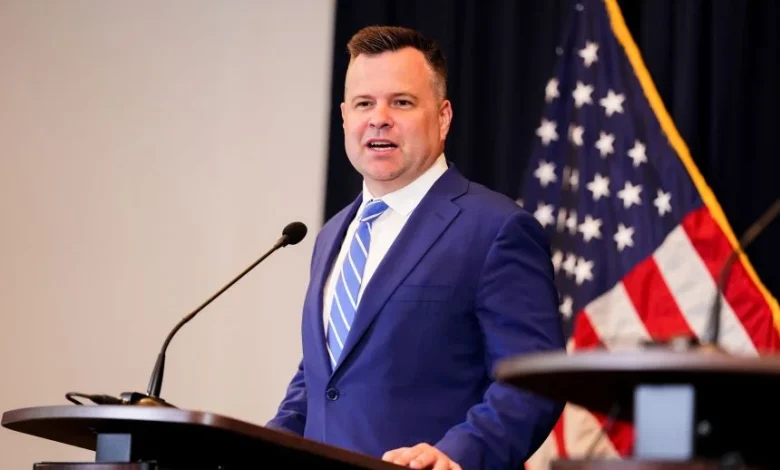
Deep State Firings: The ODNI Purge Commences
Deep state firings have officially begun within the highest echelons of the United States intelligence apparatus, marking an unprecedented structural reorganization that has sent shockwaves through Washington. On Monday, June 22, 2026, pink slips began circulating at the Office of the Director of National Intelligence (ODNI), signal-firing a massive campaign to downsize the premier coordinating body of the nation’s eighteen spy agencies. CNN was first to report that the dismissals were underway, quoting an administrative source close to the developments who confirmed, ‘The deep state firings have begun.’
The sweeping purge is being spearheaded by the newly appointed acting director, Bill Pulte, whom President Donald Trump tapped earlier this month to execute a radical overhaul. In a statement posted to Truth Social, Trump revealed that he had specifically ‘asked him to execute the immediate and needed downsizing of the office, reverting staff to their home agencies.’ This drastic mandate is aimed at dismantling what the administration views as an overly bloated, politically biased bureaucracy within the ODNI, with hundreds of staff members expected to be reassigned or permanently dismissed. Despite the high-stakes nature of the layoffs, the Office of the Director of National Intelligence did not immediately respond to multiple requests for comment, leaving employees and lawmakers scrambling for answers.
ODNI :The Catalyst: Bill Pulte’s Unconventional Appointment
The catalyst behind this abrupt administrative shift is Bill Pulte, whose appointment has drawn fierce criticism from both sides of the aisle due to his complete lack of a background in national security or intelligence affairs. Before taking the reins at the ODNI, Pulte was serving as the head of the Federal Housing Finance Agency (FHFA), where he supervised the financial stability of the housing market and mortgage giants Fannie Mae and Freddie Mac. Pulte’s rapid ascent into the peak of the intelligence community has shocked veterans of the defense sector, who argue that managing housing portfolios does not qualify an individual to oversee sensitive operations, including counterterrorism, satellite reconnaissance, and foreign clandestine services.
Within the administration, Pulte is widely recognized as a fiercely loyal ally of the president. Insiders have historically referred to him by the moniker ‘Little Trump’ due to his unwavering alignment with the president’s political objectives and executive style. During his tenure at the FHFA, Pulte gained notoriety for initiating aggressive investigations into prominent political adversaries of the administration. He filed criminal referrals with the Department of Justice alleging mortgage fraud against several high-profile Democrats, including New York Attorney General Letitia James, Senator Adam Schiff, Federal Reserve Governor Lisa Cook, and former Representative Eric Swalwell. Although these targets vehemently denied the allegations—and a federal investigation by the Government Accountability Office (GAO) into whether Pulte misused his executive authority is ongoing—his willingness to aggressively challenge institutional figures made him the ideal candidate to execute Trump’s executive purge.
ODNI :Targeting Key Intelligence Centers: NCTC and NCSC Under Fire
Initial reports indicate that the downsizing will not be distributed evenly across the ODNI, but will instead target specific centers that have long been viewed with suspicion by the administration. According to sources close to the situation, the two departments expected to be hit hardest by the massive personnel cuts are the National Counterterrorism Center (NCTC) and the National Counterintelligence and Security Center (NCSC). These specialized entities play a critical role in synthesis and analysis, acting as the primary bridges between separate intelligence organizations like the CIA, FBI, and NSA.
The decision to target the NCTC and NCSC has alarmed intelligence experts, who warn that reducing the staff of these analytical hubs could directly jeopardize national security. The NCTC was established specifically in the wake of the September 11 terrorist attacks to solve the critical information-sharing failures that allowed the hijackers to operate undetected. By breaking down the walls between these agencies, the center ensured that disparate pieces of information could be compiled into a single, cohesive threat assessment. Dismantling or severely downsizing these coordinating bodies threats to recreate the exact intelligence silos that left the country vulnerable decades ago, creating critical blind spots that foreign adversaries could exploit.
ODNI :Strategic Overview: ODNI Centers and Transition Dynamics
To fully comprehend the operational impact of the ongoing downsizings, it is essential to examine the specific mandates of the targeted components within the Office of the Director of National Intelligence framework. The table below outlines the core functions and projected vulnerabilities resulting from the current administrative actions.
| ODNI Element / Component | Primary Security Mandate | Estimated Operational Impact of Firings | Key Areas of Concern |
|---|---|---|---|
| National Counterterrorism Center (NCTC) | Integrates and analyzes all US intelligence on foreign terrorism | Severe; expected to face major personnel cuts | Potential gaps in tracking foreign extremist sleeper cells and proxy threats |
| National Counterintelligence and Security Center (NCSC) | Protects US secrets, supply chains, and critical infrastructure from foreign spies | Severe; deep administrative downsizing and active duty personnel reductions | Increased vulnerability to state-sponsored espionage and cyber operations |
| ODNI Central Leadership & Staff | Coordinates information sharing among the 18 federal intelligence agencies | Moderate-High; staff reverted back to home agencies | Siloed agency operations, reduction in cooperative analysis efficiency |
Congressional Backlash and Warnings from Capitol Hill
The rapid implementation of the firings has ignited intense backlash on Capitol Hill, with lawmakers expressing grave concern over the stability of the nation’s defense apparatus. On Monday, top Democrats on the Senate and House Intelligence Committees took the extraordinary step of sending a formal letter to acting director Bill Pulte. In the correspondence, Senate Intelligence Committee Chairman Mark Warner and House Intelligence Committee Ranking Member Jim Himes explicitly warned Pulte of the severe operational risks associated with executing sudden, large-scale cuts to the federal intelligence workforce.
In their joint letter, Warner and Himes wrote, ‘We are concerned by reports that you intend to fire or place on leave hundreds of Office of the Director of National Intelligence (ODNI) officers as soon as this week.’ They emphasized that while institutional efficiency is a valid goal, executing arbitrary mass layoffs bypasses structured, analytical evaluations of the agency’s needs. The lawmakers pointed out that the ODNI had already undergone significant downsizing in 2025, and warned that further hollow-out operations ‘risk jeopardizing the mission of an organization explicitly created after 9/11 to prevent any future such terrorist attack.’
The Logistics of the Purge: Speed, Secrecy, and Surprise
The logistical execution of the cuts has been characterized by speed, secrecy, and surprise. According to intelligence sources, Pulte caught the agency’s leadership off guard by showing up at the ODNI headquarters a day early last week, immediately requesting a master roster listing every single employee in the office. This aggressive entrance reportedly surprised even the outgoing Director of National Intelligence, Tulsi Gabbard, whose tenure was unexpectedly cut short by the president to accelerate Pulte’s arrival.
Following his initial arrival, Pulte issued a directive requiring every division head within the ODNI to compile and submit a list ranking all personnel by Monday, June 22. This ranking process was directly tied to the downsizing initiative, allowing the leadership to identify which employees would receive immediate termination notices or be reverted to their home agencies. This mechanical, top-down approach has severely damaged morale within the agency, as career intelligence officers face the sudden end of their assignments with little to no transitional support.
Broader Context: The Warfare Against the Permanent Bureaucracy
This sweeping campaign at the ODNI is not an isolated event; rather, it represents the latest front in the Trump administration’s ongoing warfare against the federal bureaucracy, often referred to as the ‘deep state.’ The administration has consistently sought to dismantle protections for civil servants, aiming to replace permanent, non-partisan career officials with loyal political appointees who will execute executive orders without resistance. These aggressive personnel maneuvers parallel other highly controversial executive acts that have faced significant legal resistance in recent years.
For instance, the administration’s unilateral restructuring of national agencies mirrors previous overreaches in other sectors, such as when grants halted by the Trump administration were deemed unconstitutional by federal courts due to a lack of statutory authority. Similarly, the administration’s pattern of bypassing traditional institutional checks and balances has frequently collided with the judiciary, reminiscent of the legal battles that erupted when unilateral tariffs were deemed illegal after the court struck down Trump’s global import taxes. This domestic restructuring also unfolds during a period of intense political positioning, as the opposition prepares for the next electoral cycle and Harris’s 2028 ambitions stir debate over the election postmortem.
National Security Risks: Looming Vulnerabilities in 2026
From a national security standpoint, the sudden gutting of key analytical bodies creates immediate and profound vulnerabilities. In an era marked by shifting global threats, hybrid warfare, and sophisticated cyberattacks, the coordination of intelligence is more vital than ever. Reverting highly specialized officers back to their home agencies destroys accumulated institutional knowledge and disrupts ongoing operations that require cross-agency collaboration.
Furthermore, disrupting communications and data pipelines within the intelligence community mirrors broader bureaucratic friction over vital data sharing. This dynamic is highly visible in other federal domains, such as when WHO data access concerns rise as the US navigates global health information gaps, showing how institutional silos and restricted data flows can severely cripple strategic planning. Without cohesive coordination from a centralized ODNI, the United States risks failing to connect the dots on emerging geopolitical threats, potentially leading to catastrophic blind spots in its defense posture.
The Path Forward: Temporary Disruption or Permanent Restructuring?
As the immediate wave of layoffs continues, the long-term future of the ODNI remains highly uncertain. Trump has clarified that Pulte’s role is intended to be temporary, serving as an aggressive transitional figure to execute the painful downsizing before a permanent director is confirmed. The president’s permanent nominee for the position, Jay Clayton, was scheduled to appear for a Senate confirmation hearing last week, but the hearing was abruptly postponed by the White House, leaving Pulte in full operational control for the foreseeable future.
Ultimately, the mass layoffs at the ODNI will serve as a defining test case for the administration’s civil service agenda. Whether these cuts lead to a leaner, more efficient intelligence apparatus or trigger a dangerous degradation of national security capabilities is a question that will be answered in the critical months ahead. For now, the corridors of the nation’s top intelligence office remain tense, as the career officials who guard the country’s secrets watch their ranks diminish under an unprecedented executive mandate.