FCC Scrutiny of ABC’s ‘The View’ Triggers Free Speech Battle
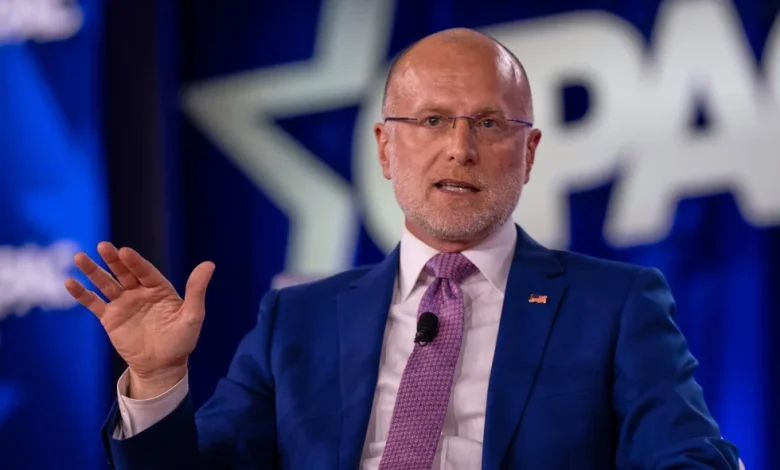
FCC regulatory oversight has plunged the American media landscape into a historic constitutional battle, pitting the independence of broadcast television against aggressive federal regulation under Trump-appointed Chairman Brendan Carr. This high-stakes clash centers on whether “The View,” one of daytime television’s most iconic and longest-running programs, violates decades-old federal rules governing equal airtime for political candidates. In response, ABC and its parent company, the Walt Disney Company, have launched an unprecedented public advocacy campaign, urging millions of viewers to push back against what the network describes as a direct assault on free speech and editorial autonomy.
Table of Contents
- The Genesis of the Dispute: James Talarico’s Appearance
- Understanding the “Equal Opportunity” Rule (Section 315)
- ABC’s Counter-Offensive: “Let the Viewers Decide”
- Inside the On-Air Spots and QR Code Campaign
- Dual Fronts: Local License Renewals Under Early Review
- The DE&I Inquiry and the Political Backlash
- The Legal Definition of a “Bona Fide” News Program
- Historical Precedents and the 2006 Late-Night Shift
- Public and Industry Reactions: The First Amendment Debate
- Summary of the Dual Investigations
- What Lies Ahead: Key Deadlines and Potential Outcomes
The Genesis of the Dispute: James Talarico’s Appearance
The current confrontation traces back to February 2026, when the Federal Communications Commission officially announced it was examining whether ABC’s daytime talk show “The View” violated federal political broadcasting rules. The specific catalyst for the inquiry was a February 2 appearance by James Talarico, a prominent Texas Democrat and candidate in the state’s highly competitive U.S. Senate race. During his appearance, Talarico was interviewed by the show’s panel of co-hosts, speaking on a variety of national and regional issues to a broad daytime audience. Following the broadcast, rival campaigns and media critics raised questions about whether ABC had provided comparable access to other qualified candidates in the same race.
The situation escalated rapidly when FCC Chairman Brendan Carr publicly confirmed that the agency had initiated an enforcement action regarding “The View”. Speaking to reporters, Carr asserted that the commission was looking into the matter seriously, reflecting a broader administrative shift toward tighter scrutiny of political candidate appearances on daytime and late-night television. This regulatory move came amid a backdrop of heightened political tension, especially after late-night host Stephen Colbert complained that CBS had preemptively scuttled a scheduled interview with Talarico on “The Late Show” due to fears of running afoul of the same equal-time regulations. While Carr dismissed Colbert’s claims of government censorship as a fundraising “hoax,” the controversy underscored the growing legal risks faced by national networks hosting political guests.
Understanding the “Equal Opportunity” Rule (Section 315)
At the heart of this regulatory battle is Section 315 of the Communications Act of 1934, commonly known as the “equal time” or “equal opportunity” rule. This statute mandates that if a broadcast television or radio station permits a legally qualified candidate for public office to use its facilities, it must afford equal opportunities to all other legally qualified candidates for that same office. The original intent of the rule, which dates back to the Radio Act of 1927, was to prevent a handful of powerful broadcast licensees from utilizing the public airwaves to unfairly favor one political faction or candidate over another.
Crucially, Section 315 does not apply blindly to all television content. In 1959, recognizing the importance of uninhibited news coverage, Congress enacted four explicit exemptions to the equal opportunity rule. These statutory exemptions cover appearances on: bona fide newscasts, bona fide news interviews, bona fide news documentaries, and on-the-spot coverage of bona fide news events (such as political conventions and debates). For several decades, the definition of a “bona fide news interview” has been subject to interpretation, with major networks seeking broad latitude to include daytime talk shows and late-night programs under this umbrella to protect their editorial freedom.
ABC’s Counter-Offensive: “Let the Viewers Decide”
Faced with escalating pressure from the FCC, ABC and Disney decided to wage a highly public counter-offensive. On Monday, June 22, 2026, the network launched a comprehensive on-air and digital campaign designed to rally public support against the federal regulatory threat. By leveraging its own massive media reach, ABC took the fight directly to the airwaves, placing the dispute at the center of national conversation.
The campaign explicitly frames the FCC’s investigation as an existential threat to free speech, editorial independence, and the rights of viewers to choose their preferred programming. Rather than quietly navigating the administrative process, ABC’s leadership opted for a transparent defense, arguing that allowing a political appointee to dictate who can and cannot appear on a popular program sets a dangerous precedent for all of American journalism. By mobilizing its loyal viewer base, the network hopes to flood the FCC with public comments defending the show’s format and legacy.
Inside the On-Air Spots and QR Code Campaign
The cornerstone of ABC’s advocacy effort is a series of polished 20-second on-air promotional spots that began broadcasting during commercial breaks of “The View”. The ads open with archival footage of the show’s late creator and legendary journalist Barbara Walters, reminding viewers of the show’s rich history of provocative, open-ended discussions. Walters founded “The View” in 1997 with the mission of creating a forum where women of diverse backgrounds could interview politicians, cultural figures, and celebrities.
The spots quickly transition to a direct warning about federal interference, displaying text that reads: “Now the FCC wants to control who is allowed to appear on the show.” The advertisements prominently display a scannable QR code directing viewers to the FCC’s official public comment portal. The voiceover and text urge the public to act before the July 6 deadline, asking them to tell the commission to “let the viewers decide” what they want on their airwaves. Similar digital versions of the campaign have been deployed across the network’s social media platforms to maximize engagement.
Dual Fronts: Local License Renewals Under Early Review
The regulatory pressure on Disney-owned properties is not limited to “The View.” In an extraordinary development, the FCC has simultaneously forced an early, accelerated review of the broadcast licenses for all eight local television stations owned and operated by ABC. These stations represent some of the most lucrative and highly watched local media markets in the country, including WABC-TV in New York, KABC-TV in Los Angeles, WLS-TV in Chicago, WPVI-TV in Philadelphia, KTRK-TV in Houston, KGO-TV in San Francisco, WTVD-TV in Raleigh-Durham, and KFSN-TV in Fresno.
Under normal circumstances, broadcast station licenses are renewed for eight-year terms, with several of ABC’s stations not scheduled for review until as late as 2031. Initiating an early, out-of-cycle review is a highly unusual regulatory maneuver that has sent shockwaves through the broadcasting industry. The FCC has justified the action as part of an investigation into the stations’ diversity, equity, and inclusion (DE&I) hiring and operational practices, seeking to determine if they violate federal anti-discrimination regulations. However, the timing of the announcement has drawn intense scrutiny from industry observers and legal scholars.
The DE&I Inquiry and the Political Backlash
The early license review was announced just days after President Donald Trump and First Lady Melania Trump issued fierce public criticisms of ABC late-night host Jimmy Kimmel over a controversial monologue. Although Chairman Brendan Carr and the FCC’s Republican majority maintain that the timing of the license probe is purely coincidental, critics and Democratic lawmakers have accused the agency of utilizing its administrative power to engage in political retaliation.
Historically, the FCC has not declined to renew a major network-owned television station’s license since the early 1980s, recognizing that such an action would cause massive economic disruption and raise severe First Amendment concerns. Nevertheless, by forcing ABC’s local affiliates to undergo a highly complex, public, and expensive review process, the FCC has introduced a major element of regulatory risk. ABC has responded by running localized on-air spots in the eight affected markets, telling viewers to “tell the FCC to keep your trusted local station on the air” ahead of a July 29 comment deadline.
The Legal Definition of a “Bona Fide” News Program
The core legal battle over “The View” rests on the precise regulatory definition of a “bona fide news interview” program. ABC and its stations filed a Petition for Declaratory Ruling with the FCC, arguing that “The View” has functioned as a legitimate news and public affairs interview program for over a quarter of a century. The network argues that its hosts conduct rigorous, unscripted interviews with political candidates of all affiliations and that these segments are driven entirely by genuine news value and public interest.
The FCC, however, has signaled a desire to narrow the interpretation of the 1959 statutory exemptions. In January 2026, the Media Bureau issued a controversial guidance document warning that programs “motivated by partisan purposes” or primary entertainment formats do not qualify for the news exemption. The agency argues that if a daytime or late-night talk show is predominantly an entertainment vehicle that exhibits political bias, candidate appearances on the program must trigger equal-time opportunities for all qualified opponents. This new interpretation represents a stark departure from decades of regulatory policy and has created immense uncertainty for television producers nationwide.
Historical Precedents and the 2006 Late-Night Shift
For nearly twenty years, broadcast networks have relied on a landmark 2006 FCC ruling that declared NBC’s “The Tonight Show with Jay Leno” exempt from the equal-time requirements. In that decision, the commission acknowledged that entertainment talk shows frequently feature substantive, news-oriented interviews with public figures, and that classifying such programs as news interviews served the public interest by encouraging political candidates to reach non-traditional audiences.
Subsequent FCC decisions extended similar exemptions to a variety of other popular programs, including “The Daily Show” and various morning talk shows. By challenging the status of “The View,” Chairman Carr’s administration is seeking to dismantle this established consensus. If the FCC successfully reclassifies daytime and late-night talk shows as non-exempt entertainment programming, it would fundamentally alter how political campaigns interact with the media. Broadcasters would be faced with a difficult choice: either ban political candidates from appearing on their entertainment shows entirely, or face the administratively impossible task of offering equal airtime to dozens of minor, third-party, and write-in candidates.
Public and Industry Reactions: The First Amendment Debate
The FCC’s aggressive stance has drawn sharp condemnation from media advocates, legal scholars, and civil liberties organizations. In a formal filing submitted on June 22, 2026, the prominent public interest group Public Knowledge urged the commission to immediately grant ABC’s petition and confirm the show’s news exemption. The group described the proceeding as “a First Amendment violation masquerading as a dispute about broadcast law,” accusing the FCC of selectively enforcing outdated rules to punish a network whose editorial stance and guest list draw the ire of the executive branch.
The controversy has also been closely covered by international news organizations, including The Guardian, which highlighted the “open season” environment confronting ABC as it battles simultaneous regulatory threats. Conversely, supporters of Chairman Carr’s actions argue that the equal opportunity rule is a necessary tool to ensure fair democratic elections. They contend that daytime talk shows with highly partisan panels have a disproportionate influence on the electorate and should not be permitted to provide massive, uncompensated media platforms to favored candidates while freezing out their opponents.
Summary of the Dual Investigations
To better understand the complex legal and regulatory challenges currently facing ABC and the Walt Disney Company, it is helpful to compare the two distinct FCC proceedings that are currently underway. The table below outlines the primary focus, key targets, active deadlines, and competing arguments for each investigation.
| Investigation Focus | Key Target Property | Key Deadlines (2026) | ABC / Disney Argument | FCC / Regulator Argument |
|---|---|---|---|---|
| Equal-Time Rule Compliance | “The View” (Daytime Talk Show) | Public comments: June 22 Reply comments: July 6 |
The show has operated as a “bona fide” news interview program for nearly 30 years and is protected by Section 315 exemptions and First Amendment speech rights. | The program’s format and partisan tone disqualify it from the news exemption, and James Talarico’s appearance triggered equal-time obligations for opponents. |
| Early License Renewal Review | Eight Local Owned-and-Operated Stations (New York, L.A., Chicago, etc.) | Petitions to deny: June 29 Public comments: July 29 |
The unprecedented, accelerated review is a politically motivated effort to retaliate against critical political commentary and late-night satire. | The early review is a standard, coincidental inquiry into whether the stations’ diversity, equity, and inclusion (DE&I) policies violate federal hiring rules. |
What Lies Ahead: Key Deadlines and Potential Outcomes
As the summer of 2026 progresses, the conflict between ABC and the Federal Communications Commission is poised to reach a dramatic climax. With the public comment period for “The View” concluding on July 6, and the license renewal comments due by July 29, both sides are working feverishly to shape public opinion and build a robust administrative record. The sheer volume of public filings, spurred by ABC’s QR code campaign, will force the commission to carefully evaluate the political and legal fallout of its final decision.
If the FCC rules against ABC, the decision will almost certainly be met with a swift and vigorous appeal in federal court. Legal experts believe that the case could eventually reach the Supreme Court, presenting a landmark test of the government’s authority to regulate the content of broadcast television in the 21st century. Until a final resolution is reached, the broader broadcasting industry will remain on high alert, watching closely to see if the traditional boundary between regulated public airwaves and protected journalistic freedom is permanently redrawn.