Sanders Defends Graham Platner in Maine Senate Race: 5 Stunning Facts About the Marriage Dispute
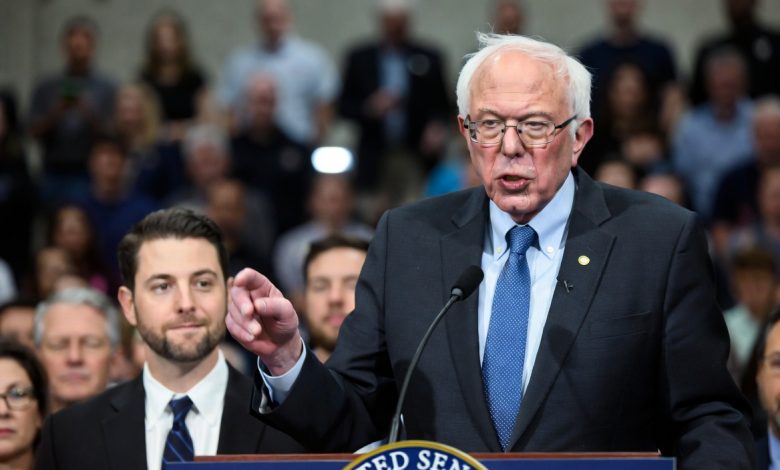
Sanders, who has endorsed Platner in his bid to unseat GOP Sen. Susan Collins, said that working families face bigger issues than Platner’s marriage. “We got a housing crisis. People can’t afford healthcare, they can’t afford groceries, they can’t afford to fill up their gas tanks. And I think it’s important for us to focus on the issues facing working families a little bit more than Graham Platner’s marriage,” Sanders told reporters on Capitol Hill. “I wish their marriage the very best. But right now, I think we should be focusing on the crises facing the working class and electing people of the guts to stand up to the oligarchs who control our country,” Sanders said.
The high-stakes 2026 midterms are shaping up to be some of the most fiercely contested in modern political history, and nowhere is this more apparent than in Maine. The battle to unseat five-term Republican Senator Susan Collins has taken a dramatic turn as Vermont Senator Bernie Sanders and other leading progressive figures rally around Graham Platner, a 41-year-old former Marine Corps veteran and oyster farmer. Despite a flurry of media coverage surrounding leaked, sexually explicit text messages Platner exchanged during a difficult period in his marriage, the progressive wing of the Democratic Party is holding the line. By redirecting the national spotlight away from personal scandals and onto structural economic crises, Sanders and his allies are attempting to redefine the parameters of modern political campaigns.
Sanders Defends Graham Platner in the High-Stakes Maine Senate Race
When news broke regarding Graham Platner’s private text messages, mainstream media outlets quickly shifted their coverage from policy debates to personal controversy. However, Vermont Senator Bernie Sanders was quick to shut down the media’s focus during a Capitol Hill press briefing. Sanders, one of Platner’s earliest and most influential endorsers, emphasized that voters are far more concerned with their day-to-day survival than the personal lives of political candidates. For Sanders, the endorsement of Platner represents a rare opportunity to place a genuine, working-class populist in the United States Senate—a candidate who understands the realities of manual labor and military service firsthand.
Platner’s background stands in stark contrast to the typical profile of a Washington politician. An oyster farmer from Sullivan, Maine, and a combat veteran who served multiple tours in Iraq and Afghanistan, Platner has built a grassroots campaign that has captured nationwide attention. His platform focuses heavily on challenging corporate monopolies, revitalizing local economies, and rebuilding the social safety net. By standing firmly behind Platner, Sanders is sending a clear message to the Democratic establishment: the progressive movement will not let personal distractions derail a campaign built on economic justice.
Unpacking the Controversy: What Led to the Marriage Backlash?
To understand the current political storm, it is essential to trace the origins of the controversy. Over the weekend, reports surfaced detailing sexually explicit text messages that Platner had exchanged with several women in the spring of 2025, prior to the official launch of his Senate bid. The texts were reportedly shared with media outlets by the campaign’s former political director, Genevieve McDonald, who had been confided in by Platner’s wife, Amy Gertner, during the early, difficult stages of their marriage when the couple was undergoing counseling.
The response from the Platner campaign was swift and highly personal. Gertner released a self-shot video addressing the situation directly, characterizing the media coverage as “shameful gossip” and reminding the public that “being married is hard” but emphasizing her ongoing commitment to her husband. She expressed deep hurt that personal marital struggles shared in confidence with a supposed friend were weaponized for political gain. Progressive allies have rallied around this framing, arguing that the weaponization of private marital counseling sets a dangerous precedent for all political candidates, echoing the legal and constitutional overreaches often seen in high-profile battles such as due process and constitutional protections during legal crises.
A Whirlwind Populist Campaign Faces Intense Media Scrutiny
Platner’s rise from a coastal Maine oyster farmer to the presumptive Democratic nominee has been nothing short of a political phenomenon. After launching his campaign in August 2025 alongside Senator Sanders, Platner quickly gained a massive following. His populist message resonated so deeply with Mainers that the state’s two-term governor, Janet Mills, who was heavily backed by the national Democratic establishment, suspended her Senate campaign in April 2026. This left Platner as the undisputed frontrunner heading into the June 9 primary.
With his position solidified, political analysts argue that opposition research and media scrutiny were bound to intensify. Opponents have tried to highlight not only the marital texts but also past online statements and a covered-up tattoo, trying to paint a picture of an unstable candidate. Yet, Platner’s supporters argue that these attacks represent the desperation of an establishment threatened by an outsider who refuses to play by the traditional political playbook.
Focusing on the Issues: The Economic Crises Facing the Working Class
In his comments to reporters, Senator Sanders articulated what many progressives see as the true crises facing the nation. While cable news networks dedicate hours of coverage to personal text messages, millions of American families are struggling to keep a roof over their heads and food on the table. Sanders’ defense of Platner is built on the premise that the media’s obsession with personal scandals is a deliberate distraction designed to protect the economic status quo.
The Housing and Healthcare Shortfall
The housing crisis in Maine and across the United States has reached unprecedented levels. Skyrocketing rents, corporate buyouts of residential properties, and a severe shortage of affordable housing have left working families with few options. Many Mainers are forced to spend more than half of their income on rent, leaving little room for other necessities. Combined with a healthcare system where premiums, deductibles, and prescription drug costs continue to rise, the financial strain on the working class is immense. Platner’s platform directly addresses these issues by calling for federal investment in public housing, rent control measures, and a transition toward a universal healthcare system that removes the profit motive from medicine.
Surging Gas and Grocery Prices
Inflation continues to squeeze household budgets, with the cost of everyday goods like groceries and fuel remaining stubbornly high. Sanders pointed out that working families cannot afford to fill up their gas tanks or buy basic groceries without making severe sacrifices. These economic pressures are exacerbated by global energy and policy crises that disrupt fuel distribution and drive up costs for consumers. For rural Mainers who must drive long distances for work, medical care, and groceries, the cost of gas is not an abstract policy debate—it is a daily crisis that impacts their quality of life.
The Progressive Playbook: Deflecting Personal Attacks to Highlight Policy
The unified defense of Platner by progressive leaders represents a calculated strategy to rewrite the rules of political communication. Senators Elizabeth Warren and Ruben Gallego joined Sanders in dismissing the text message controversy, pointing instead to the economic anxieties of their constituents. Gallego noted that Platner is a candidate who has lived a non-traditional life, has grown from his past mistakes, and is willing to acknowledge his personal struggles. This approach seeks to humanize the candidate rather than apologize for him.
By keeping the focus on policy, progressives are aiming to build a coalition of voters who are tired of polished, focus-grouped politicians. This strategy aligns with other progressive struggles where grassroots movements have clashed with established state laws, such as the political and legal frictions seen in campus activism. The goal is to channel voter anger away from personal moralizing and toward the corporate interests and “oligarchs” that Sanders frequently rails against.
Comparing Platforms: Graham Platner vs. Senator Susan Collins
The contrast between the two candidates in the Maine Senate race could not be more pronounced. Senator Susan Collins, a moderate Republican who has served in the Senate since 1997, represents a traditional, institutionalist approach to governance. Graham Platner represents a populist rebellion against that very institution. Below is a comparison of their stances on key issues facing working-class families:
| Issue Area | Senator Susan Collins (GOP) | Graham Platner (Democrat) |
|---|---|---|
| Healthcare | Supports private insurance market; advocates for incremental reforms and drug price transparency. | Advocates for a single-payer, Medicare-for-All system to eliminate private insurance middle-men. |
| Housing Crisis | Favors tax incentives for developers and local community block grants to encourage development. | Proposes federal rent control, banning corporate ownership of single-family homes, and massive public housing investment. |
| Economy & Wages | Supports business-friendly tax structures; cautious on dramatic federal minimum wage increases. | Advocates for doubling the federal minimum wage, strengthening labor unions, and taxing extreme wealth. |
| Energy & Environment | Balancing fossil fuel transitions with economic concerns; supports bipartisan climate legislation. | Supports a rapid transition to renewable energy while holding major oil and gas corporations legally accountable. |
Strategic Implications for the National Progressive Movement
The Maine Senate race is being closely watched by national strategists as a test case for whether a left-wing populist can win in a politically diverse state. Maine has a history of independent-minded voters, having elected both progressive Democrats and moderate Republicans. If Platner can overcome the personal controversies and build a winning coalition, it will provide a blueprint for progressive candidates running in working-class, rural districts across the country.
Furthermore, this race highlights the ongoing tension within the Democratic Party between the establishment and the progressive wing. The quick endorsement of Platner by Sanders and Warren, even after the suspension of Governor Janet Mills’ campaign, shows that progressives are eager to prove that an uncompromised populist message can defeat a well-funded Republican incumbent. This battle mirrors national policy debates over federal funding, where grassroots demands often run into executive roadblocks, much like the controversies surrounding how federal funding halts face constitutional challenges in court.
Local Frictions vs. National Political Pressures
As the campaign moves closer to the primary and the general election, the friction between local campaign dynamics and national political narratives will likely intensify. Platner’s campaign has sought to keep its focus local, highlighting his work as an oyster farmer and harbormaster. According to PBS NewsHour reports, his team has continuously emphasized that the concerns of working-class Mainers—such as fisheries management, local manufacturing jobs, and affordable rural heating—are being ignored by corporate-backed politicians in Washington.
The Role of Grassroots Enthusiasm and the June Primary Outlook
Despite the negative headlines, grassroots enthusiasm for Platner remains high. Over the Memorial Day weekend, Platner made headlines by releasing a campaign ad during a Boston Red Sox game that accused private equity firms of ruining the beloved baseball team. When the network owned by the team’s ownership pulled the ad, Platner capitalized on the decision, using it as proof of corporate censorship. This confrontational, anti-corporate style has endeared him to a fanbase that feels increasingly alienated by modern commercialization and economic inequality.
With the primary scheduled for June 9, the coming days will be a crucial test of whether the text message controversy will impact voter turnout. If the progressive base rallies around Platner as a victim of establishment sabotage, it could supercharge his campaign heading into the general election. Conversely, if moderate voters are turned off by the personal drama, it could complicate the Democratic Party’s efforts to present a unified front against Susan Collins in November.
Conclusion: The Battle of Working-Class Interests in Maine
Ultimately, the debate over Graham Platner’s candidacy is a debate over what matters most in modern American politics. For Senator Bernie Sanders and the progressive movement, the choice is clear: personal imperfections and private marital struggles must not overshadow the systemic economic crises that are pushing millions of working-class families to the brink. As Maine voters prepare to cast their ballots, they will decide whether to focus on the personal lives of their candidates or to join a broader movement aimed at challenging the oligarchic forces that control the nation’s economy.