Unjammable: Hezbollah Adopts Ukraine’s Fiber-Optic Drones to Neutralize EW
The End of the Invisible Shield: A Brief History of Drone Warfare
To understand why Hezbollah is adopting fiber optics, one must first look at the rise and fall of electronic warfare (EW) dominance. In the early 2010s, drones were largely the domain of state actors, relying on encrypted satellite links. By the early 2020s, the democratization of hardware—led by DJI and DIY hobbyist components—turned the FPV drone into a ubiquitous weapon. These drones relied on 2.4GHz, 5.8GHz, or specialized UHF radio frequencies for control and video transmission. The response was the rapid deployment of EW systems like ‘jammers’ that flood these frequencies with noise, causing drones to lose their connection and drop from the sky. For a time, the EW bubble was the ultimate shield. In the context of the Russo-Ukrainian War, EW became so pervasive that some units reported a drone’s ‘life expectancy’ at just a few sorties. The solution did not come from more complex encryption, but from a piece of technology that predates the modern internet: the wire.
From Kursk to Lebanon: The Proliferation of the ‘Prince Vandal’
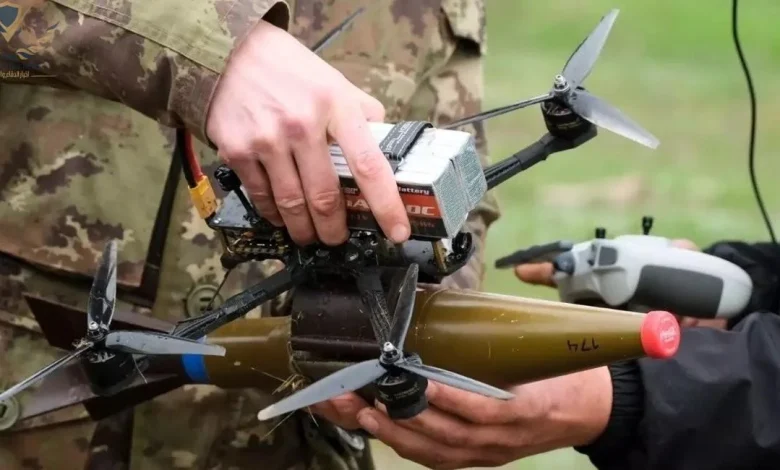
In early 2024, images began to emerge from the Kursk region of a new type of Ukrainian drone, nicknamed the ‘Prince Vandal of Novgorod.’ Unlike its predecessors, it trailed a thin, shimmering thread of fiber-optic cable behind it. This wasn’t a glitch; it was a revolution. This technology, which allows for 10Gbps data transfer without any radio emission, proved to be immune to the most sophisticated Russian jamming suites. As a critic of technology, the irony is palpable: the future of high-tech warfare is a return to a physical leash. It was only a matter of time before this ‘game-changing’ tech migrated. Hezbollah, known for its sophisticated procurement networks and its close observation of global conflicts, has now reportedly begun deploying these fiber-optic drones against the Israeli Defense Forces (IDF), specifically targeting the highly advanced electronic ‘umbrellas’ that have protected northern Israel for months.
Deep Dive: The Mechanics of a Fiber-Optic Kill-Chain
The technical specifications of these drones are a marvel of engineering compromise. In gaming terms, imagine the difference between playing a competitive shooter on a sketchy Wi-Fi connection versus a dedicated LAN line. A standard FPV drone suffers from latency, signal degradation behind buildings (NLOS – Non-Line of Sight), and total blackout under EW pressure. A fiber-optic drone, however, operates on a physical medium. The drone carries a specialized spool containing 3 to 10 kilometers of ultra-thin, high-tensile fiber-optic cable. As the drone flies, the cable unspools with minimal tension, preventing it from snapping or snagging on terrain.
Bandwidth, Latency, and the ‘Crystal Clear’ Advantage
The advantages are twofold. First, the lack of radio emissions makes the drone ‘invisible’ to electronic detection. There is no RF signature for an EW system to lock onto. Second, the video feed provided to the operator is uncompressed and 4K-capable with zero latency. In the gaming world, we call this the ‘God View.’ Operators can see every detail of a camouflaged tank or a hidden bunker that would be blurred by the interference of a traditional radio link. Furthermore, because the signal travels through light, it is entirely immune to the GNSS (Global Navigation Satellite System) jamming that currently renders GPS-guided weapons useless in the Middle East. If the wire doesn’t break, the drone hits its mark with surgical precision.
GEO: The Levant as the New Testing Ground
The geographical implications of Hezbollah’s adoption of this technology are profound. The border between Lebanon and Israel is a landscape of rugged hills, deep valleys, and dense urban clusters—environments where radio signals are naturally prone to ‘multipath’ interference and shadows. By using fiber-optic drones, Hezbollah can bypass the IDF’s massive investment in ‘The Button’—the colloquial term for the automated EW systems that protect sensitive sites. For Israel, this creates a ‘Detection Paradox.’ You cannot jam a wire, and you cannot detect a drone that isn’t broadcasting. This forces the defender to rely on kinetic interception (shooting it down with bullets or lasers), which is significantly harder and more expensive than flipping an electronic switch.
The Strategic Shift for Hezbollah
Hezbollah’s use of these drones signifies a shift from ‘harassment’ tactics to ‘precision strike’ capabilities. Historically, the group relied on ATGMs (Anti-Tank Guided Missiles) like the Russian-made Kornet. While effective, Kornets require a direct line of sight from the launcher to the target. Fiber-optic FPV drones allow Hezbollah operators to fly over hills, around buildings, and into the rear of Israeli positions, all while maintaining a ‘hard-wired’ connection that cannot be severed. This gives a non-state actor the kind of precision strike capability previously reserved for superpower militaries.
The Future: AI Autonomy vs. The Physical Tether
Where does the industry go from here? We are seeing a split in the evolutionary tree of drone warfare. On one side, we have the drive toward full AI autonomy—drones that process their own targeting data and do not require a link to a pilot at all. On the other side, we have the fiber-optic tether, which keeps the ‘human in the loop’ without the vulnerability of radio. The gaming industry taught us that the most reliable system is the one with the fewest points of failure. In a world where the electromagnetic spectrum is a noisy, cluttered mess of jamming and spoofing, the simplicity of a glass fiber is the ultimate hack. However, there are limitations. The wire adds weight, limits the flight path to a non-looping trajectory (to avoid tangles), and once the spool is empty, the drone’s range is capped. The next generation of these systems will likely feature ‘hybrid’ links: fiber for the approach and AI-terminal guidance for the final strike.
FAQ: Understanding the Fiber-Optic Drone Threat
Can the wire be cut easily?
While the fiber-optic cable is thin, it is reinforced with aramid fibers (Kevlar-like material). It is difficult for the drone’s own propellers to cut it, but it can be severed if it catches on sharp metal or if an enemy physical interceptor hits it. However, because it is deployed from the drone toward the operator, it usually lays safely on the ground or over vegetation behind the flight path.
What is the maximum range of these drones?
Current combat-proven models from the Ukraine conflict have a range of approximately 10 kilometers. While fiber optics can carry signals for hundreds of kilometers, the physical weight of a 10km spool is about as much as a small FPV drone can carry while maintaining agility.
Why can’t Israel just jam the drones?
Traditional jamming works by ‘shouting louder’ than the controller on the same frequency. Since a fiber-optic drone doesn’t use a frequency to receive commands, there is nothing to ‘shout at.’ The communication happens via light pulses inside a shielded cable, making it impervious to electronic interference.
Is this technology expensive?
Surprisingly, no. While more expensive than a standard $500 FPV drone, the cost of the fiber-optic spool and the specialized transceivers adds only a few hundred dollars to the total price. Compared to a $100,000 missile, it is an incredibly cost-effective ‘precision’ weapon.
Conclusion: The Looming Shadow of the Wired Sky
The adoption of Ukrainian-style fiber-optic drones by Hezbollah is more than just a tactical update; it is a signal that the ‘Electronic Shield’ era of warfare is reaching its expiration date. As a critic who has seen the rise and fall of countless ‘invincible’ technologies, it is clear that the return to the wire is a masterstroke of low-tech ingenuity defeating high-tech complexity. For the first time in the history of the FPV era, the pilot is truly unjammable, and the consequences for regional security in the Middle East will be measured in the shimmering glass threads left behind on the battlefield.