Strait of Hormuz Conflict Escalates as Trump Claims Waterway 2026
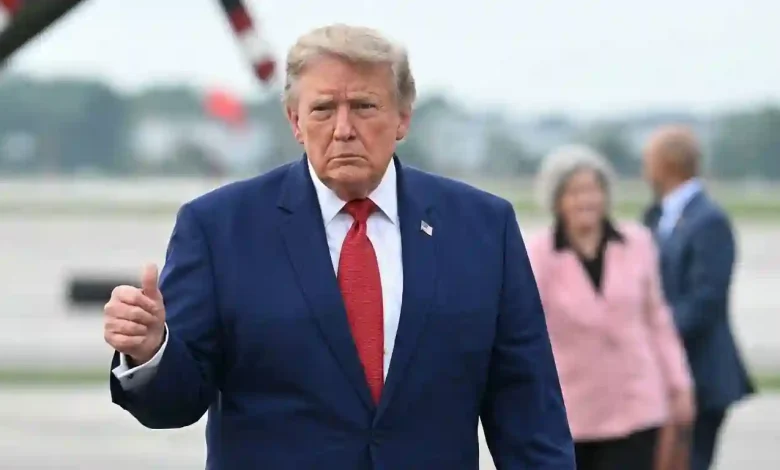
Table of Contents
Strait of Hormuz tensions have reached an unprecedented boiling point following a series of highly controversial and escalatory remarks by U.S. President Donald Trump. Speaking at a political event on Friday, Trump asserted that the United States would soon claim the strategic waterway as an official U.S. territory. This sudden, aggressive policy posture represents a dramatic shift in Washington’s geopolitical objectives, signaling a willingness to permanently alter the maritime geography of the Middle East. As the geopolitical fallout from Trump’s war against Iran intensifies, President Trump emphasized that his administration is prepared to deliver a decisive economic blow to force Iran into absolute submission, aiming to bring an end to a conflict that has dragged on for nearly six months. This proposal has sent shockwaves through global energy markets, diplomatic circles, and international legal communities, as the Strait of Hormuz remains one of the world’s most critical chokepoints for global oil and liquefied natural gas (LNG) shipments.
In immediate response to these statements, Iran’s Deputy Foreign Minister Kazem Gharibabadi vehemently rejected Trump’s claims, asserting that the strategic waterway is sovereign Iranian territory and will remain so. Gharibabadi ridiculed the idea that a critical global transit route could be declared U.S. property via social media posts or campaign speeches, reiterating that any decisions regarding the closure or reopening of the passage would be made under Iran’s command. Asserting Iranian dominance over the Strait of Hormuz, Gharibabadi stated that Iran’s blockade of shipping in the region will persist unabated until the United States acknowledges its strategic failures and accepts defeat. This escalating war of words has heightened fears of a direct, wider confrontation, as both nations refuse to yield in their battle for command over the vital passage.
Geopolitical Flashpoint at the Strait of Hormuz
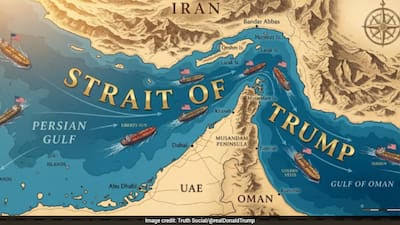
The Strait of Hormuz is widely regarded as the most critical maritime chokepoint in the world, with roughly 20 percent of the world’s liquid petroleum consumption passing through its narrow lanes daily. Located between Oman and Iran, it connects the Persian Gulf with the Gulf of Oman and the Arabian Sea. For decades, international law has governed transit through the strait under the concept of transit passage, allowing vessels of all nations the right to continuous and expeditious navigation. However, the current military conflict has thoroughly disrupted this established legal order. Experts view this territorial threat as a core element of Trump’s broader war strategy, intended to pressure Tehran. The assertion of direct sovereign control by a non-coastal state like the United States is entirely unprecedented in modern maritime history, prompting sharp reactions from both allies and adversaries alike who fear the total collapse of regional maritime security.
Trump’s Nassau County Address: Declaring US Territory
The Nassau County Police Academy Speech
President Trump chose the stage of the new Nassau County Police Academy in Garden City, New York, to drop this geopolitical bombshell. Addressing a crowd of enthusiastic supporters, Trump detailed the progress of the ongoing military campaign, claiming that Iran’s military capabilities have been severely degraded by recent actions. ‘After we finish defeating Iran, which is being very badly defeated, pretty soon I’ll be declaring the Hormuz strait a territory of the United States,’ Trump declared, chuckling slightly before reiterating that he was serious. He argued that since the U.S. Navy and its coalition partners are actively blockading the strait and determining which vessels can pass, the waterway effectively operates under American jurisdiction. ‘Essentially, that’s what it is,’ Trump told the crowd. ‘We have the blockade. No ships get through unless we want them to.’
The Rhetoric of “Defeat” and American Blockade Controls
To justify his extraordinary proposal, Trump painted a picture of an Iranian leadership that is completely isolated and unable to sustain its military operations. He suggested that the severe disruption of Iranian oil revenues and naval capabilities had left Tehran with few options. However, this rhetoric has met with skepticism from defense analysts who point out that declaring an international waterway as U.S. territory would violate numerous international treaties, including the United Nations Convention on the Law of the Sea (UNCLOS). Despite these legal hurdles, the administration remains committed to its aggressive stance. White House officials have refused to rule out further escalatory military options against Iran should diplomatic negotiations remain stalled.
Iran’s Unyielding Stance: Gharibabadi’s Ultimatum
Kazem Gharibabadi Rejects the “Fanciful Delusions”
Tehran’s response was swift and uncompromising. Taking to social media platform X, Iran’s Deputy Foreign Minister Kazem Gharibabadi dismissed Trump’s assertions as empty campaign rhetoric designed to mask American strategic setbacks. Shortly after the speech, Tehran formally refuted Trump’s claims of US naval supremacy. Gharibabadi emphasized that ‘the Strait of Hormuz cannot be seized by tweet, nor by aircraft carrier, nor by issuing an order, nor by an election speech.’ He declared that Iran has no fear of American military posturing and remains fully prepared to defend its sovereign waters. Gharibabadi’s remarks highlight Iran’s long-standing position that security in the Persian Gulf must be managed exclusively by regional states, without the interference of foreign powers.
Operational Realities of the Iranian Blockade
Gharibabadi went further, warning that the Iranian blockade of the strait would continue indefinitely until the United States accepts its defeat. This blockade has severely curtailed the volume of shipping passing through the chokepoint. While the U.S. claims to have established comprehensive command, Iranian forces have repeatedly demonstrated their ability to harass and intercept commercial vessels. In recent months, regional proxy forces have retaliated across multiple fronts to demonstrate resistance. This decentralized asymmetric warfare capability makes it exceedingly difficult for the U.S. to guarantee safe passage, even with a heavy naval presence.
The Strategy of Hard Economic Blows
Measures “Never Seen Before” from the US Treasury
In tandem with the territorial threats, the Trump administration is preparing to execute a devastating economic offensive designed to cripple Iran’s remaining financial networks. Treasury Secretary Scott Bessent announced that Washington will implement economic measures next week that have ‘never been seen before.’ These sanctions are expected to target the few remaining loopholes in Iran’s international trade, focusing on the shadow fleet of oil tankers that continue to transport Iranian crude to Asian markets. The goal is to dry up Iran’s primary source of hard currency, leaving the regime unable to fund its military apparatus or pay government salaries, thereby forcing them back to the negotiating table on Washington’s terms.
Impact on the Iranian Domestic Economy and Oil Markets
This tightening economic stranglehold has already had severe repercussions within Iran, triggering a profound economic crisis in Iran. The national currency has plunged to historic lows, inflation has soared, and basic goods have become scarce. By cutting off the remaining avenues of trade, the U.S. hopes to incite domestic pressure on the Iranian government to capitulate. However, historical precedents suggest that such maximum pressure campaigns can also lead to increased nationalistic resistance and a further hardening of Iran’s foreign policy. Furthermore, the prospect of a complete halt in Hormuz traffic has caused extreme volatility in global oil markets, with energy analysts warning that any prolonged escalation could lead to a severe global supply shock.
Comparative Overview: US Claims vs. Iran’s Stance
The strategic postures of both nations reveal fundamentally incompatible objectives, with neither side willing to make the initial concession. The following table provides a breakdown of the competing perspectives on key issues:
| Geopolitical Dimension | United States Position & Strategy | Iranian Position & Strategy |
|---|---|---|
| Territorial Claims | Plans to declare the Strait of Hormuz a US territory “pretty soon” | Waterway remains sovereign Iranian territory under Iranian command |
| Economic Measures | Unprecedented Treasury sanctions to freeze Iran’s shadow oil trade | Resistance and continued blockade enforcement to bypass sanctions |
| Military Control | Enforces a tight maritime blockade to restrict Iranian shipping | Maintains operational command and ability to close/open the strait |
| Negotiation Terms | Tehran must accept defeat and agree to comprehensive security terms | US must recognize its strategic defeat and halt hostile actions |
The Maritime and Geopolitical Realities of the Blockade
The actual state of maritime traffic through the Strait of Hormuz paints a stark picture of the conflict’s toll. According to data from commodities and shipping analytics firm Kpler, transit volumes have collapsed to just a fraction of pre-war levels. On Friday, only two vessels successfully navigated the strait, with zero crude oil shipments visible. This is a dramatic decline from the pre-war average of over 130 ships passing through the waterway daily. While U.S. Central Command reported that its forces had redirected, disabled, or boarded dozens of commercial vessels as part of its blockade, Iran’s military command disputes Washington’s claims of absolute control, labeling them as ‘baseless lies.’ Despite previous attempts to broker a compromise, the stalled diplomatic efforts have left both nations entrenched. The resulting vacuum of authority has made the strait one of the most perilous shipping routes in modern history, with insurers raising premiums to prohibitive levels.
Diplomatic Deadlock and Regional Implications
The absolute diplomatic deadlock between Washington and Tehran leaves little room for optimism. A Pakistan-brokerd ceasefire in April and a subsequent June agreement to initiate negotiations have completely broken down over core disagreements regarding security guarantees and freedom of navigation. Trump’s latest threat to claim the strait as a U.S. territory has effectively shut the door on immediate diplomatic resolution, as no Iranian leader can negotiate under the threat of losing sovereign territory. Regional neighbors find themselves in an incredibly delicate position, balancing their security alliances with the United States against the immediate threat of a localized war that could devastate their own economies and oil infrastructure. As both sides double down, the Strait of Hormuz remains a dangerous trigger point that could drag the global community into an uncontrolled economic and military crisis.