Israeli airstrikes hit Gaza despite Trump ceasefire claims 2026
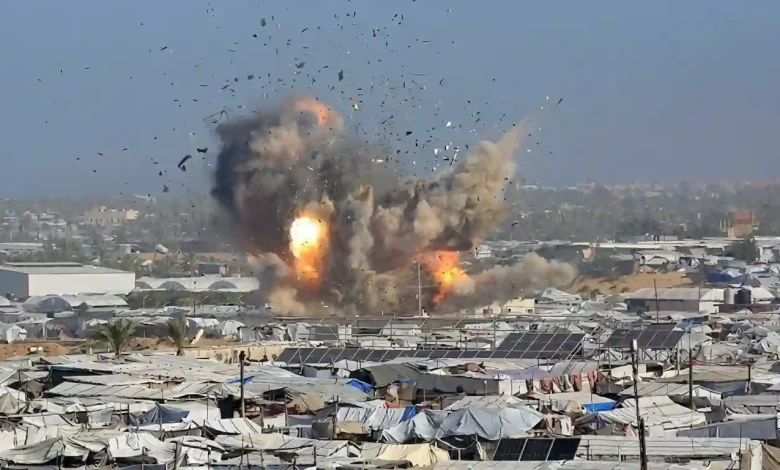
Table of Contents
Israeli airstrikes continued in Gaza for a second straight day on Sunday, killing at least four Palestinians, despite U.S. President Donald Trump’s announcement of a breakthrough in efforts to implement last year’s Gaza ceasefire agreement. Palestinian health officials said Israeli warplanes carried out separate strikes in Gaza City and Deir al-Balah, demonstrating a severe disconnect between high-level diplomatic proclamations in Washington and the ongoing kinetic reality on the ground in the war-torn enclave.
Israeli airstrikes Shatter Hopes of Trump’s Ceasefire Breakthrough
The sudden escalation over the weekend has severely dampened hopes for an immediate end to hostilities. On Thursday, U.S. President Donald Trump proudly proclaimed a major diplomatic milestone, stating that Hamas had agreed to a comprehensive disarmament plan under a newly formulated U.S.-backed framework. However, the immediate resumption of military activity by the Israel Defense Forces (IDF) suggests that a true consensus remains far out of reach. As Qatar mediates intense regional diplomacy, the gap between Washington’s optimistic statements and the local command structures of both the IDF and Hamas continues to widen.
With security conditions deteriorations continuing on the ground, US embassies issue urgent security warnings across the region, advising foreign nationals to remain vigilant as local escalations threaten to disrupt travel and communication networks. The direct contradiction between political messaging and the physical violence on the ground has become a core feature of the conflict’s current phase, leaving civilians caught in an endless loop of unfulfilled promises and sudden violence.
Tactical Breakdown of the Strikes in Gaza City and Deir al-Balah
According to Palestinian medical sources, the strikes on Sunday were concentrated in two primary urban centers. In Deir al-Balah, located in the central Gaza Strip, an Israeli missile struck a residential apartment, instantly killing a man and his wife and wounding four others. Simultaneously, in Gaza City to the north, another airstrike targeted a residential building, killing two people, including a young child. These targeted operations highlight the ongoing volatility in areas that have been repeatedly hit over the past several months of the war.
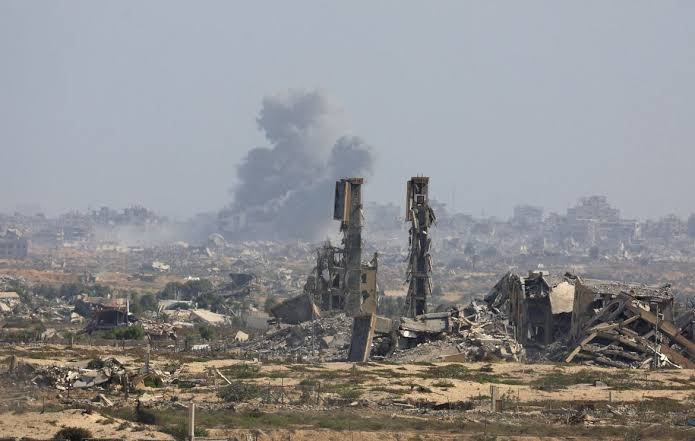
Local witnesses described the scenes of destruction as rescue teams dug through the rubble of the shattered apartments. The IDF has maintained that its operations target precise military infrastructure belonging to Hamas and other armed factions. However, local human rights organizations and health officials argue that the density of Gaza’s urban quarters makes civilian casualties an inevitable consequence of such aerial bombardments.
The Human Cost: Civilian Casualties amidst a Fragile Ceasefire
The humanitarian situation inside the Gaza Strip has reached a breaking point, characterized by severe shortages of essential goods, medical supplies, and clean water. The ongoing military actions continue to disrupt critical supply chains, causing global energy shocks where gasoline prices climb above 4 dollars per gallon due to heightened instability across Middle Eastern transport routes. Within Gaza, this translates to skyrocketing transport costs for what little aid is allowed through the border crossings.
According to UNICEF, the human cost of this sustained friction is staggering, with hundreds of children losing their lives in the months following the initial declaration of a ceasefire framework last October. In addition to the direct casualties from airstrikes, the collapse of medical infrastructure has led to a rise in disease, premature births among malnourished mothers, and a total lack of structured education for Gaza’s youth.
Decoupling the Trump Peace Plan: A Roadmap without a Path?
The core of the diplomatic impasse lies within the details of the 15-point roadmap released by President Trump’s Board of Peace. The proposed framework envisions a phased transition where Hamas surrenders its weapons to a nascent Palestinian governing committee, while Israel gradually withdraws its forces from the key territory. However, the sequence of these actions has become a major source of disagreement. Experts fear this friction could expand into a potential U.S. war with Iran if regional proxies choose to escalate their involvement in response to a failed diplomatic track.
The U.S. administration has pressured both sides to accept the compromise, but neither party appears willing to take the crucial first step without ironclad guarantees. For Washington, the success of this peace initiative is seen as a central pillar of its regional foreign policy, yet the daily exchange of fire threatens to render the entire framework obsolete before it can be formally initiated.
Disarmament versus Sovereignty: The Hamas Position
Hamas officials have publicly stated their willingness to proceed with the peace plan, but they have attached strict conditions. The group insists that it will only surrender or store its heavy weaponry after Israel completes a full and verified withdrawal of its military forces from the Gaza Strip. Hamas claims that disarming prior to an Israeli withdrawal would leave the population completely vulnerable to future military incursions.
The militant faction has actively urged the United States to utilize its diplomatic leverage to force Israel into adhering to the withdrawal schedule. However, with limited trust between the negotiating parties, Hamas continues to maintain its defensive posture, arguing that disarmament must be a mutual end-state rather than a unilateral starting condition.
Israel’s Skepticism and the Search for Total Enclave Control
On the Israeli side, political and military leaders have expressed deep skepticism regarding Hamas’s willingness to truly disarm. Israeli Energy Minister Eli Cohen, a prominent member of Prime Minister Benjamin Netanyahu’s security cabinet, explicitly stated that there was no agreed-upon deal to halt military operations. Cohen went as far as to advocate for Israel to assume complete control over the entire Gaza Strip, building on the 70 percent of the territory that the military currently occupies.
This internal political pressure makes it exceptionally difficult for Netanyahu’s government to agree to any phased withdrawal. Facing intense domestic opposition from right-wing coalition partners who view any concession to Hamas as a defeat, the Israeli government has demanded absolute disarmament and verification before any troop movements are considered.
Comparative Regional Dynamics and Mediators’ Dilemmas
The continuation of the conflict has broader regional implications, drawing in various international actors who seek to either stabilize the region or leverage the crisis to their advantage. Iran, a key supporter of Hamas, continues to monitor the negotiations closely, as Tehran relies on a calibrated response to regional pressure to maintain its strategic influence without triggering a direct, full-scale military confrontation with the United States or Israel.
This complex regional puzzle makes the role of neutral mediators highly difficult. While some regional capitals attempt to foster dialogue, the diplomatic deadlock remains absolute while the Islamic Republic rejects peace talks in several formats, complicating the efforts of international envoys who are desperately searching for common ground between the warring parties.
Qatar’s Critical Diplomatic Balancing Act
As one of the primary mediators alongside Egypt and Turkey, Qatar has spent months shuttling between political leaders to keep the peace plan alive. Qatari diplomats have worked tirelessly to draft compromise language that addresses Hamas’s security concerns while attempting to satisfy Israel’s demand for the dismantlement of the militant group’s military wing. Despite these efforts, the lack of political will from the primary combatants has repeatedly stalled progress, highlighting the limited effectiveness of Mecca joint defence initiatives and other regional security arrangements in the face of deep-seated historical grievances.
The Broader Middle Eastern Crisis and Its Global Impacts
The conflict in Gaza does not exist in a vacuum. It is inextricably linked to wider geopolitical tensions across the Middle East, affecting maritime shipping lanes in the Red Sea and shaping the foreign policy objectives of global superpowers. The geopolitical theater continues to suffer from the immediate fallout of U.S. strikes in other regional theaters, creating a highly volatile environment where a single miscalculation could trigger a much wider regional war.
Statistical Summary of the Gaza Conflict Escalations (August 2026)
To better understand the current operational reality of the conflict and the associated diplomatic status, the table below outlines the key parameters of the military engagements and diplomatic initiatives recorded over the first week of August 2026.
| Target Location | Reported Casualties | Primary Operational Detail | Diplomatic Framework Status |
|---|---|---|---|
| Gaza City (North) | 2 Dead (including 1 child) | Targeted airstrike on residential apartment block | Violates proposed Phase 2 stabilization terms |
| Deir al-Balah (Central) | 2 Dead (married couple), 4 injured | Precision strike on an urban residential building | Unresolved under the Board of Peace 15-point roadmap |
| Khan Younis (South) | Ongoing civilian displacement | Artillery and minor aerial bombardments | Stalled due to disagreements over troop withdrawal |
| Red Sea Transit Routes | None reported directly on Sunday | Maritime patrols and coalition defense operations | Linked to broader regional containment efforts |
This data illustrates that despite the high-level focus on peace agreements, localized military operations continue unabated, contributing to a rising casualty toll and making the practical implementation of any ceasefire agreement extremely difficult.
Geopolitical Ramifications of Continued Hostilities
In conclusion, the continuation of Israeli airstrikes in Gaza despite President Trump’s optimistic announcements highlights the structural weaknesses of the current peace process. Without a clear, mutually agreed-upon sequencing of disarmament and military withdrawal, any announced breakthrough remains symbolic at best. The international community faces a difficult challenge: bridging the massive trust deficit between Israel and Hamas while preventing the conflict from expanding into a broader regional war. Until these fundamental issues are addressed, the cycle of violence is likely to persist, undermining the credibility of international diplomacy and prolonging the suffering of civilians on both sides of the border.