Colorado Attorney General Phil Weiser Wins Democratic Primary
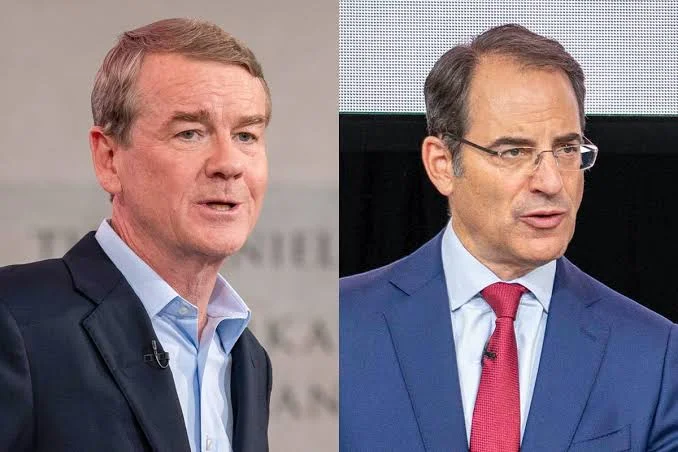
Table of Contents
Colorado Attorney General Phil Weiser has secured a historic and stunning victory in Colorado’s highly contested Democratic primary for governor. In a projection that sent shockwaves through the national political landscape, NBC News projected on Tuesday night that Weiser defeated three-term U.S. Senator Michael Bennet in a major upset. The race, which pitted two of Colorado’s most prominent and influential Democratic figures against each other, ultimately centered on a core question: who would be the most effective leader in standing up to federal overreach and protecting the state’s interests in a highly polarized national environment.
While Senator Michael Bennet entered the primary as the clear establishment frontrunner, backed by substantial name recognition and significant campaign spending, Weiser’s victory signals a powerful shift. Running as the perceived underdog, Weiser tapped into a deep well of grassroots enthusiasm and voter frustration with the Washington status quo. His victory highlights that an antiestablishment, locally focused message can successfully break through even when facing a well-funded federal incumbent. As Colorado prepares for the general election in November, Weiser’s triumph completely reshapes the political calculus of the Centennial State.
A Historic Political Realignment in Colorado
Colorado’s political landscape has undergone a dramatic transformation over the past decade. Once considered a classic purple swing state defined by razor-thin margins and ticket-splitting voters, the state has steadily shifted into a reliably blue stronghold. Since the sweeping Democratic victories of the 2018 midterms, Democrats have held all major statewide offices and maintained decisive majorities in both chambers of the Colorado General Assembly. Outgoing Governor Jared Polis, who is term-limited and cannot run for reelection, secured his second term by a commanding 20-point margin, demonstrating the strength of the state’s modern Democratic coalition.
The 2026 gubernatorial primary represented a fascinating new chapter in this realignment. Rather than a battle between opposing parties, the primary became a referendum on the direction, style, and philosophy of Colorado’s dominant political force. By choosing Phil Weiser over Michael Bennet, Democratic voters signaled a preference for a governor whose political identity is rooted entirely in state-level executive action and legal defense, rather than the legislative compromises and institutional norms associated with Washington, D.C. This primary has demonstrated that Colorado Democrats are no longer content with traditional political profiles and are actively seeking leaders who promise proactive, aggressive leadership from the state capitol.
Inside the Strategy of the Primary Underdog
When Michael Bennet unexpectedly entered the gubernatorial primary in the spring of 2025, many political analysts believed the nomination was his to lose. Serving in the U.S. Senate since 2009, Bennet possessed a formidable statewide network, deep connections with national donors, and high name recognition. In contrast, Phil Weiser, who has served as Colorado’s Attorney General since 2019, had to construct a campaign capable of dismantling the narrative of Bennet’s inevitability.
Weiser’s campaign engineered a brilliant, sticky strategic slogan that directly addressed the primary’s unique dynamics: “Weiser for governor, Bennet for Senate”. This implicit argument reassured voters who admired both public servants that they did not have to choose between losing one or the other. By electing Weiser as governor, Colorado could retain his energetic executive leadership at home while keeping Bennet’s crucial, senior voice in a closely divided U.S. Senate.
Furthermore, Weiser focused heavily on grassroots organizing. While Bennet’s campaign was bolstered by establishment super PACs and significant out-of-state donor contributions, Weiser set a historic fundraising record by raising over $6 million, with 93% of his donations coming directly from Colorado residents. This emphasis on local, grassroots support allowed Weiser to project an image of a candidate who was “powered by Colorado,” contrasting sharply with Bennet’s “Washington-style” campaign.
Campaign Themes and the Battle Over Trump Opposition
The defining theme of the primary campaign was the question of which candidate would be more effective in standing up to federal policies, particularly those of Donald Trump’s administration. Colorado has long positioned itself as a defensive bulwark against conservative federal policies, particularly regarding reproductive rights, environmental regulations, and immigration. Both Weiser and Bennet campaigned extensively on their willingness to resist federal overreach, but their arguments diverged significantly in method and tone.
Weiser’s campaign leaned heavily on his record as the state’s chief legal officer. As Attorney General, Weiser had initiated or joined dozens of lawsuits against the Trump administration to protect the Affordable Care Act, defend federal public lands, and safeguard the rights of marginalized communities. He argued that the governor’s office required a fighter who understood the legal levers of state power and was ready to use executive authority to defend Colorado’s laws.
In contrast, Bennet highlighted his legislative efforts in the Senate, arguing that his experience crafting federal policy was essential to building long-term legislative resilience against conservative agendas. However, Weiser successfully turned Bennet’s long Senate record into a political liability during their televised debates. Weiser repeatedly criticized Bennet for voting to confirm more of Trump’s cabinet nominees than almost any other Senate Democrat, arguing that Bennet’s Washington-centric approach lacked the combative edge required to protect Colorado from federal overreach. This line of attack resonated deeply with highly motivated progressive primary voters who demanded unyielding opposition.
National Status Quo and Democratic Voter Frustration
Weiser’s primary upset is not an isolated event; rather, it is a reflection of a broader national trend. Across the United States, Democratic voters have increasingly expressed deep frustration with the political status quo. Despite holding significant federal influence at various points, many voters feel that the Washington establishment has failed to deliver tangible, rapid solutions to pressing systemic problems, ranging from the soaring cost of living to climate change and systemic inequality.
This frustration has fueled a growing antiestablishment sentiment within the Democratic party’s own ranks. In Colorado, this manifested as a rejection of Bennet’s moderate, compromise-oriented legislative style. Voters felt that the traditional, incremental approach of Washington politics was insufficient to address the urgent crises facing their communities. By backing Weiser, primary voters chose a candidate who presented himself as an active, state-focused disruptor rather than a member of the federal political establishment.
Comparing the Candidates: Phil Weiser vs. Michael Bennet
To understand how Weiser’s campaign overcame Bennet’s initial advantages, it is helpful to compare the two candidates’ backgrounds, strategies, and key policy platforms. While both have been central figures in Colorado Democratic politics for years, their career trajectories and political philosophies represent distinct approaches to governance.
The debate over their respective qualifications highlighted a fundamental choice for primary voters: should Colorado be led by an experienced federal lawmaker who understands the national legislative process, or by a legal executive who has spent years using the power of the state to fight local and national battles? The following table summarizes the key differences that defined their primary campaigns:
| Feature | Phil Weiser | Michael Bennet |
|---|---|---|
| Current Office | Colorado Attorney General (since 2019) | U.S. Senator from Colorado (since 2009) |
| Campaign Slogan / Philosophy | “Weiser for governor, Bennet for Senate” | Solutions from outside “Washington’s broken politics” |
| Fundraising Approach | Grassroots-focused ($6M total, 93% Colorado donors) | Super PAC and national establishment donor-backed |
| Core Focus | State-level executive action, legal defenses, localized solutions | Bold federal-style initiatives, affordability, systemic reform |
| Primary Result | Projected Winner (55%) | Conceded Primary (45%) |
The Policy Divides: Housing, Affordability, and Climate
The policy debates between Weiser and Bennet were exceptionally substantive, highlighting different perspectives on how to solve Colorado’s most urgent challenges. The state has seen a dramatic rise in the cost of living, with housing costs in particular making Colorado one of the most expensive states in the nation. According to coverage by The Colorado Sun, the candidates clashed repeatedly over housing density, environmental regulations, and health care.
On housing, Bennet advocated for an aggressive, top-down federal and state approach to mandate density and rapidly construct affordable housing. He argued that local municipal zoning laws were holding back necessary development, pushing younger generations out of the state. Weiser, conversely, cautioned against sweeping state-level density mandates that ignored the local concerns of individual municipalities. He argued for a collaborative, localized model that worked with city and county leaders to find customized housing solutions.
On climate change, Bennet proposed a sweeping “cap-and-invest” system to charge major polluters for their carbon emissions, arguing that Colorado needed to lead the nation with bold, aggressive climate policy. Weiser countered with a more practical, implementation-focused approach, emphasizing the enforcement of existing state environmental protections and using legal action to hold corporate polluters accountable under current laws. These debates highlighted a recurring theme: Bennet favored structural, ambitious, and sometimes disruptive reforms, while Weiser focused on pragmatic, executive-driven, and legally sound local action.
Primary Election Results and Statistical Breakdown
The primary election concluded on Tuesday, June 30, 2026, with a decisive outcome that surprised many political observers who had expected a razor-thin margin. The Associated Press officially called the race for Phil Weiser at 7:55 p.m. MDT, shortly after the initial wave of ballots was processed. At the time of the call, Weiser held a commanding 55% to 45% lead over Michael Bennet, a ten-point margin that remained stable as late-arriving ballots were counted.
Bennet called Weiser to concede approximately ten minutes after the race was called, bringing an elegant end to a highly competitive but largely respectful primary contest. The statistical breakdown of the vote revealed key insights into Weiser’s winning coalition:
- Unaffiliated Voters: Under Colorado election law, unaffiliated voters can choose to participate in either the Democratic or Republican primary. Turnout data indicated that a significant majority of unaffiliated voters opted for the Democratic ballot, and their votes heavily favored Weiser’s pragmatic, state-focused platform.
- Geographic Strongholds: Weiser performed exceptionally well in the populous Denver metro area, Boulder, and key mountain resort counties. Bennet maintained strength in parts of southern Colorado and rural areas, but it was insufficient to offset Weiser’s massive margins in urban and suburban hubs.
- Grassroots Mobilization: Weiser’s victory was propelled by an aggressive get-out-the-vote effort. Over the final weekend of the campaign, thousands of volunteers knocked on doors and made phone calls, converting Weiser’s impressive grassroots fundraising into actual ballots cast.
What This Means for the 2026 Colorado Gubernatorial Race
With the primary behind him, Phil Weiser shifts his focus to the general election in November 2026. Because Colorado has not elected a Republican governor since 2002, and with Democrats currently dominating statewide politics, national election analysts immediately classified Weiser as the heavy favorite to win the governor’s mansion.
However, the general election will present a different set of challenges. Weiser will face the winner of a highly competitive three-way Republican primary that featured state Senator Barb Kirkmeyer, state Representative Scott Bottoms, and ministry leader Victor Marx. While Republicans face a steep uphill battle in a state that has rejected their statewide candidates by double-digit margins in recent cycles, they are expected to run an aggressive campaign focusing on Colorado’s high cost of living and rising economic anxiety.
To secure victory, Weiser must successfully transition from a primary campaign focused on motivating progressive and antiestablishment Democrats to a general election strategy designed to appeal to Colorado’s massive block of moderate and independent voters. Fortunately for Weiser, his established record as a pragmatic, results-oriented Attorney General provides a strong foundation for building a broad coalition that spans across political divides.
The Path Forward to the November General Election
As Weiser prepares for the upcoming campaign trail, his immediate priority will be party unification. While the primary campaign featured sharp debates over policy and strategy, both Weiser and Bennet expressed a strong desire to ensure that Colorado remains a progressive, forward-looking state. In his concession speech, Bennet pledged his full support to Weiser, urging his supporters to unite behind the Democratic nominee to defeat the Republican ticket in November.
Weiser’s general election platform is expected to expand upon the key themes of his primary run. He will continue to emphasize his commitment to defending Colorado’s progressive laws against federal interference, while also focusing heavily on local issues like housing affordability, public education funding, and expanding access to healthcare. By combining his proven legal fighting spirit with a collaborative, community-focused approach to governance, Weiser aims to prove that his vision for the governor’s office is not only popular with primary voters but is the right path forward for all of Colorado.
Looking Back at Historical Context and Future Implications
In his emotional victory speech delivered to a packed crowd of supporters in Denver, Phil Weiser paid tribute to several historical Colorado governors, drawing parallels between their leadership and the challenges of the modern era. He referenced Billy Adams, who famously worked to drive the Ku Klux Klan out of Colorado politics in the 1920s; Ralph Carr, who stood alone in his principled opposition to Japanese internment camps during World War II; and Roy Romer, who championed LGBTQ+ rights at a time when such positions were politically unpopular.
By invoking these historic figures, Weiser sought to place his candidacy within a long, proud tradition of Colorado leaders who were willing to take courageous, independent stands to defend human dignity and constitutional rights. This historical perspective serves as a powerful reminder of the unique role that state governors play in the American federal system. In times of national polarization and federal gridlock, state-level executives often become the primary defenders of civil rights, environmental protection, and economic fairness.
Weiser’s historic primary upset will undoubtedly have lasting implications for both Colorado and the national Democratic Party. It demonstrates that voters are looking for a new generation of leaders who are willing to reject the political establishment and fight for tangible, local results. As Weiser embarks on his campaign to become Colorado’s next governor, his victory stands as a testament to the power of grassroots organizing, strategic clarity, and an unwavering commitment to the people of the Centennial State.