Iranian negotiators targeted 2026: US warned Tehran of Israeli plots
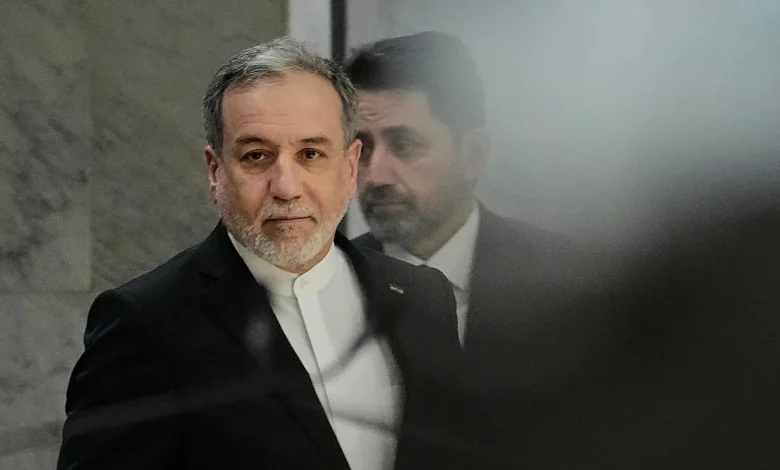
Table of Contents
Iranian negotiators representing Tehran during the high-stakes April and May ceasefire talks were the subject of an extraordinary security alert when the United States government took the unprecedented step of warning Iran about suspected Israeli assassination plots. According to senior U.S. and Iranian officials familiar with the matter, the Trump administration grew increasingly alarmed that Israel was planning to assassinate top-tier Iranian representatives in the midst of sensitive diplomatic negotiations. These backchannel peace talks, mediated by Pakistan and Qatar, were aimed at ending the destructive U.S.-Israeli war with Iran and securing the reopening of the highly critical Strait of Hormuz. The targeted individuals were none other than Iranian Foreign Minister Abbas Araghchi and the influential Speaker of the Iranian Parliament, Mohammad Bagher Ghalibaf.
The Backstory of the Secret Assassination Warning
The geopolitical landscape of the Middle East was pushed to its absolute limits during the spring of 2026. Following months of high-intensity conflict, characterized by joint U.S.-Israeli strikes that severely impacted Iran’s ruling structure, the Trump administration shifted its focus toward finding a viable diplomatic off-ramp. President Donald Trump, eager to deliver a major foreign policy victory, normalize global energy prices, and secure maritime trade routes, initiated covert negotiations with Tehran. However, this diplomatic pivot created a profound rift with Jerusalem. Under Prime Minister Benjamin Netanyahu, Israel’s military strategy remained firmly focused on a decapitation campaign designed to permanently dismantle Iran’s decision-making apparatus.
U.S. intelligence agencies began picking up highly troubling indicators that Israeli planners viewed the upcoming peace summits as an opportune window to target Iran’s primary negotiators. The fear in Washington was that an Israeli strike on these key figures would not only end the peace process but also spark an uncontrollable escalatory cycle, pulling American forces back into an active, indefinite war. The gravity of the threat forced the Trump administration to make a remarkable decision: bypass their closest regional ally and send a direct warning to their adversary to prevent a diplomatic catastrophe.
Key Iranian Targets: Abbas Araghchi and Mohammad Bagher Ghalibaf
The potential assassination targets identified by American intelligence were the most critical figures representing Iran’s diplomatic and political interests. In the wake of intense military campaigns that had already thinned the ranks of Iran’s leadership, Abbas Araghchi and Mohammad Bagher Ghalibaf emerged as the primary intermediaries capable of negotiating and ratifying a binding agreement. U.S. officials recognized that eliminating these individuals would effectively leave Washington with no viable partners for peace, reinforcing the influence of hardline domestic factions within Iran who vehemently opposed any diplomatic engagement with the West.
Abbas Araghchi: The Diplomatic Face of Iran
Abbas Araghchi, Iran’s Foreign Minister, has long been regarded by Western diplomats as a highly skilled, pragmatic negotiator. Having played a central role in previous international agreements, Araghchi possessed the rare ability to bridge the gap between Tehran’s ideological principles and the realities of global diplomacy. In the eyes of the Trump administration, Araghchi was seen as an indispensable asset for securing a sustainable ceasefire. One U.S. official, speaking on the condition of anonymity, summarized the administration’s concerns bluntly: “You kill those folks and you’re killing the pragmatists”. The removal of Araghchi from the diplomatic chessboard would have eliminated the primary conduit for direct and indirect communication between Washington and Tehran, effectively paralyzing the peace process.
Mohammad Bagher Ghalibaf: The Parliament Speaker on the Hit List
Mohammad Bagher Ghalibaf, the Speaker of the Iranian Parliament and a former commander within the Islamic Revolutionary Guard Corps (IRGC), represented a critical bridge between Iran’s military establishment and its political government. While Ghalibaf maintained strong conservative credentials, his political career has been marked by a highly practical approach to governance and crisis management. As the war threatened the very survival of the state, Ghalibaf became a leading advocate for a structured diplomatic resolution. Because any potential peace treaty would require legislative approval and military buy-in, Ghalibaf’s leadership was deemed essential by American planners. His assassination would have triggered immense domestic instability, likely resulting in a military-led takeover of the government by extreme hardline factions eager to escalate the war.
How the U.S. Delivered the Rare Warning to Tehran
Because the United States and Iran do not maintain formal diplomatic relations, the delivery of this highly sensitive intelligence warning required complex, multi-layered backchannel diplomacy. The Trump administration utilized trusted regional intermediaries, specifically Pakistan and Qatar, to transmit the urgent message to Tehran. Pakistani and Qatari officials were briefed on the specific nature of the Israeli threats and instructed to advise the Iranian delegation to implement maximum security precautions during their travels to and from negotiation venues in Islamabad and Doha.
The warning instructed the Iranian negotiators to vary their flight paths, utilize decoy aircraft, and significantly restrict their public appearances. This level of active intelligence sharing between Washington and Tehran—even through intermediaries—highlights the extraordinary strain in the U.S.-Israel relationship. It revealed that the White House was willing to actively protect Iranian officials from Israeli military operations in order to preserve the viability of its own diplomatic agenda, showcasing a remarkable realignment of tactical priorities in the midst of an active war.
Diverging Objectives: The Split Between U.S. and Israeli War Aims
The tension surrounding the assassination plots exposed a fundamental divergence of war aims between the United States and Israel. While the Trump administration prioritized regional stabilization, the containment of energy prices, and the safe passage of commercial shipping through the Strait of Hormuz, the Israeli government viewed the conflict as a historic opportunity to achieve total victory over its primary regional adversary. For Israel, the elimination of Araghchi and Ghalibaf was seen as a logical continuation of its targeted killing campaign, regardless of whether those individuals were actively engaged in peace talks.
This strategic divergence was characterized by analysts as one of the most significant diplomatic rifts in modern history. U.S. officials had warned their Israeli counterparts as early as March to cease targeted operations against Iran’s political leadership. Israel’s apparent determination to proceed with these strikes despite Washington’s explicit objections demonstrated the limited leverage the Trump administration possessed over the Netanyahu government during key phases of the war, forcing the U.S. to take matters into its own hands by warning Tehran directly.
| Targeted Official | Key Role in Iran | U.S. Strategic Assessment | Alleged Israeli Motivation |
|---|---|---|---|
| Abbas Araghchi | Foreign Minister & Lead Diplomat | Indispensable pragmatic channel for negotiated peace | Dismantle Iran’s diplomatic engagement capability |
| Mohammad Bagher Ghalibaf | Parliament Speaker & Security Liaison | Critical for political ratification and military buy-in | Completely disrupt legislative and political continuity |
Chronology of the Secret April-May Peace Diplomacy
The intense diplomatic efforts to end the war unfolded against a backdrop of constant military tension and shadow warfare. In early April, a preliminary ceasefire framework was established, halting major direct military engagements but leaving the broader geopolitical crisis unresolved. This brief pause in fighting allowed negotiators from Washington and Tehran to convene for marathon sessions aimed at hammering out a permanent settlement. High-level delegations met under intense secrecy in Switzerland, Pakistan, and Qatar, working through highly complex issues including sanctions relief, nuclear guarantees, and maritime security protocols.
However, the momentum of these talks was constantly threatened by the shadow of Israeli intelligence operations. As negotiators worked late into the night in Islamabad and Doha, U.S. intelligence tracked Israeli reconnaissance flights and tactical planning, leading to the realization that Israel was actively monitoring the travel plans of the Iranian delegation. The diplomatic timeline was thus a race against time, with American negotiators trying to finalize a deal before an Israeli strike could permanently shatter the peace process.
Details of the Avoided Strikes and Tactical Incidents
The threat to the Iranian negotiators was not merely theoretical; it manifested in several highly alarming tactical incidents that nearly triggered a catastrophic escalation. In mid-April, during a pivotal round of negotiations in Islamabad, Iranian security forces detected Israeli fighter jets entering Iranian airspace near the Pakistani border. At the exact same time, Mohammad Bagher Ghalibaf was scheduled to fly back to Tehran. Alerted to the imminent threat, Iranian aviation authorities ordered Ghalibaf’s transport plane to make a sudden, emergency diversion, landing in the eastern city of Mashhad rather than the capital.
This incident sent shockwaves through the diplomatic community and confirmed the accuracy of the warnings previously conveyed by the United States. Following the diversion, the Iranian delegation demanded strict, verifiable security guarantees from the U.S. as a precondition for continuing the talks. Tehran made it clear that they would not return to the negotiating table unless Washington could guarantee that Israel would not target their representatives during diplomatic transits, placing immense pressure on American officials to rein in their regional ally.
Geopolitical Ramifications of the Fractured Coalition
The revelation of the secret warnings has profound implications for the future of Middle Eastern geopolitics and the stability of the U.S.-Israel alliance. By actively intervening to protect Iranian officials, the United States demonstrated that its commitment to preventing a wider regional war superseded its traditional defense of Israeli military autonomy. This action has created a legacy of deep distrust between Washington and Jerusalem, with Israeli officials feeling betrayed by what they perceived as American interference in their national security operations.
Furthermore, the active participation of Pakistan and Qatar as trusted intermediaries has elevated their status as critical diplomatic players in the region. The successful coordination of security alerts during the crisis proved that regional channels can function effectively even under the most extreme wartime conditions. This framework could serve as a model for future conflict resolution efforts, providing a reliable safety valve to prevent miscalculations and unauthorized escalations between adversarial nations.
Domestic Reactions and Official Denials
Following the public leak of these events, the domestic and international reactions were swift and highly polarized. The office of Israeli Prime Minister Benjamin Netanyahu immediately dismissed the reports as “fake news” and “a complete fabrication of reality,” denying that Israel had any plans to target the negotiators or that the U.S. had issued such warnings. Despite these denials, independent journalistic investigations, including those published by the Washington Post, verified the core details of the intelligence sharing through multiple high-level sources within both the American and Iranian governments.
In Tehran, the revelation was met with a mixture of vindication and caution. Iranian state media highlighted the incident as proof of Israel’s bad faith and desire to perpetuate regional instability, while praise was quietly directed toward the diplomatic corps for successfully navigating the extreme security risks. For the Trump administration, the leak underscores the immense complexity of managing a highly volatile regional conflict, highlighting the delicate balance between supporting a key ally and pursuing broader strategic objectives that serve long-term global stability.