France National: 3 Incredible World Cup Final Runs
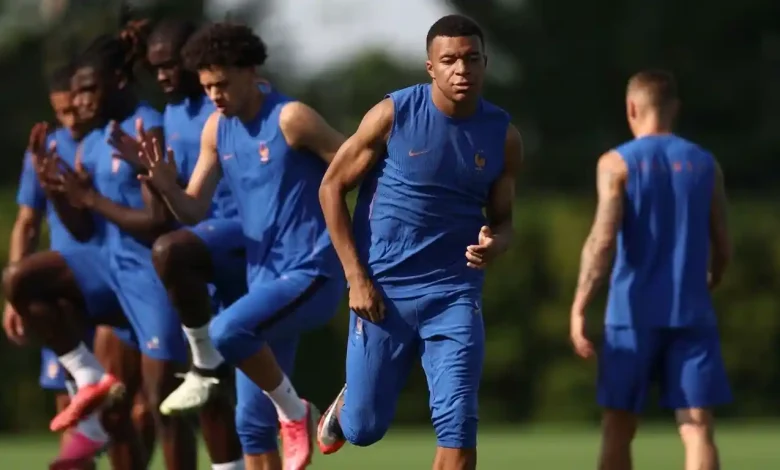
Table of Contents
France National Football Team is currently on a relentless quest to rewrite the history books, showing no signs of the psychological fatigue that so often plagues world-class teams following heartbreaking defeats. After the historic and agonizing loss to Argentina in the 2022 World Cup Final in Qatar, many soccer pundits anticipated an emotional hangover that could compromise their 2026 campaign. In that legendary 2022 match, Kylian Mbappé scored an iconic hat-trick—becoming only the second player ever to achieve this in a World Cup final—yet France still fell short in the dramatic penalty shootout. Instead of harboring dejection, however, Les Bleus have emerged stronger, deeper, and more calculated than ever. Their latest 1-0 triumph over a stubborn, ultra-defensive Paraguay team in the Round of 16 at Lincoln Financial Field in Philadelphia serves as a perfect testament to this grit, setting them on a path to potentially become the first country to reach three consecutive World Cup finals since Brazil’s historic run from 1994 to 2002.
This long-form analysis dives deep into France’s tactical evolution, their physical victory over Paraguay, the emergence of impact substitute Désiré Doué, and their highly anticipated quarterfinal matchup against Morocco in Boston.
France National Football Team: Banishing the Ghosts of the 2022 World Cup Final
In sports history, the runner-up of a legendary championship match often carries a heavy psychological burden into the subsequent cycles. The trauma of losing on penalties after coming back multiple times can dismantle a squad’s internal cohesion. Yet, Didier Deschamps has constructed an environment of relentless focus where complacency has no place. While France’s global and domestic challenges continue to capture headlines elsewhere, the focus of the athletic department remains laser-targeted on reclaiming the ultimate prize in France National football.
This single-minded determination is reminiscent of elite operations that must continuously pivot and perform under extreme pressure. Much like tactical maneuvers on a global geopolitical scale—such as when France deploys warships in the Strait of Hormuz to secure critical trade channels—the French national squad has learned to deploy its immense resources strategically on the pitch, neutralizing threats before they can disrupt the overall campaign. Rather than wallowing in the disappointment of 2022, Deschamps has seamlessly integrated a new generation of French talent with seasoned veterans, creating a self-sustaining cycle of footballing excellence.
Under the Philadelphia Heat: Tactical Analysis of the 1-0 Win Over Paraguay
The Round of 16 clash, played on Saturday, July 4, 2026, took place under a scorching Independence Day heatwave in Philadelphia. The temperature at Lincoln Financial Field hovered at sweltering levels, forcing both teams to manage their physical output carefully and utilize the mandatory cooling breaks to full advantage. For France, the match was not an exhibition of their trademark “champagne France National football,” but rather a grueling physical test. Paraguay, fresh off a historic penalty shootout upset over Germany in the previous round, set up a defensive wall that tested the patience and stamina of the French attackers.
To break down how this gritty encounter unfolded, let us examine the core team statistics from this monumental clash in Philadelphia:
| Statistic Category | France National Team | Paraguay National Team |
|---|---|---|
| Final Score | 1 | 0 |
| Ball Possession (%) | 68% | 32% |
| Total Shots | 14 | 4 |
| Shots on Target | 4 | 0 |
| Fouls Committed | 11 | 13 |
| Yellow Cards | 3 | 0 |
| Key Substitutions | Désiré Doué (61′ for Barcola) | Julio Enciso (72′) |
| Match-Winning Event | Kylian Mbappé Penalty (70′) | N/A |
Breaking Down the Low-Block: Paraguay’s Defend-at-All-Costs Strategy
From the opening whistle, Paraguay’s tactical intent was clear: implement a highly compact 5-4-1 defensive shape, squeeze the spaces between the lines, and deny any running room for the French wingers. Having successfully neutralized Germany’s star-studded offense in the Round of 32, the Albirroja felt confident that their physical approach could frustrate France. In the first half, the strategy worked to perfection. France dominated over 68% of the possession but struggled to create clear-cut chances, with speculative long-range shots from Manu Koné and Ousmane Dembélé easily dealt with by Paraguay’s defensive line and goalkeeper Orlando Gill.
Paraguay’s physical defending was highly aggressive, borderline hostile. They constantly initiated physical duels, utilized tactical fouls to break French momentum, and slow-played every dead-ball situation to eat away at the clock. This hyper-pragmatic approach made it incredibly difficult for the French offense to settle into a rhythm. The French attackers were forced to drop deep and work in extremely tight spaces, where the Paraguayan defenders double-teamed anyone who entered the final third.
The Game-Changer: Désiré Doué’s Superb Impact Off the Bench
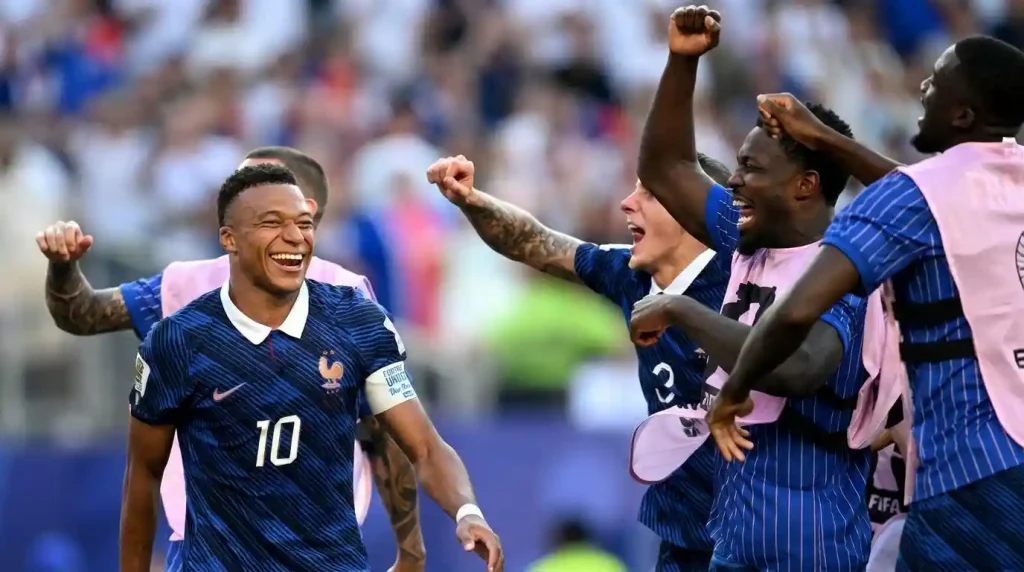
With the match stalemated and the pressure building, Didier Deschamps made the tactical decision that ultimately decided the match. In the 61st minute, he substituted Bradley Barcola—who had struggled to find space on the left flank—and brought on the highly technical Paris Saint-Germain sensation, Désiré Doué. On almost any other World Cup squad, the 21-year-old Doué would be the undisputed face of the franchise. For the incredibly deep French team, however, he represents an absolute luxury off the bench.
It took only four minutes for Doué to prove his world-class quality. Entering the pitch with fresh legs and an aggressive dribbling mindset, he immediately targeted Paraguay’s right side. In the 65th minute, Doué received the ball on the left wing, drove inside, and danced through three Paraguayan defenders in a crowded penalty area with astonishing technical precision. Desperate to stop him, a fourth defender lunged in, tripping the young winger. While the referee initially waved play on, a prompt VAR review confirmed the obvious foul, awarding France the decisive penalty that broke Paraguay’s ironclad resistance.
A Historic Parallel: Evoking Memories of the 1998 World Cup Battle
For long-time supporters of the French national team, the grueling battle against Paraguay in Philadelphia carried a deep sense of déjà vu. Tactical analysts immediately noted how much this match mirrored the historic encounter between these two nations in the Round of 16 during the 1998 World Cup in France. On that fateful day in Lens, a heavily favored French team was similarly stymied by an incredibly disciplined Paraguayan defense led by the legendary goalkeeper José Luis Chilavert. The match remained scoreless after 90 minutes and was only settled in the 114th minute of extra time when defender Laurent Blanc scored the first-ever Golden Goal in World Cup history.
Analyzing these historical trends is crucial for appreciating the cyclical nature of international France National football. Just as financial analysts scrutinize structural patterns in market volatility—closely evaluating the economic risks and echoes of 2008 in 2026 to prepare for future corrections—football historians recognize that a championship run always requires winning at least one ugly, defensive battle. The 1998 victory over Paraguay paved the way for France to lift their first-ever World Cup trophy. The 2026 team hopes their own hard-fought 1-0 win over the South Americans will serve as the exact same catalyst.
“Dirty Football” and “Tuxedos”: Mbappé’s Cold Response to Paraguay’s Tactics
The intensely physical nature of the game boiled over multiple times, resulting in heavy clashes on the pitch. Following the final whistle, French captain Kylian Mbappé did not mince his words when discussing Paraguay’s aggressive approach. Speaking to the media, Mbappé delivered a memorable and cold response that quickly went viral across the sports world. He pointed out that Paraguay expected France to simply show up and rely on their technical reputation, but the French team proved they are more than capable of handling physical, grueling matches.
“We’ve shown we’re not just a team that knows how to play beautiful, attacking France National football,” Mbappé remarked with steel in his eyes. “If we have to get our hands dirty, we will do it. They thought we’d show up in tuxedos to play, but we know how to play dirty France National football too. We won, we fought, and we were the better team.” This quote highlights the mental shift in this French squad; they have shed any remaining sense of entitlement and are fully prepared to grind out victories by any means necessary.
Golden Boot Standings and Kylian Mbappé’s Legendary Ascent
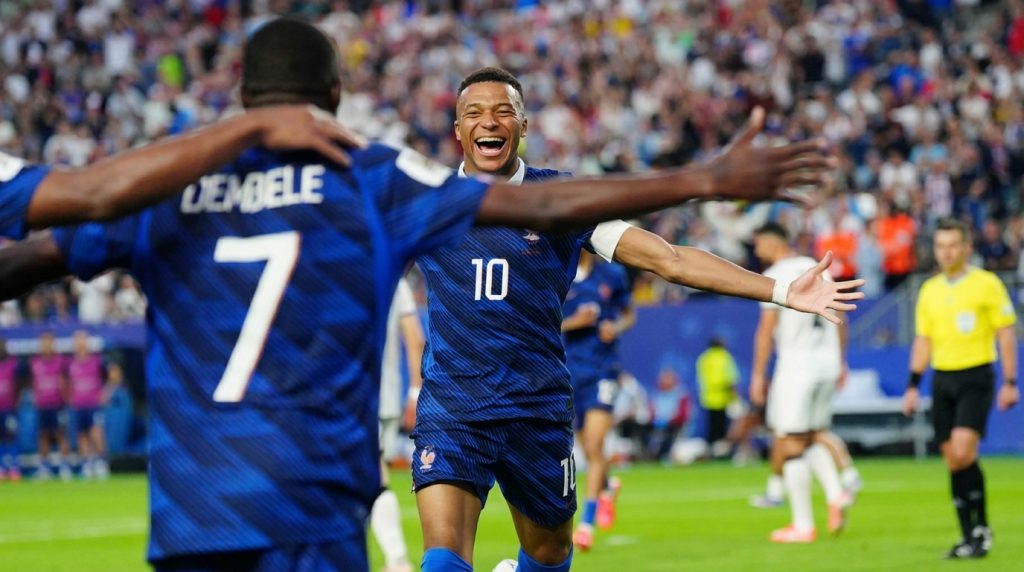
By coolly converting the 70th-minute penalty, Kylian Mbappé secured his seventh goal of the 2026 FIFA World Cup, putting him right back at the forefront of the race for the Golden Boot. The strike drew him level with Lionel Messi in the current tournament standings, although Mbappé currently leads on assists. Furthermore, this crucial goal brings Mbappé within just one goal of Messi’s all-time World Cup record of 20 goals, cementing the French captain’s status as one of the greatest tournament players the sport has ever seen.
Mbappé’s ability to remain absolutely calm under immense pressure is what separates him from ordinary stars. This relentless drive to achieve greatness, even when faced with aggressive opponents, mirrors the absolute dedication seen in the most iconic figures in sports history, such as Alex Zanardi, the motorsports legend and Paralympic icon whose life was defined by overcoming insurmountable odds and never giving up. Mbappé’s hunger to lead France to another world championship is the driving engine of this entire roster.
The Chase for Three Consecutive World Cup Finals (Emulating Brazil 1994-2002)
With their ticket booked to the quarterfinals, the France National Football Team is now just two wins away from achieving an extraordinary milestone: reaching three consecutive World Cup finals (2018, 2022, and 2026). In the modern era of highly competitive, globalized football, making three straight finals is an almost impossible feat. The only nation to achieve this in the last half-century is the legendary Brazil squad that played in the finals of 1994, 1998, and 2002, winning two of them.
The secret behind France’s sustained dominance lies in their unparalleled depth and systematic developmental pipeline. Just as leading global powers meticulously build high-tech self-reliance—seen clearly in China’s strategy to secure 70% domestic silicon wafer usage by 2026—the French Football Federation has established a world-class talent pipeline that ensures any departing veteran is immediately replaced by an equally gifted youngster. When players like Bradley Barcola face tactical limitations, Deschamps can seamlessly insert a star like Désiré Doué. This self-sustaining system makes France a terrifyingly resilient opponent in tournament football.
What Lies Ahead: A Quarterfinal Rematch Against Morocco
Next up for France is a highly anticipated quarterfinal showdown against Morocco, scheduled for Thursday, July 9, 2026, at Boston Stadium. This match will be a highly emotional rematch of the 2022 World Cup semifinal in Qatar, where France defeated the historic Moroccan side 2-0. Morocco reaches the quarterfinals of the 2026 tournament in stellar form, having knocked out co-hosts Canada and proven once again that their defensive organization and rapid counter-attacks can dismantle the world’s best teams.
For more detailed updates and post-match breakdowns, fans can follow the official FIFA tournament portal as the knockout bracket heats up. If France hopes to continue their historic march toward a third consecutive final, they must display the same patience, tactical discipline, and physical resilience they showed in the heat of Philadelphia. With Mbappé leading the charge and a bench brimming with game-changing luxuries like Désiré Doué, the world champions-in-waiting look ready to handle whatever obstacles stand in their way.