Cape Verde vs Argentina: The Epic 2026 World Cup Clash
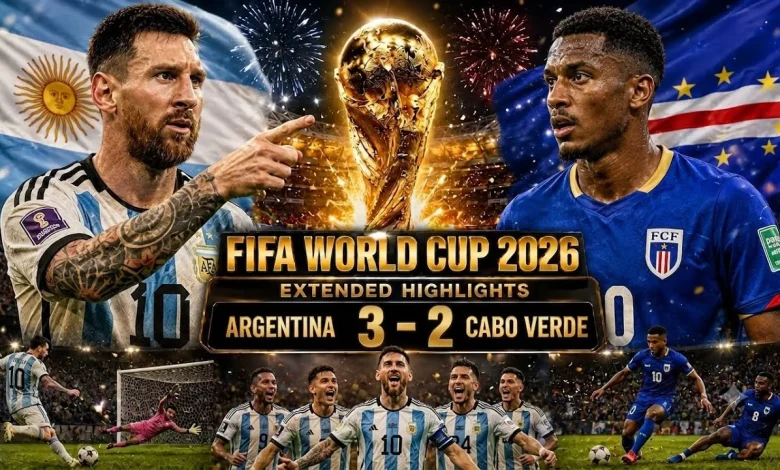
Table of Contents
Cape Verde, a small nation off the west coast of Africa, has officially captured the hearts of football fans across the globe during its historic run at the 2026 FIFA World Cup. Before this tournament, very few casual sports fans knew of this volcanic archipelago, home to just over 500,000 people. Yet, through sheer determination, tactical discipline, and a collective spirit that defines the beautiful game, the Blue Sharks staged one of the most mesmerizing underdog stories in sporting history. Their journey reached an epic climax in the Round of 32, where they faced the mighty giants of world football, Argentina. This match, billed as a modern-day David vs. Goliath, pushed the reigning world champions to their absolute limits in a thrilling 3-2 extra-time encounter.
Introduction: The World Cup Tale of the Century
The magic of the World Cup has always been defined by its ability to elevate the unheralded and showcase the beauty of the unexpected. In the hot, humid evening of Miami Gardens, Florida, the narrative reached heights that even Hollywood screenwriters would struggle to invent. A nation ranked 64th in the world stood eye-to-eye with the second-ranked team on the planet, refusing to be overawed by the sheer scale of the occasion or the legendary status of their opponents. What transpired over 120 minutes was not just a football match; it was a testament to the power of belief, community, and tactical excellence.
The Incredible Path to the Knockout Stage
Cape Verde’s journey to the knockout round was anything but a fluke. Placed in a formidable group alongside footballing powerhouses Spain and Uruguay, as well as the formidable Saudi Arabia, the Blue Sharks were expected by many pundits to exit the tournament early without a fight. Instead, they introduced themselves on the world stage with a shocking scoreless draw against Spain. Led by the heroic efforts of their veteran goalkeeper Vozinha, they frustrated the former world champions with a compact defensive block and lightning-fast counter-attacks.
They followed up this monumental result with another hard-fought draw against Uruguay, and a third consecutive draw against Saudi Arabia. These three points were enough to secure passage to the Round of 32, making Cape Verde the smallest country ever to qualify for the World Cup’s knockout stages. The achievement was a testament to the meticulous planning of head coach Bubista and the tight-knit bond of a squad largely assembled from the nation’s global diaspora, playing in secondary leagues across Europe.
David vs. Goliath: A Discrepancy for the Ages
Entering the Round of 32, the match-up between Cape Verde and Argentina was highlighted by the largest world ranking discrepancy ever witnessed in a World Cup knockout match. Argentina, the defending champions, entered the tournament ranked second in the world, while Cape Verde occupied the 64th spot—representing a massive 62-place gulf in the FIFA global rankings. On paper, it was a mismatch of epic proportions. Argentina boasted a squad of world-class superstars playing for elite European clubs, led by arguably the greatest player in the history of the sport, Lionel Messi.
Cape Verde, conversely, featured players with incredibly unique career paths. For instance, defender Pico Lopes was recruited to the national team via a simple message on LinkedIn—a story that sounds more like a fantasy than real-life international football. Yet, when the referee blew the whistle at Miami Stadium, rankings and pedigree ceased to matter. The Blue Sharks proved that organization, passion, and tactical execution can bridge even the widest talent gaps in modern sports.
The Clash of Generations: Vozinha vs. Lionel Messi
For most of Friday night, the epic contest boiled down to a fascinating duel between two elder statesmen of international football: Argentina’s 39-year-old living legend, Lionel Messi, and Cape Verde’s 40-year-old goalkeeper, Vozinha. Together, they represented almost eight decades of life experience and a combined wealth of footballing wisdom. It was a masterclass of experience, as Messi’s attacking genius repeatedly clashed with Vozinha’s spectacular reflexes and positional awareness.
Lionel Messi’s Pursuit of Glory
Lionel Messi entered the 2026 World Cup looking to defend Argentina’s crown and further cement his immortal status in the annals of sport. Even at 39, his vision, precision, and match-winning capabilities remained undiminished. He had already scored seven goals in the tournament, tying him at the top of the Golden Boot race before this match. Facing Cape Verde, Messi knew his team needed to avoid complacency against an opponent with absolutely nothing to lose. Throughout the game, Messi was the hub of Argentina’s creative play, drifting between the lines and orchestrating every offensive transition.
Vozinha’s Fairy Tale for His Mother
Vozinha, on the other hand, had much simpler, yet deeply touching, aspirations when the tournament began. The 40-year-old goalkeeper’s primary dream was for his mother to see him play live on the world’s biggest stage. Thanks to a collaborative global effort during the group stage, his mother was successfully flown to the United States to watch him play. Motivated by her presence in the stands, Vozinha elevated his game to superhuman levels. His performance against Argentina was nothing short of legendary, as he made ten crucial saves, including five spectacular denials of Lionel Messi himself. From point-blank block shots to tipping trademark Messi free-kicks over the crossbar, Vozinha stood as an unyielding wall.
Match Breakdown: A Five-Goal Thriller in Miami
The match itself will go down as one of the greatest World Cup games ever played. Under the hot and humid evening sky of Miami, 64,478 fans witnessed a rollercoaster of emotions that lasted over two and a half hours in real time.
First Half: Messi Breaks the Deadlock
In the 29th minute, Argentina finally broke through Cape Verde’s obdurate defense. Lisandro Martínez lofted a brilliant, pinpoint pass over the top of the defensive line. Messi, showing his signature movement, controlled the ball exquisitely with the outside of his left boot and lashed a powerful strike into the roof of the net, giving Vozinha no chance. It was Messi’s record-extending 20th career World Cup goal, and it seemed to signal the beginning of a routine victory for La Albiceleste.
Second Half: Duarte’s Historical Equalizer
However, the Blue Sharks refused to fold. Just before the hour mark, in the 59th minute, Cape Verde struck back. Captain Ryan Mendes drove down the right flank and delivered a low cross into the penalty area. Midfielder Deroy Duarte controlled the ball with his left foot before drilling a precise right-footed shot past Argentina’s goalkeeper Emiliano Martínez, sending the Cape Verde bench and neutral fans into absolute rapture. It was Duarte’s first-ever goal for his country, coming on the grandest stage of all.
As Argentina pushed desperately for a winner, Vozinha repeatedly denied Messi, making a crucial point-blank block in the 63rd minute and another stunning fingertip save from a Messi free-kick in the 72nd minute. The veteran keeper kept Cape Verde alive through five agonizing minutes of stoppage time, saving another free-kick to send the match into extra time.
Extra Time Drama: Cabral Stuns the World Again
Extra time brought even more dramatic twists. Just two minutes into the first period of extra time (92nd minute), Argentina’s Lisandro Martínez picked up a half-cleared ball from a corner, cut inside, and fired a sumptuous shot into the top corner of the net to make it 2-1. It seemed like the fairy tale was finally coming to an end. But the resilient Blue Sharks were far from done.
In the 103rd minute, left-back Sidny Lopes Cabral scored what will surely be remembered as one of the goals of the tournament. Receiving the ball on the left, he cut inside and unleashed a spectacular, curling strike that sailed past a diving Emiliano Martínez into the far top corner. At 2-2, the specter of a penalty shootout loomed large.
But in the 111th minute, heartbreak struck for Cape Verde. Lionel Messi swung a dangerous corner kick into the box. Argentina defender Cristian Romero rose highest to head the ball, which deflected off Cape Verde center-back Diney Borges and flew into the net. This unfortunate own goal ultimately sealed a 3-2 victory for La Albiceleste, bringing a dramatic end to Cape Verde’s magical run.
Key Statistics and Team Comparison
To understand the magnitude of this encounter, let us look at the key team statistics from this historic Round of 32 match:
| Statistic / Metric | Argentina (Rank 2) | Cape Verde (Rank 64) |
|---|---|---|
| Goals Scored | 3 | 2 |
| Total Shots | 24 | 9 |
| Shots on Target | 13 | 4 |
| Goalkeeper Saves | 2 | 10 |
| Ball Possession | 68% | 32% |
| Corner Kicks | 11 | 3 |
| Fouls Committed | 14 | 18 |
Post-Match Reaction and Legacy of the Blue Sharks
According to post-match reports by AP News, the emotion in the stadium at the final whistle was overwhelming. While Argentina’s players sank to their knees in pure relief, Cape Verde’s players walked with their heads held high, receiving a grand standing ovation from all corners of the stadium. Cape Verde’s head coach Bubista expressed immense pride in his squad, stating that they had shown the world their true identity and proved that small nations can compete on equal footing with the absolute best.
“We did our best, and we did it with bravery,” Bubista remarked. “This performance will stay in the history books forever.” Even Argentina’s manager, Lionel Scaloni, paid tribute to their opponents, acknowledging that Cape Verde proved they are an exceptional team. The global football community echoed these sentiments, celebrating the Blue Sharks for reminding everyone why football is loved worldwide.
What Lies Ahead for Both Nations
For Argentina, the narrow escape keeps their dream of defending their World Cup title alive, setting up a highly anticipated Round of 16 clash against Egypt in Atlanta. Lionel Messi and his squad will need to address the defensive vulnerabilities exposed by Cape Verde if they are to lift the trophy once again.
For Cape Verde, although their World Cup campaign has come to an end, they return home as national heroes. They have not only put their country on the global football map but also inspired millions of underdogs worldwide. The legacy of their 2026 World Cup run, characterized by the unforgettable duel between Vozinha and Messi, will be talked about for generations to come.