Kohen Wiley shooting 2026: Autopsy Questions Police Justification
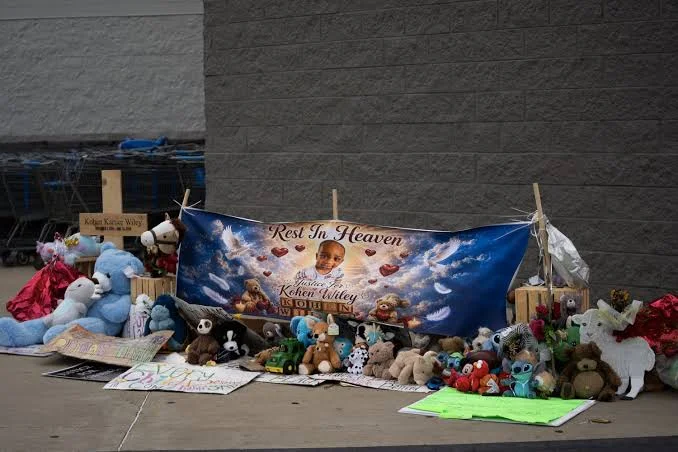
Table of Contents
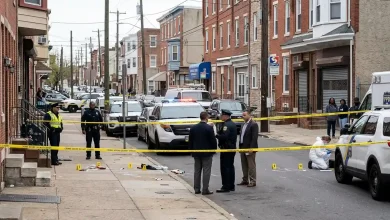
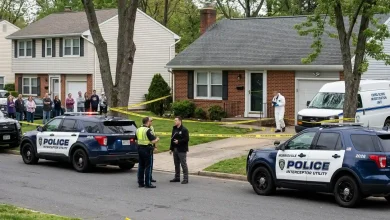
Kohen Wiley shooting investigations reached a critical turning point on Wednesday when a preliminary independent autopsy report revealed the fatal bullet entered through the side of the car, raising grave questions about the police department’s justification for opening fire. One-year-old Kohen Wiley was tragically shot and killed on June 14, 2026, as law enforcement officers responded to a minor shoplifting call at a Walmart in Senatobia, Mississippi. The case has quickly ignited nationwide conversations about police escalation, the safety of innocent bystanders during low-level property disputes, and the immediate need for visual transparency through body-worn camera footage. As the family’s legal team, led by civil rights attorneys Ben Crump and Van Turner, demands the immediate release of all relevant video recordings, this newly disclosed forensic evidence directly challenges the initial narrative put forward by state investigators.
Wiley :Introduction to the Tragedy of Kohen Wiley
The tragedy began in the parking lot of a Walmart located on U.S. 51 in Senatobia, Mississippi, a small community of roughly 8,000 residents located about 40 miles south of Memphis, Tennessee. On Sunday, June 14, 2026, police officers were dispatched to the retail giant following reports of a suspected shoplifting incident, which family advocates later indicated involved low-value household necessities like diapers. Inside a parked vehicle was one-year-old Kohen Wiley, sitting in the front passenger seat in the arms of his mother, Vellesiya Wiley. When officers arrived and attempted to intercept the car, gunfire was discharged, striking and mortally wounding the infant. The devastating incident has left a family shattered, a community in mourning, and civil rights leaders demanding systemic reform across Mississippi law enforcement agencies.
In the immediate aftermath of the shooting, local officials placed the officer involved, identified in preliminary records as Officer Hunter Foster, on administrative leave without pay pending a state-level investigation. However, the slow progression of the official inquiry prompted Kohen’s family to seek independent avenues for justice. Retaining Ben Crump, a nationally prominent civil rights attorney known for representing the families of George Floyd and Breonna Taylor, alongside Memphis-based attorney Van Turner, the family commissioned an independent autopsy. On Wednesday, July 1, 2026, during an emotional press conference held at the Senatobia Church of Christ, the legal team revealed forensic findings that they argue completely dismantle the narrative initially propagated by state authorities.
Wiley :The Core Conflict: Police Claims vs. Physical Evidence
At the center of the legal and moral battle is a sharp divergence between the police department’s initial account of the encounter and the physical evidence recovered from the scene. Whenever law enforcement officers use lethal force, particularly against moving vehicles, the legal standard requires a demonstrating of immediate, life-threatening danger to the officer or the public. In this case, the state’s narrative and the family’s first-hand testimony present completely opposite versions of how the tragedy unfolded.
Wiley :State Investigation and the Official Incident Report
The Mississippi Bureau of Investigation (MBI) was quickly brought in to take over the inquiry, a standard procedure for officer-involved shootings in the state. According to early statements released by the MBI, when responding officers arrived at the Walmart, they encountered individuals attempting to flee the retail store into a parked vehicle. MBI investigators claimed that as officers tried to halt the vehicle, the driver steered directly in the direction of the police, nearly striking one of the officers. Under the assertion that their lives were in immediate peril, an officer discharged their weapon, after which the vehicle sped away. The occupants of the car drove directly to a local hospital, where young Kohen Wiley was tragically pronounced deceased from his injuries. No police officers sustained serious injuries during the encounter.
Wiley :Family Testimony and Disputing the Trajectory
Conversely, the occupants of the car, including the child’s mother Vellesiya Wiley and a family friend who was driving, have vehemently disputed the state’s version of events. From the outset, the family has maintained that the driver did not steer toward the officers but was instead trying to navigate away from the scene to avoid confrontation. The family has emphasized that they were driving away, in the opposite direction, when the officer opened fire on the vehicle. This testimonial discrepancy has fueled intense local frustration, as community members argue that police officers are using the “fleeing vehicle as a weapon” justification to shield themselves from accountability. The legal team argued that the physical evidence revealed by the independent autopsy proves that the officer was never in the path of the car, as the bullet did not strike the vehicle from the front but from the side.
Wiley :Dr. Roger Mitchell’s Forensic Findings
To establish an objective timeline of the shooting, the family’s legal team retained Dr. Roger Mitchell, a highly respected, board-certified forensic pathologist based in Washington, D.C.. Dr. Mitchell, who previously served as the Chief Medical Examiner for the District of Columbia, conducted a comprehensive forensic review of Kohen Wiley’s body on June 24, 2026. His findings, which were detailed in a preliminary report presented on Wednesday, officially classified the toddler’s manner of death as a homicide resulting from a gunshot wound to the torso. According to the report, the fatal projectile entered the right side of the child’s chest and exited through the left side of his torso, establishing a definitive right-to-left trajectory.
Wiley :Explaining the “Pseudo-Stippling” Detail
One of the most scientifically telling details within Dr. Mitchell’s report is the presence of what forensic pathologists refer to as “pseudo-stippling” on the child’s skin. True stippling, or powder tattooing, occurs when unburned gunpowder particles hit and embed in the skin, which typically indicates a shot fired from close range. However, pseudo-stippling presents a similar pattern of tiny abrasions and skin punctures but is caused by alternative debris, most commonly tiny fragments of shattered glass. Dr. Mitchell determined that the markings on Kohen’s body were pseudo-stippling caused by the shattering of the car’s side passenger window. This detail provides incontrovertible physical proof that the officer’s bullet entered through the side window of the car rather than the front windshield, supporting the argument that the officer was standing to the side of the vehicle when they fired.
The Exit Wound and Severe Internal Damage
The trajectory of the bullet from right to left indicates that it traveled directly through the child’s thoracic cavity. Dr. Mitchell’s report noted that because the body was not fully reopened during this secondary independent review, he was unable to catalog every specific organ damage with absolute precision. However, based on the entry and exit wounds, the pathologist concluded that vital organs within the chest, including the heart, lungs, and esophagus, suffered catastrophic damage from the high-velocity projectile. The severity of the internal injuries meant that the toddler had virtually no chance of survival, a fact that the legal team used to highlight the extreme and disproportionate nature of the force used during a property crime response.
Demands for Transparency and Video Release
Armed with these forensic findings, attorneys Ben Crump and Van Turner have intensified their demands for absolute transparency from both public officials and the private sector. The Mississippi Bureau of Investigation has historically adhered to a policy of withholding bodycam, dashcam, and third-party surveillance footage until their investigations are fully completed. State Public Safety Commissioner Sean Tindell has indicated that such investigations typically span six to nine months. The family’s attorneys argue that waiting up to nearly a year for answers is an unacceptable delay that serves only to cool public outrage and delay the path to justice.
Call on Walmart to Release Parking Lot Surveillance
The legal team has directed a significant portion of its advocacy toward Walmart, requesting that the retail giant immediately release its parking lot surveillance footage. Given that Walmart utilizes extensive, high-definition camera arrays to monitor its store perimeters and parking lots, it is highly likely that multiple camera angles captured the entire sequence of events. Attorneys argue that Walmart has a corporate responsibility to be transparent, especially when a shoplifting call originating from their store results in the loss of an innocent child’s life. “There was a better way to handle this situation had Walmart and had the Senatobia Police Department released the video,” Turner stated during the news conference, pointing out that public access to the footage would immediately clarify the physical positions of the officer and the car.
Push for Bodycam and Dashcam Footage Release
In addition to private security footage, the family is demanding the immediate public release of all dashcam and bodycam video from the officers present at the scene. Ben Crump emphasized that under modern policing standards, there is no logistical or legal reason to keep bodycam footage locked away for months. He pointed out that in other jurisdictions across the United States, bodycam footage is often released within days of an incident to maintain public trust. By withholding the footage, the Senatobia Police Department and the MBI are fueling suspicion that they are attempting to protect the officer rather than uncover the truth. The independent autopsy findings have provided a strong evidentiary basis to demand that the public be allowed to see what occurred on June 14.
Community Outrage and the Push for Systemic Reform
The fatal shooting of a baby has deeply affected the local community, highlighting deep-seated tensions between local police and the Black residents of Senatobia and surrounding Marshall, Tate, and Panola counties. The tragedy occurred amid a broader national conversation regarding the criminalization of low-income individuals and the disproportionate use of lethal force during non-violent misdemeanor stops. Activists argue that responding to a low-level property crime with loaded, high-velocity weapons represents a systemic failure of police training and operational priorities.
On Friday, June 26, 2026, just one day before Kohen was laid to rest, over a hundred marchers gathered in Senatobia to participate in the “Justice for Kohen Wiley” protest. Carrying signs and wearing blue in memory of the infant, the demonstrators marched through the town, demanding accountability, systemic police reform, and the immediate resignation of those involved in withholding the facts. The emotional weight of the tragedy was heavily felt at Kohen’s funeral, held on Saturday, June 27, at the Hosanna Family Worship Center in nearby Pope, Mississippi. Following a moving service, a horse-drawn carriage transported the child’s casket to Mt. Pleasant Missionary Baptist Church Cemetery in Enid, Mississippi, where he was laid to rest. The family’s tragedy is detailed in national media outlets, including Newsweek, which continue to track the legal fallout from this deeply disturbing event.
Comparative Analysis of Official vs. Independent Accounts
To better understand the core disagreements surrounding the death of Kohen Wiley, it is helpful to look at the direct comparisons between the claims made by the Mississippi Bureau of Investigation and the physical evidence detailed by Dr. Roger Mitchell and the family’s legal team. The discrepancy in these accounts forms the basis of the family’s upcoming civil rights lawsuit against the city and the police department.
| Investigative Category | MBI & Police Narrative Claims | Independent Autopsy & Family Legal Claims |
|---|---|---|
| Direction of Vehicle | The vehicle drove toward the officers, almost striking one of them. | The vehicle was moving away, attempting to leave the parking lot without striking anyone. |
| Officer Position & Safety | The officer was in immediate physical danger, necessitating lethal force. | The officer was standing to the side of the car, outside its potential path of travel. |
| Bullet Entry Point | Not explicitly specified, but implied a head-on defensive shot. | The bullet entered the right side of Kohen’s chest, indicating a side-angle trajectory. |
| Source of Glass/Debris | Not detailed in preliminary statements. | Shattered side-window glass caused pseudo-stippling on the child’s torso. |
| Manner of Death | Under investigation as an officer-involved shooting. | Formally classified as a homicide resulting from a shotgun blast. |
The physical reality of a side-angle bullet entry severely undermines the legal defense of “imminent threat”. In federal and state jurisprudence, an officer’s use of deadly force is evaluated based on whether a reasonable officer on the scene would have believed their life was in danger. If the vehicle had already passed the officer, or if the officer was positioned safely to the side, shooting into the passenger cabin violates standard police protocols and constitutes excessive force. Ben Crump and Van Turner have indicated that they intend to use Dr. Mitchell’s autopsy findings to file a federal civil rights lawsuit, seeking both compensatory damages and systemic changes to how Mississippi officers are trained to handle property crimes. Until the bodycam and Walmart security videos are made public, the physical evidence of the side-angle shot remains the most powerful tool in the family’s quest for accountability.