Ukraine Drone Strikes Force Russian Air Defense Redeployments 2026
Table of Contents
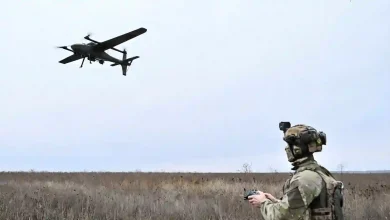
Ukraine has dramatically escalated its strategic aerial campaign against critical Russian energy facilities and military industries as the full-scale conflict enters its fifth year. This campaign is defined by Kyiv’s deployment of domestically manufactured, long-range weapon systems designed to bypass established air defenses and target high-value logistics nodes deep within Russian territory. In a series of highly coordinated overnight operations, Ukrainian forces demonstrated their expanded strike reach, successfully targeting one of the world’s largest natural gas processing plants and multiple satellite communication installations. This development marks a major shift in the kinetic balance of the war, showcasing how Kyiv’s self-reliance in military engineering is redefining the tactical landscape of Eastern European warfare.
The Evolution of Ukraine’s Deep-Strike Strategy
Under the pressure of prolonged conflict, the Armed Forces of Ukraine have moved away from purely defensive postures to establish a systematic deep-strike doctrine. Kyiv’s military strategy focuses heavily on undermining Russia’s primary economic engine—its hydrocarbon sector—while simultaneously crippling the communication networks that coordinate frontline troops. According to reports from the Institute for the Study of War, these operations have steadily increased in precision and range, using advanced guidance algorithms to strike deep behind enemy lines without relying on Western-supplied munitions, which often carry geographic usage restrictions. By shifting the war’s physical consequences to Russian soil, Ukraine aims to disrupt the Kremlin’s supply lines, deplete its air defense resources, and demonstrate the tangible domestic costs of the ongoing invasion.
Targeting the Arteries of the Russian War Machine: Orenburg and Satellite Nodes
The most recent display of Ukraine’s evolving strike capability occurred in the southern Urals, where Ukrainian drones struck the Orenburg Gas Processing Plant. Located more than 1,200 kilometers (750 miles) from the Ukrainian border, this facility is not merely an industrial center but a highly strategic military-industrial asset. The complex houses Russia’s sole helium production plant, a substance critical for cooling liquid-fuel rocket engines and guiding advanced precision weaponry. Furthermore, the facility produces ethane, a vital chemical precursor required for manufacturing solid rocket propellants and high-grade gunpowder. By setting this massive complex ablaze, Ukraine has directly targeted the supply chain of Russia’s missile program. Additionally, the operation successfully disabled two key satellite communications centers, severing vital links utilized by Russian aerospace forces to coordinate intelligence and strategic bombing runs across Ukraine. This simultaneous disruption of industrial output and operational communications underscores the high level of sophistication now embedded within Ukrainian planning.
Russia’s Air Defense Crisis: Protecting Moscow and the Kerch Bridge
Faced with these persistent and long-range incursions, the Russian military leadership has been forced into a highly problematic defensive reallocation. Ukrainian President Volodymyr Zelenskyy, citing highly detailed intelligence reports, confirmed that Moscow has ordered the redeployment of advanced air defense systems—including S-400 and Pantsir-S1 batteries—from outlying Russian regions. The Russian command has designated two absolute priorities for protection: the federal capital of Moscow and the highly symbolic Kerch Bridge in occupied Crimea. However, this defensive concentration comes at a heavy price. By stripping air defenses from other Russian regions and temporarily occupied Ukrainian territories, the Kremlin has left extensive sections of its logistics network and military installations exposed to future Ukrainian operations. Ukrainian military intelligence (HUR) indicates that this reallocation creates crucial vulnerabilities that Kyiv’s planners intend to exploit in subsequent phases of their aerial campaign.
The Strategic Importance of the Kerch Strait Connection
The Kerch Bridge, connecting the Russian mainland directly to the occupied Crimean Peninsula, remains one of the most critical logistical bottlenecks of the entire war. Serving as the primary supply artery for Russian forces operating in southern Ukraine, the bridge has been a recurring target of Ukrainian special operations, having suffered severe structural damage in previous strikes. As Kyiv intensifies its efforts to enforce a ‘logistical lockdown’ on Crimea, Russia’s deployment of heavy air defenses, smoke screen countermeasures, and naval barriers around the bridge highlights its extreme vulnerability. If Ukraine succeeds in permanently severing this transport link, the Russian southern grouping would be forced to rely on vulnerable overland routes running through occupied Zaporizhzhia and Donetsk, which are already within range of Ukrainian artillery and mid-range drones. Consequently, the defense of the Kerch Bridge is not merely a symbolic priority for Vladimir Putin, but a logistical necessity to prevent a systemic collapse of the southern front.
Ceasefire Diplomacy: The Trump Proposal and the Kremlin’s Refusal
As kinetic operations escalate on the battlefield, the diplomatic arena has experienced significant volatility. Under the influence of the U.S. administration, President Donald Trump has aggressively pushed for an unconditional ceasefire to halt the active hostilities. Ukrainian President Volodymyr Zelenskyy took a decisive step by publicly accepting Trump’s proposed framework, signaling Kyiv’s willingness to engage in structured negotiations provided that robust international security guarantees are established. This diplomatic maneuver was designed to demonstrate Ukraine’s commitment to a peaceful resolution while placing the burden of continuing the conflict entirely on Moscow. However, Russian President Vladimir Putin has flatly refused the proposal, demanding instead that Kyiv capitulate to extensive territorial concessions and halt its military mobilization before any formal negotiations can begin. This rejection highlights the deep diplomatic impasse, with Moscow choosing to sustain its war of attrition despite the mounting economic and military costs.
Zelenskyy’s Diplomatic Posture vs. Putin’s Calculations
The rejection of the ceasefire by the Kremlin has allowed Zelenskyy to sharpen his diplomatic rhetoric on the international stage. Writing on the social platform X, the Ukrainian President emphasized that ‘it is the Russian leadership’s rejection of diplomacy that is prolonging the war,’ urging the Russian public and global observers to recognize that Moscow’s actions are the primary obstacle to peace. Zelenskyy’s acceptance of Trump’s terms represents a calculated risk aimed at securing continued bipartisan support in Washington, where shifting geopolitical dynamics under the Trump administration have introduced new uncertainties for long-term coalition military assistance. Conversely, Putin’s refusal reflects a calculation that Russia can outlast Western political will, leveraging its superior domestic manpower and defense output to secure a complete military victory rather than settling for a frozen conflict that leaves Ukraine politically independent.
A Deepening Crisis on the Northern Frontier: Chernihiv Evacuations
While the aerial campaign and diplomatic disputes dominate the international narrative, a severe humanitarian and defensive crisis is unfolding in northern Ukraine. Viacheslav Chaus, the head of the Chernihiv Regional Military Administration, announced that the regional Defense Council has ordered a mandatory evacuation for civilian communities bordering Belarus. Set to begin on July 1, 2026, the evacuation directly affects 12 border settlements across four key communities: Koriukivka, Horodnia, Novhorod-Siverskyi, and Semenivka. Military authorities requested this measure due to persistent Russian cross-border shelling, sabotage operations, and the potential threat of a renewed offensive from Belarusian territory. Regional administrators estimate that approximately 1,000 residents, including 120 children, remain in these highly vulnerable border areas. The government has committed to a two-month timeline to safely relocate these civilians to prepared temporary housing facilities deeper within the interior of the country.
The Shadow of Belarus and Northern Frontier Security
The strategic position of Belarus remains a critical variable in Ukraine’s northern defensive planning. Although Belarusian forces have not directly entered the land war, Minsk has consistently allowed Russian forces to utilize its territory for logistics, air strikes, and training operations. The mandatory evacuation in Chernihiv reflects the Ukrainian military’s assessment that the northern border remains an active threat. This defensive positioning is highly reminiscent of other global border flashpoints where militarization creates high-friction zones, such as when North Korea enhances its border artillery footprint. By depopulating the border villages, Ukraine minimizes civilian casualties from daily shelling while granting its border guard forces and territorial defense brigades greater operational freedom to establish defensive fortifications, minefields, and surveillance networks designed to repel any sudden incursions.
Comparative Analysis of Strategic Military Capabilities
To understand the current structural dynamics of the conflict, it is essential to compare the contrasting capabilities and tactical adjustments made by both Ukraine and Russia as the war continues into its fifth year. The following table highlights the primary operational focuses, key domestic systems, and logistical vulnerabilities of both belligerents.
| Feature | Ukraine’s Strategic Posture | Russia’s Strategic Posture |
|---|---|---|
| Primary Strike Capability | Long-range domestic strike drones (e.g., Lyutyi, Palianytsia) and precision cruise missiles targeting industrial infrastructure. | Strategic aviation, ballistic missile barrages, and Iranian-designed Shahed loitering munitions targeting civilian grid nodes. |
| Air Defense Allocation | Decentralized defense of key cities and energy grids; heavy reliance on Western Patriot, IRIS-T, and NASAMS systems. | Centralized redeployment of S-400/Pantsir systems to protect Moscow and the Kerch Bridge, leaving provincial hubs exposed. |
| Diplomatic Alignment | Acceptance of U.S.-proposed ceasefire terms to position Kyiv as a cooperative diplomatic partner; demands security guarantees. | Rejection of ceasefire proposals; demands complete territorial capitulation and termination of Western military aid. |
| Border Defense Operations | Mandatory evacuations of border communities (e.g., Chernihiv) to secure military zones and mitigate civilian casualties. | Utilization of Belarusian territory for military posture, troop housing, and electronic warfare operations. |
This systematic comparison illustrates that while Russia maintains a quantitative advantage in heavy armor and conventional artillery, Ukraine has successfully closed the gap through highly innovative, asymmetrical technological developments. As seen in modern conflicts, from the Middle East to Eastern Europe, the intersection of autonomous systems and fiber-optic guiding mechanisms has completely transformed tactical air power, comparable to innovations highlighted in discussions about asymmetric drone technology developments.
The Path Forward: A War of Attrition into 2026
The conflict’s continuation into late 2026 reflects a transition from a war of rapid maneuver to a highly industrialized war of attrition. Ukraine’s ability to manufacture and deploy long-range weapons at scale has successfully disrupted Russia’s economic and logistical security, forcing the Kremlin to choose which high-value assets to defend. However, the refusal of the Russian leadership to engage in meaningful diplomacy, coupled with the humanitarian displacement on the northern border, guarantees that the conflict will remain highly kinetic for the foreseeable future. The strategic success of Kyiv’s aerial campaign will ultimately depend on its capacity to sustain production rates of domestic deep-strike weapons, while Russia’s operational stability will be tested by its ability to secure its sprawling energy infrastructure against an increasingly sophisticated and long-range adversary.