Claire Valdez defeats Antonio Reynoso in NY-7 Primary
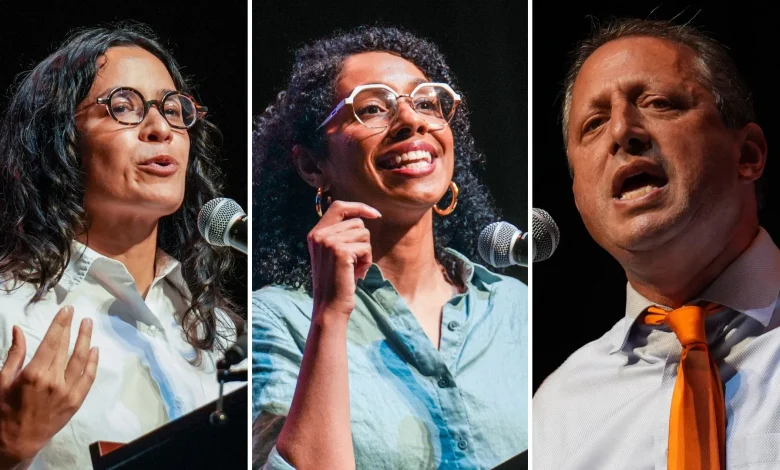
Claire Valdez defeats Antonio Reynoso in a historic Democratic primary for New York’s 7th Congressional District, representing a monumental shift in New York City’s progressive political landscape. The highly anticipated race, which was triggered by the retirement of longtime Representative Nydia Velázquez, served as a crucial battleground between the city’s ascendant democratic socialist movement and its traditional, institutionally aligned progressive establishment. By capturing a commanding majority of the vote, Valdez has solidified her position as a rising star in federal politics and signaled a new era of progressive leadership in New York.
Introduction to the Historic NY-7 Democratic Primary
The race for New York’s 7th Congressional District has captivated political observers across the nation. For over three decades, the district was represented by Representative Nydia Velázquez, a trailblazing leader known affectionately as “La Luchadora” for her fierce advocacy of working-class families and immigrant communities. Her decision to retire created a rare open seat in a district that spans diverse neighborhoods across both Brooklyn and Queens, including Bushwick, Williamsburg, Greenpoint, Astoria, Long Island City, Sunnyside, and Woodside. The demographic makeup of the district is exceptionally unique, consisting of a 77 percent tenant population alongside a vibrant mix of working-class families, artistic communities, Hasidic residents, and a massive Latin American diaspora. Because the district is overwhelmingly Democratic, the primary election was widely understood to be the real contest to determine who would represent the area in Washington, D.C.
The Immediate Aftermath: NBC News Projects a Decisive Victory
Soon afterward, NBC News projected that state legislator Claire Valdez had defeated Brooklyn Borough President Antonio Reynoso in the open 7th District, where longtime Rep. Nydia Velázquez is retiring. The projection came early on election night, with NY1 calling the race for Valdez just before 9:30 p.m. As the results poured in, the crowd at Valdez’s watch party at 99 Scott in East Williamsburg broke into uproarious chants of “DSA! DSA!” celebrating what became a blowout victory. With 88 percent of scanners reporting, Valdez secured a commanding 58 percent of the vote, while Reynoso trailed far behind with just 33 percent. New York City Council Member Julie Won sat in a distant third place with approximately 7 percent, followed by candidate Vichal Kumar. The decisive margin shocked many political insiders who had predicted a razor-thin margin, underscoring the formidable organizing strength of the left-wing coalition.
Who is Claire Valdez? The Rise of the Democratic Socialist
Claire Valdez’s journey to the halls of Congress is rooted in grassroots activism and labor organizing. Born in Lubbock, Texas, Valdez is a dual citizen of the Ysleta del Sur Pueblo Nation and the United States. She moved to New York City in 2015, living in Ridgewood, Queens, and working a series of service-industry jobs, including positions at Taco Bell, Pizza Hut, and Trader Joe’s, while pursuing her passion for the arts. Her political consciousness deepened when she took a role as a program assistant in the visual arts department at Columbia University. There, she became an active member of United Auto Workers (UAW) Local 2110, eventually rising to serve as the unit chair. In 2019, she joined the New York City chapter of the Democratic Socialists of America (NYC-DSA), serving as a new member coordinator and building relationships with local activists. In 2024, she successfully ran for the New York State Assembly, representing the 37th District in Queens, where she served with distinction before launching her congressional campaign.
A Path Shaped by Grassroots and Labor Organizing
Valdez’s campaign was built on the foundation of labor solidarity and working-class empowerment. Leveraging her deep ties to the UAW and other progressive unions, she championed a platform centered on Medicare for All, a federal Green New Deal, and sweeping tenant protections. Valdez, who has served in the New York State Assembly since 2025 (see her political profile on Wikipedia), leveraged her legislative record and extensive union ties to present herself as a champion of working people. She argued that the crises facing working-class New Yorkers—ranging from runaway gentrification to stagnant wages—required a bold, systemic challenge to corporate power rather than incremental legislative compromises. Her message resonated deeply with younger voters, union members, and tenant organizers who felt left behind by the traditional political apparatus.
Antonio Reynoso: The Establishment Progressive
Antonio Reynoso entered the race as one of the most prominent progressive figures in Brooklyn. Having served on the New York City Council from 2014 to 2021, where he chaired the Committee on Sanitation and Solid Waste Management, Reynoso built a reputation as a reformer. In 2021, he made history by being elected Brooklyn Borough President, succeeding Eric Adams. Throughout his tenure, Reynoso championed progressive causes, including expanding maternal healthcare access, advocating for the closure of the Rikers Island jail complex, and pushing for environmental justice in low-income communities. His deep roots in Brooklyn’s political fabric and his close relationships with neighborhood coalitions made him a formidable candidate who expected to capture the loyalty of long-term residents and mainstream progressive organizations.
A Record on Police Reform and Brooklyn Alliances
Reynoso’s campaign leaned heavily on his record of challenging systemic inequalities and his long history of pushing for police reform. As a City Council member, he was a vocal critic of the NYPD’s stop-and-frisk policies and worked to implement accountability measures within the department. He also founded the New Kings Democrats, a political club dedicated to reforming the Brooklyn Democratic Party machine and increasing transparency. Reynoso argued that his extensive legislative experience and proven track record of “doing the hard things” made him uniquely qualified to navigate the complexities of Washington, D.C. He highlighted his ability to build broad coalitions that united working-class families with long-standing civic institutions, asserting that his pragmatic progressive approach was the most effective way to secure tangible resources for the district.
The Strategic Endorsements: A Battle of Progressive Visions
The primary in the 7th District exposed deep, unresolved ideological divisions within New York’s broader progressive coalition. It was not merely a contest between two candidates, but a proxy battle between different visions of progressive governance. Antonio Reynoso was backed by a formidable alignment of institutional progressive power. He secured the endorsement of the retiring representative, Nydia Velázquez, who hoped to pass her legacy to a trusted ally. He was also endorsed by the Working Families Party (WFP), several major labor unions, and a host of establishment progressive elected officials. Conversely, Claire Valdez’s campaign was fueled by the ascendant democratic socialist wing of the Democratic Party. She received the endorsement of high-profile national figures like Senator Bernie Sanders, the national and local chapters of the DSA, and a coalition of left-wing labor organizations, including the United Auto Workers.
Mayor Zohran Mamdani vs. the Institutional Establishment
One of the most consequential factors in the race was the endorsement and active support of New York City Mayor Zohran Mamdani. Sworn in as mayor on January 1, 2026, Mamdani’s rise to City Hall was a watershed moment that sent shockwaves through the political establishment. As the first democratic socialist mayor of New York City, Mamdani has worked to implement a bold agenda focused on worker protections, tenant rights, and socialized municipal services. For Mamdani and the NYC-DSA, the open seat in the 7th District was an opportunity to expand their influence from City Hall to the federal level. Mamdani campaigned extensively for Valdez, mobilizing a massive, highly disciplined grassroots volunteer network. The victory of Valdez—and other DSA-aligned candidates in concurrent primaries—is a major validation of Mamdani’s political capital and cements the DSA as the dominant force on the city’s left.
Comparative Analysis of Candidates in the NY-7 Primary
To understand the dynamics of this historic primary, it is useful to examine the distinct profiles, support networks, and policy platforms of the major candidates who vied for the Democratic nomination in New York’s 7th Congressional District. The table below outlines the core attributes of each campaign:
| Candidate | Key Endorsements | Core Platform Points | Approximate Vote Share (%) |
|---|---|---|---|
| Claire Valdez | Mayor Zohran Mamdani, Senator Bernie Sanders, NYC-DSA, UAW Local 2110 | Medicare for All, Green New Deal, Universal Tenant Protections, Social Housing | 58% |
| Antonio Reynoso | Rep. Nydia Velázquez, Working Families Party (WFP), Mainstream Unions | Police Reform, Maternal Healthcare Expansion, Closing Rikers Island, Civic Reform | 33% |
| Julie Won | Local Civic Organizations, Queens Political Allies | Immigrant Rights, Affordable Housing Development, Queens Infrastructure | 7% |
Key Factors Behind Valdez’s Commanding Victory
Several critical elements contributed to Claire Valdez’s landslide victory over an established citywide figure. First and foremost was her campaign’s ability to frame the election around the housing crisis. In a district where 77 percent of residents are renters, Valdez’s unapologetic stance on tenant rights struck a powerful chord. While Reynoso emphasized his legislative experience and record on police reform, Valdez focused on the immediate, material struggles of everyday residents facing skyrocketing rents and displacement in gentrifying neighborhoods like Bushwick, Greenpoint, and Long Island City.
Tenant Organizing and the Housing Crisis
Valdez’s background as a tenant organizer and assembly member allowed her to connect deeply with the district’s demographic realities. She argued that housing is a fundamental human right, advocating for federal rent control measures and a massive investment in social housing to combat the predatory practices of corporate real estate developers. Her campaign successfully mobilized tenant associations, housing justice networks, and local community groups, turning the primary into a referendum on the future of housing affordability in New York City. Reynoso’s traditional progressive approach, which favored mixed-income developments and cooperative community planning, was perceived by many younger, rent-burdened voters as insufficient to address the scale of the ongoing crisis.
What the Election Means for the Future of New York Progressive Politics
The outcome of the NY-7 primary has profound implications for the future of progressive politics, both locally and nationally. The decisive victory of Claire Valdez demonstrates that the Working Families Party and institutional labor unions no longer hold a monopoly on progressive endorsements and voter loyalty in New York City. The NYC-DSA, under the political leadership of Mayor Zohran Mamdani, has proved that it possesses a superior grassroots mobilization machine capable of defeating seasoned, citywide elected officials who are backed by the traditional party apparatus.
Furthermore, the victory indicates a growing polarization within the Democratic party. As the national party wrestles with its ideological direction, New York’s 7th District has sent a clear message: the future of the urban progressive movement lies with unapologetic, working-class democratic socialism. The success of Valdez, coupled with the political realignment taking place across the five boroughs, will likely inspire similar grassroots challenges in urban districts nationwide, pushing the national Democratic party to adopt more ambitious policies regarding climate change, healthcare, and economic inequality.