Darializa Avila Chevalier Defeats Espaillat in NY Primary 2026
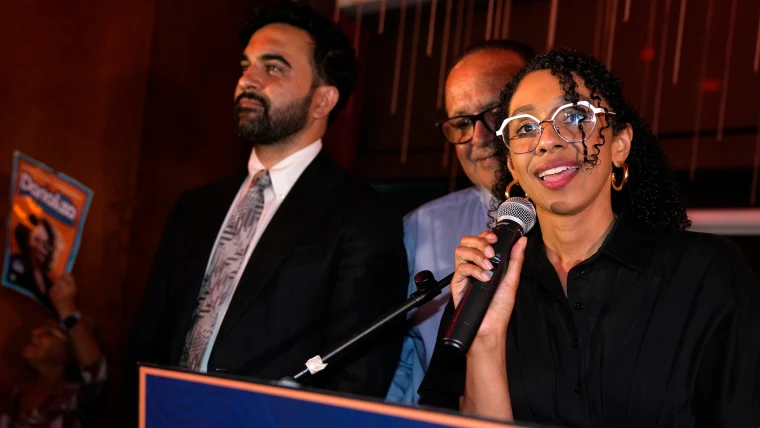
Darializa Avila Chevalier’s Historic Upset in Upper Manhattan
Darializa Avila Chevalier has sent shockwaves through the political landscape of New York City by securing a monumental primary victory over long-time incumbent Adriano Espaillat. The 32-year-old community organizer, activist, and proud member of the Democratic Socialists of America (DSA) has successfully dismantled one of the state’s most formidable political operations. By defeating the 71-year-old Espaillat, Chevalier did not just win a congressional primary; she fundamentally redefined what is politically possible in Upper Manhattan’s 13th Congressional District. This electoral outcome stands as one of the most significant progressive upsets in recent New York political history, drawing immediate comparisons to previous insurgent victories that have reshaped the national Democratic Party.
Chevalier’s campaign was built on a bold, unapologetic challenge to the status quo. Working as a public defender, she witnessed daily the systemic inequities confronting the working-class residents of Harlem, Washington Heights, Inwood, and the northwest Bronx. Throughout her campaign, she framed Espaillat as an out-of-touch institutionalist who had grown comfortable in the halls of power, leaving his constituents to navigate skyrocketing rents, food insecurity, and aggressive federal immigration policies on their own. Her victory signals a major generational and ideological shift, proving that a dedicated grassroots coalition can overcome a massive funding disadvantage and the entrenched power of a party machine.
The Political Landscape of New York’s 13th Congressional District
To understand the magnitude of this upset, one must examine the unique socio-economic and demographic realities of New York’s 13th Congressional District. For decades, this district has been a crucial hub of Dominican-American political influence, a legacy that Adriano Espaillat helped build and command. However, behind the district’s rich cultural tapestry lies a deep economic divide. Rent burdens in Upper Manhattan are among the highest in the city, and gentrification has steadily displaced historic communities of color, forcing families out of neighborhoods they built over generations.
As younger, progressive-leaning residents moved into the district, and as long-term residents grew increasingly frustrated with the lack of affordable housing and economic security, the demographic and political landscape began to shift. The traditional party machine, once reliant on reliable block-by-block organizing and ethnic solidarity, gradually lost touch with a multi-generational working class facing unprecedented precarity. Chevalier capitalized on this disconnect, building a multi-racial, working-class coalition that united older tenants fighting displacement with younger progressives demanding systemic change. Her campaign recognized that ethnic representation alone was no longer sufficient for constituents who felt economically abandoned.
Campaign Strategy: Grassroots Organizing vs. Institutional Power
The campaign strategy engineered by Chevalier and her team was designed to bypass traditional gatekeepers and speak directly to the lived experiences of everyday voters. While Espaillat relied on heavy financial backing from real estate interests, corporate political action committees, and endorsements from the highest echelons of the Democratic establishment, Chevalier relied on a volunteer-driven ground game. Armed with clipboard and conviction, her campaign launched an exhaustive door-knocking operation that targeted high-density public housing complexes, rent-stabilized tenements, and transit hubs.
This strategy was rooted in deep listening. Rather than relying on polished television advertisements, Chevalier’s campaign focused on personal, face-to-face interactions. Volunteers did not just ask for votes; they asked residents about their rent, their safety, and their feelings on foreign policy. This hyper-local approach created a sense of shared ownership over the campaign, converting ordinary constituents into passionate advocates who mobilized their own families and neighbors to turn out on primary day.
Focusing on Working-Class Struggles and Housing
Under the banner of housing justice, Chevalier made the local cost-of-living crisis the centerpiece of her platform. She directly tied the rise of luxury developments in Harlem and Washington Heights to the political donations flowing into establishment campaigns. As a public defender, she brought a unique credibility to these issues, discussing how housing instability directly correlates with justice-system involvement and community instability.
She championed bold policies, including federal rent control standards, a massive expansion of public housing funding, and robust federal tenant protections. By framing housing as a fundamental human right rather than a market commodity, she drew a sharp line between herself and Espaillat, whom she accused of failing to leverage his federal position to protect his constituents from aggressive corporate landlords and speculative real estate developers.
The Foreign Policy Clash: Israel and Defense Spending
Perhaps the most contentious aspect of the primary was the clash over foreign policy and federal spending priorities. Chevalier boldly challenged the bipartisan consensus on foreign military aid, linking international military funding directly to the domestic neglect of American cities. She tapped into deep dissatisfaction among Democratic primary voters regarding the United States’ policy toward Israel and Gaza, arguing that federal lawmakers were out of step with the humanitarian values of their constituents.
In her viral campaign launch video, Chevalier delivered a critique that became the rallying cry of her movement: “Where is our congressman when ICE is kidnapping his constituents? Why should we let Adriano Espaillat vote to spend billions on bombs overseas when we’re struggling to afford rent and groceries right here in New York City?” This rhetoric masterfully connected local anxieties—such as the threat of deportation and the rising cost of groceries—with global spending decisions, presenting a cohesive anti-imperialist, pro-working-class worldview that resonated deeply with voters weary of endless foreign interventions.
Candidate Comparison: Chevalier vs. Espaillat
To fully grasp how this political realignment occurred, it is helpful to analyze the structural, ideological, and tactical differences between the two candidates. The contrast could not have been more pronounced, representing two entirely different visions for the future of the Democratic Party.
| Metric / Issue | Darializa Avila Chevalier | Adriano Espaillat |
|---|---|---|
| Age & Background | 32, Public Defender & Activist | 71, Long-time Career Politician |
| Political Affiliation | Democratic Socialists of America (DSA) | Establishment Democrat |
| Primary Campaign Funding | Grassroots, small-dollar donors | Real estate, corporate PACs |
| Housing Policy | Universal rent control, public housing expansion | Market-rate development, tax incentives |
| Foreign Policy | Anti-war, oppose foreign military aid to Israel | Pro-establishment, support military aid packages |
| Key Base | Working-class renters, youth, progressive activists | Older homeowners, party loyalists, real estate |
The Rising Influence of the Democratic Socialists of America (DSA)
This electoral upset cannot be decoupled from the growing organizational sophistication of the Democratic Socialists of America. Over the past decade, the NYC-DSA has transitioned from a marginal activist group into an elite electoral powerhouse capable of targeting and defeating some of the most powerful politicians in the state. By deploying a highly disciplined, technologically savvy, and ideologically committed volunteer corps, the DSA has mastered the mechanics of low-turnout primary elections.
Chevalier’s victory demonstrates that democratic socialist policies—often caricatured by opponents as politically toxic or unrealistic—have mainstream appeal in working-class urban centers. By focusing on concrete, material improvements in people’s lives, such as housing, healthcare, and immigration defense, the DSA has built an electoral brand that successfully cuts through establishment scare tactics. This win solidifies the organization’s position as a major broker in New York politics, signaling to other incumbents that no seat is safe from a progressive primary challenge.
The Legacy of Adriano Espaillat and the Machine’s Decline
For Adriano Espaillat, this defeat marks a stunning and abrupt end to a historic congressional career. As the first Dominican-American elected to Congress, Espaillat was once a symbol of political empowerment for a community that had historically been locked out of New York’s power structures. He built a legendary political apparatus uptown, orchestrating the victories of numerous allies in local, state, and federal offices, effectively establishing himself as the undisputed kingmaker of Upper Manhattan.
However, critics argue that as Espaillat’s power grew, his connection to the immediate struggles of his district weakened. His voting record, which increasingly aligned with moderate party leadership and defense spending bills, opened a massive flank for a progressive challenger. By failing to adapt to the changing demographics of his district and underestimating the depth of community anger over housing costs and international military spending, his legendary political machine ultimately proved too slow and rigid to withstand the dynamic, grassroots energy of Chevalier’s campaign.
National Implications for the Democratic Party
The ripple effects of Chevalier’s victory will be felt far beyond the boundaries of Upper Manhattan. This race serves as a stark warning to national Democratic leaders who believe they can safely ignore the progressive left’s demands on both domestic and foreign policy. The tension between local bread-and-butter issues and international military funding is no longer an abstract academic debate; it is an electoral reality that can decide congressional seats.
As the country faces ongoing economic uncertainty, the progressive strategy of linking foreign military aid to domestic municipal neglect is likely to be replicated in primaries across the country. Chevalier has provided a highly effective blueprint for how to challenge pro-war, corporate-backed Democrats. National strategists will have to reckon with the fact that a younger generation of voters is increasingly unwilling to support candidates who prioritize defense expenditures over investments in affordable housing, healthcare, and education.
The Path Forward for Upper Manhattan’s New Leadership
As the dust settles on this historic primary, Darializa Avila Chevalier faces the daunting task of transitioning from an outside activist and public defender to a federal legislator. The expectations resting on her shoulders are immense. The working-class residents of Upper Manhattan who propelled her to victory will expect swift, tangible action on housing affordability, immigration reform, and federal accountability.
Chevalier’s tenure will undoubtedly be watched closely by both allies and detractors. Her ability to navigate the complex legislative environment of Washington, D.C., while remaining deeply accountable to her grassroots base will test the viability of democratic socialist governance. If she succeeds, she will not only have transformed Upper Manhattan, but she will also have helped pave the way for a more just, equitable, and progressive national agenda that puts the needs of working-class people above corporate profits and foreign wars.