England vs Ghana 2026: Queiroz Frustrates Three Lions in Draw
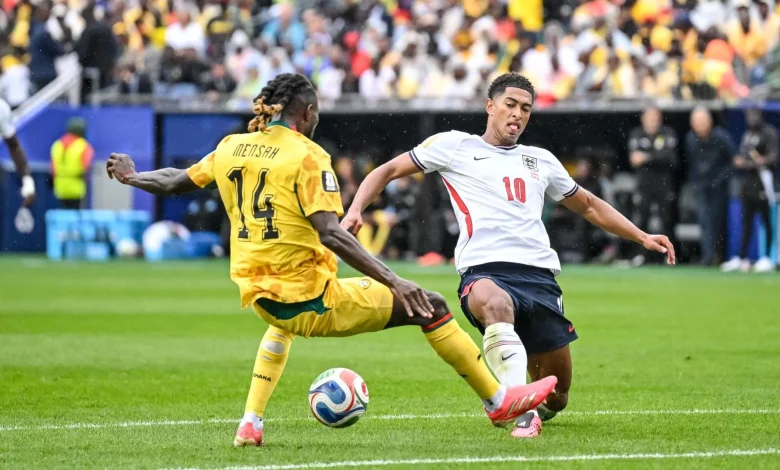
England vs Ghana played out a highly tactical, rain-slicked 0-0 stalemate at the Gillette Stadium in Foxborough, Massachusetts, during a dramatic Group L fixture at the 2026 FIFA World Cup. On a damp, cool Tuesday night, Thomas Tuchel’s Three Lions dominated possession and peppered the opposition penalty area, yet they were ultimately neutralized by a disciplined, resilient Ghanaian side. Led by the tactical wizardry of veteran manager Carlos Queiroz, the Black Stars executed a defensive masterclass that frustrated England’s star-studded lineup from the opening whistle to the final seconds of injury time.
The result leaves both nations tied at the top of Group L with four points each, having both won their respective opening matches. England, who dismantled Croatia 4-2 in their opener, found the physical and structural hurdles presented by Ghana far more difficult to clear than the gaps they exposed in the Croatian defense. Meanwhile, Ghana followed up their hard-fought 1-0 victory over Panama with a defensive performance that will go down as one of the most stubborn in recent World Cup history. Despite England’s overwhelming territorial dominance, the final scoreline read 0-0, sparking massive celebrations among the traveling Ghanaian supporters and raising serious tactical questions for Thomas Tuchel’s England camp.
The Foxborough Rain and Tactical Standoff
The atmospheric conditions at Gillette Stadium set the stage for a classic war of attrition. Steady, freezing rain slicked the pitch, making fast, intricate passing sequences highly risky and giving defensive sliding tackles an extra layer of slide and security. England’s plan was clear from the outset: establish absolute dominance in the middle of the pitch, utilize their inverted wingers to stretch the Ghanaian backline, and feed early crosses to captain Harry Kane. However, the wet surface and the tight spacing enforced by Ghana made quick transitions nearly impossible.
Thomas Tuchel’s side monopolized the ball, passing it sideways and backwards through their center-backs and midfielders in search of a breakdown in Ghana’s defensive shape. According to reports by Al Jazeera Sport, England controlled a staggering 78% of the ball throughout the 90 minutes. Yet, for all their possession, the Three Lions struggled to turn their geometric control into concrete scoring opportunities. Ghana’s defensive lines remained beautifully synchronized, shifting as a cohesive unit and refusing to break even under intense aerial and ground pressure.
Carlos Queiroz and His Defensive Masterclass
For Ghana’s head coach, Carlos Queiroz, this match represented both a tactical triumph and a personal redemption. Four years ago at the World Cup in Qatar, Queiroz was coaching Iran when his team faced England and suffered a crushing 6-2 defeat. The Portuguese tactician, now in charge of the Black Stars, was determined not to let history repeat itself. Approaching this game with a highly defensive, pragmatic 5-4-1 formation, Queiroz designed a low block that choked the space in the final third.
“Our plan was to block and frustrate them from the first minute,” Queiroz said proudly in his post-match press conference. “We did it.” He added that football is not merely about possession, arguing that tactical intelligence, bravery, and structural discipline are just as vital to the sport as individual technique. By packing the midfield and reducing the space between his defensive line and his goalkeeper, Queiroz effectively nullified the threat of Jude Bellingham and Bukayo Saka, forcing England to settle for hopeful long-range efforts and speculative crosses.
The Tactical Blueprint: How Ghana Setup
To implement this blueprint, Queiroz relied on a tireless central midfield pairing of Thomas Partey and Kwasi Sibo, who acted as a screen in front of a deep three-man central defense. The wing-backs stayed pinned back, forming a flat five-man wall when England advanced. Whenever Bukayo Saka or Noni Madueke attempted to cut inside, they were immediately met by a secondary defender, preventing them from curling shots toward the far post. Ghana recorded an extraordinary 43 clearances and numerous defensive blocks over the course of the match, illustrating the sheer work rate and concentration demanded by their manager.
Benjamin Asare: The Wall in Goal
Behind the wall of defenders stood Benjamin Asare, Ghana’s stand-in goalkeeper, who put in a performance of a lifetime. Stepping in under immense pressure, Asare demonstrated immaculate command of his penalty area. Though England registered 19 shots, only four were on target, and Asare dealt with each of them with composed, flawless handling. He came off his line repeatedly to claim slick, wet crosses, denying Harry Kane and late substitute Nico O’Reilly any clean headers. Asare’s distribution was simple and cautious, ensuring that Ghana did not turn the ball over in dangerous areas and further frustrating the English forwards.
Three Lions Frustrated Under Thomas Tuchel
For England, this performance was a sobering reminder of the difficulties of breaking down a world-class low block. Thomas Tuchel, who took over with the ambition of leading England to World Cup glory, looked visibly agitated on the touchline as his team’s possession failed to yield results. England’s build-up play often felt ponderous and predictable, lacking the sharp, one-touch passing required to pierce a packed defense. Harry Kane was starved of service, forced to drop deep into midfield to get touches on the ball, which ultimately left the penalty box vacant during key attacking transitions.
Missed Opportunities: Nico O’Reilly Hits the Woodwork
Despite their struggles, England did fashion several late, heart-stopping opportunities in the closing minutes of the game. The closest they came to breaking the deadlock was in the dying moments of injury time when youngster Nico O’Reilly rose high above the Ghanaian defense. His powerful, downward header beat Benjamin Asare but rattled violently off the crossbar, sending a collective sigh of despair through the English contingent at Gillette Stadium. Earlier, Harry Kane missed a golden opportunity from close range, failing to connect cleanly with a low cross that zipped across the wet turf. Ultimately, England outshot Ghana 19-1, yet their lack of clinical edge cost them a perfect start to the group stage.
Jude Bellingham Speaks Out on Ghana’s Block
Following the final whistle, England midfielder Jude Bellingham did not hide his frustration with Ghana’s defensive setup. Speaking to the media, Bellingham acknowledged the tactical efficacy of Queiroz’s side but lamented their refusal to engage in an open game of football.
“Frustrated a little bit with how they defended, how they set up,” Bellingham confessed. “They got exactly out of the game what they played for. Couldn’t quite break them down, even with all corners, all the possession, all the shots on goal from distance.” Bellingham’s comments highlight a recurring vulnerability for England at major tournaments: when faced with an opponent that completely surrenders possession and focuses entirely on defensive stability, the Three Lions can look devoid of creative solutions and tactical variation.
The Coffee Break: Queiroz Rages at VAR
Despite securing a highly valuable point, Carlos Queiroz was far from pleased with the officiating, launching a scathing and sarcastic attack on the Video Assistant Referee (VAR) system during his post-match comments. The source of Queiroz’s fury was a highly controversial incident in the second half when England defender Ezri Konsa slid in on Ghana’s Prince Kwabena Adu inside the penalty area. The Ghanaian players loudly appealed for a penalty, but the referee waved play on, and the VAR officials chose not to intervene.
“I am not sure whether VAR is still working at the World Cup,” Queiroz remarked with a heavy dose of sarcasm. “The VAR went for a coffee! He was on holiday when we needed him most.” Queiroz’s comments quickly went viral on social media, drawing attention to a crucial moment that could have handed the Black Stars an unexpected victory. Nevertheless, the manager’s tactical organization ensured that the non-call did not derail his team’s concentration, as they held firm until the final whistle.
England’s Historic Record Against African Nations
While the draw was disappointing for England, it did extend an impressive historical milestone. England has still never lost to an African country at the World Cup, stretching their unbeaten streak to ten matches against CAF opposition. The Three Lions have historically struggled to break down African defenses, often grinding out narrow wins or playing out cagey draws, and this 0-0 stalemate fits perfectly into that historical trend.
However, the modern era of international football has seen the gap between traditional powerhouses and emerging footballing nations close dramatically. Ghana, ranked 73rd in the world, went toe-to-toe with an England side ranked among the top five, proving that defensive organization and tactical discipline can overcome immense disparities in squad value and individual prestige.
Group L Analysis and Qualification Scenarios
With two rounds of Group L matches completed, both England and Ghana find themselves in a commanding position to qualify for the round of 32. In the expanded 48-team World Cup, progress is highly achievable, but securing the top spot remains a major priority to ensure a more favorable draw in the knockout stages.
England’s next match is on Saturday against Panama at the MetLife Stadium in East Rutherford, New Jersey, where Thomas Tuchel will be expected to make tactical adjustments to ensure a more fluid attacking performance. Simultaneously, Ghana will take on Croatia in Philadelphia, looking to build on their momentum and seal a historic place in the knockout rounds.
Key Player Performances and Match Ratings
In a match dominated by defensive actions, the standout performers were almost exclusively on the Ghanaian side. Benjamin Asare earned the Man of the Match honors for his heroic display in goal, while central defenders performed brilliantly to restrict Harry Kane’s impact. Below is a summary of the key statistics from this hard-fought Group L encounter:
| Match Statistic | England | Ghana |
|---|---|---|
| Possession (%) | 78% | 22% |
| Total Shots | 19 | 2 |
| Shots on Target | 4 | 1 |
| Corners Taken | 9 | 0 |
| Passes Completed | 684 | 142 |
| Defensive Clearances | 12 | 43 |
| Fouls Committed | 8 | 15 |
| Yellow Cards Received | 1 | 3 |
What Lies Ahead for England and Ghana
As the group stage nears its climax, both Thomas Tuchel and Carlos Queiroz have plenty of homework to do. For Tuchel, the challenge is clear: England must develop a “Plan B” when their primary possession-based passing game is blunted by an organized defense. The inclusion of more dynamic runners, quicker ball circulation, and taking more risks in the final third will be essential if England is to fulfill their potential as genuine World Cup contenders.
For Ghana, the path forward is one of belief and consistency. Under Carlos Queiroz, the Black Stars have rediscovered their defensive identity and competitive edge. If they can combine their resolute defensive structure with a more potent counter-attacking threat, Ghana could well become the dark horse of the 2026 World Cup, capable of frustrating any heavyweight team that stands in their way.