Tacloban school shooting 2026: Bullying Claims and Security Failures Probed
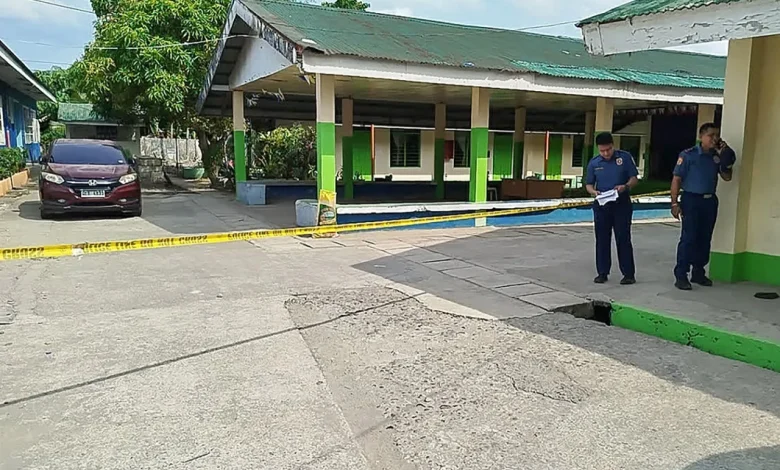
Tacloban school shooting incident has plunged the Eastern Visayas region of the Philippines into deep mourning, exposing severe vulnerabilities in campus security and raising critical questions about youth violence and gun accessibility. The tragic event unfolded at the government-run San Jose National High School, located in the highly urbanized Tacloban City, Leyte. What began as a standard midmorning Tacloban school day quickly transformed into a scene of absolute terror as gunshots echoed through the hallways. Two teenage suspects, aged just 14 and 15, were taken into custody after opening fire inside classroom premises, leaving a trail of destruction that has shocked teachers, parents, and national authorities alike.
According to regional police chief Brig. Gen. Jason Capoy, the Tacloban school, which serves a student population of over 1,500, became the target of a deeply disturbing and premeditated attack. Initial investigations suggest that the incident was not a spontaneous outburst but rather a carefully planned assault devised weeks in advance. The sheer scale of the incident has forced the Department of Education (DepEd) and the Philippine National Police (PNP) to confront systemic issues ranging from weapon proliferation to the psychological health of students within the public school system.
Tacloban :Chronology of the Midmorning Attack
The nightmare began at approximately 9:20 a.m. on Monday, June 22, 2026. While teachers were actively conducting lessons, the quiet environment of San Jose National High School was shattered by successive gunshots. The sudden burst of violence caught everyone off guard, causing immediate confusion as students and faculty struggled to comprehend what was happening. Witnesses reported hearing sharp, rapid cracks of firearm discharges, which sent waves of panic across the multi-building campus.
Tacloban :Barging into Classrooms
During the assault, the two young suspects barged into two classrooms. Brig. Gen. Jason Capoy explained to reporters that after the shooting started in the first room, the children inside scrambled for safety. The suspects, seemingly undeterred by the panic, ran after some of the fleeing victims, pursuing them directly into a neighboring room. This pursuit escalated the chaos, turning the corridor and the secondary classroom into active firing zones. Survivors reported that one of the suspects fired randomly, aiming both at specific targets and into the crowded spaces where students were attempting to hide.
Tacloban :Panic and Scrambling for Safety
The reaction inside the Tacloban school was immediate and chaotic. A social studies teacher, Irvin Nogar, recounted seeing a gunman walking toward his classroom area, prompting him to instantly lock the door and instruct his students to hide under their desks. Inside several classrooms, children were heard crying, screaming, and whispering prayers as they huddled together, desperate to avoid detection. For those trapped in rooms where the shooters actively barged, the situation was even more desperate. In a frantic bid to survive, many students leaped out of second-story windows or tripped over desks and chairs. Out of the 20 total injuries reported, 15 were caused by direct gunshots, including one student who was struck in the head and remains in critical condition. The remaining five injuries were sustained during the stampede, as terrified adolescents stumbled and jumped to safety, suffering fractures, cuts, and severe bruising.
Tacloban :Profiles of the Suspects and Victims
The suspects and the victims were all enrolled as students at the same institution, making the tragedy an internal crisis for the San Jose National High School community. The victims, primarily teenage students aged between 15 and 17, were caught completely defenseless. Regional police confirmed that three students died as a result of their injuries, while 20 others suffered physical wounds, and hundreds more were left with deep psychological trauma. The majority of the casualties were female students, who were caught in the direct line of fire inside the classrooms.
Tacloban :Teenage Suspects with No Prior Criminal Record
The shooters were identified as a 14-year-old Grade 9 student and a 15-year-old Grade 10 student. According to police reports, both boys had no prior criminal records and had not exhibited obvious signs of severe delinquent behavior before the shooting. They were close friends who spent significant time together, both inside and outside of Tacloban school. The sudden and violent nature of their action has baffled neighbors and classmates, who described them as relatively quiet individuals. One detail that emerged from police questioning was that the 14-year-old suspect was allegedly addicted to “GoreBox,” a mobile game known for its highly graphic depictions of violence, physics-based dismemberment, and sandbox gunplay. Investigators are analyzing whether this digital exposure played a role in desensitizing the youth to extreme physical violence.
The psychological profile of the shooters is currently being examined by government psychiatrists. The 14-year-old suspect’s obsession with the mobile game is of particular interest. Psychologists note that highly graphic, violent media can sometimes blur the lines between virtual simulations and physical reality for highly impressionable adolescents, especially when coupled with feelings of extreme isolation and prolonged victimization. Local community leaders in Tacloban City have expressed shock, noting that the boys were often seen playing mobile games on their phones in the barangay plaza, appearing completely normal to passersby. This hidden anger, brewing behind closed doors and digital screens, highlights the difficulty teachers and parents face in identifying early warning signs of extreme distress.
Tacloban :Bullying Motive and Month-Long Planning
During initial interrogation by local police officers, the suspects claimed that their primary motive was severe, ongoing bullying at school. While Brig. Gen. Jason Capoy did not elaborate on the specific nature of the bullying, he confirmed that the suspects pointed to this peer victimization as the catalyst for their actions. What makes the case even more chilling is the revelation that the attack was planned for more than a month, dating back to late April or early May. This level of premeditation indicates that the teens actively collaborated, discussing how to procure firearms, bypass the minimal Tacloban school security, and carry out their assault. Online discussions analyzed by the police also suggested the suspects had researched local laws, indicating a calculated awareness of their actions and potential consequences.
Bullying in Philippine schools has been a persistent issue, with studies showing high rates of physical and verbal harassment in Tacloban public high schools. In the case of the San Jose National High School shooting, the suspects claimed they had reached a breaking point. However, the month-long planning period indicates a terrifying level of cognitive function and coordination. Investigators revealed that the suspects meticulously planned the day of the attack to coincide with a busy midmorning period, calculating that the school’s single security guard would be overwhelmed with administrative tasks or focused on the main gate. The planning also involved analyzing how to conceal the bulky 9mm Glock pistol and the .38-caliber revolver in their Tacloban school backpacks, ensuring they would not draw suspicion as they walked past the guard house.
Tacloban :The Source of the Weapons and Forensics
A central focus of the ongoing criminal investigation is how two young minors managed to obtain lethal, high-caliber firearms. The weapons used in the attack were not makeshift zip guns; they were highly reliable, professional-grade handguns capable of delivering lethal force. Police recovered at least 40 empty shell casings from the crime scene, indicating a prolonged firing sequence that lasted several minutes before the suspects were subdued or fled.
Tacloban :Police-Issue Glock 9mm and Security Agency Revolver
The firearms utilized were a 9 mm Glock semi-automatic pistol and a .38-caliber revolver. Forensic and administrative tracking of the weapons revealed deeply concerning origins:
- The 9mm Glock Pistol: This weapon was used by the 14-year-old suspect and was traced back to his aunt, an active police officer serving under the Police Regional Office 8 (PRO-8). The suspect managed to access and remove the firearm from his aunt’s possession without her immediate knowledge, exposing serious gaps in the secure storage of service weapons by law enforcement personnel.
- The .38-Caliber Revolver: This handgun was carried by the 15-year-old suspect. Investigators traced the weapon back to a Cebu-based private security agency. It was later discovered that the suspect’s grandfather was a former security guard employed by that specific agency, providing the connection that allowed the minor to ultimately secure the revolver.
Tacloban :Gunshot Shells and Ballistic Recovery
Ballistics experts from the Scene of the Crime Operatives (SOCO) recovered over 40 empty shells, all of which were linked to the 9 mm Glock pistol. In contrast, the .38-caliber revolver was fired only once during the entire incident, with police recovering the firearm with five intact rounds still in its chamber. This suggests that the 14-year-old suspect wielding the Glock was the primary active shooter responsible for the bulk of the gunfire and the resulting casualties. The forensic team is conducting a comprehensive analysis to determine the exact trajectories and match specific bullets to the injuries sustained by the victims.
Tacloban :Severe Tacloban School Security Lapses Exposed
The ease with which the teenagers brought loaded firearms onto the high school campus has sparked intense public outrage and placed the school’s administration under intense scrutiny. Public schools in the Philippines are theoretically required to maintain strict access control, but the reality at San Jose National High School paints a very different picture of neglect and underfunding.
Tacloban :Single Guard for Multiple Entrances
With a student population exceeding 1,500 individuals, the campus had only one security guard on duty during the morning shift. This lone guard was responsible for monitoring and securing multiple gates, entrances, and exits across a sprawling property. Consequently, the suspects were easily able to sneak the 9mm Glock and .38-caliber revolver past the gate without undergoing any bag inspection or metal detection. Parents and local community leaders have loudly criticized this security posture, pointing out that a single unarmed or minimally armed guard is completely inadequate for managing a high Tacloban school of that scale.
This security gap is not unique to San Jose National High School; it is a systemic issue across many public schools in Leyte and the wider Eastern Visayas region. Due to severe budget constraints, many government-run schools rely on a single guard hired through local parent-teacher associations (PTA) or basic municipal security contracts. These guards are often unarmed, lack professional combat training, and are tasked with an impossible range of duties—from directing traffic outside the school to registering visitors, preventing truancy, and securing multiple entry points. Following the incident, local government units (LGUs) in Tacloban have mobilized emergency funds to temporarily deploy local barangay tanods (community watchmen) to assist public school guards until a permanent, federally funded solution can be established.
Tacloban :Legal Implications and Accountability
As the legal process begins, the Philippine justice system faces a complex task. The involvement of minors as perpetrators, combined with the negligence of adult gun owners, has created a multifaceted legal battleground that spans both administrative and criminal law.
Administrative Investigation of the Police Officer
The police officer aunt of the 14-year-old suspect has been immediately relieved of her duties and placed under restrictive custody. PNP Chief Gen. Jose Melencio Nartatez Jr. has ordered a rigorous administrative and criminal investigation into her failure to secure her government-issued firearm. Under Philippine regulations, law enforcement officers are held to strict standards regarding the safekeeping of service weapons. Her negligence not only facilitated a mass casualty event but also constitutes a severe breach of professional conduct, likely resulting in dismissal from the service and potential criminal charges as an accessory.
Juvenile Justice Law (RA 9344) and Public Outcry
The age of the suspects has reignited a fierce national debate regarding Republic Act No. 9344, also known as the Juvenile Justice and Welfare Act. Under this current law, minors aged 15 and below are exempt from criminal liability, though they are subject to intensive intervention and rehabilitation programs. Critics of the law argue that it is being exploited by young offenders who are fully aware of their legal immunity. In this case, intelligence reports indicate that the two suspects actively discussed RA 9344 during their month-long planning phase, raising alarms among lawmakers. Prominent figures, including Senator Loren Legarda, have called for a comprehensive review of youth-related legislation to address how the state handles extreme acts of violence committed by minors while ensuring that those who enable them are fully prosecuted.
Summary Table of the Incident Details
To provide a clear overview of the tragic events at San Jose National High School, the following table compiles the verified facts and figures surrounding the shooting:
| Category | Details / Statistics |
|---|---|
| Location | San Jose National High School, Tacloban City, Leyte, Philippines |
| Date & Time | Monday, June 22, 2026, at approximately 9:20 AM |
| Suspects | Two male students, aged 14 and 15 (Grades 9 and 10) |
| Fatalities | 3 students (aged 16 to 17) |
| Injuries | 20 total (15 from gunshots, 5 from fleeing through windows) |
| Weapons Used | 9 mm Glock pistol (police-issue); .38-caliber revolver (private security) |
| Shells Recovered | Over 40 casings (predominantly 9 mm Glock) |
| Primary Motive | Severe peer bullying (planned for more than a month) |
| Security Status | Single guard on duty for a campus of 1,500+ students |
Institutional Reforms and the National Response
In the wake of this unprecedented violence, the Philippine government has promised immediate, sweeping changes. President Ferdinand Marcos Jr. expressed his deepest condolences to the families of the victims and issued a directive to both the Department of Education (DepEd) and the Department of the Interior and Local Government (DILG) to conduct a thorough security audit of all public and private educational institutions across the archipelago. The goal is to prevent similar tragedies by hardening school defenses and improving the psychological support systems available to vulnerable students.
PNP and DepEd Directives
The immediate response from educational and law enforcement leaders focuses on physical security and weapon control. The PNP has announced that it will work closely with DepEd to deploy additional security personnel to schools with high enrollment numbers. Measures under consideration include the installation of active metal detectors at primary entrance gates, the implementation of mandatory, randomized bag checks, and the establishment of a dedicated police presence or “police outposts” near school zones during peak hours. Furthermore, the PNP is reviewing its internal policies regarding how officers store their firearms at home, emphasizing that failure to secure service weapons will result in immediate suspension and severe administrative penalties.
Addressing Mental Health and Bullying in Schools
While physical security is critical, experts argue that resolving the root causes of school violence requires a robust approach to mental health. The revelation that the shooters were driven by bullying highlights a long-standing issue in the Philippine public school system, where guidance counselors are often understaffed and ill-equipped to handle complex cases of peer abuse. According to educational advocates, schools must transition from purely academic spaces into environments that actively monitor student well-being. According to a detailed report on local youth issues by Inquirer.net, school administrators are being urged to invest heavily in professional counseling services, launch anti-bullying reporting hotlines, and create peer support networks that allow marginalized students to seek help before feelings of isolation and anger escalate into devastating acts of violence.