5 Shocking Revelations About Narcoterrorist Boat Strikes and U.S. Military Campaign Scrutiny
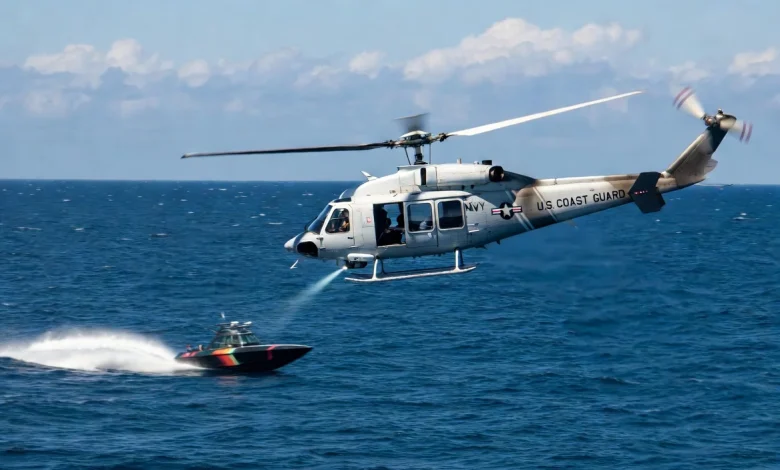
Table of Contents
Narcoterrorist boat strikes executed by the United States military in the Eastern Pacific Ocean and Caribbean Sea have escalated into one of the most polarizing and legally fraught campaigns in modern American national security policy. Following the latest maritime engagement on Thursday, June 18, 2026, which claimed the lives of three individuals, the total death toll of this targeted military campaign has climbed to at least 211 since its inception in early September 2025. Spearheaded by the administration of President Donald Trump, this aggressive strategy treats maritime drug interdiction not as a law enforcement operation, but as an active, lethal armed conflict against non-state combatants. This shift has triggered an intense constitutional debate inside Washington and across international courts over the limits of executive military authority, the definitions of combatancy, and the lack of verifiable evidence presented to the public.
Understanding the Modern Theater of Maritime Operations
The theater of operations for these strikes spans millions of square miles across the Caribbean Sea and the Eastern Pacific Ocean. Historically, drug interdiction in these areas was a cooperative effort led by the U.S. Coast Guard, working in tandem with international allies, local law enforcement, and naval assets. Suspected vessels—typically low-profile vessels (LPVs) or “go-fast” speedboats—were intercepted, boarded, and their crews detained for trial in federal courts under the Maritime Drug Law Enforcement Act (MDLEA). However, the onset of Operation Southern Spear in late 2025 fundamentally altered this dynamic. By replacing handcuffs with guided missiles and judicial trials with drone-launched kinetic strikes, the United States has redefined the boundaries of international maritime enforcement. This aggressive posture aims to completely disrupt the maritime supply lines of transnational criminal organizations, but it has done so at a massive human cost and under a shroud of extreme military secrecy.
The Latest Strike in the Eastern Pacific
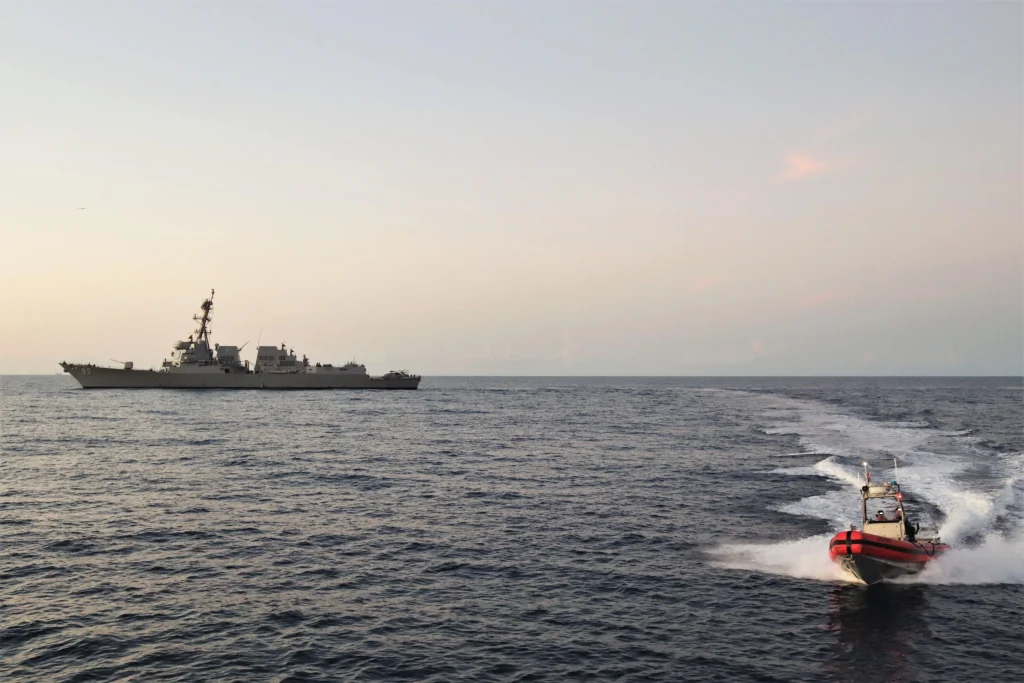
On June 18, 2026, U.S. Southern Command (USSOUTHCOM) confirmed that another lethal kinetic strike was executed against a suspected drug smuggling vessel operating in international waters in the Eastern Pacific Ocean. According to official military spokespersons, the target vessel was detected transiting along a known maritime smuggling corridor frequently utilized by transnational criminal organizations. A short video clip released on the social media platform X showcased a low-profile speedboat slicing through open waters at high speed before being hit by a high-precision munition, instantly transforming the craft into a ball of flame and smoke. While the Pentagon asserted that intelligence had verified the ship’s affiliation with “narcoterrorist” cartels, no physical evidence of narcotics, weapons, or cargo was recovered or presented to back these claims. Three individuals on board were reported killed, bringing the administrative running total to at least 211 deaths over a nine-month period. This latest strike typifies the administrative strategy of utilizing maximum, lethal force as a primary deterrent rather than a defensive measure.
Operation Southern Spear and the Trump Administration’s War on Cartels
The broader campaign, unofficially and officially referred to under the umbrella of Operation Southern Spear, represents an unprecedented militarization of the War on Drugs. Initiated on September 1, 2025, with an initial missile strike in the Caribbean that killed 11 people, the campaign has rapidly expanded. President Donald Trump has repeatedly argued that the flow of synthetic opioids like fentanyl and other illicit substances constitutes a direct act of “war” against the American populace. By defining drug cartels as “foreign terrorist organizations” under an executive order signed on his first day back in office, the administration paved the way for military engagement. Under the leadership of Defense Secretary Pete Hegseth, the military has deployed an array of naval assets, including stealth destroyers, Coast Guard cutters, and advanced F-35 fighter jets, to monitor and neutralize targets across the transit zones of South and Central America. The administration justifies these lethal strikes as a necessary escalation to stop fatal drug overdoses from poisoning Americans, claiming that traditional law enforcement methods have proved wholly insufficient. Supporters of the policy argue that treating cartel networks as military threats is the only way to dismantle their highly sophisticated logistical infrastructure.
Legal and Constitutional Controversies: ‘Armed Conflict’ or Extrajudicial Killings?
The legal justification for executing kinetic strikes against unarmed or lightly armed speedboats in international waters remains a subject of fierce controversy among legal scholars and international defense analysts. The Trump administration has relied heavily on a classified Justice Department memorandum that asserts the United States is in a state of “armed conflict” with designated Latin American cartels. This legal architecture mirrors the justifications used during the post-9/11 War on Terror, designating suspected smugglers as “unlawful combatants”. Consequently, the military maintains that it is not bound by traditional law enforcement protocols, such as issuing warnings, attempting boardings, or arresting suspects for trial. Critics, however, argue that these actions constitute extrajudicial killings that violate international maritime law, including the United Nations Convention on the Law of the Sea (UNCLOS) and basic human rights treaties. By utilizing lethal force as a first resort rather than a last measure, the administration faces accusations of establishing a dangerous precedent that circumvents the international rule of law and denies accused individuals their fundamental right to due process under the law.
The ‘Unlawful Combatant’ Designation and Rules of Engagement
Under standard rules of engagement for maritime interdiction, international forces are expected to employ a strict escalation-of-force model. This model typically begins with verbal warnings, progresses to warning shots, and culminates in disabling fire aimed at the vessel’s engines rather than its occupants. Under Operation Southern Spear, however, these guidelines appear to have been systematically discarded in favor of outright destruction. The most notorious manifestation of this policy occurred during the initial September 2, 2025 strike, where survivors who had initially escaped the blast were targeted in a subsequent “double-tap” strike while clinging to the vessel’s wreckage. According to investigative reports published by the Associated Press reports, Defense Secretary Pete Hegseth reportedly issued directives to “kill them all” in these maritime theaters, arguing that any survival of cartel operatives represents a national security threat. This “no quarters” approach has drawn sharp condemnation from military lawyers who warn that targeting incapacitated individuals in water violates long-standing treaties governing maritime warfare, including the Geneva Conventions and customary international humanitarian law.
The Lack of Verifiable Drug Evidence and Transparency Concerns
One of the most persistent criticisms leveled against the Pentagon and the White House is the complete lack of verifiable evidence connecting the targeted vessels to drug trafficking. In almost every press release issued by USSOUTHCOM, officials state that “intelligence confirmed” the vessel was ferrying narcotics, yet they offer no public documentation, satellite imagery, or wreckage recovery reports to support these claims. Because the high-impact missile strikes completely incinerate the fast boats and sink them to the bottom of the ocean, any potential evidence is effectively erased. Human rights organizations operating in coastal regions of Venezuela, Colombia, and Ecuador have compiled reports of local fishermen disappearing under mysterious circumstances around the same times as some of these announced strikes. Families of missing mariners argue that innocent civilian fishermen, who frequently operate low-profile vessels without transponders due to local fuel shortages and piracy threats, are being misidentified as “narcoterrorists” and vaporized without recourse or investigation, creating an unaccountable system of maritime executions.
Congressional Scrutiny and Demands for Pentagon Accountability
As the death toll from the campaign has passed the 200 mark, resistance within the United States Congress has grown. Democratic senators and several constitutional scholars have raised concerns over the expansion of executive power and the erosion of legislative oversight. Members of the Senate Armed Services Committee have formally demanded that the Pentagon release unedited, high-resolution video footage of the strikes, as well as the intelligence briefs used to authorize them. Legal scholars point out that under the U.S. Constitution, the power to declare war resides with Congress, and using military forces to execute law enforcement actions abroad without congressional approval or a formal declaration of war borders on a constitutional crisis. Lawmakers argue that if the administration can unilaterally designate criminal syndicates as combatants to justify kinetic drone and missile strikes, there is little to stop future administrations from deploying similar lethal operations against other non-state actors globally without any judicial or legislative check.
Geopolitical Strains and Regional Reactions in Latin America
The geopolitical ramifications of the U.S. military’s lethal maritime campaign are reverberating across Latin America, sparking diplomatic protests and fueling anti-American sentiment. The government of Venezuela has repeatedly accused the United States of violating its territorial sovereignty and conducting illegal blockades in the Caribbean Sea. These operations have intensified the long-standing tensions between Washington and Caracas, with the Trump administration accusing President Nicolás Maduro of directly cooperating with narcoterrorist syndicates like the Cartel de los Soles and Tren de Aragua. Furthermore, allied nations such as Colombia and Ecuador find themselves in a precarious diplomatic position. While these governments rely on U.S. financial and security assistance, the unilateral execution of lethal strikes close to their territorial waters without prior bilateral coordination has drawn quiet concern from regional military leaders who fear a complete breakdown of established cooperative security protocols and a rise in regional instability.
Command Shakeups and Executive Orders: The Bureaucratic Impact
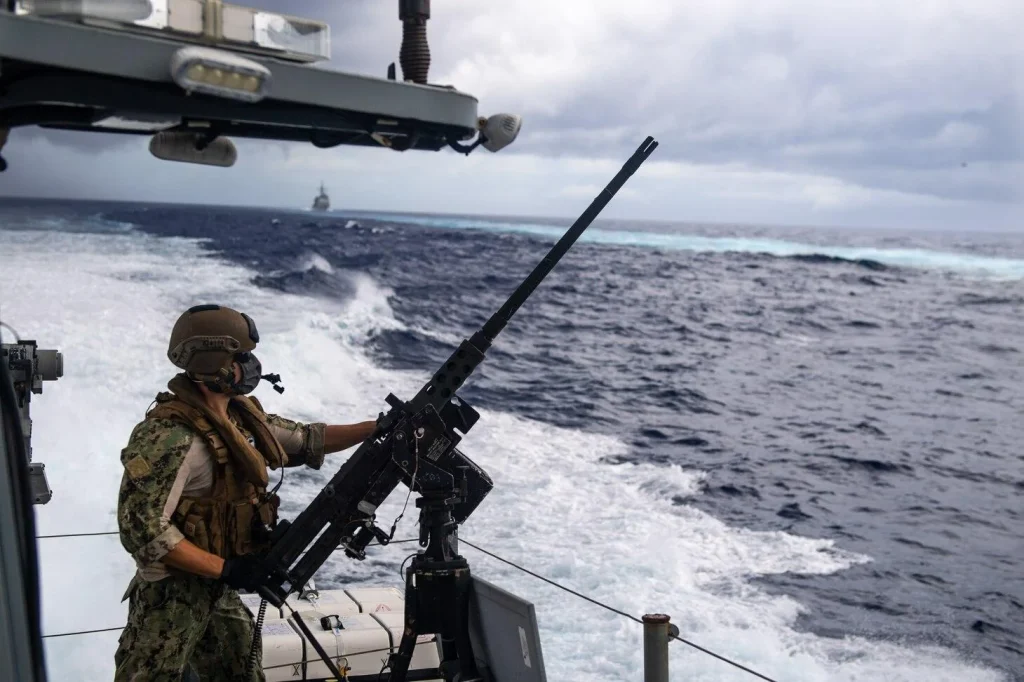
The internal friction caused by these aggressive operations has also left its mark on the leadership of the United States military. In late 2025, Admiral Alvin Holsey, the commander of U.S. Southern Command who oversaw the initial phases of the strikes, retired abruptly just one year into a tenure that typically lasts three to four years. While official retirement announcements made no mention of the maritime strikes, Pentagon insiders suggested that Holsey was deeply uncomfortable with the legal ambiguity surrounding the rules of engagement and the directive to bypass standard law enforcement procedures. Leadership of the command was temporarily handed off to Air Force Lt. Gen. Evan Pettus, marking a tense period of transition as the White House seeks to appoint a permanent commander willing to carry out the administration’s uncompromising policies. This bureaucratic upheaval highlights the deep divisions within the professional military class regarding the ethical, legal, and professional costs of using battlefield tactics to solve transnational crime problems.
Detailed Summary of Lethal Marine Engagements
The systematic execution of these maritime operations is best understood by looking at the distinct operational phases that have defined the campaign since its inception in September 2025. The following table provides a comprehensive summary of the timeline, geographic focus, casualty counts, and major legal milestones of Operation Southern Spear.
| Campaign Phase | Primary Geographic Focus | Estimated Casualties (Deaths) | Key Tactical/Political Milestone |
|---|---|---|---|
| Phase I (September 2025) | Caribbean Sea (Off Venezuelan Coast) | Approximately 20–30 | Operation Southern Spear launched; first lethal strike on Sept 1–2; controversial “double-tap” strike. |
| Phase II (October – December 2025) | Caribbean Sea & Eastern Pacific | 87 (Cumulative) | Retirement of USSOUTHCOM Admiral Alvin Holsey; Secretary Pete Hegseth defends aggressive “bottom of the ocean” policy. |
| Phase III (January – June 2026) | Eastern Pacific & Caribbean | 211 (Cumulative) | Expansion of strikes; intense Congressional pushback demanding unedited footage and verification of cargo. |
Conclusion: The Unresolved Future of Maritime Enforcement
The ongoing use of lethal kinetic force on the high seas represents a fundamental shift in how the United States projects power and addresses international crime. While the Trump administration maintains that these operations are crucial to protecting American lives from the scourge of fentanyl, the refusal to provide evidence, the bypass of judicial review, and the high death toll of at least 211 individuals have created a profound legal and ethical crisis. As Congress continues to press for transparency and regional allies express growing unease, the ultimate legacy of Operation Southern Spear remains uncertain. Whether these strikes are viewed in the future as a necessary and innovative evolution of national defense or as a dangerous, lawless overreach of executive power will depend on how the United States handles the mounting demands for accountability, truth, and adherence to international law in the months to come. Ultimately, the question remains whether security can be achieved when the very laws meant to preserve order are cast aside in the name of conflict.