Controversial Update: 1 LAPD K-9 Shooting Case Triggers Massive Public Outrage
Table of Contents
LAPD investigators and public officials are navigating a massive wave of public outrage after the release of a highly controversial body-worn camera video. The footage captures a tragic escalation where a responding police officer shot and killed a beloved family dog. What makes this incident particularly agonizing for the local community is that the entire confrontation stemmed from a false alarm. Officers responded to reports of frantic screams coming from a Canoga Park apartment, only to discover later that the resident was merely celebrating a major sports victory. The subsequent death of the pet has reignited fierce debates over police de-escalation tactics, transparency, and the questionable decision to censor the identity of the officer involved.
The incident, which took place on a Saturday night in June 2026, has highlighted deep friction between the community and law enforcement. As bodycam footage circulates on social media platforms, the visual evidence is being dissected by animal welfare advocates, civil rights lawyers, and the public. With demands for accountability mounting, the Los Angeles Police Department is finding itself on the defensive, particularly regarding its unusual choice to blur the face of the shooter in the publicly released edit.
The False Alarm: A Celebration Turned Tragic
On the evening of June 13, 2026, at approximately 8:55 p.m., the tranquil atmosphere of a residential community in Canoga Park, Los Angeles, was broken. Responding to a 911 call reporting a woman screaming inside a condominium complex, officers arrived expecting a dangerous domestic emergency or physical dispute. However, the reality inside the apartment was entirely benign. The resident, Marie Marseille, along with her family, was watching the New York Knicks play a high-stakes championship game. When the Knicks clinched their victory, Marseille erupted in screams of excitement—a common reaction for sports enthusiasts, but one that a nearby neighbor misinterpreted as a cry for help.
The neighbor, who later spoke with local news affiliates, expressed profound guilt over placing the emergency call. While they acted in good faith out of concern for a fellow resident’s safety, the call initiated a chain reaction of administrative and tactical moves that ultimately proved fatal. The arrival of armed LAPD officers transformed a moment of family joy into an unforgettable nightmare, showcasing how easily false alarms can escalate into tragic outcomes when responding officers lack complete situational awareness.
Jameson’s Fate: The Sequence of Events in Canoga Park
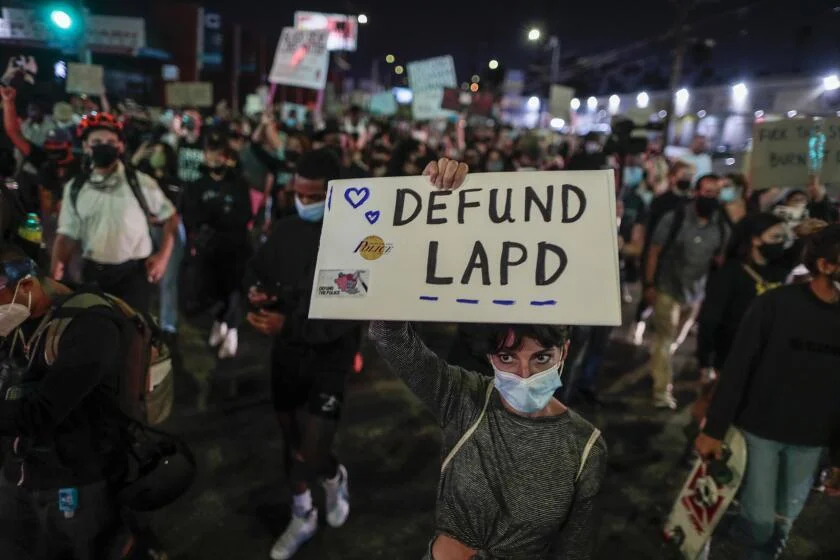
Jameson, a 2-year-old golden Saint Bernard doodle, was the heart of the Marseille household. Described by his family as energetic, playful, and completely unaccustomed to violence, Jameson was even dressed for the occasion, wearing a small New York Knicks jersey to join in the family sports celebration. When LAPD officers knocked on the apartment door, Marie Marseille opened it to explain the situation, with Jameson sitting or standing by her side, barking at the unfamiliar visitors in uniform.
According to statements released by the LAPD, the responding officers noted that a “large dog was barking by her side at the officers”. Recognizing the potential hazard of an unrestrained animal, the officers instructed Marseille to secure her pet. She complied by closing the door temporarily to corral the dog inside. However, when the door was reopened shortly thereafter, Jameson managed to slip past or follow his owner back to the threshold. The LAPD maintains that the dog “allegedly charged at one of the officers,” prompting immediate defensive actions. What followed was a rapid sequence of events: four gunshots echoed through the hallway, and Jameson collapsed, mortally wounded, onto the apartment floor.
The Edited Bodycam Video: What the Footage Shows
On Friday, the LAPD released an edited eight-minute critical incident video containing body-worn camera footage of the shooting. The release was expedited under immense pressure from the Mayor’s office and community activists demanding immediate clarity. The footage provides a chilling, first-person view of the encounter, documenting the tense seconds preceding the gunfire, with the auditory track capturing the frantic instructions of the officers juxtaposed with the owner’s desperate assurances.
In the video, Marie Marseille can be heard clearly telling the responding officers that Jameson is not aggressive. Concurrently, the officers are heard commanding the apartment occupants to hold or secure the animal. The visual feed reveals just one officer drawing their service weapon and firing four rapid shots as Jameson moves in his direction while barking. While the department emphasizes that the dog “charged,” the video has led to contrasting interpretations, with many viewers arguing that the dog’s body language appeared excited and vocal rather than predatory or vicious.
Controversy Over the Blurred Face of the Firing Officer
The most contentious element of the LAPD’s video release is not just the act of shooting itself, but the deliberate editing decisions made by the department. Crucially, the LAPD blurred the face of the officer who fired the fatal shots. This decision immediately drew sharp criticism from independent watchdogs, legal experts, and investigative journalists. Under standard operating procedures, body-worn camera footage released to the public under California transparency laws rarely obscures the faces of officers who engage in a significant use of force, unless there is an extraordinary threat to their safety or an ongoing undercover operation.
Eric Leonard, a veteran investigative reporter for NBC4, noted during a live broadcast that such blurring is highly unusual for body-worn videos released by the LAPD. By obscuring the officer’s face, the department has created what many perceive as a double standard in transparency, prompting questions about whether the agency is actively shielding the officer from public accountability. This edit has only served to fuel suspicion and deepen the divide between the department and a grieving community demanding answers.
Why Is Officer Identity Concealment So Unusual?
In modern policing, body-worn cameras are championed as the ultimate tool for transparency and mutual accountability. When a critical incident occurs, particularly one resulting in the loss of life, the unedited footage is expected to provide an objective record. When the LAPD selectively censors portions of the video—especially the face of the primary actor—it compromises that objectivity. In most circumstances, the public is entitled to know the identity of public servants who deploy lethal force in the line of duty.
This unusual concealment raises significant questions. Critics argue that if the officer’s actions were entirely justified and aligned with standard use-of-force policies, there should be no reason to hide their identity. Conversely, if the department is concerned about immediate retaliation or intense public harassment, it points to a broader structural issue: a profound lack of trust that makes officers fear the very communities they serve. This tension is not unique to Los Angeles; it mirrors a national debate on how bodycam footage should be handled during high-profile investigations.
Public Backlash and Family Reaction to Jameson’s Death
The Marseille family’s grief has resonated deeply across Southern California and beyond. In the immediate aftermath of the shooting, cell phone videos recorded by neighbors and family members circulated widely on the internet. In these videos, Marie Marseille can be seen sobbing uncontrollably over Jameson’s lifeless body, screaming, “We were just celebrating the Knicks”. The raw emotional power of these clips has mobilized local animal advocacy groups and pet owners who view the shooting as an egregious overreaction by poorly trained officers.
Speaking to NBC4 Los Angeles, Marseille contested the department’s characterization of the shooting. “I don’t know if ‘charged’ is the right word,” she said. “Jameson, he is a very playful dog, very happy and energetic and excited, if he barked. He has never bitten anyone.” The family’s legal representation is currently exploring civil rights options, arguing that the responding officers failed to utilize any non-lethal means to control the situation before resorting to their firearms.
Official Responses: Mayor Karen Bass and Chief Jim McDonnell
The political fallout from Jameson’s death was swift, reaching the highest levels of city government. Los Angeles Mayor Karen Bass released a statement expressing deep concern over the footage. “What I saw on the bodycam footage is disturbing and tragic,” Bass stated. “The Chief and I agreed that it was important to release the bodycam footage swiftly. While the investigation is ongoing, I am very concerned about why shots were fired and Jameson was killed. This shooting makes clear that while LAPD provides officers with written guidance on the use of force and pets, this is not enough.” Bass went on to instruct the LAPD chief and the president of the police commission to conduct a comprehensive review of the department’s policies regarding dog encounters and implement necessary updates to training.
LAPD Chief Jim McDonnell also offered a public statement, acknowledging the severe emotional impact of the loss. “The loss of a pet is deeply personal. For many, a dog is not simply an animal; it is a companion, a source of comfort, and a member of the family,” McDonnell noted, attempting to strike a compassionate tone. He promised that a thorough, multi-layered examination of the incident would be conducted by a specialized division of investigators specifically trained to handle officer-involved shootings.
LAPD’s Use of Force Policy Regarding Dog Encounters
To evaluate the legality and ethics of the officer’s actions, investigators are reviewing the LAPD’s official 2023 “Use of Force Directive” concerning dog encounters. This directive outlines a hierarchy of intervention tactics that officers are trained to employ when encountering what they classify as “hostile dogs”. The policy explicitly encourages officers to look for alternatives to deadly force whenever feasible, recognizing that domestic pets often react defensively to strangers in their territory.
According to the directive, officers have access to several non-lethal tools to deter an aggressive animal, including:
- Verbal Commands: Using authoritative, low-frequency vocal commands to establish dominance and halt a dog’s advance.
- OC Spray (Pepper Spray): Deploying chemical irritants to temporarily disable the animal’s senses without causing physical damage.
- Fire Extinguishers: Discharging a fire extinguisher to create a physical barrier of cold gas and loud noise, which is highly effective at deterring animals.
- Tasers: Utilizing electronic control devices in extreme cases where non-chemical deterrents are unavailable.
However, the directive also preserves the officer’s right to use deadly force when it is deemed “objectively reasonable” to protect themselves or others from an imminent threat of death or serious bodily injury. The critical question for the Internal Affairs Division is whether a barking Saint Bernard doodle, moving toward an officer in a confined hallway, truly constituted an imminent threat of serious physical harm.
The Broader Picture: Systemic Accountability and Reform
The tragedy in Canoga Park is not an isolated event but part of a persistent national trend of police dog-shootings, sometimes referred to by activists as “canine homicide.” This incident echoes wider national conversations surrounding police accountability and the use of lethal force, such as the high-profile killing of Casey Goodson Jr. where community scrutiny forced systemic reviews of officer-involved shootings. While the legal standards for shooting a person and shooting an animal differ legally, the underlying community demand remains identical: a call for restraint, de-escalation, and absolute transparency.
While wildlife management debates, like the controversial Alaska caribou conservation bear-killing program, highlight administrative use of lethal force on animals, urban pet-related police encounters operate under vastly different ethical, legal, and community constraints. Amid legal challenges and political shifts across California, where issues ranging from regulatory battles to media-driven controversies frequently dominate the news cycle, the local community remains hyper-sensitive to institutional accountability and the actions of the LAPD.
| Perspective Aspect | LAPD Official Account | Family & Witness Accounts |
|---|---|---|
| Initial 911 Call Context | Responded to reports of frantic screams (domestic safety concern). | Harmless screams of joy celebrating the New York Knicks’ victory. |
| Jameson’s Behavior | The dog was barking, exited the apartment, and “charged” at officers. | Jameson was playful, excited, wearing a Knicks shirt, and barking but not aggressive. |
| Escalation and Response | Officer fired four defensive shots to protect against an imminent threat. | Officer overreacted instantly with lethal force, failing to use non-lethal options. |
| Video Editing & Transparency | Released edited critical incident video with blurred officer face for safety/protocol. | Criticized the blurred officer face as highly unusual and a barrier to accountability. |
As the LAPD’s Internal Affairs Division continues its dual use-of-force and administrative investigations—processes that can take up to a year to fully complete—the calls for policy reform are growing louder. Activists are demanding that the LAPD mandate comprehensive animal behavior and de-escalation training for all patrol officers. They argue that if officers were trained to read a dog’s body language more accurately, Jameson might still be alive today, and a family’s joyous celebration would not have ended in a pool of blood.