3 Stunning Facts: Oklahoma GOP Primary Winners Drummond and Mazzei Advance to Runoff
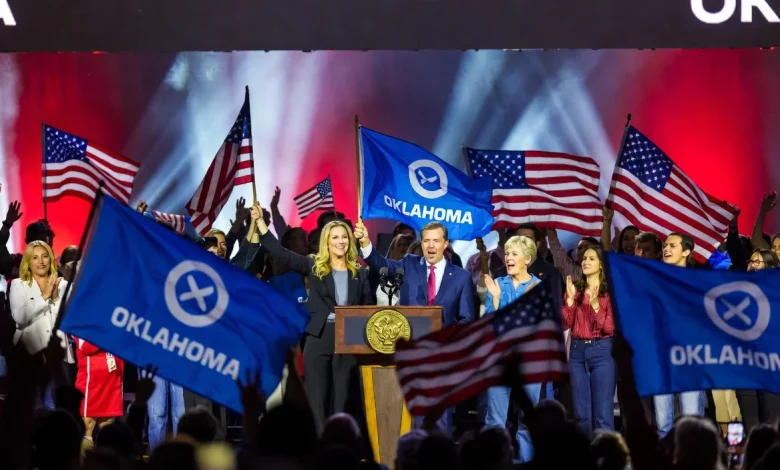
Oklahoma political analysts are closely observing a seismic shift in the state’s Republican landscape as Attorney General Gentner Drummond and former state Senator Mike Mazzei head to a high-stakes gubernatorial runoff. The primary election, held on June 16, 2026, narrowed a crowded field of nine GOP contenders down to the top two vote-getters, neither of whom managed to secure the outright majority needed to win the nomination. With current Governor Kevin Stitt term-limited and unable to seek re-election, this primary serves as a crucial turning point for Oklahoma’s policy trajectory, economic development, and alignment with national political movements.
Oklahoma Republican Gubernatorial Primary Results Overview
The June 2026 primary was characterized by intense campaigns, heavy financial spending, and a split electorate that ultimately prevented any single candidate from avoiding an August runoff. Gentner Drummond, who currently serves as the state’s Attorney General, and Mike Mazzei, a former state senator and Secretary of Budget, finished in the top two spots in the crowded field of nine GOP candidates. Unofficial election night tallies showed both candidates pulling in approximately a quarter of the total vote each, separated by less than half a percentage point.
Because Oklahoma election law requires a candidate to secure 50% plus one of the vote to win the primary nomination outright, the state is now bracing for a two-month sprint toward the August 25 runoff. This phase of the race will test the candidates’ organizational strength, their ability to consolidate support from the eliminated candidates, and the true weight of national endorsements in local red-state elections.
The Profiles of the Frontrunners: Gentner Drummond vs. Mike Mazzei
The runoff features two distinct political figures who bring divergent styles of conservative governance to the table. While both candidates share fundamental conservative values, their backgrounds, campaign funding strategies, and political relationships highlight a significant choice for Oklahoma voters.
Gentner Drummond: The Battle-Tested Attorney General
Gentner Drummond entered the race with a distinct advantage in terms of statewide name recognition, having won the statewide office of Attorney General in 2022. A veteran of the U.S. Air Force and an alumnus of Oklahoma State University, Drummond has built a reputation as a pragmatic yet firm legal institutionalist. During his tenure as Attorney General, Drummond has frequently made headlines for his willingness to challenge both federal overreach and state-level leadership, including several direct clashes with outgoing Governor Kevin Stitt.
Drummond’s political strategy has centered on maintaining an independent streak. He has been vocal in his defense of the state’s open records laws, spearheaded aggressive crackdowns on illegal marijuana growing operations, and successfully administered millions of dollars in opioid settlement funds. However, his willingness to engage in cooperative dialogue with sovereign Native tribes and his opposition to certain state initiatives, such as the proposed public funding of a Catholic charter school, have occasionally drawn criticism from the party’s more hardline populist wing. Drummond positions himself as an independent defender of the Oklahoma constitution, emphasizing that his primary allegiance is to the citizens of Oklahoma rather than external political forces.
Mike Mazzei: The Wealth Manager and Trump-Endorsed ‘MAGA Warrior’
Mike Mazzei, a Tulsa-based financial adviser and former state senator who also served as Governor Stitt’s Secretary of Budget, represents the populist economic wing of the Republican Party. Mazzei’s campaign has been defined by unprecedented self-funding, with the candidate putting more than $10.9 million of his own wealth into his bid for the governor’s mansion. This financial muscle allowed Mazzei to flood the airwaves with policy-focused advertisements, raising his profile significantly among primary voters who were previously less familiar with his legislative record.
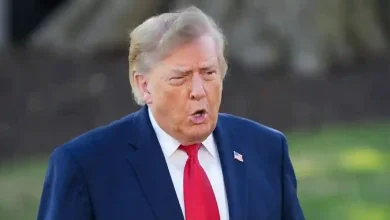
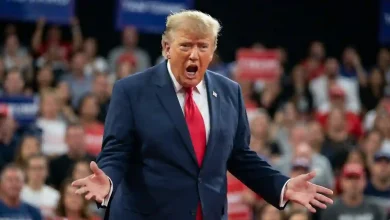
Just over two weeks before primary day, Mazzei’s campaign received a massive boost in the form of an endorsement from President Donald Trump on Truth Social. Trump wrote, “It is my great Honor to endorse MAGA Warrior, Mike Mazzei, who is running for Governor of Oklahoma, a state which I love, and WON BIG. Mike knows the AMERICA FIRST Policies required to Grow our Economy, Create GREAT Jobs, Cut Taxes and Regulations, Promote MADE IN THE U.S.A., and Unleash American Energy DOMINANCE.” This endorsement immediately transformed the race, solidifying Mazzei’s standing among the state’s dedicated MAGA base and propelling him into a dead heat with the established Attorney General.
The Influence of Donald Trump’s Endorsement in Red States
The tight primary results in Oklahoma offer an intriguing case study on the limits and power of Donald Trump’s endorsement in modern Republican primaries. In a deeply conservative state where Trump won every single county in the last three presidential elections, his endorsement remains a highly coveted political asset. It undoubtedly played a critical role in elevating Mazzei from a wealthy challenger to a top-tier contender, helping him consolidate a large portion of the populist vote in a highly fractured field.
However, the fact that Drummond managed to finish slightly ahead of Mazzei—despite Mazzei’s $10.9 million self-funding and Trump’s late-stage endorsement—suggests that established, popular statewide incumbents can hold their ground by appealing directly to local interests. Drummond addressed this dynamic head-on during his primary watch party, stating, “I anticipated overcoming a Trump endorsement, I anticipated overcoming a weak candidate who flips. Not every voter is going to agree with me, but every voter can, rest assured, they know where I stand, and I put Oklahoma first.” This tension between national executive influence and regional independence is a recurring theme in red-state politics, reminiscent of past instances where the executive branch attempted to impose federal mandates or when grants halted by Trump administration efforts were legally challenged by local officials.
Furthermore, local voters have shown a sophisticated understanding of policy limits. Just as the court struck down Trump’s global import taxes when national policy clashed with established legal boundaries, Oklahoma voters appear to weigh national endorsements against the concrete, local track records of candidates who have actively managed the state’s judicial and administrative affairs.
Primary Election Results: A Crowded Field and Narrow Margins
The Republican primary ballot for governor featured nine candidates, presenting voters with a diverse array of political philosophies and professional backgrounds. This division of the vote meant that even the frontrunners could only command about a quarter of the electorate each, setting the stage for a highly competitive runoff. Behind Drummond and Mazzei, several candidates mounted significant campaigns that will influence how the remaining votes are distributed in August.
Chip Keating, a former state Secretary of Public Safety and the son of former Governor Frank Keating, ran a vigorous campaign as a political outsider and secured approximately 18% of the vote. Charles McCall, the former Speaker of the Oklahoma House of Representatives and a prominent local banker, finished in fourth place, pulling in roughly 12% of the vote after highlighting his legislative accomplishments, including personal income tax cuts and grocery sales tax repeals.
The following table provides a comparative breakdown of the top four candidates in the Republican primary, illustrating their backgrounds, core campaign platforms, and the unofficial vote shares that defined the historic June 16, 2026 election.
| Candidate | Core Political & Professional Background | Main Platform Highlights | Primary Vote Share (Approx.) | Key Endorsements & Financial Posture |
|---|---|---|---|---|
| Gentner Drummond | Current Oklahoma Attorney General (Elected 2022); Air Force Veteran & Attorney | Combating illegal marijuana operations; protecting open records; cooperative tribal governance; resisting federal regulatory overreach. | 26.2% | Local law enforcement groups; broad support from civic and agricultural organizations. |
| Mike Mazzei | Former State Senator; Former State Secretary of Budget; Tulsa Financial Adviser | Eliminating the state property tax; transitioning to zero state income tax; banning foreign land ownership; boosting energy dominance. | 25.8% | President Donald Trump (MAGA Warrior endorsement); heavily self-funded ($10.9M). |
| Chip Keating | Former State Secretary of Public Safety; Son of former Gov. Frank Keating | Positioning as a political outsider; prioritizing public safety and law enforcement modernization; fiscal conservatism. | 18.0% | Former Gov. Frank Keating; select conservative business and trade coalitions. |
| Charles McCall | Former Speaker of the Oklahoma House; Banker; Former Mayor of Atoka | Eliminating the state income tax; commercial property tax pauses; cultural conservative legislative records. | 12.0% | Numerous state legislative colleagues; conservative cultural PACs. |
Key Policy Debates: Tax Reform, Land Ownership, and Tribal Relations
As the campaign transitions into a head-to-head matchup, three major policy issues are expected to dominate the discourse: economic reform, national security at the state level, and the complex relationship between the state government and sovereign Native tribes.
On the economic front, both candidates are vying to prove who has the most viable strategy for growth. Mazzei has placed bold fiscal promises at the center of his campaign, proposing a complete elimination of the state property tax alongside a structured pathway toward zero state income tax. He argues that his background as a financial adviser and Secretary of Budget gives him the unique expertise needed to manage this transition without compromising critical state services. Drummond, by contrast, has urged a more measured approach, emphasizing fiscal responsibility and cautioning against abrupt tax code overhauls that could lead to sudden revenue shortfalls, which could impact education, infrastructure, and public safety budgets.
National security and foreign influence have also emerged as major talking points. Mazzei has actively campaigned on prohibiting foreign governments and foreign-controlled entities from acquiring land in Oklahoma, tapping into broader national anxieties regarding agricultural security and national sovereignty. Drummond, in his capacity as Attorney General, has approached this issue through the lens of law enforcement, using state statutes to actively shut down foreign-backed illegal marijuana grow operations that have cropped up across rural Oklahoma.
Perhaps the most delicate issue in Oklahoma politics is the relationship between the state government and the five major Native American tribes. Outgoing Governor Kevin Stitt’s administration has been marked by a highly adversarial stance toward the tribes, particularly in the wake of the landmark Supreme Court ruling in McGirt v. Oklahoma. Drummond has advocated for a reset in these relations, arguing that litigation is costly and counterproductive, and that cooperative governance agreements on taxation, policing, and resource management represent the best path forward. Mazzei, while acknowledging the importance of cooperation, has aligned more closely with the state-first jurisdictional model favored by the outgoing administration, presenting a clear ideological contrast for voters concerned with tribal sovereignty.
The Broader Political Landscape: Red State Dynamics and the November Election
The political dynamics playing out in Oklahoma reflect broader trends observed across deep-red states nationwide. In these states, the Republican primary is often the most critical contest, as the winner is overwhelmingly favored to prevail in the general election. According to the historical election tracking provided by Ballotpedia, Oklahoma has not elected a Democratic governor since 2006, and Republicans have held the office continuously since 2011.
These internal primary battles often revolve around which candidate can best protect the state from external economic and political pressures. Red-state leaders frequently point to federal policies as the root cause of local economic hardships, such as high inflation, rising energy costs, and administrative burdens. This rhetoric is often met with sharp counter-punches from progressive coastal leaders. For example, national campaigns like the Newsom midterm attack on gas and fertilizer prices have sought to blame conservative state leadership for high costs, while local Republican candidates counter that federal environmental regulations and fiscal policies are the true drivers of inflation. Consequently, the debate over who can best shield Oklahoma’s agriculture and oil sectors from federal intervention remains a powerful motivator for GOP primary voters.
The winner of the August 25 Republican runoff will face Democratic nominee Cyndi Munson in the November general election. Munson, a former state House minority leader who secured her party’s nomination, faces an uphill climb in a state with a strong Republican registration advantage. However, a divisive and overly negative GOP runoff could create opportunities for Democrats to appeal to moderate and independent voters who may grow weary of intra-party friction.
Looking Ahead to the August 25 Runoff
With just over two months remaining before the August 25 runoff, both the Drummond and Mazzei campaigns are expected to significantly ramp up their efforts. For Mazzei, the challenge will be translating his multi-million-dollar self-funding and Trump’s endorsement into a concrete, majority-winning voter coalition. He will likely look to consolidate the support of voters who backed Chip Keating and other populist candidates in the primary, arguing that he is the only true ‘America First’ conservative capable of transforming the state’s economy.
For Drummond, the path to victory involves leveraging his record as an active, effective Attorney General and portraying himself as an independent, steady leader who does not rely on national endorsements to understand Oklahoma’s unique needs. Drummond’s appeal to rural communities, law enforcement agencies, and institutional conservatives will be critical as he seeks to counter Mazzei’s media saturation.
Ultimately, the upcoming runoff will serve as a definitive indicator of the political climate in Oklahoma. It will demonstrate whether the momentum of a late-stage presidential endorsement can overcome a sitting statewide official’s established reputation, offering valuable insights into the evolving power dynamics of the modern Republican Party.