B-52 bomber crash at Edwards AFB: 8 Presumed Dead
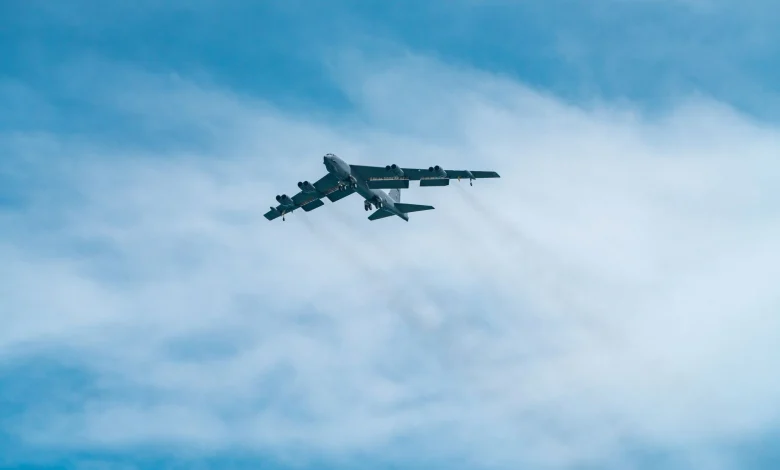
B-52 bomber crash at Edwards Air Force Base on Monday, June 15, 2026, has resulted in a devastating tragedy, with eight people on board now presumed dead. The incident, which occurred shortly after takeoff at approximately 11:20 a.m. local time (PDT), represents one of the most severe military aviation mishaps in recent years. The long-range heavy bomber—a Boeing B-52H Stratofortress identified as serial number 60-0061 and nicknamed ‘The Spirit of Aggieland II’—was operating under the authority of the 412th Test Wing, which oversees base operations and developmental flight testing at the Mojave Desert facility. According to statements released by military officials, the aircraft was executing a routine test flight in direct support of the Air Force’s ongoing radar modernization program. In the immediate aftermath of the impact, emergency response crews rushed to the scene on the airfield to combat a fierce post-crash fire, but Col. James Hayes, the deputy commander of the 412th Test Wing, confirmed in a subsequent press conference that ‘initial indications are that the crash was not survivable’.
Tragedy Strikes Edwards Air Force Base
Edwards Air Force Base, situated in Southern California’s Antelope Valley near Palmdale and Lancaster, is widely regarded as the cornerstone of the United States Air Force’s aerospace testing, evaluation, and developmental flight research. The base has served as the testing ground for virtually every major military aircraft since World War II, ranging from the sound-barrier-breaking Bell X-1 to modern stealth fighters. Under the command of the 412th Test Wing, Edwards routinely hosts high-stakes, cutting-edge engineering programs aimed at keeping legacy airframes relevant against modern global threats.
Monday’s disaster halted these critical operations instantly, transforming a busy test center into an active recovery and emergency response site. Immediately following the crash, airbase command suspended all non-commercial visitor passes and closed the active airfield, redirecting all incoming flights to alternative military installations or commercial landing strips. According to base spokespersons, this decision was vital to allow first responders and safety crews to focus entirely on fire suppression, hazardous material containment, and the security of the extensive debris field. The closure of the airfield is temporary but necessary to conduct a thorough damage assessment of the runway and surrounding infrastructure affected by the intense heat and impact.
Details of the Fateful Monday Morning Takeoff
The flight departed from the main runway at Edwards Air Force Base at approximately 11:10 a.m. local time, climbing briefly into the clear skies of the Mojave Desert. However, the mission aborted almost immediately. At 11:20 a.m. PDT, tracking systems and visual witnesses indicated that the B-52 bomber had experienced a catastrophic loss of control, impacting the airfield’s runway area. The impact was violent, instantly rupturing the bomber’s massive fuel tanks, which were laden with jet fuel for the test sortie.
The resulting explosion triggered a massive, high-intensity fire that produced billowing columns of thick, black smoke visible for miles across the desert landscape. Alert cameras operated by the UC San Diego and CalFire ‘ALERTCalifornia’ network captured the plume rising high into the atmosphere, a visual testament to the severity of the impact. Flight tracking data analyzed by defense experts indicated that the aircraft climbed to a low altitude before entering an abrupt descent, indicating that the crew had very little time to diagnose or respond to whatever critical system failure occurred during the initial phase of flight.
The Victims of the Stratofortress Crash
The loss of eight individuals is a rare and deeply felt blow to the tightly knit strategic bomber and flight test communities. A standard operational B-52 crew consists of five personnel: a commander, co-pilot, radar navigator, navigator, and electronic warfare officer. However, because this flight was a specialized developmental test mission, the aircraft carried an expanded crew of eight people to monitor experimental systems.
Col. James Hayes expressed the base’s profound grief during his briefing, stating, ‘Today, Edwards Air Force Base experienced a horrible tragedy and we lost eight great Americans’. Base officials noted that the names of the victims would not be made public until at least 24 hours after full notification of their respective next of kin, a standard Department of Defense protocol designed to protect the privacy of grieving families.
A Mixed Crew of Military and Civilian Personnel
Unlike standard training missions that rely solely on active-duty Air Force personnel, test sorties for advanced technological systems require a diverse range of expertise. The crew on board the ill-fated B-52H consisted of a mixed contingent of military personnel, government civilian employees, and defense contractors. These individuals work in close integration to monitor experimental hardware, record diagnostic telemetry, and make real-time adjustments that cannot be simulated on the ground.
Boeing, the primary manufacturer and integrator of the B-52 platform, issued a statement on Monday evening confirming that two of its employees were among those on board the flight. The presence of corporate engineers and government civilian specialists underscores the complex collaborative nature of modern defense acquisition programs, where civilian industry experts fly alongside military pilots to ensure that highly technical systems operate correctly under real flight conditions.
The Radar Modernization Program and B-52 Upgrade Plans
The aircraft involved in the crash was a critical asset supporting the B-52 Radar Modernization Program (RMP). According to Air & Space Forces Magazine, the RMP is one of the most significant components of a massive, multi-phase effort to upgrade the United States Air Force’s fleet of heavy bombers, ensuring they remain viable combat platforms through the year 2050. The B-52 Stratofortress first entered service in 1955, and despite its age, its heavy payload capacity, exceptional range, and structural durability have made it irreplaceable in the American nuclear triad.
To keep these aircraft flying for another three decades, the Air Force has embarked on a sweeping upgrade cycle. This cycle includes re-engining the fleet with modern Rolls-Royce F130 turbofans—which will eventually designate the modernized aircraft as the B-52J—and installing entirely new digital systems to replace obsolete analog equipment. The radar modernization represents the technological foundation of these upgrades, providing the processing power and situational awareness required to operate in contested modern airspaces.
Integration of Active Electronically Scanned Array (AESA) Technology
At the heart of the RMP is the replacement of the B-52’s antiquated APQ-166 mechanically scanned radar. The old analog radar system has long suffered from poor reliability, parts obsolescence, and limited tracking capability in modern electronic warfare environments. To resolve this, the Air Force partnered with Boeing and Raytheon Technologies to integrate an advanced Active Electronically Scanned Array (AESA) radar system, designated as the APQ-188.
This modern radar is directly derived from the AN/APG-79 system utilized by the U.S. Navy’s F/A-18E/F Super Hornet carrier-based fighters. The APQ-188 AESA radar provides the B-52 with exponentially improved targeting precision, multi-target tracking, enhanced situational awareness, all-weather navigation, and robust electronic protection capabilities. The test aircraft, serial 60-0061, had arrived at Edwards Air Force Base in December 2025 after undergoing modification work at Port San Antonio. It was scheduled for extensive flight testing throughout 2026 to collect the operational data required for a formal production decision.
Historical Context of B-52 Stratofortress Mishaps
While the B-52 has established an enviable record of operational reliability over its seven decades of service, any crash of a large, multi-engine heavy bomber is a major event. The Stratofortress is powered by eight jet engines, possesses a massive 185-foot wingspan, and flies with incredibly complex mechanical and hydraulic systems. Given its age, maintaining and upgrading the B-52 requires meticulous safety standards and engineering oversight.
Historically, major accidents involving the airframe have occurred during demanding maneuvers, extreme weather conditions, or during transition flights. The June 15, 2026 crash represents the first loss of a B-52 bomber in over a decade, sending a stark reminder of the inherent risks associated with military flight testing, where developmental hardware is pushed to its operational limits.
Comparative Look at Past B-52 Incidents
The tragedy at Edwards Air Force Base is the deadliest B-52 accident in over forty years. The last time a Stratofortress was completely lost was on May 18, 2016, when a B-52H crashed during an aborted takeoff at Andersen Air Force Base on the island of Guam. In that instance, the crew detected a bird strike and attempted to stop the aircraft, which ultimately overran the runway and was destroyed by fire; fortunately, all seven crew members escaped safely.
To find a more lethal B-52 mishap, historians must look back to December 16, 1982, when a B-52G crashed on takeoff from Mather Air Force Base in Sacramento County, California, resulting in the deaths of all nine crew members on board. Another infamous crash occurred on June 24, 1994, at Fairchild Air Force Base in Washington, where a B-52H crashed during airshow practice after the pilot operated the aircraft beyond its structural design limits, killing all four crew members. The table below outlines these key historical events to provide comparative context to the June 2026 disaster.
| Date of Incident | Location | Aircraft Version / Serial | Presumed Fatalities | Mission Context / Primary Cause |
|---|---|---|---|---|
| June 15, 2026 | Edwards Air Force Base, California | B-52H Stratofortress (60-0061) | 8 | Crashed shortly after takeoff during a routine radar modernization test flight. Under investigation. |
| May 18, 2016 | Andersen Air Force Base, Guam | B-52H Stratofortress (61-0007) | 0 | Aborted takeoff due to bird strike; wing stalled, aircraft caught fire. All 7 crew survived. |
| June 24, 1994 | Fairchild Air Force Base, Washington | B-52H Stratofortress (61-0026) | 4 | Crashed during airshow practice due to pilot maneuvering beyond flight envelope limits. |
| December 16, 1982 | Mather Air Force Base, California | B-52G Stratofortress (57-6496) | 9 | Crashed on takeoff during a routine low-level training mission. Flight control malfunction. |
The Investigation and Recovery Phase
An official investigation into the cause of the Edwards Air Force Base crash has begun, though military authorities warn that finding definitive answers will be a meticulous and lengthy process. Col. James Hayes outlined the multi-tiered investigative approach that the Air Force employs for major mishaps. Initially, an interim safety board is convened to secure the crash site, preserve perishable evidence, and collect initial eye-witness accounts.
This will quickly transition into a formal Safety Investigation Board (SIB), comprised of pilot representatives, aeronautical engineers, maintenance experts, and medical officers. The SIB’s primary objective is to determine the safety-related factors of the crash to prevent future occurrences, and its findings are traditionally kept privileged to encourage open testimony. Concurrently, an Accident Investigation Board (AIB) will be formed to gather legal evidence, determine official responsibility, and prepare a public report. The entire process, from black box analysis to final reporting, is expected to take upwards of six months.
Technical Analysis of ADS-B Flight Radar Tracking Data
While formal investigators have not released any preliminary conclusions, civilian defense analysts and aviation tracking enthusiasts have scrutinized public ADS-B radar telemetry to piece together the aircraft’s final moments. According to radar tracking data provided by ADS-B Exchange, the B-52H (60-0061) began its takeoff roll heading northeast. Shortly after getting airborne, the aircraft started a gradual turn further north.
However, seconds later, the telemetry shows an abrupt, sharp hook to the northwest. Immediately following this sudden change of direction, the aircraft entered a rapid, vertical descent, plunging at a rate exceeding 5,000 feet per minute before the signal was lost at ground level. Aviation safety experts suggest that such a severe descent rate immediately after takeoff points toward a catastrophic aerodynamic stall, a major structural failure, an uncontained engine disaster affecting multiple thrust lines on one side, or a complete loss of primary flight control surfaces. Recovering the aircraft’s flight data recorder (FDR) and cockpit voice recorder (CVR)—popularly known as the ‘black boxes’—remains the top priority for recovery teams working on the charred runway at Edwards AFB, as their telemetry will provide the definitive timeline of the flight’s mechanical status.