Mali Attacks: Jihadi and Separatist Forces Launch Joint Assault
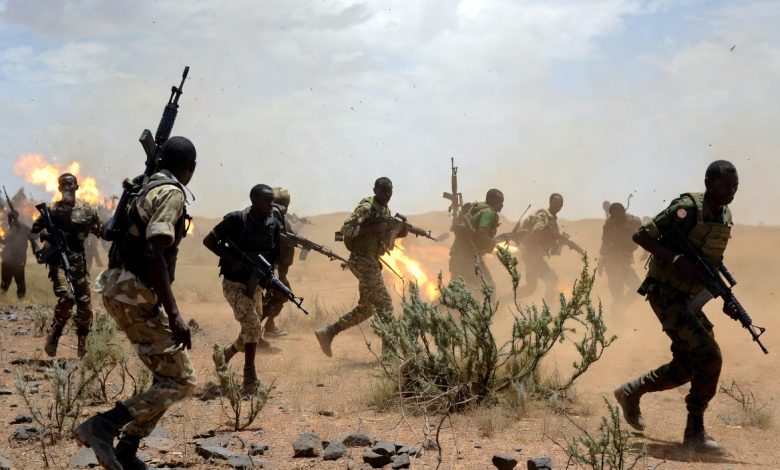
Mali has reached a critical and bloody precipice this weekend as, for the very first time, an unprecedented coalition of jihadi militants and heavily armed separatist factions launched a series of synchronized, large-scale assaults against government strongholds. This alarming tactical evolution completely shatters the previous security paradigm in West Africa. For decades, these anti-state actors operated with divergent ideological motivations and distinct operational theaters. However, the relentless pressure exerted by the Russian-backed military junta has inadvertently forged a lethal marriage of convenience. The heavily fortified military installations across the northern and central regions of the country found themselves simultaneously overwhelmed by sophisticated swarm tactics, improvised explosive devices, and precision mortar fire. As the dust settles on this historic and devastating weekend, intelligence analysts and geopolitical scholars are urgently attempting to decode the broader implications for the Sahel. The state’s survival hangs in the balance as this newfound insurgent unity demonstrates a terrifying capability to coordinate logistics, share intelligence, and execute multi-front offensives that bypass conventional defensive perimeters.
Mali Under Siege: The Genesis of Coordinated Extremist Assaults
The transition from fragmented rebel skirmishes to a unified military campaign did not occur in a vacuum. Historically, the armed factions in the region have been deeply divided. On one side, radical jihadi organizations linked to al-Qaeda and the Islamic State sought to establish a fundamentalist caliphate, violently suppressing local populations and imposing strict interpretations of religious law. On the other side, secular Tuareg separatist groups fought a long-standing ethno-nationalist insurgency aimed at securing independence for the northern territory they call Azawad. These groups frequently clashed over territorial control, smuggling routes, and ideological supremacy. However, the recent withdrawal of the United Nations Multidimensional Integrated Stabilization Mission in Mali (MINUSMA) and the eviction of French counter-terrorism forces created a massive security vacuum. The military junta, desperate to assert control, filled this void by heavily relying on brutal crackdowns and indiscriminate offensive operations. This heavy-handed approach systematically alienated marginalized communities and pushed disparate rebel factions into a corner, convincing them that their only chance of survival against a common, well-equipped enemy was to pool their military resources and launch joint operations.
Understanding the New Alliance
The structural anatomy of this new insurgent alliance is as complex as it is deadly. Analysts monitoring the communications and operational footprints of the attackers have identified a sophisticated command-and-control apparatus that seamlessly integrates the localized geographic knowledge of the separatists with the battle-hardened asymmetrical warfare tactics of the jihadis. This synchronization allows them to strike hardened targets that would have previously been considered impregnable. The coalition utilizes decentralized command nodes, making it incredibly difficult for state intelligence agencies to decapitate the leadership through targeted airstrikes. By sharing vital smuggling networks for arms procurement and coordinating their propaganda efforts, these groups have effectively multiplied their combat power. This convergence of interests highlights a severe failure in the state’s pacification strategy, mirroring situations where internal cracks stall strategic maneuvering within centralized defense structures. The junta now faces an adversary that possesses both the ideological fanaticism necessary for suicide assaults and the conventional military discipline required to hold captured territory.
The Strategic Shift in Jihadi Operations
Beyond the immediate tactical victories, this weekend’s coordinated assault represents a profound strategic pivot for jihadi networks operating in the Sahel. Traditionally characterized by hit-and-run ambushes and rural intimidation, these organizations are now executing conventional military campaigns aimed at permanently dislodging the state’s military apparatus from strategically vital corridors. The deployment of commercially available drones for overhead reconnaissance and the use of modified, armored suicide-vehicle-borne improvised explosive devices (SVBIEDs) indicate a significant technological leap. Furthermore, the jihadists have actively restrained their historical animosity toward the secular separatists, suggesting a pragmatic shift in their overarching doctrine. This willingness to compromise on ideological purity in favor of operational effectiveness demonstrates a dangerous level of adaptability. The insurgents are systematically targeting supply chains, isolating garrisons, and destroying key infrastructure, effectively strangling the government’s ability to reinforce its besieged outposts. This methodical dismantling of the state’s military presence threatens to plunge the entire nation into a state of irreversible fragmentation.
The Role of the Russian-Backed Military Junta
The central authority in Bamako, propelled to power through successive coups, has staked its entire political legitimacy on restoring national sovereignty and eradicating the insurgent threat. To achieve this monumental task, the military junta dramatically severed its historical defense ties with Western nations and enthusiastically embraced a strategic partnership with Moscow. This geopolitical realignment brought an influx of Russian military hardware, including attack helicopters, advanced radar systems, and most controversially, thousands of private military contractors. However, the junta’s uncompromising, militarized approach to governance has systematically eroded the fragile social fabric of the nation. By prioritizing hard security measures over political dialogue and economic development, the regime has inadvertently fueled the very insurgencies it sought to destroy. The severe diplomatic alienation of the government remains a stark example of failed international diplomacy leading to isolation, leaving the junta entirely dependent on a single, unpredictable foreign patron whose own resources are increasingly strained by global conflicts.
Wagner Group Mercenaries on the Frontlines
The introduction of Russian mercenaries, formerly operating under the Wagner Group umbrella and now integrated into the Africa Corps, was initially touted as a decisive game-changer that would swiftly crush the rebellion. However, the reality on the ground has proven to be drastically different and deeply troubling. These foreign fighters have been repeatedly implicated in severe human rights abuses, including extrajudicial killings, torture, and the systemic massacre of civilians in contested areas. Such draconian tactics have enraged local populations, effectively serving as the most potent recruitment tool for the insurgent alliance. Furthermore, the Russian contractors lack the nuanced cultural understanding and linguistic capabilities necessary to navigate the complex tribal dynamics of the region. Their heavy-handed, scorched-earth operations have forced formerly neutral communities into the arms of the militants out of sheer self-preservation. While the mercenaries possess superior firepower, their inability to secure vast, hostile territories against a highly mobile and deeply entrenched enemy has severely undermined the junta’s narrative of impending victory. For deeply researched accounts of these dynamics, one can review the International Crisis Group’s Sahel reporting, which extensively documents the deteriorating human rights situation.
Vulnerabilities in Bamako’s Defense Architecture
Despite the massive influx of foreign military assistance and an aggressively inflated defense budget, the state’s military architecture suffers from catastrophic systemic vulnerabilities. Corruption, logistical bottlenecks, and poor troop morale persistently plague the regular armed forces. The strategy of consolidating troops into massive, heavily fortified super-camps has yielded disastrous results, as these isolated garrisons are highly susceptible to siege tactics and protracted starvation campaigns by the insurgent coalition. The lack of reliable air support, exacerbated by poor maintenance protocols for the newly acquired Russian aircraft, frequently leaves ground forces utterly defenseless during coordinated ambushes. Additionally, the over-reliance on foreign mercenaries has stunted the institutional development of the national army, preventing the cultivation of a cohesive, indigenous security force capable of earning the trust of the populace. As the insurgents increasingly demonstrate the ability to conduct complex, synchronized attacks across multiple geographic zones, the fundamental fragility of the junta’s defensive posture is being exposed on a terrifying scale, putting the survival of the regime in severe jeopardy.
Geopolitical Ramifications of a Destabilized Sahel Region
The alarming escalation of coordinated insurgent violence is not merely a localized tragedy; it represents a profound geopolitical crisis with severe implications for global security. The Sahel region functions as a critical geographic bridge between North Africa and the Sub-Saharan continent. A complete state collapse would inevitably create a sprawling, ungoverned sanctuary for international terrorist organizations, allowing them to establish robust training camps, orchestrate transnational attacks, and monopolize highly lucrative illicit trafficking networks involving narcotics, weapons, and human smuggling. The international community, already grappling with overlapping global crises, watches with mounting trepidation as the security architecture of West Africa crumbles. Financial institutions warn that geopolitical instability threatens markets, particularly concerning the disruption of critical mineral supply chains heavily concentrated in the African continent. The potential for a domino effect, where the fall of one government triggers a cascade of insurgencies in neighboring states, is a nightmare scenario that regional policymakers are desperately struggling to prevent.
Impact on Neighboring Nations and Border Security
The borders in this vast, arid region are notoriously porous and exceptionally difficult to police, making the concept of territorial containment almost impossible. Neighboring countries, including Niger, Burkina Faso, and Mauritania, are acutely vulnerable to the violent spillover effects of this escalating conflict. Insurgent groups fluidly cross these artificial boundaries, utilizing neighboring territories as safe havens to regroup, resupply, and launch cross-border raids. This transnational mobility completely neutralizes isolated, national-level counter-terrorism strategies. As the conflict intensifies, a massive humanitarian crisis is unfolding, with hundreds of thousands of desperate refugees fleeing across borders, placing unbearable economic and social strain on already impoverished host nations. The regional bloc, ECOWAS, finds its authority severely compromised, unable to mount a coordinated military response or facilitate meaningful political dialogue. The unchecked expansion of this insurgent coalition threatens to engulf the entire sub-region in a protracted, multi-generational conflict that will devastate economic development and perpetuate an agonizing cycle of immense human suffering.
The Global Perspective: Western Powers Watch Closely
For Western powers, particularly the European Union and the United States, the deteriorating situation represents a monumental strategic catastrophe. Having invested billions of dollars and decades of effort into stabilizing the region, their abrupt marginalization by the Russian-backed junta has left them with severely limited leverage. The West is now deeply concerned about the escalating influence of hostile foreign powers and the growing risk of large-scale terrorist attacks originating from an ungoverned Sahelian safe haven. Policymakers are frantically recalibrating their regional strategies, attempting to bolster the defensive capabilities of coastal West African states, such as Ivory Coast and Ghana, to prevent the insurgency from reaching the strategic Gulf of Guinea. This frantic geopolitical maneuvering mirrors the high-stakes deployment of advanced military assets seen in other heavily contested global theaters. However, without a viable partner on the ground in the epicenter of the crisis, Western nations are largely relegated to a posture of containment and intelligence gathering, unable to directly intervene or meaningfully alter the catastrophic trajectory of the conflict.
Data Analysis: Troop Dispositions and Casualties
To fully comprehend the magnitude of this escalating conflict, a rigorous examination of the military capabilities and resources of the primary belligerents is absolutely essential. The table below provides a comprehensive, comparative analysis of the opposing forces, detailing their estimated troop strengths, primary operational strategies, and the geopolitical alliances that fuel their campaigns. This data underscores the highly asymmetrical nature of the warfare currently ravaging the nation, contrasting the heavy, conventional approach of the state with the highly mobile, technologically adaptive tactics of the insurgent coalition.
| Faction | Estimated Strength | Primary Strategy | Foreign Backing / Support |
|---|---|---|---|
| State Armed Forces (FAMa) | 40,000 – 45,000 | Garrison defense, heavy mechanized patrols, air superiority | Russia (Hardware, Intelligence) |
| Russian Mercenaries (Africa Corps) | 1,500 – 2,000 | Shock troop offensives, counter-insurgency, resource extraction | Russian Federation Ministry of Defense |
| Jihadi Coalition (JNIM) | 4,000 – 6,000 | Ambushes, SVBIEDs, asymmetric swarm tactics, ideological recruitment | Al-Qaeda Central (Ideological), Illicit smuggling |
| Tuareg Separatists (CSP-DPA) | 3,000 – 5,000 | Desert mobility, targeted strikes on supply lines, territorial control | Diaspora funding, captured state weaponry |
Future Scenarios: Can the State Survive?
As the conflict rapidly enters this unprecedented and intensely lethal phase, the fundamental survival of the state apparatus is facing extreme and undeniable peril. The military junta is desperately attempting to project an image of unshakeable strength, furiously broadcasting propaganda to reassure a deeply terrified populace. However, the undeniable reality of lost military bases, staggering casualty rates, and the unprecedented unity of the insurgent factions tells a vastly different and grim story. If the government cannot quickly devise a radically new strategic paradigm—one that seamlessly integrates robust military defense with genuine, localized political reconciliation—it risks a total collapse of authority outside the immediate perimeter of the capital city. The relentless, grinding attrition of state resources, combined with the catastrophic diplomatic isolation from the broader international community, creates a highly volatile and unsustainable environment. The ultimate fate of the nation now hinges entirely on the junta’s rapidly diminishing ability to fracture the newfound alliance between the jihadis and the separatists before the state’s military architecture is completely overwhelmed by the insurgency’s coordinated offensives.
Economic Toll of the Protracted Conflict
The catastrophic economic devastation wrought by this unending, multidimensional conflict is truly staggering and profoundly tragic. Foreign direct investment has almost entirely evaporated, terrified by the rampant instability and the looming threat of complete systemic collapse. Crucial national industries, particularly the historically lucrative gold mining sector and large-scale agricultural production, are suffering from massive disruptions as critical infrastructure is relentlessly targeted and supply routes are entirely severed by heavily armed insurgent groups. The rampant, uncontrolled hyperinflation of basic commodities has plunged millions of vulnerable citizens into agonizing, desperate poverty, while the heavily militarized government continuously diverts an overwhelming majority of the severely depleted national budget toward an unwinnable and increasingly brutal war effort. This catastrophic economic paralysis severely degrades the state’s ability to provide essential public services, including healthcare and education, thereby further alienating an already deeply disenfranchised population and aggressively accelerating the catastrophic, downward spiral of national destabilization.
Potential Diplomatic Resolutions and Regional Mediation
In the very grim face of this unrelenting and unprecedented escalation, the incredibly narrow window for achieving a peaceful, negotiated political settlement is tragically closing at an alarming speed. Despite the intense, prevailing pessimism among international observers, certain regional diplomats and deeply respected traditional leaders continue their exhaustive, high-risk efforts to establish back-channel dialogues and mediate a cessation of hostilities. For any diplomatic initiative to achieve even marginal success, it must bravely address the profound, systemic root causes of the rebellion, including the historic marginalization of northern communities, the severe lack of equitable economic development, and the deeply entrenched systemic corruption within the central government. Furthermore, the highly controversial presence of foreign mercenaries must be thoroughly reassessed, as their heavy-handed and brutal tactics actively impede any realistic prospects for genuine reconciliation. Ultimately, the long-term, sustainable salvation of the nation demands a highly courageous, unprecedented political compromise—a deeply difficult path that the current, fiercely defiant military junta has so far vehemently refused to even consider, setting the stage for a prolonged and devastating tragedy.