Cuba Summit Flop: Why Brazil, Mexico, and Spain Were the Only Attendees
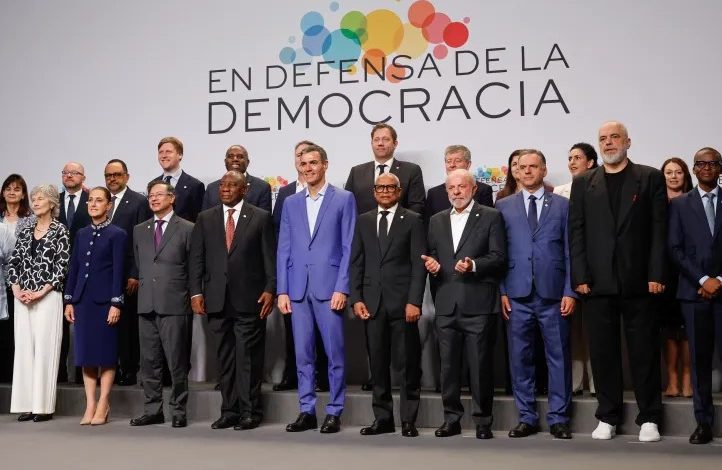
Cuba Summit in Defense of Democracy: A Historic Disappointment
The Premise of the Defense of Democracy Summit
The conceptual framework behind Havana’s summit was ostensibly to build a coalition of nations willing to advocate for alternative governance models, shielding them from the economic and political pressures exerted by Washington and its allies. The agenda promised comprehensive dialogues on sovereignty, non-intervention, and the supposed failures of capitalist democracies. However, the international community met the invitation with profound skepticism. The irony of a single-party state—where opposition is criminalized, independent media is banned, and political prisoners number in the thousands—hosting a summit centered around “democracy” was simply too blatant for most nations to ignore. For many long-time observers of Caribbean geopolitics, the event felt less like a genuine diplomatic initiative and more like a desperate cry for validation from a government running out of ideological currency.
Diplomatic Isolation: Why the Turnout Was So Low
In decades past, Havana could reliably call upon a robust bloc of Non-Aligned Movement members and socialist-leaning governments in Latin America to bolster its international profile. The failure of this summit indicates a seismic shift in regional and global diplomacy. Many nations that historically offered rhetorical support to Havana are now navigating their own complex economic crises and simply cannot afford the diplomatic blowback associated with endorsing an authoritarian regime. Furthermore, Cuba’s foreign policy has recently drawn intense international scrutiny. The revelation of recent controversies involving Cuban mercenaries abroad has alienated former allies who view Havana’s deepening military ties with aggressive global powers as a dangerous escalation that threatens broader global stability. Consequently, what was meant to be a showcase of solidarity instead served as a roll call of absence, proving that ideological rhetoric is no longer sufficient to secure diplomatic alliances.
Decoding the Attendees: Brazil, Mexico, and Spain
Brazil’s Stance and Regional Diplomacy
Brazil’s decision to sign the summit’s declaration is deeply rooted in the ideological commitments of its current administration. President Luiz Inácio Lula da Silva has long viewed a normalized relationship with Havana as a cornerstone of Latin American autonomy. By participating, Brazil is attempting to reassert its role as the dominant diplomatic broker in the Global South, pushing back against what it perceives as disproportionate US influence in the hemisphere. However, this move is not without significant domestic and international risks for Brasilia. Many within Brazil’s powerful agricultural and industrial sectors view the alignment with Havana as an unnecessary provocation of Western trade partners, a sentiment that could complicate Brazil’s broader economic strategies in the coming years.
Mexico’s Historical Sympathies and Modern Complications
Mexico has maintained a historically unique relationship with Cuba, often serving as the sole Latin American nation to refuse the severing of ties during the height of the Cold War. The current Mexican leadership continues this tradition, framing its support as a commitment to the principles of self-determination and non-intervention. Yet, Mexico’s signature on the summit’s declaration comes at a perilous time. With the renegotiation of vital North American trade agreements looming, aligning so publicly with an isolated authoritarian regime provides ammunition to political factions in Washington seeking to implement stricter border and trade policies. Mexico’s enduring romanticism regarding the Cuban revolution is increasingly clashing with its modern geopolitical and economic necessities.
Spain’s Strategic European Maneuvering
Spain’s participation is perhaps the most complex of the three. As a key member of the European Union, Madrid’s decision to break ranks with the broader Western consensus is driven by historical, cultural, and significant economic ties. Spanish hotel chains and infrastructure firms are among the largest foreign investors on the island. By signing the declaration, Spain’s current socialist-led government is attempting to protect these substantial commercial interests while also appealing to its left-wing political base at home. Nevertheless, this unilateral approach directly challenges the European Union’s common position on human rights and democratic governance, isolating Spain from its core European allies on matters concerning Latin American foreign policy.
| Nation | Geopolitical Motivation | Economic Ties to the Regime | Domestic Risk Factor |
|---|---|---|---|
| Brazil | Reasserting leadership in the Global South and pushing for Latin American autonomy. | Moderate; seeking to recover defaulted loans and expand regional trade. | High; potential backlash from conservative and agricultural sectors. |
| Mexico | Historical continuity, anti-interventionism, and ideological solidarity. | Low to Moderate; primarily focused on medical and energy cooperation. | High; threatens delicate trade and immigration negotiations with the U.S. |
| Spain | Protecting established European investments and historical cultural linkages. | High; massive investments in the Cuban tourism and hospitality sectors. | Moderate; risks alienation from the broader European Union foreign policy bloc. |
67 Years of Dictatorship: The Heavy Toll on Havana
Economic Paralysis and Deepening Sanctions
The fundamental reality underlying the summit’s failure is the catastrophic state of the Cuban economy after 67 years of centralized, dictatorial control. The nation is currently enduring its most severe economic crisis since the collapse of the Soviet Union. Chronic shortages of food, medicine, and basic consumer goods are a daily reality for millions. The national power grid regularly collapses, plunging the island into days-long blackouts that paralyze what little industrial output remains. While the government continuously blames external embargoes and sanctions for these hardships, international economists widely agree that the root cause is systemic mismanagement, the stifling of private enterprise, and an entrenched bureaucracy that prioritizes regime survival over public welfare. As a result, the island has witnessed an unprecedented mass exodus, with hundreds of thousands of its youngest and brightest citizens fleeing the country in search of basic opportunities.
The Geopolitical Cost of the Regime’s Alliances
In an attempt to secure financial lifelines, the regime has increasingly aligned itself with other globally sanctioned pariah states. This strategy has resulted in controversial oil-for-influence deals and alarming military cooperation agreements. By hitching its wagon to aggressive authoritarian states, Havana has essentially torpedoed any remaining goodwill it possessed within the moderate international community. The parallels between Havana’s desperate alliances and the strategies of other isolated regimes are stark, mirroring situations where similar internal cracks stalling negotiations lead governments to embrace extreme geopolitical risks. These partnerships have invited heightened surveillance and secondary sanctions from the West, creating a suffocating economic environment that ensures the regime’s continued decline. The lack of attendance at the summit proves that most nations recognize the toxicity of these alliances and want absolutely no part in them.
A Regime Running Out of Time: What Happens Next?
Internal Pressures and Rising Public Dissent
The absolute flop of the summit is not merely an external embarrassment; it has profound internal implications. The current generation of Cuban citizens is fundamentally different from those who witnessed the revolution. Empowered by mobile internet access—despite heavy state censorship—the population is acutely aware of the regime’s failures and its profound isolation on the world stage. Sporadic protests have erupted across the island with increasing frequency, driven by exhaustion and hunger rather than organized political opposition. The state’s response has historically been brutal suppression, a tactic rigorously documented by organizations like Amnesty International, which continuously highlight the arbitrary detention of peaceful demonstrators. However, as the economic foundation of the state continues to crumble, the capacity of the security apparatus to indefinitely suppress the masses is coming under unprecedented strain.
International Repercussions for Authoritarian Allies
The crumbling facade of the Cuban regime also serves as a warning shot to its remaining benefactors. As Havana struggles to maintain basic municipal services, the financial burden on its allies grows exponentially. The world is watching as state-sponsored economic models collapse under their own weight. This dynamic is closely tied to broader global conflicts, where international scrutiny is intensifying over state-owned conglomerates propping up failing governments, much like the intense focus on international scrutiny over Russian state-owned enterprises. The era of the regime utilizing high-profile diplomatic summits to project strength and unity has definitively ended. The “Summit in Defense of Democracy” will likely be remembered not as a triumph of socialist diplomacy, but as the moment the international community collectively agreed that the Cuban dictatorship is out of friends, out of options, and rapidly running out of time.