Lebanon President Joseph Aoun Slams Hezbollah Treason
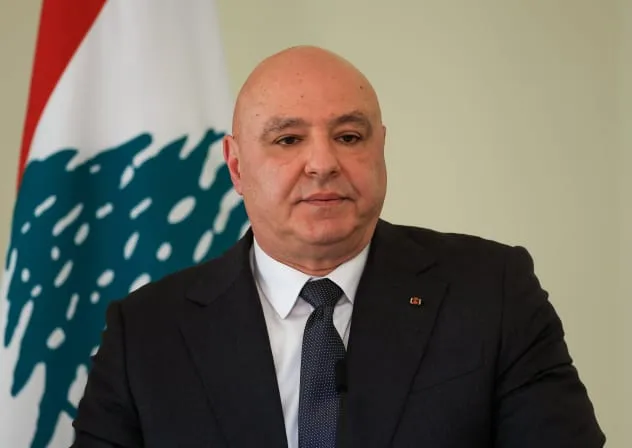
Lebanon stands at a historic and volatile precipice, as President Joseph Aoun has delivered one of the most explosive and consequential public addresses in the nation’s modern political history. By publicly tearing into Hezbollah and framing their unilateral military engagements as a betrayal of the state, Aoun has shattered decades of delicate political taboos. His uncompromising declaration that “Treason is dragging your country into war to serve foreign interests” marks a definitive rupture between the sovereign aspirations of the Lebanese state and the regional proxy strategies dictated by external actors. The president is currently steering the deeply fractured nation toward an armistice modeled on the 1949 agreement with Israel, a bold diplomatic maneuver that has ignited fierce domestic and international debates. This comprehensive analysis explores the multifaceted dimensions of President Aoun’s unprecedented stance, the historical significance of the 1949 armistice framework, the ensuing backlash from Hezbollah, and the broader geopolitical ramifications for the Middle East.
Lebanon’s Historic Crossroads: President Aoun Rejects Proxy Wars
For decades, the balance of power within the nation has been precariously maintained through fragile compromises between state institutions and heavily armed non-state actors. However, the devastating toll of recent conflicts has prompted a dramatic reassessment of this paradigm. President Joseph Aoun’s recent public condemnation of Hezbollah is not merely a rhetorical flourish; it represents a profound strategic pivot aimed at reclaiming state sovereignty. By explicitly challenging the authority of an organization that has long operated as a state within a state, Aoun is asserting that the survival of the republic must supersede the ideological and military adventurism of any single faction.
The Definition of Treason in the Modern Crisis
President Aoun’s invocation of the word “treason” carries monumental weight in the context of Levantine politics. When he asked, “When you dragged the country into war, did you have national consensus then?” he pierced the core justification that armed factions have historically used to legitimize their arsenals. The president is enforcing a strict constitutional interpretation: the decision of war and peace belongs exclusively to the state. Bypassing state institutions to launch cross-border attacks fundamentally undermines the social contract. By categorizing such actions as treasonous, Aoun is reframing the national narrative, stripping away the veneer of “resistance” from campaigns that primarily serve to project Iranian regional power.
Foreign Interests vs. National Consensus
The core of Aoun’s grievance centers on the exploitation of the nation’s territory for geopolitical leverage. “Had this war been for the sake of Lebanon, we would have supported it. But when the goal of a war is to serve the interests of others, I reject it entirely,” he declared. This statement directly indicts the strategy of linking the southern border’s fate to distant geopolitical struggles, effectively holding the domestic population hostage to foreign agendas. The lack of national consensus regarding these conflicts has generated immense resentment among citizens who bear the physical and economic brunt of retaliatory strikes while having zero input in the strategic decisions that precipitate them.
The 1949 Armistice Model: A Blueprint for Peace
In his quest to stabilize the explosive southern frontier, President Aoun is looking backward to move forward. He is actively negotiating an armistice with Israel modeled closely on the 1949 General Armistice Agreement. This historical precedent offers a pragmatic, internationally recognized framework for ceasing hostilities without necessarily resolving underlying ideological disputes or mandating immediate normalized relations. It is a calculated diplomatic mechanism designed to stop the bleeding and restore the state’s monopoly on border security.
Negotiating With Israel Amidst Internal Opposition
Diplomatic channels are currently operating at a fever pitch. Negotiating an armistice requires navigating treacherous political waters, especially when powerful domestic factions actively oppose the very concept of de-escalation. The state’s diplomatic maneuvering is gaining traction, much like the changing political climate observed when President Aoun denied refusing to meet Netanyahu, signaling a pragmatic willingness to engage for the sake of national survival. By embracing direct or mediated negotiations, the presidency is attempting to bypass non-state actors and interact directly with international stakeholders and the United Nations to forge a binding cessation of hostilities.
Ensuring a Dignified Agreement for the Lebanese People
A central tenet of Aoun’s domestic messaging is the promise that the impending armistice will not be a capitulation. He has explicitly assured the public that the agreement will not be humiliating, urging his fierce critics to wait for the final results before rushing to judgment. The proposed framework focuses on mutual security guarantees, the withdrawal of unauthorized armed elements from border zones, and the empowerment of the national army to secure the territory. By prioritizing human security and economic survival over perpetual conflict, Aoun aims to secure a “dignified peace” that honors the sacrifices of the population while decisively closing the chapter on proxy exploitation.
Hezbollah’s Fierce Pushback and the Grave Sin Allegation
The reaction from Hezbollah has been swift, uncompromising, and deeply antagonistic. The group’s leadership publicly branded the armistice talks as a “grave sin,” viewing any agreement that nullifies their “resistance” mandate as an existential threat to their organizational identity and their utility to their foreign sponsors. This rhetoric sets the stage for a dangerous internal confrontation, as the armed group attempts to delegitimize the state’s diplomatic initiatives.
Ideological Clashes Over the Southern Border
The clash between the presidency and Hezbollah is fundamentally ideological. For the state, the southern border is a sovereign boundary that must be managed through international law, state diplomacy, and official military presence, anchored historically in protocols recognized by the United Nations Peacemaker archives. For Hezbollah, the border represents an ideological frontline in a pan-regional “axis of resistance.” Aoun’s fierce retort that “the real sin was using Lebanon as a battlefield for Iran’s wars” directly attacks this ideological foundation, highlighting the catastrophic costs of prioritizing extraterritorial ambitions over domestic welfare. This sentiment is increasingly echoed in the capital, where MPs push to remove all armed groups from urban centers to restore state authority.
The Iranian Influence Proxy Battle
The internal political crisis cannot be decoupled from its primary external catalyst: the Islamic Republic of Iran. Hezbollah’s operational directives and strategic posture are heavily influenced, if not entirely dictated, by Tehran. President Aoun’s aggressive stance is therefore as much a message to the Iranian leadership as it is to domestic audiences. He is signaling that the era of uncontested foreign exploitation of sovereign territory is ending. However, this bold move occurs precisely as the region faces immense instability and as internal cracks in Iranian leadership complicate their regional strategy, making the proxy network’s reactions highly unpredictable.
| Strategic Parameter | President Aoun’s State Doctrine | Hezbollah’s Factional Stance |
|---|---|---|
| Decision of War & Peace | Exclusive monopoly of the sovereign state | Independent action aligned with Axis of Resistance |
| Southern Border Status | Demilitarized zone governed by 1949 Armistice model | Active frontline for regional proxy conflicts |
| Foreign Policy Alignment | National consensus; prioritizing domestic survival | Serving ideological goals of foreign sponsors (Iran) |
| Current Negotiations | Pragmatic diplomacy to avoid national collapse | Viewed as a capitulation and a “grave sin” |
Assessing the Toll on Southern Lebanon
The human and economic toll of the ongoing unauthorized conflict has been nothing short of catastrophic. When Aoun asked, “How much longer will the people of the South pay the price for the wars of others on our land?” he captured the profound despair of hundreds of thousands of displaced citizens. The southern regions have been systematically decimated, agricultural lands scorched, and vital infrastructure annihilated in retaliatory strikes.
Economic Devastation and the Price of Unilateral Actions
The socio-economic fabric of the south has been torn apart to serve agendas completely detached from local needs. The humanitarian crisis is staggering, exemplified by the stark reality that 55 Lebanese villages remain closed and inaccessible due to the relentless violence. Families have lost generations of accumulated wealth, businesses have collapsed, and the state’s already fragile economy is hemorrhaging capital. Aoun’s pivot toward an armistice is driven by the urgent, undeniable realization that the country simply cannot financially or structurally survive a protracted war of attrition that it never officially declared.
The Broader Geopolitical Context
President Aoun’s defiance echoes far beyond the borders of his beleaguered nation. The international community, particularly Western and Gulf states, is monitoring this unprecedented institutional pushback with cautious optimism. A successful armistice and the reassertion of state control over the southern frontier could serve as a paradigm-shifting precedent for other nations grappling with powerful Iranian proxies. It challenges the fatalistic assumption that state institutions in the Levant are irrevocably subordinate to militant factions.
Middle East Stability and Diplomatic Negotiations
The success of this bold initiative hinges on intricate diplomatic coordination. International mediators are working tirelessly to bridge the gap between Israel’s security requirements and Lebanon’s sovereignty demands. A return to the principles of the 1949 Armistice Agreement requires mutual concessions, verifiable enforcement mechanisms, and a robust commitment from the international community to empower the national armed forces. By establishing clear red lines and publicly confronting the architects of proxy warfare, Aoun has taken the perilous but necessary first step toward restoring his nation’s viability on the global stage.
Conclusion: A Nation Awaiting Judgment
Lebanon is undergoing a profound and agonizing metamorphosis. President Joseph Aoun’s ferocious condemnation of Hezbollah’s actions as treasonous foreign adventurism has forever altered the domestic political landscape. By championing a pragmatic, non-humiliating armistice based on the historic 1949 agreement, he is offering a desperate population a tangible alternative to perpetual ruin. While Hezbollah decries the state’s diplomacy as a “grave sin,” the stark reality of decimated villages and economic collapse speaks louder than ideological rhetoric. As the nation watches the high-stakes negotiations unfold, the ultimate judgment will lie in the results—whether the state can finally reclaim its sovereignty and secure a dignified peace, or whether it will remain tragically tethered to the endless wars of others.