Lebanon Summit: President Aoun Denies Refusal to Meet Netanyahu
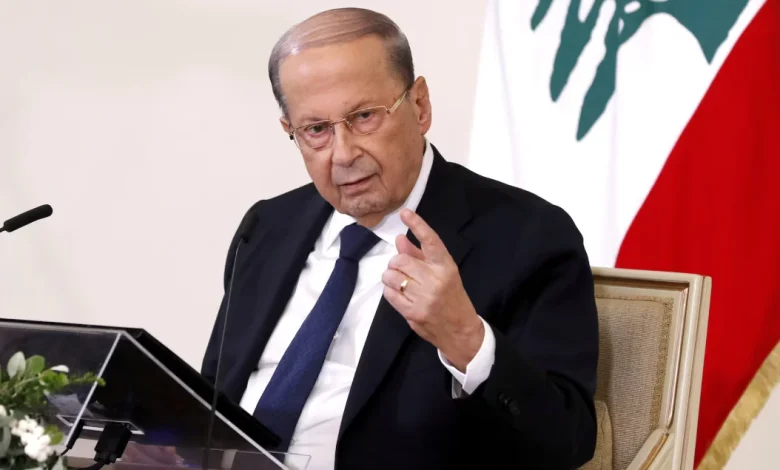
Lebanon stands at a critical diplomatic crossroad in the Spring of 2026, as international media channels have been flooded with conflicting reports regarding the nation’s willingness to engage in direct, high-level diplomatic talks with the State of Israel. Amid an incredibly volatile regional climate, recent headlines suggested that Lebanese leadership had unequivocally shut the door on any potential bilateral summit. However, a senior Lebanese diplomatic source has forcefully pushed back against these claims, categorically stating that the reports are flat-out wrong. The reality of the situation is significantly more nuanced: the President has not refused a direct dialogue with the Israeli Prime Minister; rather, the precise timing, logistical parameters, and strategic conditions for such an unprecedented encounter remain undecided. This meticulous approach to statecraft highlights the complex web of domestic constraints, regional alliances, and historical grievances that must be navigated before any public handshake can occur. Understanding this dynamic requires a deep dive into the political maneuvers happening behind closed doors in both Beirut and Jerusalem.
Executive Summary of the Diplomatic Situation
The diplomatic landscape of the Levant has always been fraught with tension, but the current juncture presents a unique set of variables. The suggestion that a meeting between the Lebanese and Israeli heads of state was entirely off the table originated from a misunderstanding of Lebanon’s traditional negotiating posture. The senior Lebanese source, speaking on condition of anonymity due to the extreme sensitivity of the subject matter, clarified that the presidential administration is actively reviewing backchannel proposals. The outright denial of a refusal is a crucial pivot in Lebanon’s public messaging. It signals to international mediators, particularly those in Washington and Paris, that Beirut remains open to pragmatic conflict resolution mechanisms, provided that Lebanon’s sovereignty and territorial demands are respected. This measured ambiguity serves a dual purpose: it keeps the diplomatic window cracked open for potential economic and security benefits while simultaneously shielding the presidency from immediate domestic backlash from hardline factions that fundamentally oppose normalization with Israel. The situation is fluid, and the deliberate pause in scheduling a meeting is a calculated delay rather than an ideological veto.
Analyzing the Rumors Surrounding the Historic Meeting
To fully grasp the current state of affairs, one must examine the origins of the narrative that falsely proclaimed a definitive collapse in potential talks. Information warfare and strategic leaks are commonplace in Middle Eastern diplomacy, often utilized by opposing factions to derail negotiations before they can even begin. In this instance, a series of unverified intelligence assessments were leaked to regional news outlets, portraying the Lebanese executive branch as rigidly intransigent. These reports failed to account for the intricate diplomatic choreography currently underway.
The Source of the Initial Misinformation
The initial misinformation wave appears to have been catalyzed by fragmented reports interpreting a delayed response from Beirut as a hard rejection. In the high-stakes environment of international relations, silence or a request for further deliberation is frequently misconstrued as a negative response. Analysts tracking the international news reports noted that certain regional actors, who possess a vested interest in maintaining a state of perpetual friction between Lebanon and Israel, likely amplified these rumors. The goal of such amplification is to force the Lebanese presidency into a corner, compelling an artificial public denial that would effectively tie the government’s hands and sabotage any ongoing backchannel discussions. However, the sophisticated response from the senior Lebanese source effectively neutralized this pressure tactic by correcting the record without committing to a definitive timeline.
Official Statements from the Presidential Palace
While the Presidential Palace has refrained from issuing a formalized, widely broadcast press release regarding a specific summit date, the strategic leaks from authorized senior sources function as a soft official statement. These communications are meticulously crafted to communicate flexibility to international partners. The message is clear: the administration is evaluating the geopolitical cost-benefit analysis of a meeting. They are systematically reviewing the prerequisites, which likely include assurances regarding border demarcations, cessation of airspace violations, and guarantees concerning the extraction of offshore hydrocarbon resources. By emphasizing that the decision is merely pending regarding ‘when’ rather than ‘if’, the administration maintains its strategic autonomy and retains valuable leverage for future negotiations.
Geopolitical Implications of a Potential Aoun-Netanyahu Summit
A direct, publicized meeting between these two figures would represent a seismic shift in the geopolitical architecture of the Middle East. It would transcend a mere bilateral handshake, sending shockwaves through the complex alliance networks that define the region. For decades, Lebanon has technically remained in a state of war with Israel, governed by armistice agreements and fragile UN resolutions. Transitioning from this hostile stasis to direct head-of-state engagement would fundamentally alter the regional security paradigm.
Impact on Domestic Lebanese Politics
The domestic political landscape in Lebanon is notoriously fractured, characterized by a delicate sectarian power-sharing system. Any move toward engaging Israel is highly polarizing. However, there is a growing faction within the Lebanese political establishment that recognizes the dire economic necessity of regional stability. This context is deeply intertwined with broader security shifts, mirroring the complexities detailed in Lebanon’s southern strategy where Aoun pledges the army over Hezbollah. By asserting state control and prioritizing the Lebanese Armed Forces (LAF) in the southern territories, the executive branch attempts to consolidate the authority necessary to enter into binding international agreements. A summit could provide the political capital needed to secure massive international financial bailouts, vital for resurrecting Lebanon’s collapsed banking sector and crumbling infrastructure. Conversely, it risks inflaming tensions with heavily armed non-state actors who view any dialogue with Israel as an existential threat to their resistance narrative.
Israel’s Strategic Positioning in the North
From the Israeli perspective, securing a predictable and stable northern border is paramount for national security. The Israeli government faces intense domestic pressure from displaced residents of northern communities who demand long-term security guarantees before returning to their homes. The potential for a summit is heavily contingent on satisfying these security imperatives, which frequently clash with Lebanese sovereign rights. This friction is evident when analyzing how the situation complicates Netanyahu’s demands for a Lebanon security zone before peace talks. The Israeli Prime Minister is operating within a fragile political coalition that requires him to project strength and extract significant concessions. Therefore, the Lebanese hesitation to immediately schedule a meeting is also a tactical move to assess how much diplomatic ground Israel is willing to concede regarding territorial and security arrangements along the Blue Line.
Historical Context of Lebanon-Israel Relations
The current diplomatic hesitation cannot be understood in a vacuum; it is the product of decades of historical baggage, devastating conflicts, and broken agreements. Since the establishment of the State of Israel, relations have been defined by cross-border incursions, extensive military occupations, and a pervasive lack of trust. Overcoming this immense historical inertia is arguably the greatest obstacle to any future head-of-state summit.
Previous Indirect Negotiations
Despite the lack of direct diplomatic ties, Lebanon and Israel are not strangers to the negotiating table, albeit usually through intermediaries. The landmark 2022 US-brokered maritime border agreement demonstrated that pragmatic, interest-based compromises are achievable even between enemy states. That agreement allowed both nations to pursue lucrative offshore natural gas exploration, proving that economic incentives can temporarily override ideological enmity. The success of those indirect negotiations serves as a foundational precedent for the current backchannel efforts aiming for a broader political and security understanding. The current maneuverings indicate a desire to elevate these indirect frameworks into a more formalized, direct diplomatic engagement, assuming the conditions are favorable.
The Role of International Mediators
The presence and influence of international mediators are absolutely critical in bridging the vast chasm between Beirut and Jerusalem. The United States, France, and various regional actors continually deploy envoys to facilitate dialogue and de-escalate tensions. These mediation frameworks are interconnected across the broader Middle Eastern theater. The interconnected nature of these efforts is highlighted when observing how regional diplomacy operates, such as when Pakistan mediates U.S.-Iran talks amidst Lebanon ceasefire hurdles. Resolving the Lebanese-Israeli dynamic is inextricably linked to the broader regional standoff involving Iran and its network of allied factions. Mediators must carefully untangle these overlapping conflicts, ensuring that any progress on the bilateral Lebanese-Israeli front is not immediately sabotaged by spoiler actors reacting to shifting regional power balances.
Comparative Analysis of Middle East Peace Efforts
To contextualize the monumental nature of a potential Lebanon-Israel summit, it is highly instructive to compare this evolving situation with other historical and contemporary peace efforts in the region. The trajectory of peace processes in the Middle East varies wildly depending on the strategic depth, economic interdependency, and domestic stability of the nations involved.
| Nation | Current Diplomatic Status with Israel | Primary Mediators | Key Sticking Points | Economic Incentives |
|---|---|---|---|---|
| Lebanon | Indirect negotiations; Direct summit pending timing decisions. | United States, France | Border demarcation, Security zones, Armed non-state actors. | Offshore gas exploration, International financial aid. |
| Syria | Sporadic indirect talks, technically at war. | Russia, Regional Arab States | Golan Heights territorial dispute, Iranian military presence. | Sanctions relief, Post-war reconstruction funding. |
| Egypt | Full diplomatic relations (1979 Peace Treaty). | United States | Border security in the Sinai Peninsula, Gaza coordination. | Substantial US military aid, Bilateral trade. |
| Jordan | Full diplomatic relations (1994 Peace Treaty). | United States | Jerusalem holy sites administration, Water sharing agreements. | US economic assistance, Regional stability. |
As the table illustrates, the situation in Lebanon shares certain complexities with its neighbors while retaining unique challenges. Interestingly, the diplomatic pacing is similar to the evolving Syria peace talks where Al-Sharaa confirms active Israel negotiations. In both the Lebanese and Syrian theaters, the technical state of war persists, but economic devastation and the necessity for reconstruction are forcing political elites to silently reconsider decades of entrenched hostility. The transition from indirect technical agreements to public political summits is the most difficult phase of any peace process, demanding immense political courage and meticulous timing.
Future Scenarios for Bilateral Engagement
Looking ahead, several plausible scenarios could unfold regarding the scheduling and execution of a meeting between the Lebanese and Israeli leadership. The most likely path involves a prolonged period of intense, secret shuttle diplomacy. Negotiators will need to draft a comprehensive framework agreement that addresses the core security concerns of both parties before any public date is announced. This framework would likely include rigid timelines for military redeployments, verified guarantees regarding border integrity, and a robust international monitoring mechanism to ensure compliance. If these foundational elements can be successfully negotiated, the summit itself would likely occur in a neutral, highly secure third-party location. European capitals with deep historical ties to the Levant, such as Paris, or regional diplomatic hubs heavily invested in Mediterranean stability, such as Nicosia in Cyprus, are prime candidates for hosting such a momentous event. Another scenario involves utilizing the backdrop of a major international summit, such as the United Nations General Assembly in New York, to facilitate a side-line meeting, which offers a degree of diplomatic cover and minimizes the domestic spectacle. Regardless of the venue, the senior Lebanese source’s clarification ensures that the international community understands that Beirut’s diplomatic engine is idling, not turned off. The timing will be dictated by a convergence of favorable conditions that minimize domestic risks while maximizing national security and economic gains.
Conclusion and Final Thoughts
The intricate dance of Middle Eastern diplomacy requires an extraordinary degree of patience, precision, and an ability to decode the space between public pronouncements and private intentions. The categorical denial by a senior Lebanese source that the President has refused to meet with the Israeli Prime Minister is a vital piece of the ongoing geopolitical puzzle. It dispels the dangerous myth of absolute Lebanese intransigence and re-centers the narrative on the pragmatic realities of statecraft. While the historical grievances run deep and the domestic political obstacles are formidable, the devastating economic realities and the urgent need for regional stability are powerful catalysts for unprecedented diplomatic engagement. The decision of ‘when’ to meet is not merely a logistical question; it is the ultimate strategic calculation that will define the future security architecture of the Levant. As backchannel negotiations continue and international mediators work tirelessly to bridge the divide, the world watches closely, understanding that a delayed summit is vastly different from a denied one. The door to diplomacy remains cautiously open, awaiting the precise alignment of strategic interests necessary to turn a theoretical meeting into a historical reality.