Hezbollah Fath-360 Missile Launch Targets Kiryat Shmona
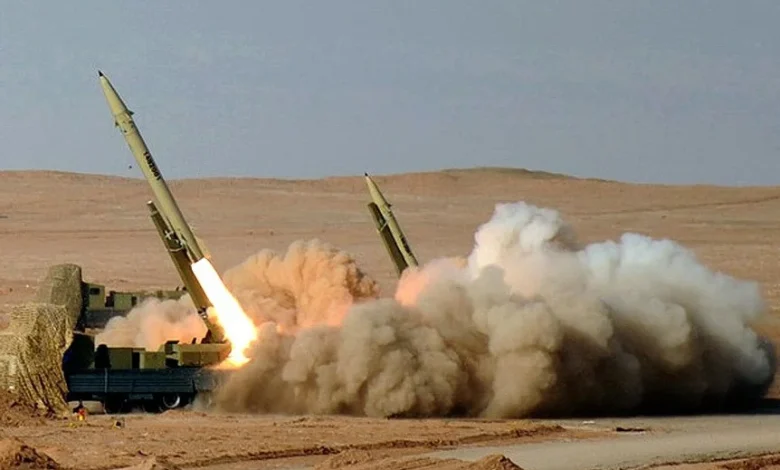
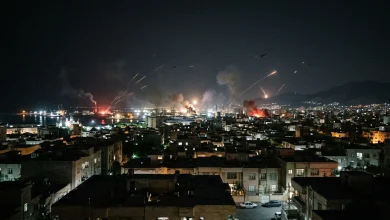
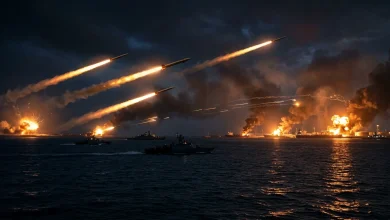
Hezbollah has officially released an extensive, high-definition video broadcasting the preparation, deployment, and launch of an advanced Iranian Fath-360 short-range ballistic missile. The militant group explicitly stated that the projectile was aggressively aimed at the northern Israeli city of Kiryat Shmona, marking a significant escalation in the ongoing border conflict. This meticulously edited footage not only serves as a stark demonstration of advanced military capabilities but also acts as a potent instrument of psychological warfare. By showcasing a weapon with a purported 120-kilometer range and a devastating 150-kilogram high-explosive warhead, the message dispatched across the tense borders is unequivocal: the technological threshold of this regional conflict has fundamentally changed.
Table of Contents
- The Fath-360 Deployment
- Specifications of the Iranian Missile
- Strategic Implications for Northern Israel
- The Threat to Kiryat Shmona
- Analyzing the Video Footage
- Preparation and Launch Sequence
- Regional Escalation and Geopolitical Context
- Iran’s Role in Arming Militant Proxies
- International Response and Condemnation
- Defense Mechanisms and Interception Protocols
- Historical Context of the Conflict
- Evolution of the Arsenal Over the Decades
- Future Trajectories in Border Tensions
The Fath-360 Deployment
The introduction of the Fath-360 into the active Lebanese theater represents a formidable paradigm shift. Often compared by defense analysts to the United States military’s HIMARS system due to its mobility and precision, the Fath-360 is a satellite-guided, solid-fuel, short-range ballistic missile (SRBM). Its solid-fuel composition is arguably its most dangerous characteristic in a rapidly developing combat environment. Unlike liquid-fueled missiles that require hours of highly visible and vulnerable preparation time, solid-fuel systems can be transported, erected, and launched within a matter of minutes. This dramatically shrinks the operational window available for the Israeli Air Force (IAF) to identify, target, and neutralize the launchers before the payload is successfully dispatched toward its destination.
Specifications of the Iranian Missile
Understanding the exact specifications of this munition is vital for grasping the magnitude of the threat it poses to civilian and military infrastructure alike. The Fath-360 is not merely a blunt instrument; it is engineered for devastating precision.
| Specification | Fath-360 Details |
|---|---|
| Origin | Islamic Republic of Iran |
| Missile Type | Short-Range Ballistic Missile (SRBM) |
| Maximum Range | Approximately 120 kilometers |
| Warhead Payload | 150 kg High-Explosive |
| Guidance System | Satellite (GLONASS) and Inertial Navigation |
| Propulsion | Single-stage solid propellant |
| Estimated Speed | Mach 3 to Mach 4 (Terminal Phase) |
With an estimated terminal velocity pushing Mach 4, the missile allows minimal reaction time for both human targets seeking shelter and automated air defense algorithms calculating interception vectors. The 150 kg high-explosive warhead is capable of obliterating multi-story structures, destroying fortified bunkers, and inflicting massive collateral damage over a wide blast radius.
Strategic Implications for Northern Israel
The deployment of a missile bearing a 120 km range against a target like Kiryat Shmona, which sits merely a few kilometers from the Lebanese border, is a deliberate strategic flex. It indicates that the missile was either fired from deep within the Lebanese interior—providing the launch crew with an added layer of geographic protection—or it was used at a suboptimal range simply to prove a point. If launched from the border region, a 120 km range places almost the entire northern half of Israel, including major population and industrial centers like Haifa, Tiberias, and potentially the northern outskirts of Tel Aviv, squarely within the crosshairs of this advanced weaponry. The strategic ambiguity created by this capability forces the Israel Defense Forces (IDF) to disperse their defensive assets over a much larger geographical footprint, thinning out defensive coverage and complicating Northern Command’s tactical calculus.
The Threat to Kiryat Shmona
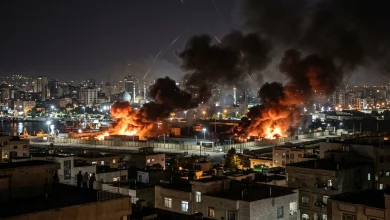
Kiryat Shmona has historically borne the brunt of cross-border escalations. Since the outbreak of heightened hostilities, the city has been largely evacuated, leaving behind a skeleton crew of emergency responders, local defense coordinators, and essential infrastructure workers. However, the use of a precision ballistic missile against this largely deserted urban center is indicative of a broader strategy aimed at preventing the return of these displaced civilians. The psychological terror inflicted by the knowledge that such massive, un-interceptable (or difficult to intercept) warheads are aimed at their homes ensures that the economic and social paralysis of Israel’s northern periphery will continue indefinitely, securing a strategic victory for the militant faction without necessarily engaging in a full-scale ground invasion.
Analyzing the Video Footage
The dissemination of the video is as much a weapon as the missile itself. In modern asymmetrical warfare, the narrative battle often dictates the tempo of the physical battle. The video, characterized by its multiple camera angles, high-definition resolution, and dramatic audio overlays, was meticulously crafted for rapid viral distribution across social media platforms and regional news networks. By showcasing the technological sophistication of the Fath-360, the group seeks to project an image of invulnerability and overwhelming military parity, attempting to deter further aggressive strikes from Israel while simultaneously boosting the morale of its domestic support base.
Preparation and Launch Sequence
A critical examination of the video reveals specialized launch mechanisms designed for rapid deployment and immediate exfiltration. The footage displays a camouflaged, truck-mounted transporter erector launcher (TEL) emerging from a concealed subterranean or heavily forested position. The hydraulic systems quickly elevate the cylindrical launch canisters. Within seconds, the solid rocket motor ignites, propelling the missile upward on a steep ballistic trajectory. This visual confirmation of the shoot-and-scoot tactic underscores the immense difficulty faced by conventional air forces in hunting down these mobile platforms. The brevity of the launch sequence highlighted in the video serves as a taunt, emphasizing the operational agility of the militant operators.
Regional Escalation and Geopolitical Context
This isolated launch cannot be viewed in a vacuum; it is deeply embedded within a wider tapestry of regional unrest and geopolitical maneuvering. The entire Middle East has been locked in an escalating cycle of retaliation, proxy engagements, and shadow wars. The deployment of advanced Iranian hardware in Lebanon serves as a direct message from Tehran to both Jerusalem and Washington. It clearly signals that the so-called Axis of Resistance remains fully operational, heavily armed, and perfectly willing to push the boundaries of conventional deterrence. This coordinated pressure is designed to stretch Israeli military resources thin, forcing multi-front engagements ranging from Gaza in the south, to the West Bank, to the northern border, and even extending to maritime threats in the Red Sea.
Iran’s Role in Arming Militant Proxies
The undeniable presence of the Fath-360 in Lebanon casts a glaring spotlight on the sophisticated, transnational logistical networks maintained by the Islamic Revolutionary Guard Corps (IRGC). Moving a weapon of this size and technological complexity from Iranian factories, through the contested territories of Iraq and Syria, and finally into the subterranean arsenals of southern Lebanon requires an immense, coordinated smuggling operation. It bypasses numerous intelligence safety nets and repeated airstrikes aimed at disrupting these very supply chains. According to leading international observers, this transfer of precision-guided munitions (PGMs) is the cornerstone of Iran’s forward-defense strategy, effectively placing Iranian deterrence permanently on Israel’s doorstep without committing uniformed Iranian personnel to direct combat.
International Response and Condemnation
The publication of this video and the brazen nature of the attack have sent diplomatic ripples across the international community. European capitals and the United States have repeatedly voiced deep concern over the unchecked proliferation of ballistic missile technology in the region. The United Nations Interim Force in Lebanon (UNIFIL), tasked with maintaining the fragile peace under UN Resolution 1701, finds itself increasingly sidelined as heavy military hardware dictates the reality on the ground. Diplomatic backchannels are currently working overtime, attempting to de-escalate the situation before the exchange of fire crosses an invisible red line that mandates a massive, uncontrollable regional war. The international consensus remains that the use of precision ballistic missiles significantly narrows the window for any peaceful diplomatic resolution.
Defense Mechanisms and Interception Protocols
The introduction of the Fath-360 deeply complicates Israel’s celebrated multi-tiered air defense network. The Iron Dome system, globally renowned for its high success rate in intercepting unguided, relatively slow-moving Katyusha and Grad rockets, is fundamentally not designed to counter the high-velocity, steep-trajectory characteristics of a ballistic missile. Intercepting the Fath-360 requires the activation of the David’s Sling system, which is explicitly engineered to neutralize large caliber rockets, short-range ballistic missiles, and advanced cruise missiles. However, the interceptor missiles utilized by David’s Sling are exponentially more expensive and exist in far smaller quantities than Iron Dome interceptors. This economic asymmetry is a core component of the militant strategy: forcing the expenditure of million-dollar defense assets to intercept much cheaper offensive weapons.
Historical Context of the Conflict
To fully appreciate the gravity of the Fath-360 video, one must look back at the historical evolution of this long-standing conflict. During the devastating 2006 Lebanon War, the militant arsenal was overwhelmingly composed of unguided artillery rockets. While these weapons caused significant panic and disruption, their lack of precision meant that hitting a specific military base or vital infrastructure node was largely a matter of statistical luck rather than tactical design. The conflict was defined by a massive volume of fire rather than pinpoint accuracy. The modern era, however, is radically different. The technological leap from dumb rockets to advanced, satellite-guided ballistic missiles means that each launch has a high probability of finding its intended target, fundamentally altering the risk calculations for the civilian population and military planners alike.
Evolution of the Arsenal Over the Decades
The transformation of the group’s military doctrine over the past two decades is a masterclass in asymmetrical capability development. The shift prioritized quality and precision over mere quantity. The Fath-360 represents the pinnacle of this evolutionary process. By retrofitting older unguided rockets with precision guidance kits and directly importing fully assembled modern ballistic systems from Iran, the group has acquired capabilities that were historically the exclusive domain of standing national armies. This evolution essentially blurs the line between a non-state actor and a conventional state military force, presenting unprecedented challenges to international law, rules of engagement, and global counter-proliferation efforts.
Future Trajectories in Border Tensions
As the dust settles from this latest high-profile launch and the accompanying media blitz, the future trajectory of the Israel-Lebanon border remains perilously uncertain. The deployment of the Fath-360 guarantees that the intensity of the localized conflict will remain elevated. Israeli military planners are now forced to operate under the assumption that numerous such systems are actively concealed across the border, holding essential civilian infrastructure and military installations at risk. The crucial question facing the region is whether this launch represents a new, permanent baseline for daily attritional warfare, or if it is the prelude to a far more destructive and expansive confrontation. The terrifying reality is that as the weaponry becomes increasingly advanced, the margin for political miscalculation shrinks to zero, leaving the fate of millions hanging in the balance of a highly combustible strategic standoff.