Debbie Wasserman Schultz Shakes Up Florida’s 20th District Primary
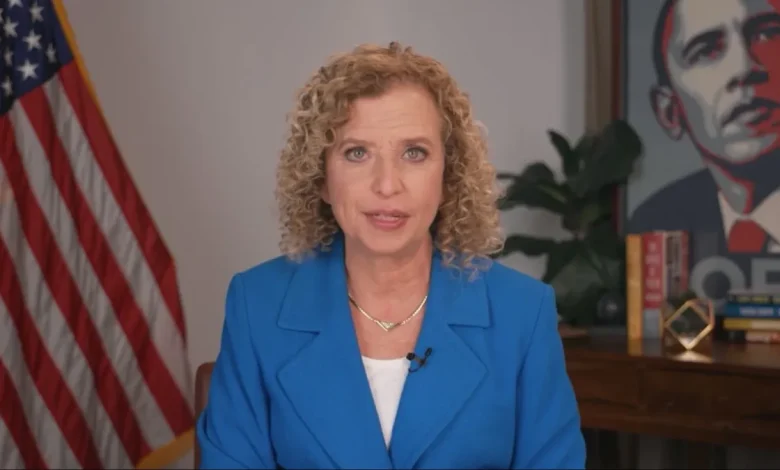
Debbie Wasserman Schultz, the prominent 11-term congresswoman and former Democratic National Committee (DNC) chair, has thrown Florida’s political ecosystem into intense turmoil. By launching her campaign for Florida’s 20th Congressional District, she has catalyzed a fierce debate over race, representation, and political opportunism in the Sunshine State. This sudden shift from her traditional legislative territory to a historically Black-majority district comes after Governor Ron DeSantis and the Republican-controlled state legislature pushed through a radical, mid-decade congressional map. The aggressive redrawing split her previous Broward County district five ways, effectively turning her home base into a highly competitive toss-up, and prompting her to seek the safety of one of the state’s most reliably Democratic seats.
The tactical migration of a powerful, white, establishment incumbent into a seat that has long served as a critical vehicle for Black political representation has triggered an explosive civil war within the local Democratic Party. While Wasserman Schultz insists that her extensive legislative experience and federal seniority are vital assets that must be preserved to benefit South Florida, local activists, Black community leaders, and prospective candidates view her entry as a direct threat to minority representation. In a remarkable display of political resistance, rival candidates in the district are actively exploring an unprecedented consolidation strategy. Their goal is to ensure they do not split the minority vote and hand a pluralistic primary victory to the powerful incumbent.
The Catalyst: How DeSantis’s Map Scrambled South Florida
The origins of this political conflict lie in the contentious redistricting process orchestrated by Governor Ron DeSantis and the Florida Legislature. Historically, congressional boundaries in Florida have been the subject of fierce legal battles, with courts frequently striking down maps deemed to intentionally dilute minority voting power or unfairly favor one political party. However, the newly enacted maps have fundamentally reshaped South Florida’s legislative boundaries, creating a domino effect that has displaced veteran lawmakers.
Under the new map, Wasserman Schultz’s old district—historically a safe Democratic stronghold in southern Broward County—was effectively dismantled and distributed among five separate districts, many of which now lean toward the Republican Party. The remaining core of her home territory was merged into a highly competitive, coastal district that stretches from Delray Beach to Miami Beach, designated as the new 22nd Congressional District. Rather than face a highly challenging, expensive, and unpredictable general election in this newly drawn coastal seat, Wasserman Schultz chose to jump into the adjacent 20th Congressional District. This move allowed her to seek reelection in a deep-blue seat, but it put her on a direct collision course with the district’s historically represented Black constituency.
The Backlash: Why CD-20 Has Angered Black Leaders
Wasserman Schultz’s decision to enter the CD-20 race has drawn sharp criticism from a broad spectrum of Democratic organizers, civic groups, and elected officials who accuse her of prioritizing personal political survival over the party’s broader commitment to diversity and racial equity.
Loss of Historic Black Political Power
Florida’s 20th Congressional District is roughly 45% Black and contains several historically Black communities in Broward and Palm Beach counties. For decades, this district was deliberately drawn under the protections of the federal Voting Rights Act to ensure that Black Floridians had a meaningful opportunity to elect a representative of their choice. The seat was long held by the legendary Alcee Hastings and most recently represented by Sheila Cherfilus-McCormick.
Local leaders argue that at a time when the U.S. Supreme Court has weakened federal voting rights protections and conservative state legislatures across the South are actively dismantling minority districts, preserving authentic Black representation is not merely a preference—it is an existential necessity. By choosing to run in CD-20, Wasserman Schultz is seen as actively aiding the dilution of Black political power, effectively performing the same erasure that Democrats have accused Republicans of executing through gerrymandering.
The DNC Members’ Open Rebellion
The resentment surrounding her candidacy is not confined to grassroots activists. In an extraordinary public statement, ten of the fifteen elected members of the Florida Democratic National Committee issued a joint condemnation of Wasserman Schultz’s campaign. The statement argued that the Democratic Party cannot credibly champion civil rights, voting access, and racial justice while remaining silent as one of its most senior, white establishment figures uses a safe majority-Black seat as a personal safety net.
This internal rebellion highlights a deep ideological and generational divide within the Florida Democratic Party. While establishment figures often prioritize seniority, committee placements, and general election safety, progressive and minority organizers are increasingly demanding that the party live up to its rhetoric regarding representation and equity.
A Uniting Force: Four Challengers Seek to Consolidate the Vote
In response to Wasserman Schultz’s high-profile entry into the race, her primary opponents have begun exploring a high-stakes, collaborative strategy designed to deny her the nomination.
The Closed-Door Meeting and the Contenders
To prevent a scenario where a crowded field splits the progressive and minority vote, four prominent Black candidates recently held a confidential, closed-door meeting in Broward County. The participants included activist Elijah Manley, former Broward County Mayor Dale Holness, activist and entertainer Luther Campbell, and former Congresswoman Sheila Cherfilus-McCormick.
The central premise of their discussion was clear: if all four candidates remain on the ballot for the August 18 primary, they will almost certainly divide the district’s Black electorate, allowing Wasserman Schultz to coast to victory with a simple plurality of the vote. The potential for a crowded democratic primary to dilute local voting strength has forced these rivals to discuss the possibility of coalescing behind one or two consensus candidates. While no binding agreement was reached at the initial meeting, participants described the dialogue as highly constructive and necessary to preserve the historical integrity of the seat.
The Leadership Dilemma: Hakeem Jeffries and the CBC Response
The controversy surrounding the CD-20 primary has placed national Democratic leadership in an incredibly awkward position. Typically, party leaders line up quickly and aggressively behind federal incumbents. However, the unique racial and regional dynamics of this race have fractured that traditional support system.
In a move that stunned political observers, House Minority Leader Hakeem Jeffries declined to offer a full, explicit endorsement of Wasserman Schultz during a recent press conference. While Jeffries acknowledged her long track record of legislative accomplishment, he pointedly observed that “everybody has a right to run where they see fit” and must make their case directly to the voters. Jeffries’ cautious neutrality is highly unusual, given his subsequent confirmation that he stands behind virtually all other House Democratic incumbents facing primary challenges. This hesitation underscores the profound political sensitivity surrounding the preservation of Black legislative power in the American South.
Furthermore, Representative Yvette Clarke, the chairwoman of the Congressional Black Caucus (CBC), clarified that the caucus did not encourage Wasserman Schultz to run in the 20th District. This public distancing debunked initial suggestions that national leadership had quietly sanctioned her move to protect her seniority.
Wasserman Schultz’s Defense: The Argument for Seniority
Faced with mounting criticism, Wasserman Schultz has mounted a vigorous defense of her candidacy, centering her campaign on the tangible benefits of legislative seniority and her lifelong ties to the South Florida community. Having served in Congress since 2005, she holds highly influential positions on key committees, including the House Appropriations Committee.
Her campaign argues that replacing an 11-term incumbent with a freshman representative would instantly strip South Florida of critical federal leverage. She contends that senior lawmakers are far better equipped to secure federal funding, navigate complex bureaucratic hurdles, and deliver direct economic relief to working-class families regardless of demographic shifts. Additionally, she has pointed to her extensive record of advocacy on civil rights, healthcare accessibility, and economic justice as evidence of her alignment with the values of CD-20’s residents. However, for many local voters, the abstract benefits of federal seniority do not outweigh the immediate, symbolic, and practical loss of self-representation.
Comparative Analysis: District 20 vs. District 22
The following table illustrates the key demographic, political, and historical differences between the safe Democratic seat Wasserman Schultz is seeking and the competitive coastal seat she chose to avoid:
| Metric / Feature | Florida’s 20th Congressional District (CD-20) | Florida’s Redrawn 22nd Congressional District |
|---|---|---|
| Black Population % | Approximately 45% – 50% | Under 15% |
| Partisan Lean | Deep Blue (Safe Democratic) | Toss-up (Highly Competitive) |
| Historic Representation | Long-held by Black Democrats (Alcee Hastings, Sheila Cherfilus-McCormick) | Historically held by Debbie Wasserman Schultz (as CD-25/CD-23) |
| Primary Dynamics | Wasserman Schultz vs. Crowded Field of Black Challengers | Open Seat (Jared Moskowitz running) |
| Core Geographic Focus | Central Broward and inland Palm Beach County | Coastal Palm Beach and Broward (Delray Beach to Miami Beach) |
Broader Electoral and Legal Implications in the US South
The fierce primary battle in Florida’s 20th Congressional District is far more than a localized political dispute; it is a microcosm of a broader national struggle over the future of minority voting rights and representation. As state legislatures across the country engage in aggressive redistricting, civil rights organizations are forced to fight continuous, complex, and exhausting election-related legal battles to protect minority-majority districts.
According to local political analysis by Florida Politics, the state’s Democratic Black Caucus has officially urged Wasserman Schultz to reconsider her run, pleading with her to help the party win the competitive 22nd District rather than taking the “easy win” in a safe Black seat. This tension highlights a critical structural flaw within the modern Democratic coalition: the party relies heavily on the loyalty and turnout of Black voters, yet its establishment structures often prioritize the preservation of long-serving, white incumbents over the cultivation of diverse leadership.
As South Florida Democrats prepare for the pivotal August primary, the outcome of this race will likely reverberate well beyond Broward County. The decision made by voters in CD-20 will send a powerful signal regarding whether local representation, historical identity, and racial equity still take precedence over institutional seniority and established political power—a theme that continues to dominate broader party leadership debates across the United States.