Ceasefire Terms: Israel and Lebanon Agree to Litani Plan
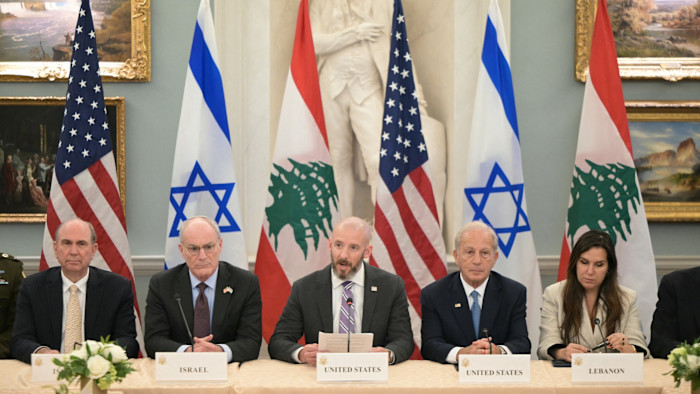
Ceasefire negotiations in the Middle East have taken a precarious yet historic turn. Following intensive diplomatic deliberations under the auspices of the United States State Department in Washington, Israel and Lebanon have agreed to a conditional framework designed to halt the devastating conflict that has raged since the spring. The diplomatic breakthrough, announced on June 3, 2026, aims to establish a sustainable peace by addressing the underlying security vulnerabilities that have historically destabilized the border region. However, because the primary combatant on the Lebanese side—the heavily armed, Iranian-backed Hezbollah militia—was not a direct party to the bilateral negotiations, analysts remain highly cautious about the long-term viability of the agreement.
Ceasefire Challenges: A Diplomatic Tightrope in Washington
The diplomatic marathon in Washington, which brought together Israeli Ambassador to the U.S. Yechiel Leiter and Lebanese Ambassador Nada Hamadeh, concluded after exhaustive negotiations mediated by high-ranking American officials. The fundamental challenge of these talks has always been the political architecture of Lebanon, where the sovereign government in Beirut must negotiate on behalf of a nation whose southern territory is effectively controlled by Hezbollah. The joint statement released by the trilateral participants emphasizes that the future of the relationship between Israel and Lebanon must be decided exclusively by sovereign governments, explicitly rejecting attempts by non-state actors or foreign powers to hold Lebanon’s future hostage.
This framework represents a calculated attempt by the international community to empower the official Lebanese state apparatus while systematically sidelining the armed wing of Hezbollah. By negotiating directly with Lebanese diplomats, Israel and the United States are seeking to reassert the primacy of the Lebanese Armed Forces (LAF) over the sovereign territory of Lebanon, particularly in regions that have long served as launchpads for cross-border rocket attacks.
The Strategic Terms of the South Litani Sector Agreement
The core of the new agreement centers on a strict mandate: the ceasefire is contingent on a complete cessation of fire from the Iran-aligned Hezbollah militia and the absolute evacuation of all its operatives from the South Litani Sector. The South Litani Sector, defined as the strategic territory extending from the Blue Line border up to the Litani River, has been the primary theater of land engagements and air interdictions over the past several months.
Under the terms of the agreement, Hezbollah must dismantle its military infrastructure, withdraw its tactical units, and surrender control of its fortified positions to the official Lebanese military. For Israel, the evacuation of Hezbollah to positions north of the Litani River is a non-negotiable security prerequisite. This geographic buffer is designed to push Hezbollah’s anti-tank guided missiles and short-range rocket systems out of striking distance from northern Israeli civilian communities, allowing tens of thousands of displaced Israeli residents to safely return to their homes.
From the March Invasion to the Washington Summit
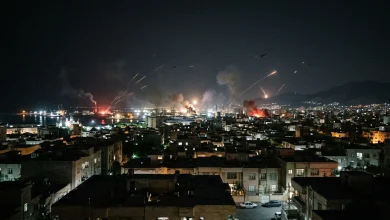
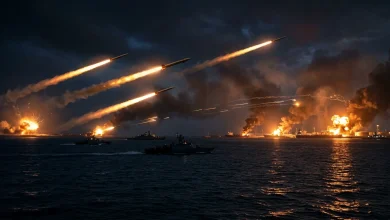
To fully understand the urgency of the June 2026 agreement, one must examine the rapid escalation that preceded it. The current conflict erupted into full-scale war on March 2, 2026, when Israel launched a massive military invasion of southern Lebanon. This operation was initiated in pursuit of Hezbollah, which had systematically fired across the border in support of Tehran amidst a broader regional confrontation.
Why the Initial Spring Truces Failed to Hold
Prior to the June 3 summit, the two sides had agreed to a tentative ceasefire on April 16, 2026, brokered by the United States. While that initial truce established a temporary 10-day pause in active fighting and was subsequently extended, hostilities nonetheless continued. The failure of the spring truces was largely driven by a lack of operational enforcement mechanisms. Both Israel and Hezbollah routinely traded accusations of ceasefire violations. Israel conducted targeted drone strikes against suspected munitions transports, while Hezbollah launched sporadic retaliatory drone and rocket attacks, claiming they were acting in self-defense. The absence of clear physical boundaries and sovereign troop deployments made a mockery of earlier diplomatic efforts.
The March Invasion and Its Tactical Objectives
When the Israeli military crossed the Blue Line in March 2026, its objectives were far more expansive than in previous border skirmishes. Israeli Defense Forces (IDF) sought to systematically neutralize Hezbollah’s subterranean tunnel networks, weapon storage facilities, and command bunkers scattered throughout southern Lebanese villages. The tactical necessity of these operations was driven by intelligence suggesting that Hezbollah had prepared for a coordinated cross-border incursion. The intensity of the March invasion resulted in severe degradation of Hezbollah’s forward operational capability, but it also triggered a catastrophic humanitarian crisis and reinforced the strategic necessity of a formal, enforced buffer zone.
The “Pilot Zones” and the Role of the Lebanese Armed Forces
A novel and highly debated element of the June 3 agreement is the creation of designated “pilot zones” within southern Lebanon. In these specific geographic sectors, the Lebanese Armed Forces (LAF) are slated to take exclusive control of the territory, ensuring the complete exclusion of all non-state actors, armed militias, and unauthorized weaponry.
Historically, the Lebanese military has occupied a delicate position. While it is the official sovereign army of Lebanon, it has historically avoided direct confrontation with Hezbollah to prevent fracturing the country along sectarian lines. Under this new Western-backed initiative, the LAF is expected to act as a genuine sovereign barrier. However, military experts warn that if the Lebanese army attempts to forcibly displace or disarm Hezbollah operatives in these pilot zones without the militia’s explicit consent, it could trigger a severe domestic crisis or even risk a civil war within Lebanon.
Hezbollah’s Strategic Dilemma: Tehran’s Direct Influence
The success of the current diplomatic push ultimately hinges on the actions of Hezbollah and its leadership, headed by Secretary-General Naim Qassem. While Lebanese government diplomats signed the accord in Washington, Hezbollah remains the dominant military force on the ground. Officially, Hezbollah representatives have stated that they will not accept a partial ceasefire and have historically demanded a permanent halt to all Israeli military actions as a prerequisite for peace.
Behind the scenes, however, the group is facing immense pressure. The sustained Israeli military campaign has eliminated several top commanders and severely disrupted the group’s logistics. This diplomatic skepticism mirrors broader views in Washington, particularly as President Donald Trump reviews Iran’s peace offer with deep skepticism, fearing that Tehran’s proxies may use temporary operational pauses to rearm and reconstitute their forces. Hezbollah must now decide whether to comply with the Litani River withdrawal or face continued, devastating ground operations from an uncompromising Israeli military.
Broader Regional Implications: The Iran War Connection
The conflict in southern Lebanon cannot be separated from the wider geopolitical struggle engulfing the Middle East in 2026. Hezbollah’s rocket attacks were originally initiated to support Iran, making the Lebanese front a crucial theater in the broader confrontation between Israel, the United States, and the Islamic Republic of Iran.
Maritime Escalation and the Strait of Hormuz
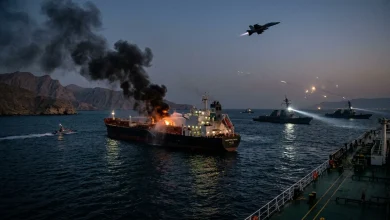
These localized efforts in southern Lebanon cannot be fully isolated from wider geopolitical maneuvers. For instance, the ongoing maritime posturing, including France’s deployment of a warship to the Strait of Hormuz, highlights how easily regional blockades and naval friction can spill over into land-based conflicts. The economic and military pressures applied in the Persian Gulf and the Red Sea directly influence Tehran’s willingness to sustain or de-escalate the proxy war being fought on Lebanon’s southern border.
Skepticism Over Diplomatic Guarantees
Meanwhile, public opinion in the West continues to shift, highlighted by a growing public perception that the U.S. is winning the confrontation with Iran, which further emboldens Western mediators to push for absolute concessions from Iranian-backed groups. This aggressive posture aligns with other regional peace initiatives, including ongoing efforts to push the administration’s broader Gaza peace plan, suggesting a coordinated attempt to neutralize hostile non-state actors along Israel’s northern and southern frontiers simultaneously.
Comparative Analysis: Evolution of Israel-Lebanon Peace Frameworks
The ongoing negotiations represent a significant shift from previous diplomatic attempts. The table below outlines how the structural terms of the June 3, 2026 Washington agreement differ from previous frameworks:
| Core Provision | 2024 Ceasefire Agreement | April/May 2026 Truces | June 3, 2026 Washington Agreement |
|---|---|---|---|
| Status & Longevity | Collapsed in March 2026 | Repeatedly violated; short-term extensions | Proposed conditional framework |
| Hezbollah Obligation | Withdrawal north of Litani River | Informal halt to cross-border strikes | Complete cessation of fire and forced evacuation |
| Enforcement Power | 5,000 Lebanese troops & UNIFIL | Joint monitoring without physical control | Exclusive “Pilot Zones” controlled by LAF |
| Israeli Security Rights | Sovereign self-defense claims | Retaliatory strikes allowed | Freedom of operation if terms are violated |
| U.S. Mediation Role | Co-facilitated with France | Direct US facilitation (Trump Admin) | US-brokered bilateral direct talks |
The Humanitarian Toll and Civilian Displacement
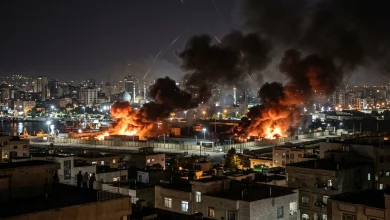
The strategic debates in Washington and Jerusalem take place against a backdrop of severe human suffering in Lebanon and northern Israel. Since the March 2026 invasion, the violence has claimed the lives of over 3,400 people in Lebanon, including both combatants and civilians, and has displaced more than 1.2 million people—roughly 20% of Lebanon’s total population. Entire towns south of the Litani River have been reduced to rubble, and the country’s already fragile economic infrastructure is on the verge of total collapse.
The ongoing presence of the United Nations Interim Force in Lebanon (UNIFIL) has done little to shield local residents from the devastation, as peacekeepers have found themselves repeatedly caught in the crossfire of intense urban combat and artillery duels. On the Israeli side, continuous rocket barrages have displaced thousands of families, paralyzed agricultural and industrial sectors in Galilee, and resulted in dozens of military and civilian casualties. For both nations, the physical and economic toll of the war has made a lasting diplomatic resolution an absolute necessity.
Looking Ahead: Will the Truce Hold in Late 2026?
The conditional ceasefire announced on June 3 represents a critical diplomatic framework, but its implementation remains highly volatile. Hours after the agreement was publicized in Washington, air raid sirens were heard in northern Israel, and reports of localized drone strikes in southern Lebanon continued to surface, underscoring the extreme fragility of the situation on the ground.
The next major milestone in this diplomatic process is scheduled for the week of June 22, 2026, when Israeli and Lebanese diplomats are slated to meet for a fifth round of direct talks in Washington to work toward a comprehensive, permanent security agreement. Whether the “pilot zones” can be successfully established without provoking a civil conflict inside Lebanon—and whether Hezbollah will ultimately comply with the demand to withdraw north of the Litani River—will determine whether this ceasefire marks the beginning of a genuine peace or merely a temporary pause before an even more destructive phase of the conflict.