Americans Believe U.S. Is Winning War with Iran: A Turning Point?
Introduction
A recent poll indicating that 74% of Americans believe the U.S. is winning its conflict with Iran presents a potentially transformative moment in the ongoing geopolitical tensions. This perception, whether or not fully aligned with the reality on the ground, offers President Trump a significant opportunity to recalibrate U.S. foreign policy in the region. The confluence of this favorable public opinion, coupled with observed reductions in U.S. Air Force activity and the pause of Project Freedom convoys, suggests a strategic pivot may be underway. This article delves into the nuances of this situation, examining the poll’s implications, the potential political benefits for President Trump, the underlying economic and strategic factors, and the possible future trajectories of U.S.-Iran relations. Understanding these dynamics is crucial for assessing the stability of the Middle East and the broader implications for global security. The situation remains fluid, and a comprehensive analysis is essential to navigate the complexities involved.
Poll Results and Public Perception
The poll results indicating that nearly three-quarters of Americans believe the U.S. is winning against Iran is a critical data point. Public perception often lags behind the realities of military and diplomatic engagements, but it plays a pivotal role in shaping political feasibility. In this case, the perception of victory, even if premature or based on incomplete information, provides a powerful mandate for the administration. This perception could be influenced by a variety of factors, including media coverage, political rhetoric, and a general desire to see the U.S. in a position of strength on the global stage. It’s essential to consider that such perceptions can be manipulated or reinforced through strategic communication efforts. Furthermore, the very definition of ‘winning’ in this context is subjective and open to interpretation. Does it mean achieving specific military objectives, securing favorable diplomatic terms, or simply projecting an image of dominance? Understanding these nuances is crucial for accurately interpreting the poll’s significance. This level of public support offers a unique window for diplomatic maneuvering and potential de-escalation. The administration can leverage this perceived victory to justify a shift in strategy, potentially leading to a more sustainable and less confrontational approach to U.S.-Iran relations.
The Political Off-Ramp for Trump
For President Trump, the poll results represent a significant political off-ramp. In the context of protracted international conflicts, finding a face-saving way to disengage is often a major challenge. The high level of public confidence in a U.S. victory provides the President with the necessary political capital to alter course without appearing weak or indecisive. This is a crucial advantage, as it allows the administration to prioritize long-term strategic interests over short-term political gains. Trump can capitalize on this perceived victory to pivot towards a more diplomatic approach, potentially securing a legacy as the leader who de-escalated tensions and prevented another costly and protracted war in the Middle East. This off-ramp is particularly valuable given the domestic pressures to reduce military spending and focus on internal challenges. By declaring victory and bringing troops home, Trump can fulfill campaign promises and address the concerns of a war-weary electorate. The opportunity to frame the situation as a successful resolution is a rare and potentially game-changing advantage. However, it also carries the responsibility to ensure that any deal or agreement reached with Iran is genuinely in the best interests of the U.S. and its allies. A premature or poorly negotiated settlement could undermine the perceived victory and lead to renewed tensions in the future.
USAF Activity and Project Freedom Pause
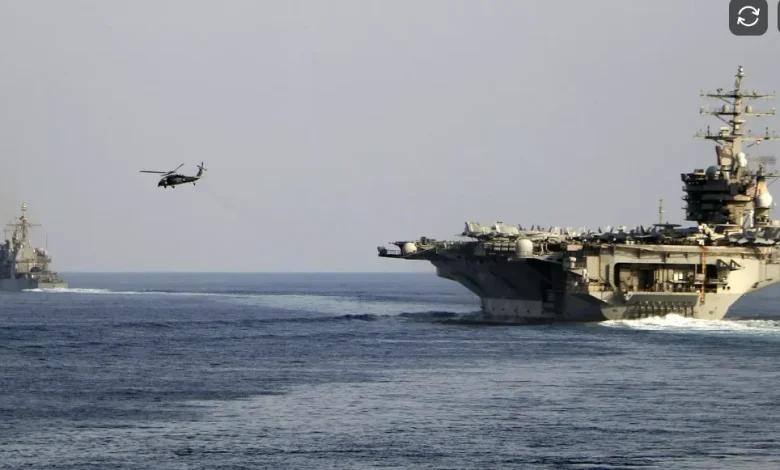
The reported reduction in U.S. Air Force activity over the region, from 27+ aircraft to just 7, coupled with the pause of Project Freedom convoys, are tangible indicators of a potential shift in U.S. military posture. These actions suggest a deliberate effort to de-escalate the military presence and create a more conducive environment for diplomatic negotiations. The decrease in air activity could be interpreted as a sign of reduced operational tempo, reflecting a decreased need for surveillance, reconnaissance, or offensive operations. The pause of Project Freedom convoys, which likely involve logistical support and troop movements, further reinforces this impression. These actions could also be interpreted as confidence-building measures aimed at signaling U.S. intentions to Iran and other regional actors. By reducing the visible military presence, the U.S. may be attempting to create a more relaxed atmosphere for negotiations and reduce the risk of accidental escalation. However, it is important to note that these actions could also be tactical maneuvers designed to reposition forces or prepare for a different type of operation. Without more detailed information, it is difficult to definitively determine the underlying rationale. Nevertheless, the observed changes in military activity are consistent with the broader narrative of a potential de-escalation and a move towards a diplomatic resolution. It is also important to consider how these actions are being perceived by allies and adversaries in the region. Clear communication and coordination are essential to avoid misunderstandings and ensure that the intended message is accurately conveyed.
Potential Deal and Political Victory
The possibility of a “Complete and Final Agreement” with Iran within the next week or two presents a pivotal moment for President Trump’s foreign policy agenda. If such a deal materializes, it would provide him with a tangible achievement to showcase to the American public. He could then confidently claim to have successfully confronted Iran’s nuclear program, secured the Strait of Hormuz, restored American deterrence, and brought troops home, all without entangling the country in another protracted conflict. This narrative aligns perfectly with the prevailing public perception of a U.S. victory and would solidify Trump’s image as a decisive and effective leader. The key to achieving this political victory lies in the details of the agreement. It must be perceived as credible, verifiable, and sustainable in the long term. Any perceived weaknesses or loopholes could undermine the narrative of success and expose the administration to criticism. Furthermore, it is crucial to ensure that the agreement addresses the concerns of U.S. allies in the region, particularly Israel and Saudi Arabia. Their support and cooperation are essential for maintaining regional stability and preventing a resurgence of tensions. The successful negotiation and implementation of such a deal would represent a significant diplomatic achievement and could potentially reshape the geopolitical landscape of the Middle East. However, the path to such an outcome is fraught with challenges and requires careful planning, skillful negotiation, and a clear understanding of the complex dynamics involved. Backchannel diplomacy might be necessary to finalize details.
Analyzing the Poll Numbers
While the 74% approval rating for the U.S.’s perceived victory against Iran appears overwhelmingly positive, a deeper analysis is warranted. It’s essential to understand the methodology of the poll, the sample size, and the specific questions asked. The phrasing of the questions can significantly influence the responses, and it’s possible that the poll results are skewed by leading questions or biased sampling. Furthermore, it’s important to consider the demographics of the respondents. Different groups may have different perceptions of the conflict based on their political affiliations, socioeconomic status, or personal experiences. For example, veterans or military families may have a more nuanced view of the situation compared to those with no direct connection to the armed forces. Additionally, it’s crucial to track how these poll numbers evolve over time. Public opinion can be fickle and easily influenced by events on the ground or by changes in media coverage. A single incident or a well-publicized setback could quickly erode the perception of victory and undermine the political capital that President Trump is currently enjoying. Therefore, while the poll numbers are undoubtedly a valuable asset, they should be interpreted with caution and in conjunction with other sources of information. Continuous monitoring and analysis are essential to accurately assess the true state of public opinion and its potential impact on U.S. foreign policy.
Challenges and Potential Pitfalls
Despite the favorable political environment, significant challenges and potential pitfalls remain. A premature declaration of victory without a solid and verifiable agreement with Iran could backfire if Iran continues its nuclear program or engages in destabilizing activities in the region. This would not only undermine President Trump’s credibility but also potentially lead to renewed tensions and a more dangerous confrontation. Another potential pitfall is the risk of alienating U.S. allies in the region. Some allies may feel that the U.S. is abandoning them or prioritizing its own interests over their security concerns. This could lead to a breakdown in regional alliances and create opportunities for other actors, such as Russia or China, to increase their influence. Furthermore, there is always the risk of unforeseen events that could derail the entire process. A terrorist attack, a military miscalculation, or a political upheaval in Iran could quickly change the dynamics and make a peaceful resolution much more difficult to achieve. Therefore, it is essential to proceed with caution, to maintain open lines of communication with all relevant parties, and to be prepared for unexpected contingencies. A successful outcome requires not only political will but also careful planning, skillful diplomacy, and a healthy dose of realism.
The Economic Factors at Play
Economic considerations play a crucial role in shaping the dynamics of the U.S.-Iran relationship. Sanctions imposed on Iran have had a significant impact on its economy, limiting its ability to export oil and access international financial markets. These economic pressures have undoubtedly contributed to Iran’s willingness to negotiate a potential agreement. However, the lifting of sanctions could also have unintended consequences. It could provide Iran with the resources to accelerate its nuclear program or to increase its support for proxy groups in the region. Therefore, any agreement must include provisions to prevent such outcomes, such as strict monitoring and verification mechanisms. Furthermore, the economic implications of a potential deal extend beyond Iran. It could affect global oil prices, trade flows, and investment patterns. A stable and prosperous Iran could become a significant economic player in the region, potentially creating new opportunities for U.S. businesses. However, it could also compete with U.S. allies in key markets. Therefore, a comprehensive assessment of the economic implications is essential to ensure that any agreement is in the best interests of the U.S. and the global economy. It’s important to consider how a war economy could shift to peacetime.
Impact on Regional Alliances
The evolving relationship between the U.S. and Iran has a profound impact on regional alliances. Traditional U.S. allies, such as Saudi Arabia and Israel, view Iran as a major threat and are wary of any rapprochement between Washington and Tehran. These countries fear that a nuclear-armed Iran would destabilize the region and embolden extremist groups. Therefore, it is crucial for the U.S. to reassure its allies that their security concerns are being taken seriously and that any agreement with Iran will not come at their expense. This can be achieved through close consultations, joint military exercises, and continued security assistance. On the other hand, some countries in the region may see a potential thaw in U.S.-Iran relations as an opportunity to improve their own ties with Tehran. This could lead to a realignment of alliances and a shift in the balance of power. Therefore, the U.S. must carefully manage its relationships with all regional actors to prevent any unintended consequences and to maintain its influence in the region. A key aspect is ensuring that Lebanon is included in any ceasefire discussions.
Historical Precedents of War Perception
Throughout history, public perception of war outcomes has often diverged significantly from the actual realities on the ground. The Vietnam War, for example, saw periods of optimistic public sentiment despite the growing quagmire and ultimately unsuccessful outcome for the U.S. Similarly, the early stages of the Iraq War were marked by widespread public support, which gradually eroded as the conflict dragged on and the true costs became apparent. These historical precedents highlight the importance of critically evaluating public opinion polls and recognizing the potential for manipulation or misinterpretation. Factors such as media bias, political propaganda, and a natural human tendency towards optimism can all contribute to a distorted perception of reality. Therefore, policymakers must rely on a wide range of sources of information, including intelligence reports, expert analysis, and on-the-ground assessments, to make informed decisions about war and peace. It is also crucial to communicate transparently with the public, providing accurate and unbiased information about the progress and challenges of any military engagement. By learning from the mistakes of the past, leaders can avoid repeating them and ensure that public perception is grounded in reality.
Future Scenarios and What to Watch For
Several future scenarios could play out in the coming weeks and months, each with its own set of implications. If a comprehensive agreement is reached with Iran, the focus will shift to implementation and verification. It will be crucial to monitor Iran’s compliance with the terms of the agreement and to address any violations promptly and decisively. If the agreement falls apart, tensions could escalate quickly, potentially leading to renewed military confrontation. In this scenario, it will be important to de-escalate tensions and to avoid any actions that could be misinterpreted as provocative. Another possible scenario is a period of prolonged uncertainty, with neither a comprehensive agreement nor a full-scale conflict. In this case, the U.S. will need to maintain a strong military presence in the region to deter aggression and to protect its interests. Key indicators to watch for include changes in Iran’s nuclear program, movements of Iranian-backed forces in the region, and statements from Iranian leaders. It is also important to monitor the reactions of U.S. allies and adversaries, as their actions could significantly influence the course of events. By carefully observing these indicators, policymakers can anticipate potential challenges and opportunities and make informed decisions about the future of U.S.-Iran relations.
Here is a summary table of the key elements discussed:
| Element | Description | Implications |
|---|---|---|
| Poll Results (74%) | Majority of Americans believe U.S. is winning against Iran. | Provides political cover for Trump to declare victory. |
| USAF Activity Reduction | Significant decrease in U.S. Air Force presence in the region. | Suggests de-escalation and potential for diplomatic resolution. |
| Project Freedom Pause | Suspension of Project Freedom convoys. | Further indicates a shift away from military confrontation. |
| Potential Agreement | Possibility of a “Complete and Final Agreement” with Iran. | Could solidify Trump’s legacy as a peacemaker. |
| Challenges & Pitfalls | Risk of a premature declaration of victory or alienating allies. | Requires careful planning and skillful diplomacy. |
Conclusion
The convergence of favorable poll numbers, reduced military activity, and the potential for a comprehensive agreement with Iran presents President Trump with a unique opportunity to recalibrate U.S. foreign policy in the Middle East. The perception of victory among the American public provides him with the political capital to pursue a diplomatic resolution and avoid another costly and protracted conflict. However, significant challenges and potential pitfalls remain. A premature declaration of victory without a solid and verifiable agreement could backfire, and alienating U.S. allies could undermine regional stability. Therefore, it is essential to proceed with caution, to maintain open lines of communication with all relevant parties, and to be prepared for unexpected contingencies. The successful navigation of these complexities could not only solidify President Trump’s legacy but also contribute to a more stable and peaceful Middle East. The situation continues to evolve, and ongoing monitoring and analysis are crucial to ensure that U.S. policy remains aligned with its strategic interests and the realities on the ground. Reindustrialization efforts may provide a stronger economic base for future engagements. See how previous peace talks have failed. The situation needs to be handled carefully to avoid escalating tensions. The need to balance regional interests with the pursuit of de-escalation requires a nuanced and adaptive approach. It remains to be seen whether this opportunity will lead to lasting peace or simply a tactical pause in a long-standing conflict. For more information on related topics, visit Council on Foreign Relations.