Ann Widdecombe Terror Investigation 2026: Police Rearrest Suspect
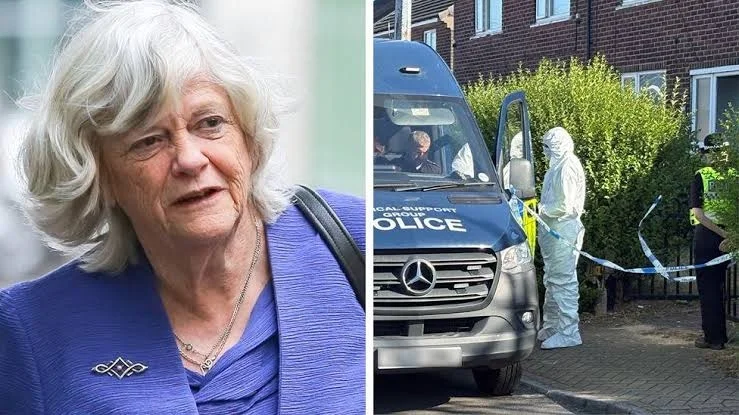
Table of Contents
Ann Widdecombe, the iconic former Conservative cabinet minister, Member of Parliament, and Reform UK campaign spokesperson, was found dead last week at her remote residence on the edge of Dartmoor National Park. The initial findings surrounding her tragic passing, which sent shockwaves through the heart of the British political establishment, have taken a dramatic and alarming turn. On Monday, police authorities officially declared that the killing is now being treated as an act of terror. This startling revelation marks a critical escalation in the investigation and has triggered widespread concerns over the safety of public figures across the United Kingdom.
Ann Widdecombe Investigation: Overview of the Terrifying Developments
The tragedy unfolded on Thursday when ambulance services and local police were called to a property in the isolated village of Haytor, Devon. Upon arrival, emergency responders discovered the body of the 78-year-old political veteran inside her home, which she affectionately called “Widdecombe’s Rest”. Authorities reported that she had sustained “serious injuries” and was pronounced dead at the scene. In the immediate aftermath of the discovery, Devon and Cornwall Police launched a standard murder investigation, initially stating that they did not believe the attack was politically motivated or terror-related.
However, the trajectory of the probe changed dramatically on Monday when National Counter Terrorism Policing took formal charge of the case. A 28-year-old male suspect from Rotherham, South Yorkshire, who was already in custody on suspicion of murder, was officially rearrested under Section 41 of the Terrorism Act 2000. This specific legal designation allows police to hold and question suspects believed to be involved in the commission, preparation, or instigation of acts of terrorism. The sudden involvement of specialized counter-terror units signals that investigators have uncovered substantive evidence pointing toward an ideological, political, or religious motivation behind the lethal assault.
Ann :The Sudden Police U-Turn: How the Murder Became a Terror Investigation
The transition of the case from a local major crime inquiry to a national counter-terrorism operation has highlighted the dynamic and volatile nature of modern policing. In the hours following the discovery of the body, Devon and Cornwall Police were quick to reassure the public that there was no broader threat and that the killing appeared to be an isolated incident. Yet, behind the scenes, detectives from the Force Major Crime Investigation Team were actively collaborating with regional security networks to piece together the suspect’s movements, digital footprint, and potential connections.
As The Guardian reported, the sudden shift in leadership represents a swift operational U-turn. Laurence Taylor, the national lead for Counter Terrorism Policing, addressed the public to explain the decision, stating that “new information and evidence” had emerged that necessitated the deployment of national counter-terrorism capabilities. The specialized resources of Counter Terrorism Policing South East (CTPSE) are now being fully mobilized to handle the complex, multi-jurisdictional elements of the case, which stretches from the quiet moorlands of Devon to industrial towns in South Yorkshire.
Security analysts suggest that the initial decision to downplay any terrorist link is standard protocol in high-profile homicides. By avoiding immediate speculation, police can secure vital forensic evidence at the crime scene, prevent potential accomplices from destroying evidence, and avoid generating premature public panic. However, as digital devices are analyzed and transit logs are cross-referenced, the transition to a terror-related classification became unavoidable once a plausible ideological motive was established.
Ann :An Arrest in South Yorkshire: Who is the 28-Year-Old Suspect?
At the center of the active investigation is a 28-year-old white British male hailing from Rotherham, South Yorkshire. The suspect was apprehended on Saturday evening following a rapid, intelligence-led operation that involved multiple police forces. The location of the arrest is of significant interest to investigators: Rotherham is situated more than 270 miles away from the quiet Devon village where the attack occurred. This massive geographical disparity suggests a high degree of premeditation, with evidence indicating that the suspect may have driven several hours across the country specifically to target the former politician’s home.
The legal framework under which the suspect is now being held is highly rigorous. Under UK counter-terrorism laws, a suspect rearrested on suspicion of preparing or instigating acts of terrorism can be detained for extended periods without immediate charge, subject to regular judicial reviews. This provides specialized interrogators with the necessary time to analyze extensive data, including mobile phone records, internet search histories, and any physical or digital manifestos that may have been left behind. Currently, police are not searching for any other individuals in connection with the attack, indicating that the suspect is believed to have acted alone during the physical execution of the crime.
Importantly, police clarified the status of an earlier arrest. On Friday afternoon, a 26-year-old male was detained in Newton Abbot, Devon, on suspicion of murder. However, after extensive questioning and verification of his whereabouts, he was released on Saturday morning and is no longer considered a person of interest in the case. This initial arrest and subsequent release emphasize the intense pressure local forces faced in the hours immediately following the discovery of the crime, as they rushed to secure potential leads before the broader geographical connection to South Yorkshire was uncovered.
Ann :Ann Widdecombe’s Legacy: A Long and Outspoken Political Career
To fully comprehend the national shock surrounding her death, it is essential to understand her unique place in modern British public life. Born in 1947, she was a towering and often polarizing figure who spent decades in the public eye. She first entered the House of Commons in 1987 as the Conservative Member of Parliament for Maidstone, a seat she held for over two decades. Throughout the 1990s, she rose through the ranks of the Conservative Party, serving in several high-profile ministerial roles, most notably as the Minister of State for Prisons under Prime Minister John Major. She later served as Shadow Home Secretary, where her sharp intellect, uncompromising stance on law and order, and forceful debating style earned her both fierce admirers and staunch critics.
She was widely recognized for her deeply held social and political convictions. A devout Roman Catholic who converted from the Church of England following the ordination of women, she was an outspoken opponent of abortion rights, a critic of the expansion of LGBTQ+ rights, and a vocal supporter of Israel. Her robust and unapologetic defense of traditional conservative values made her a household name, transcending the typical boundaries of Westminster politics.
Following her retirement from the House of Commons in 2010, she did not retreat from the public eye. Instead, she achieved a new wave of cultural prominence by participating in popular reality television programs. Her memorable run on the BBC’s Strictly Come Dancing in 2010 and her appearance on Celebrity Big Brother introduced her to an entirely new generation of viewers, who came to appreciate her eccentric, larger-than-life personality, even if they disagreed with her politics. However, her political fire remained undiminished; in 2019, she returned to active politics by joining the Brexit Party (later Reform UK), successfully contesting the European Parliament elections to represent the South West England constituency. Up until her death, she served as the Immigration and Justice spokesperson for Reform UK, continuing to champion anti-immigration and socially conservative causes.
Key Timeline of Events Leading to the Terror Re-arrest
The timeline of this investigation highlights how quickly the case evolved from a local tragedy into a national security emergency. Below is a detailed breakdown comparing the initial phase of the investigation with the current counter-terrorism framework:
| Dimension of Investigation | Initial Phase (Devon & Cornwall Police) | Current Phase (Counter Terrorism Policing South East) |
|---|---|---|
| Lead Investigative Agency | Devon and Cornwall Police (Major Crime Team) | Counter Terrorism Policing South East (CTPSE) |
| Suspect Details | 26-year-old local suspect arrested and released | 28-year-old male from South Yorkshire rearrested under the Terrorism Act |
| Operational Scope | Localized focus on Dartmoor and Newton Abbot | National coordination, spanning Devon and South Yorkshire |
| Believed Motivation | No initial evidence of political or terror connections | Under active investigation for commission or instigation of terror acts |
| Political Oversight | Standard local police reporting and notifications | Direct briefings to Home Secretary Shabana Mahmood and Parliament |
This structural shift highlights the vast resources now dedicated to uncovering the truth behind the attack. The transition of authority ensures that the investigation has access to the highest levels of intelligence gathering, digital forensics, and specialized legal expertise available in the United Kingdom.
Westminster Security: The Threat Facing British Politicians
The tragic death of such a prominent public figure has reignited an urgent national debate surrounding the security of political figures in the United Kingdom. Over the past decade, the country has witnessed an alarming rise in threats, harassment, and outright violence directed at elected officials. However, this case exposes a highly vulnerable gap in the existing protective framework: the safety of former politicians and retired public servants.
While serving Cabinet ministers, the Prime Minister, and actively threatened MPs receive various levels of state-funded protection and advice through initiatives like Operation Bridger, retired politicians do not. Once an individual leaves elected office, they largely return to private life, despite retaining a highly visible and sometimes polarizing public profile. For figures who continue to write columns, appear on television, and campaign for prominent advocacy groups, the public spotlight remains as bright as ever, but the institutional shield is removed.
This vulnerability is compounded by the geography of rural Britain. Many politicians choose to retire to isolated, rural properties seeking privacy and peace. Yet, these remote locations, such as her home in Dartmoor, lack the security infrastructure of urban centers, such as close-proximity police responses, extensive CCTV coverage, and secure gating. As a result, they present soft targets for motivated individuals who are willing to travel long distances to carry out acts of violence. This tragic case will undoubtedly force security services and the Home Office to re-evaluate how they assess risks and provide advisory support to retired public figures who remain in the public eye.
Comparing Recent Attacks on UK Public Figures
To understand the profound anxiety within Westminster, one must look at the tragic historical context of political violence in Britain. The country is still healing from the scars of previous attacks that directly targeted democratic representatives. In 2016, Jo Cox, a 41-year-old Labour MP, was shot and stabbed to death in her constituency of Batley and Spen by a far-right extremist. The attack occurred during the height of the highly charged Brexit referendum campaign, highlighting how political discourse can be weaponized by radicalized individuals.
Five years later, in 2021, Sir David Amess, a long-serving Conservative MP, was stabbed to death during a constituency surgery in Leigh-on-Sea, Essex. His killer was an extremist inspired by the Islamic State group, who had meticulously planned the attack and targeted Amess due to his political standing and voting record. These horrific events led to immediate, sweeping reviews of MP security, resulting in enhanced policing support, advice on home security, and tighter protocols for public surgeries.
The current investigation into the killing of this veteran politician represents a chilling continuation of this trend. However, unlike Cox and Amess, who were active, sitting MPs killed while performing their civic duties, this attack took place in the private sanctuary of a retired politician’s home. This shift in targeting suggests that the threat vector has expanded, requiring a more holistic and long-term approach to the protection of those who have dedicated their lives to public service, regardless of their current operational status.
Government and National Reactions: Calling for Unity
The news of the terror classification has drawn strong reactions from across the political spectrum, with leaders uniting to condemn the violence and pay tribute to her decades of service. Prime Minister Keir Starmer expressed his profound shock and sadness, describing her as a “distinguished politician over many, many years with many achievements”. Starmer emphasized the need for the country to “rise above any political differences” and urged the public to support the police as they work to establish the full facts of the case.
Home Secretary Shabana Mahmood confirmed that she had been in close communication with the head of counter-terrorism policing and announced plans to formally update Members of Parliament in the House of Commons. Mahmood praised the rapid response of the police forces involved and reiterated the government’s commitment to tackling terrorism in all its forms. Leaders from Reform UK, the party she represented in her final years, also expressed their devastation, praising her unyielding dedication to her beliefs and calling for a thorough and transparent investigation into the tragedy.
Beyond the political arena, tributes have poured in from the entertainment and media sectors. Former colleagues from her television appearances recalled her warm, sharp wit and her willingness to engage with people from all walks of life. The consensus across these diverse tributes is clear: while she was a politician of strong and sometimes controversial opinions, she was a dedicated public servant whose life was tragically cut short in an act of cowardice.
What Lies Ahead for the Counter-Terrorism Investigation?
As Counter Terrorism Policing South East takes the lead, the investigation will enter a highly intensive, forensic phase. Detectives are currently pursuing multiple lines of inquiry to establish the precise motivation behind the attack. One of the primary areas of focus will be the suspect’s digital footprint. Forensic computer experts will analyze his search history, social media interactions, and private communications to determine if he was self-radicalized online or if he was acting under the influence of an organized extremist group.
Furthermore, investigators will meticulously map the suspect’s movements in the days leading up to the crime. This will involve analyzing automatic number plate recognition (ANPR) data, mobile phone cell tower connections, and CCTV footage along the 270-mile route from South Yorkshire to Dartmoor. Establishing whether the suspect had conducted prior reconnaissance of her home will be vital in proving premeditation and understanding how he identified her address.
The findings of this investigation will have far-reaching implications, not only for the prosecution of the suspect but also for the future of national security policy in the United Kingdom. As the police work to deliver justice for her family and colleagues, the broader political establishment must grapple with the enduring reality of political extremism and the urgent need to protect the individuals who shape the nation’s democratic discourse.