Alme Leads Montana GOP Senate Ticket After Last-Minute Ballot Swap
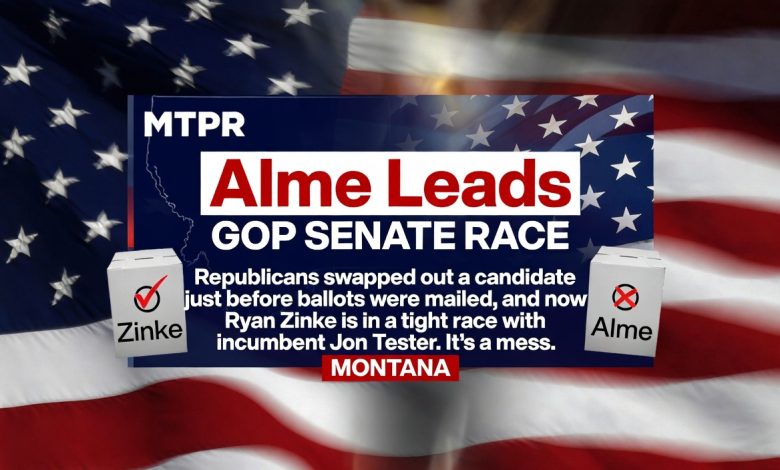
Alme has risen to the forefront of Montana’s political arena in a stunning display of strategic planning and political gamesmanship. In a state where elections are increasingly nationalized, the sudden transition of leadership atop the Republican ticket has captured the attention of strategists nationwide. The decision of Kurt Alme, a former U.S. Attorney, to run for the state’s open U.S. Senate seat came not after a long, drawn-out primary campaign, but through a highly orchestrated, last-minute ballot-switching maneuver engineered by retiring two-term Republican Senator Steve Daines. This strategic move, which successfully locked in a handpicked successor while keeping the opposing party off-balance, has redefined the rules of political pre-emption in competitive states.
The Last-Minute Switch: How Daines Engineered the Transition
The mechanics of Alme’s sudden rise to the top of the Republican field read like a political thriller. In March 2026, as the official filing deadline for Montana’s primary candidates drew near, political observers assumed that Senator Steve Daines would seek a third term. Daines, who has served in the Senate since 2015 and previously chaired the National Republican Senatorial Committee (NRSC), possessed the name recognition, fundraising apparatus, and political capital to easily defend the seat. However, behind the scenes, Daines was planning a transition that would preserve the seat for his party while allowing him to step aside on his own terms.
Daines quietly recruited Kurt Alme, a trusted ally and seasoned legal professional, to prepare a campaign. In the weeks leading up to the deadline, Daines worked behind closed doors to build consensus among top Montana Republicans and secure the backing of key national figures, most notably President Donald Trump. The plan was kept under strict wraps to ensure the element of surprise remained fully intact until the final minutes of the filing window.
Anatomy of a Filing Window Maneuver
On March 5, 2026, the filing deadline was set for exactly 5:00 p.m.. In the final ten minutes of the window, the coordinated plan was executed with flawless precision. At 4:52 p.m., Alme officially filed his paperwork to run for the U.S. Senate. Just five minutes later, at 4:57 p.m., Daines formally withdrew his own candidacy from the ballot. At 5:02 p.m., just minutes after the deadline closed, Daines publicly announced his retirement and endorsed Alme.
This rapid sequence left both potential Republican rivals and the Democratic Party entirely empty-handed. Because the filing window was closed, no other candidate could enter the race to challenge Alme for the Republican nomination, and Democrats were denied the opportunity to adjust their recruitment strategy. In an interview with Semafor, Daines confirmed that the move was deliberately designed to execute a seamless transition without exposing the seat to unpredictable primary dynamics or allowing the opposition to adapt.
Daines’ Defensive Playbook: Protecting the Red Turf of Montana
To understand the necessity of this maneuver, one must look at the broader landscape of modern congressional elections. Montana is traditionally a red state at the federal level, but its voters have historically shown a willingness to support independent-minded candidates. With the balance of power in the U.S. Senate routinely decided by a handful of seats, the open-seat designation in Montana represented a major tactical vulnerability for the GOP. An open seat typically attracts national attention, massive fundraising drives, and high-profile challengers.
Daines’ strategy was rooted in defensive pre-emption. As the former head of the NRSC, Daines was acutely aware of how nationalized spending can reshape a state’s political climate. He knew that an open primary could lead to a crowded, expensive, and potentially divisive Republican contest. By installing Alme at the absolute last second, Daines effectively cleared the field, allowing the party to consolidate its resources early and avoid an exhausting intra-party civil war.
Preventing a Democratic Spending Surge
The primary objective of the ballot switch was to block a prominent, well-known Democrat from entering the race. In open-seat elections, national Democratic organizations and progressive political action committees are capable of funneling astronomical amounts of money into local races. We have seen similar high-stakes fundraising battles play out across the country, where national movements attempt to shift state dynamics, as seen in the national battle over the Sanders-aligned progressive movements and national Democratic strategies. If Democrats had known months in advance that Daines was retiring, they likely would have recruited a heavyweight candidate with statewide appeal, such as a former governor or a well-known statewide official.
Such a recruitment would have drawn tens of millions of dollars in outside spending to the state, turning Montana into a prime-time national battleground. By freezing the field, Daines ensured that the Democratic nomination went to Alani Bankhead, a candidate who, while competent, lacks the established statewide machinery of a former governor. This significantly reduced the likelihood of a massive national Democratic investment in the state, keeping the race’s financial scale manageable for the Republican defense.
Intra-Party Pushback: Strategic Triumph or Backroom Deal?
While national Republican leaders celebrated the move as a tactical masterclass, the response on the ground in Montana was far more complicated. Many local party members and grassroots activists expressed deep frustration with the lack of transparency. The ballot swap was decried by critics as a “backroom deal” that circumvented the traditional democratic process and deprived Montana voters of a choice.
Critics argued that by keeping the plan entirely secret until minutes before the deadline, Daines denied other qualified Montana Republicans the chance to vie for the open seat. In a healthy democracy, major party nominations are expected to be decided through open debates and competitive primaries, rather than centralized backroom coordination. This controversy highlights a growing tension within the modern GOP between strategic, top-down pragmatism and the populist, grassroots demand for open competition.
Grassroots Frustration and the Democracy Argument
The frustration among the GOP grassroots in Montana mirrors national debates about institutional control and media narratives. When party establishments consolidate power to freeze out competitors, it often triggers public skepticism. This dynamic is similar to the public scrutiny and regulatory pushback seen in other highly managed institutional spaces, such as the FCC review of broadcast licenses, where central decisions are criticized for lacking transparency and democratic oversight.
Local activists pointed out that several conservative leaders in Montana might have mounted strong campaigns for the Senate had they known the seat was truly open. By suppressing a competitive primary, the party leadership was accused of prioritizing control over democratic principles. However, supporters of the maneuver countered that in an era of hyper-partisan warfare, ideological purity and open primaries are luxuries that a party fighting for a Senate majority simply cannot afford.
The Trump Endorsement: Solidifying Alme’s Path to Victory
Any potential rebellion within the state’s Republican ranks was quickly neutralized by the immediate intervention of President Donald Trump. In modern Republican politics, Trump’s endorsement remains the ultimate validator, capable of instantly legitimizing a candidate and silencing internal dissent. Almost immediately after Daines announced his retirement and endorsed Alme, Trump issued a strong statement of support on social media.
Trump stated that his endorsement of Alme was made “based on Steve’s strongest recommendation.” This endorsement effectively signaled to the MAGA grassroots that Alme was the official, approved candidate of the America First movement. Trump’s active role in shaping state-level endorsements reflects his ongoing role as the central kingmaker of the Republican Party. His political clout is leveraged globally, whether he is engaging in high-profile international diplomacy—such as receiving the historic HMS Trump Bell with King Charles during a state visit—or managing the balance of power in the United States Senate from his home in Florida.
Kurt Alme’s Legal and Political Profile
Kurt Alme’s qualifications make him an exceptionally formidable candidate, which is why Daines selected him for this critical role. Born and raised in Montana, Alme has spent decades serving the state in various legal and financial capacities. He holds a Bachelor of Science in business from the University of Colorado at Boulder and earned his Juris Doctor from Harvard Law School, giving him an elite educational background that commands respect across the political spectrum.
Alme’s career includes serving as a judicial law clerk, a partner in a major Montana law firm, and the Director of the Montana Department of Revenue. Crucially, Alme served as the United States Attorney for the District of Montana from 2017 to 2020 under the first Trump administration. After a brief stint as the budget director for Montana Governor Greg Gianforte—where he managed the state’s fiscal affairs—he was appointed as U.S. Attorney once again in 2025. His deep understanding of the law, combined with his fiscal expertise and strong conservative credentials, makes him uniquely suited to represent Montana’s interests in Washington. His background also aligns well with the economic and regulatory needs of Montana’s extensive agricultural sector. This sector is heavily influenced by federal policy debates, such as the ongoing struggles over the EATS Act and the Farm Bill, where Alme’s legal acumen and local roots will be critical assets in representing rural farmers and ranchers.
Montana’s General Election Outlook and Key Players
With the primary elections concluded on June 2, 2026, the general election lineup is officially set. Alme comfortably won the Republican primary, capturing roughly 77% of the vote against minor challengers. He will face Democratic nominee Alani Bankhead and Independent candidate Seth Bodnar, the former president of the University of Montana. Bodnar’s presence on the ballot introduces a unique variable to the race, as he aims to capture moderate voters, independent thinkers, and disgruntled members of both major parties.
While Montana’s political leanings give Alme a distinct advantage, the general election will test the durability of the Daines-engineered ballot swap. Democrats will likely focus their campaign on the “backroom deal” narrative, attempting to paint Alme as an appointed Washington insider rather than a candidate chosen by the people. Alme, on the other hand, will focus on his track record of public safety, law enforcement, fiscal responsibility, and his alignment with the popular policies of Governor Gianforte and President Trump.
Comparing Key Contenders in the 2026 Montana Senate Race
To better understand the dynamics of the upcoming general election, the table below provides a comparative analysis of the three main candidates vying for Montana’s U.S. Senate seat, highlighting their backgrounds, core platforms, and key electoral challenges.
| Candidate | Party Affiliation | Key Background & Experience | Core Platform Focus | Primary Strategic Challenge |
|---|---|---|---|---|
| Kurt Alme | Republican | Former U.S. Attorney, Harvard Law Graduate, State Budget Director under Gov. Gianforte. | Law and order, border security, fiscal conservatism, and supporting Montana’s agricultural economy. | Overcoming criticism of the “backroom deal” ballot swap and unifying the grassroots. |
| Alani Bankhead | Democratic | Local public service advocate, community organizer, and policy advisor. | Healthcare access, public lands protection, reproductive rights, and criticising Republican institutional overreach. | Overcoming the steep red lean of Montana and a lack of nationwide name recognition. |
| Seth Bodnar | Independent | Former President of the University of Montana, veteran, and business executive. | Bipartisan problem-solving, fiscal pragmatism, education reform, and bridging the political divide. | Building a statewide campaign infrastructure without major party funding and avoiding the “spoiler” label. |
Conclusion: Strategic Pre-Emption in Modern Senate Campaigns
The strategic ballot swap executed by Steve Daines and Kurt Alme will likely be studied by political scientists and campaign managers for years to come. By exploiting the strict rules of state filing deadlines, Daines demonstrated how an incumbent can successfully control the succession process, freeze out the opposition, and protect a vital Senate seat from a costly nationalized battle. While the move generated considerable intra-party friction and allegations of backroom politics, its immediate tactical success is undeniable.
As the race transitions to the general election, Alme is well-positioned to carry the Republican banner. If he succeeds in securing the seat in November, it will validate Daines’ controversial defensive playbook and potentially inspire similar pre-emptive maneuvers in future cycles across the nation. In the modern era of high-stakes, hyper-nationalized congressional warfare, the Montana ballot switch of 2026 serves as a powerful reminder that sometimes the most decisive battles are won before the campaign even officially begins.