America’s aging air traffic control system Faces Critical Breakdown 2026
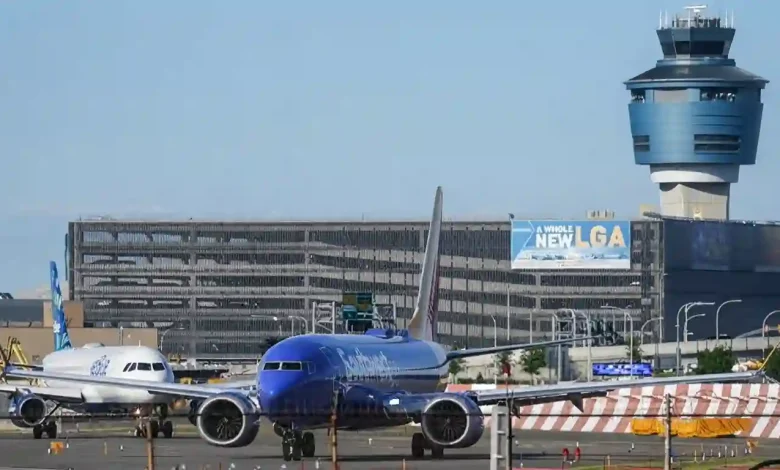
Table of Contents
America’s aging air traffic control system is buckling under the weight of archaic hardware, obsolete telecommunications infrastructure, and a chronic lack of physical redundancy. On Monday, thousands of commercial flights traversing the Eastern Seaboard ground to a halt or suffered hours of rolling delays. The immediate culprits were an internal telecommunications circuit malfunction at an air traffic facility near Philadelphia and an accidental fiber-optic sever caused by an excavation crew operating near New Brunswick, New Jersey. Together, these compounding mishaps paralyzed air traffic across the New York, New Jersey, and Pennsylvania corridors, laying bare the deep vulnerabilities of the National Airspace System (NAS).
Infrastructure Crisis in the Skies
The disruptions that unfolded across the Northeast were not an isolated weather anomaly or an unprecedented catastrophe. Instead, they represent the predictable collapse of an architectural backbone designed over four decades ago. Ground stops were issued for major transportation hubs, including John F. Kennedy International, LaGuardia, Newark Liberty International, and Philadelphia International Airport. Passengers sat stranded on airport tarmacs for hours while flight dispatchers scrambled to reroute routes through congested inland airspace corridors.
As commercial aviation volume rebounds beyond historic peaks, the Federal Aviation Administration (FAA) continues to balance passenger safety on an infrastructure foundation consisting of disparate legacy components. When modern aircraft equipped with state-of-the-art avionics enter airspace controlled by terminal radar facilities utilizing thirty-year-old operating systems, a dangerous technological mismatch occurs. The reliance on patched-together equipment introduces points of total operational failure that cascade across national flight corridors within minutes.
Anatomy of a Cascading Failure: Philadelphia and New Jersey
The cascading gridlock started early Monday morning when a critical data circuit within the Philadelphia Terminal Radar Approach Control (TRACON) environment went offline without warning. The circuit was responsible for passing radar tracking information and sector-to-sector handoffs to adjacent regional facilities. Before technicians could reroute internal data traffic through secondary backup channels, an independent construction crew working on an unrelated underground project outside New Brunswick sliced cleanly through a major trunk line of fiber-optic cabling.
This severed cable belonged to a commercial telecommunications provider contracted by the federal government to transmit mission-critical voice communications and flight progress data between the New York Air Route Traffic Control Center (ARTCC) in Ronkonkoma, Long Island, and regional tower facilities. With digital handoffs severed and secondary circuits deadlocked, controllers were forced to increase separation buffers between airborne planes from three miles to dozens of miles, slashing runway acceptance rates by upwards of 75 percent. To safeguard against operational collapse, modern dispatch operations increasingly turn to advanced routing strategies alongside contrail avoidance tech that dynamically rebalances upper-atmosphere congestion.
Running on Fumes: Compaq Workstations and Spare Parts on Secondary Markets
Perhaps the most alarming reality of the domestic air travel network is the sheer vintage of its computational machinery. Multiple en-route and terminal approach facilities across the continental United States still execute mission-critical instructions on Compaq AlphaServer systems and Intel 486-era microprocessors manufactured in the late 1990s. These antiquated computers run legacy software written in obsolete programming languages that current engineering graduates are rarely trained to manage.
Because original equipment manufacturers ceased production of these parts decades ago, maintenance contractors and federal technicians must scour online auction houses such as eBay, industrial liquidation repositories, and surplus electronic warehouses to secure spare memory chips, power supplies, and specialized motherboards. The practice of hunting for mission-critical flight radar parts on commercial consumer sites illustrates an unsustainable supply chain breakdown that puts millions of flying travelers at risk.
The Fragility of Ground Telecom and Missing Redundancy
The Federal Aviation Administration has long maintained that its operational network incorporates fail-safe redundancies. Yet, in real-world scenarios, these apparent fail-safes regularly collapse because they rely on the same physical telecommunications conduits owned by private telco conglomerates. As revealed by the New Jersey cut, secondary lines often travel through identical roadside trenches or terminal junction points, invalidating geographical diversity.
When an optical path is broken, the anticipated automatic failover frequently stumbles due to outmoded signaling conventions like legacy time-division multiplexing (TDM) circuits that struggle to interface cleanly with modern Internet Protocol architectures. This technological friction mirrors modern federal efforts to reevaluate safety protocols, similar to legislative actions seen in Oregon transportation repeal debates where rapid public sector funding shifts led to stark operational compromises on regional arterial corridors.
Comparative Breakdown of Recent Air Traffic Control Failures
| Incident Year / Location | Primary Cause of Failure | Equipment / Systems Affected | Operational Impact |
|---|---|---|---|
| Northeast Corridor (Recent) | Simultaneous circuit error and severed fiber-optic line | Philadelphia TRACON, New York Center communications | Thousands of flight cancellations; widespread rolling delays across East Coast |
| National Ground Stop (2023) | Corrupted database file within pilot warning framework | Notice to Air Missions (NOTAM) system | First nationwide ground halt of commercial aviation since September 11, 2001 |
| Austin-Bergstrom Incident | Loss of radar feed and ground tracking discrepancies | Terminal automation systems, surface surveillance radars | Near-miss runway incursions involving passenger airliners and cargo carriers |
| Northern California Center | Internal power transfer surge and cooling component failure | En-route automated radar processors and backup generators | Significant ground stops across SFO, OAK, and SJC metropolitan airspace |
NextGen Delays and FAA Budget Friction
For more than two decades, the FAA has championed the Next Generation Air Transportation System (NextGen) as the definitive cure for these structural vulnerabilities. NextGen was conceived to replace legacy ground-based radar with high-precision satellite telemetry, specifically Automatic Dependent Surveillance-Broadcast (ADS-B). However, the modernization initiative has suffered from massive cost overruns, changing technical requirements, and shifting bureaucratic leadership, reminiscent of delays observed in large-scale aerospace infrastructure and satellite integration programs.
Billions of dollars have been spent, yet crucial facilities remain trapped in a hybrid limbo where digital satellite feeds must be translated backward to display correctly on green-phosphor displays or archaic cathode-ray tube terminals. As defense departments negotiate broader industrial contracts, illustrated by multi-billion dollar procurements like the Ukraine defense deal, commercial civil aviation modernization often falls victim to political impasses and fractured annual appropriations.
Air Traffic Controller Shortages and High Cognitive Stress
Physical machinery is only half of the failing equation; human operators are bearing an impossible cognitive burden. The National Air Traffic Controllers Association (NATCA) has repeatedly warned that staffing levels have plummeted to crisis thresholds. At major facilities, including the New York TRACON in Westbury, controllers are routinely mandated to work six-day workweeks consisting of mandatory ten-hour shifts.
When outdated computer consoles randomly drop target tracks or voice loops fill with static, controllers must immediately revert to manual procedural separation techniques. This involves tracking aircraft speeds, headings, and altitudes on paper flight progress strips or via mental math calculations. The mental fatigue of keeping millions of travelers safe using tools from the mid-twentieth century is unsustainable, prompting federal lawmakers to consider stringent work-rest regulations echoing broader protections like a social media curfew implemented to mitigate neurological strain and systemic fatigue across exhausted workforces.
Digital Transformation Hurdles and Algorithmic Vulnerabilities
Integrating artificial intelligence and algorithmic sequencing into legacy airspace frameworks has emerged as a potential remedy, but it comes with immense software integration hurdles. Novel software layers often trigger unpredictable system-wide faults when forced to communicate with thirty-year-old assembly code. Similar to challenges documented in enterprise educational software rollouts, such as recent deployments of ChatGPT for teens, deploying complex neural network logic across unverified legacy stacks can introduce severe data validation errors.
Meteorological Pressure and Weather Forecasting Complications
Climate disruption is accelerating convective storm activity along the Eastern Seaboard, compressing flight paths into narrow corridors of clear sky. When thunderstorms intersect with computer system breakdowns, the result is instantaneous operational paralysis. Advanced automated weather forecasting platforms are essential to predict these convective systems, but if radar data cannot reach controllers due to severed regional fiber cables, even superior forecasting models become useless.
Systemic Pathways Forward for National Airspace Resiliency
Averting future national transit collapses will require complete structural intervention. Experts across the aviation and technology sectors recommend three foundational pillars for urgent deployment:
- Complete Decoupling from Obsolete Hardware: Congress must allocate dedicated capital expenditure funds to phase out all remaining Compaq, IBM, and unbranded legacy mainframes, mandating cloud-native, microservice architectures built on modern silicon.
- True Physical Redundancy for Telecommunications: FAA facilities must bypass commercial shared-trench fiber providers, utilizing dedicated low-Earth orbit satellite backup links and independent wireless mesh networks that activate automatically during physical cable severances.
- Workforce Capitalization and Technological Ergonomics: Aggressive hiring bonuses, streamlined training academies, and modern touch-based graphical user interfaces must replace decades-old green monochrome terminals to drastically reduce controller cognitive burden.
Without drastic structural reform and immediate capital investment, the United States will remain vulnerable to catastrophic transportation disruptions caused by little more than a faulty computer capacitor or a single errant backhoe shovel.