Mayor Mamdani: 1-Year AI School Ban Sparks MAJOR Debate
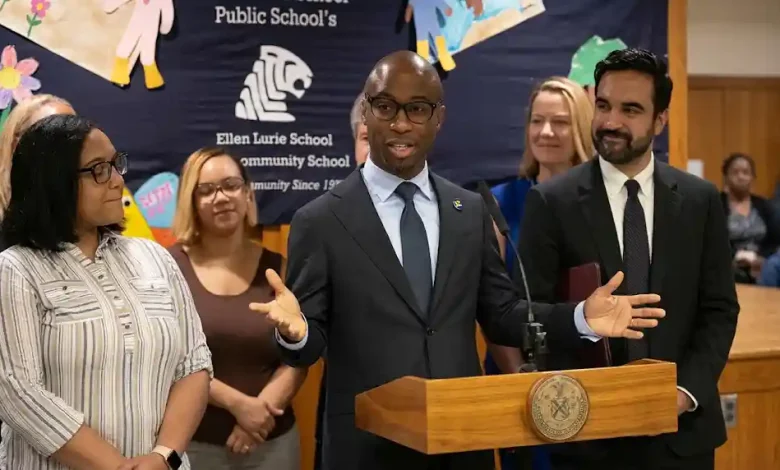
Table of Contents
Mayor Mamdani and Schools Chancellor Kamar Samuels recently made history by enacting the nation’s broadest generative AI moratorium in public schools, fundamentally reshaping how technology is integrated into the educational experiences of hundreds of thousands of children. Announced on September 2, 2026, this sweeping policy institutes a complete pause on student-facing generative AI tools for the 2026–2027 academic year, specifically targeting students from Pre-Kindergarten (2-K) through the eighth grade. The administration’s bold decision stems from a core belief that early childhood education must prioritize authentic human relationships, peer-to-peer collaboration, and foundational critical thinking over reliance on automated systems. In an era where tech companies aggressively market artificial intelligence as an educational panacea, New York City is drawing a firm boundary, stating that technology should support, not replace, human educators.
This landmark initiative represents a major victory for education advocates and parent coalitions who have expressed growing concern over data privacy, algorithmic biases, and the potential cognitive impacts of early-stage AI interaction. Under the new directive, nearly 600,000 public school students—representing two-thirds of the entire citywide school enrollment—will see AI tools and companion chatbots deactivated in their classrooms. The implementation of this policy has already triggered nationwide discussions about the appropriate role of advanced technology in early childhood development, positioning New York City as the primary laboratory for a more deliberate, human-centric approach to digital literacy. To learn more about official municipal programs, you can visit the Official NYC Mayor’s Office Portal.
The Mechanics of the NYC AI Moratorium
The mechanics of the new policy are designed to be thorough and absolute. Rather than relying on simple guidelines or soft suggestions, the Department of Education is actively dismantling access pathways to student-facing generative AI across its networks. Practically, this means that student-facing generative AI systems and companion chatbots will be completely deactivated on all school-issued devices and institutional networks. Chancellor Kamar Samuels explained that the city has already targeted 38 previously approved educational platforms, forcing software companies to either completely disable their generative AI plug-ins or face immediate contract suspensions. If a vendor cannot or will not comply with disabling these components, their software will be removed from school systems entirely.
Despite the broad nature of this moratorium, the administration has crafted specific, targeted exemptions to ensure that vulnerable student populations are not unfairly disadvantaged. For instance, the policy permits the continued use of specialized assistive technologies for students with disabilities, as well as critical translation and support software for multilingual learners. Furthermore, specialized career-readiness programs, including vocational software engineering and high school preparatory computer science courses, are permitted to utilize developer tools under strict supervision. By carving out these specific pathways, the city aims to maintain educational equity while shielding the vast majority of younger students from unproven automated products.
Screen Time Limitations and Physical Well-being
To reinforce the cognitive benefits of this technological pause, Chancellor Samuels and Mayor Mamdani have paired the generative AI ban with unprecedented limits on digital device screen time. The new rules completely prohibit individual student screen use for children from 2-K through the second grade, reserving digital devices exclusively for shared, teacher-led demonstrations. For students in third through fifth grade, personal device screen time is capped at a maximum of 30 minutes per school day. For middle school students in grades six through eight, the daily limit is restricted to 45 minutes. This represents a massive shift from the hyper-digitized classrooms of the post-pandemic era, where students often spent hours in front of personal laptops.
This holistic approach recognizes that excessive digital integration affects not just learning, but also student physical health. By restricting screen time, the administration hopes to encourage physical play, collaborative reading, and sensory engagement. This development mirrors other proactive measures across the United States, such as the major structural changes detailed in LAUSD’s edtech ban. Education officials emphasize that physical well-being must be approached comprehensively, arguing that just as schools must guarantee access to healthy school lunches to support bodily growth, they must also ensure a balanced, screen-limited environment to protect children’s neurological development and mental health.
High School Policies: Critical Thinking Over Direct Reliance
The policy takes a significantly different approach when it comes to high school students, recognizing that older teenagers are preparing to enter a highly digitized workforce. Rather than banning generative AI for high schoolers, the New York City Department of Education is shifting its focus to critical literacy, ethics, and algorithmic bias. High school students will be required to participate in twice-yearly AI critical thinking and literacy modules. These courses are designed to teach teenagers how to analyze AI-generated outputs, identify hallucinated information, detect systemic algorithmic bias, and understand the ethical ramifications of automated content generation.
In addition to these critical thinking modules, the city is rolling out limited, highly supervised pilot programs in select high school classrooms. These pilots will allow students to use AI tools in specific, controlled contexts under the close monitoring of trained educators. The goal is to demystify these advanced technologies and teach responsible, ethical usage rather than allowing students to use them as shortcuts for academic tasks. Chancellor Samuels pointed out that ignoring AI entirely at the high school level would be irresponsible, but introducing it without a foundational understanding of its limitations and societal risks would be equally dangerous.
Comparative Overview of Major Educational Tech Regulations
To fully grasp the scope of New York City’s new policy, it is useful to compare it to other major technology and AI regulations implemented across the United States. While several school districts have attempted to regulate personal device use or establish basic AI guidelines, the Mamdani administration is the first to implement a mandatory, system-wide moratorium of this scale.
| School District / City | AI Moratorium Scope | Screen Time Rules | Exemptions Provided |
|---|---|---|---|
| New York City (NYCPS) | Complete ban (Grades 2-K to 8) on student-facing GenAI | Strict caps (30-45 mins max); No screens before Grade 3 | Assistive tech, English learners, specific career pilots |
| Los Angeles (LAUSD) | No outright AI ban, but restricted access to unauthorized tools | System-wide device limits and social media blocks | Special education, individualized learning plans |
| Chicago Public Schools | Guidance-only; teachers determine classroom AI integrations | No specific daily screen time caps | None standardized; left to school principal discretion |
| Miami-Dade County | Allows AI tools with parent permission forms | Recommended screen intervals but no hard limits | Varies by individual school curriculum requirements |
Political Context: Mayor Mamdani’s Left-Wing Progressive Education Platform
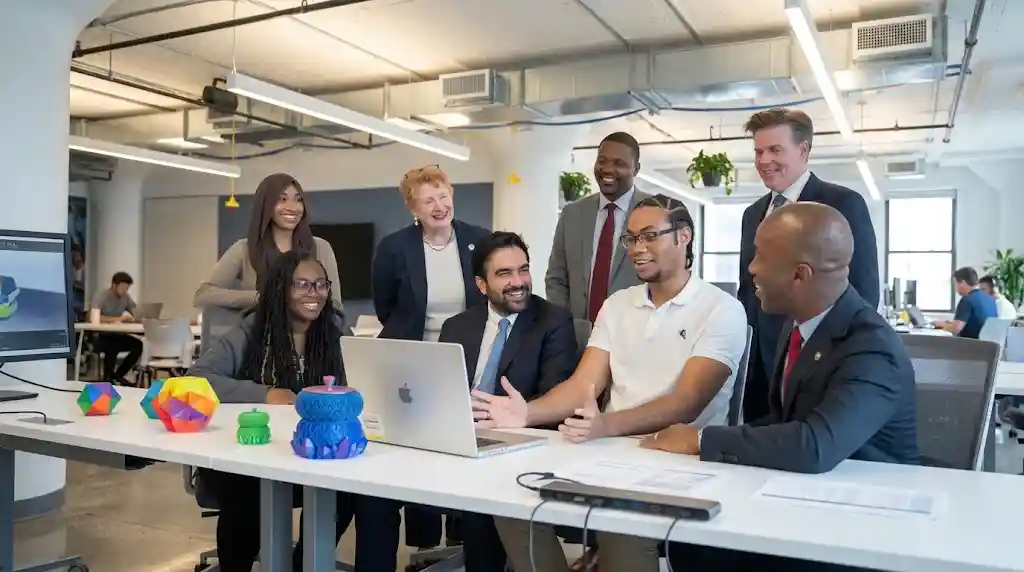
The implementation of this aggressive tech policy cannot be understood without examining the political landscape of New York City. Mayor Zohran Mamdani, who took office on January 1, 2026, as the city’s first Muslim and first Asian American mayor, has spent his political career challenging corporate interests and promoting human-centric public services. Having risen to prominence as a Democratic Socialist in the New York State Assembly representing Astoria, Mamdani won a series of highly competitive elections, illustrating how progressive waves have reshaped modern competitive Democratic primaries. His educational platform focuses heavily on protecting public services from corporate privatization and tech-lobby influence.
This tech moratorium represents a manifestation of Mamdani’s broader ideological philosophy, which views the unchecked expansion of tech conglomerates into public classrooms as a form of corporate opportunism. By halting the use of unproven AI tools, the Mamdani administration is challenging the tech lobby’s narrative that digital solutions should replace traditional public investments. This willingness to implement systemic state-level changes matches other progressive shifts across the region, such as ongoing policy adjustments and complex New Jersey Medicaid changes that prioritize public welfare over private administrative platforms. For Mamdani, protecting children from predatory tech business models is as essential as any other public safety net program.
The Tech Industry Backlash vs. Public Advocacy
Unsurprisingly, the sudden deactivation of these digital tools has provoked intense backlash from the tech sector. Silicon Valley firms, which have invested billions of dollars into developing and marketing AI-driven educational platforms, view New York City’s ban as a dangerous precedent. Tech trade groups, including the Software & Information Industry Association (SIIA), have released statements claiming that a blanket ban will leave New York City students behind in a rapidly evolving economy. These industry representatives argue that AI platforms personalize learning and help resource-constrained schools handle diverse student bodies, particularly in the wake of massive global AI technological investments that are shifting corporate priorities globally.
This corporate resistance is deeply tied to the financial ecosystem surrounding generative AI. Educational technology has become a multi-billion-dollar battleground for venture capital firms, which are riding the wave of surging AI-linked stocks. As investors perform heavy evaluations of AI infrastructure to justify high market valuations, securing contracts with the nation’s largest public school district was seen as a vital proof-of-concept for the industry. Tech firms continue to intensely train AI systems in hopes of deploying companion chatbots globally, making NYC’s resistance a significant threat to their commercial ambitions. However, Mayor Mamdani remains unmoved, stating that public classrooms should never serve as free beta-testing grounds for tech companies.
Stakeholder Reactions: Teachers, Parents, and Advocates
Reaction within New York City has been highly mixed, reflecting the deeply polarizing nature of generative AI in education. The United Federation of Teachers (UFT) issued a statement expressing strong support for the screen time limitations, but noted that the moratorium raises a series of logistical and enforcement-related questions. Educators are concerned about how they will be expected to police student device use, and many are asking for clearer guidelines regarding how they can still utilize AI themselves for administrative tasks, such as generating lesson plans or translating homework materials. The UFT has urged the Department of Education to provide aggressive safeguards on all software purchased by the city.
Meanwhile, local parent advocacy groups have largely celebrated the decision, praising the mayor and the chancellor for listening to their concerns regarding student data privacy and cognitive over-reliance. On the other hand, some local leaders and non-profit executives have expressed concern over the blanket nature of the ban. Richard Buery, CEO of the Robin Hood Foundation, argued that while well-intentioned, a complete one-year ban without exceptions through middle school may not be the optimal strategy. Similarly, State Senator Kristen Gonzalez and City Council Member Carmen De La Rosa issued a joint statement noting that while the policy is a step forward, it still falls short of a long-term strategy for responsible AI integration, warning that the five high school pilot programs must be carefully monitored to avoid creating new educational inequities.
The Path Forward: Studying the Real Impact of AI in Education
As New York City embarks on the 2026–2027 school year, the Department of Education is launching a comprehensive, year-long study to evaluate the impacts of generative AI on student learning, cognitive development, and mental health. A dedicated task force of child psychologists, veteran educators, data privacy experts, and pediatricians will spend the next ten months analyzing classrooms across the five boroughs. This task force will compare student development metrics, reading comprehension scores, and social-emotional growth between the restricted classrooms and historical baseline data.
The findings from this extensive study will be compiled into a public report, which will serve as the foundation for the city’s long-term technology policies. Mayor Mamdani and Chancellor Samuels have made it clear that this moratorium is not a permanent rejection of modern technology, but rather a necessary pause to regain control over the educational environment. By putting students first, New York City is attempting to demonstrate that a school district can engage with the technological future on its own terms, refusing to let the commercial demands of the tech sector dictate how children learn to think, read, and connect with one another.